Mexico is one of the leading digital advertising markets in Latin America. The country has 110 million internet users, and 96.7% of them access the internet through mobile devices. Digital channels already account for 59% of total advertising spend.
In this article, we explore the main mobile advertising trends in Mexico based on DataReportal. We look at the growth of in-app advertising, the role of programmatic buying, changing online behaviour, and the digital channels attracting the most investment.
We also examine how brands can use audience data, personalization, and ongoing campaign optimization to reach Mexican consumers more effectively.
Learn more about the digital landscape in other Latin American countries in our overviews:
Media Consumption Trends in Latin America in 2026
Digital Marketing in Chile: Trends and Forecasts for 2026
Digital Marketing in Argentina: Trends 2026 and DataReportal Statistics
Digital Market in Latin America: 2026 Trends
By October 2025, Mexico had around 110 million internet users. This was 83.5% of the population. The online audience grew by 1.1 million users, or 1%, over the year. Internet penetration increased by 0.2%.
Mexico is one of the largest digital markets in Latin America. Internet users spend an average of 53 hours and 41 minutes per week with digital media. This gives brands many opportunities to reach their audiences online.
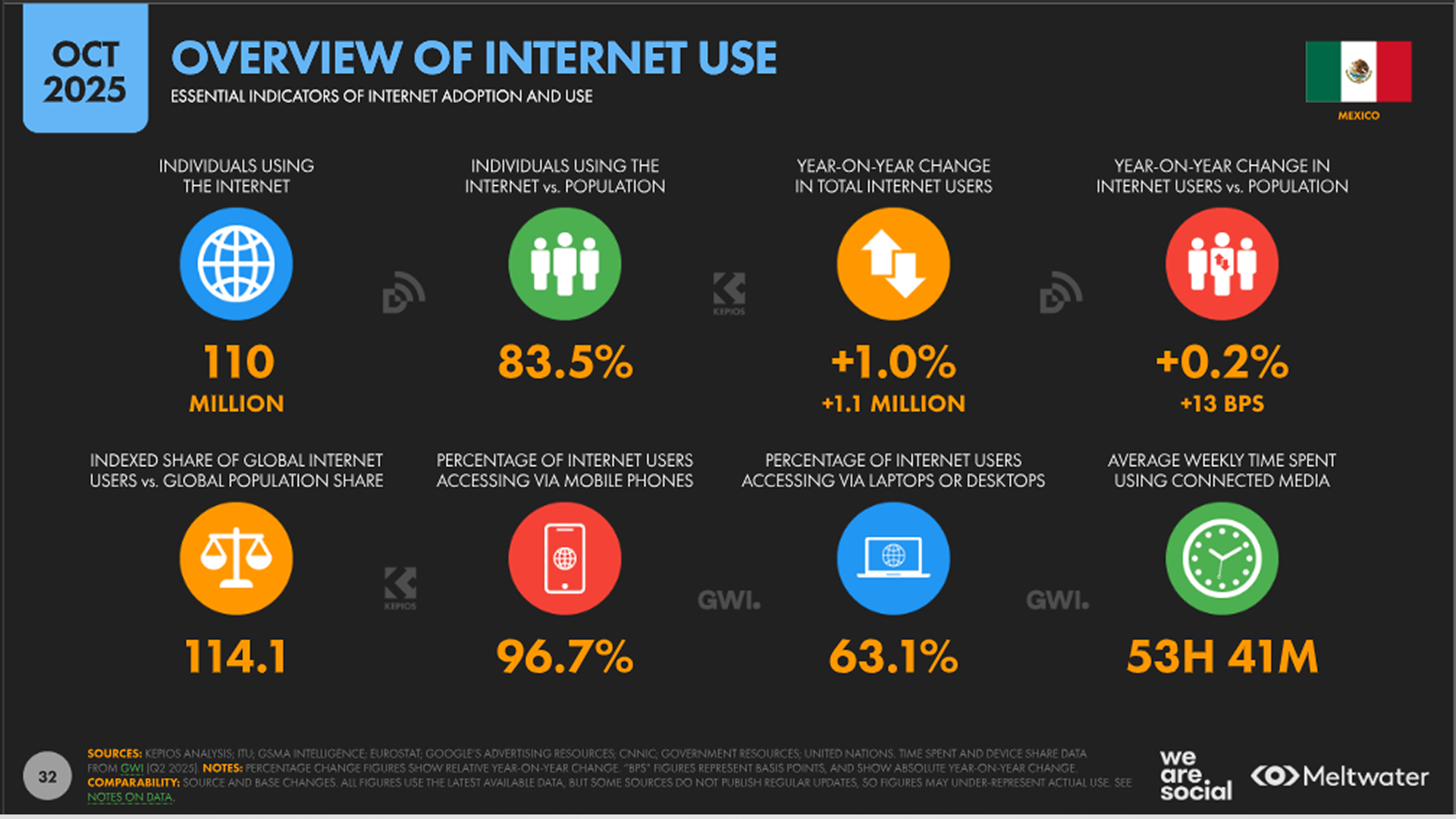
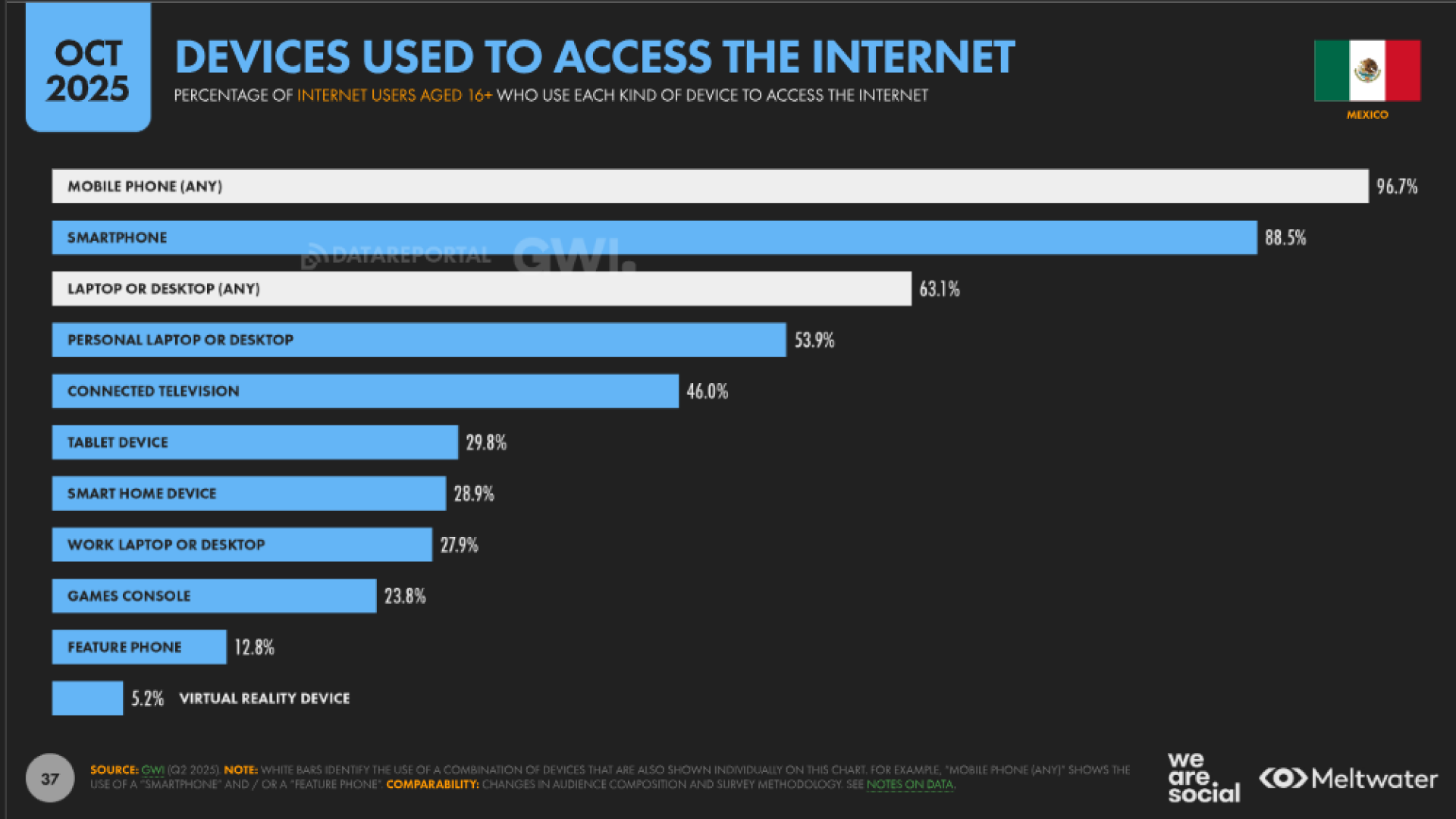
Mobile phones are the main way people access the internet in Mexico. Around 96.7% of internet users go online through a mobile device. Smartphones are used by 88.5%. Laptops and desktop computers are used by 63.1%.
Other devices are also becoming more popular. Connected TVs are used by 46% of internet users. Tablets reach 29.8%, smart home devices 28.9%, and gaming consoles 23.8%.
Digital communication now takes place across many devices. However, mobile remains the main point of contact. It should therefore play a central role in most advertising strategies.
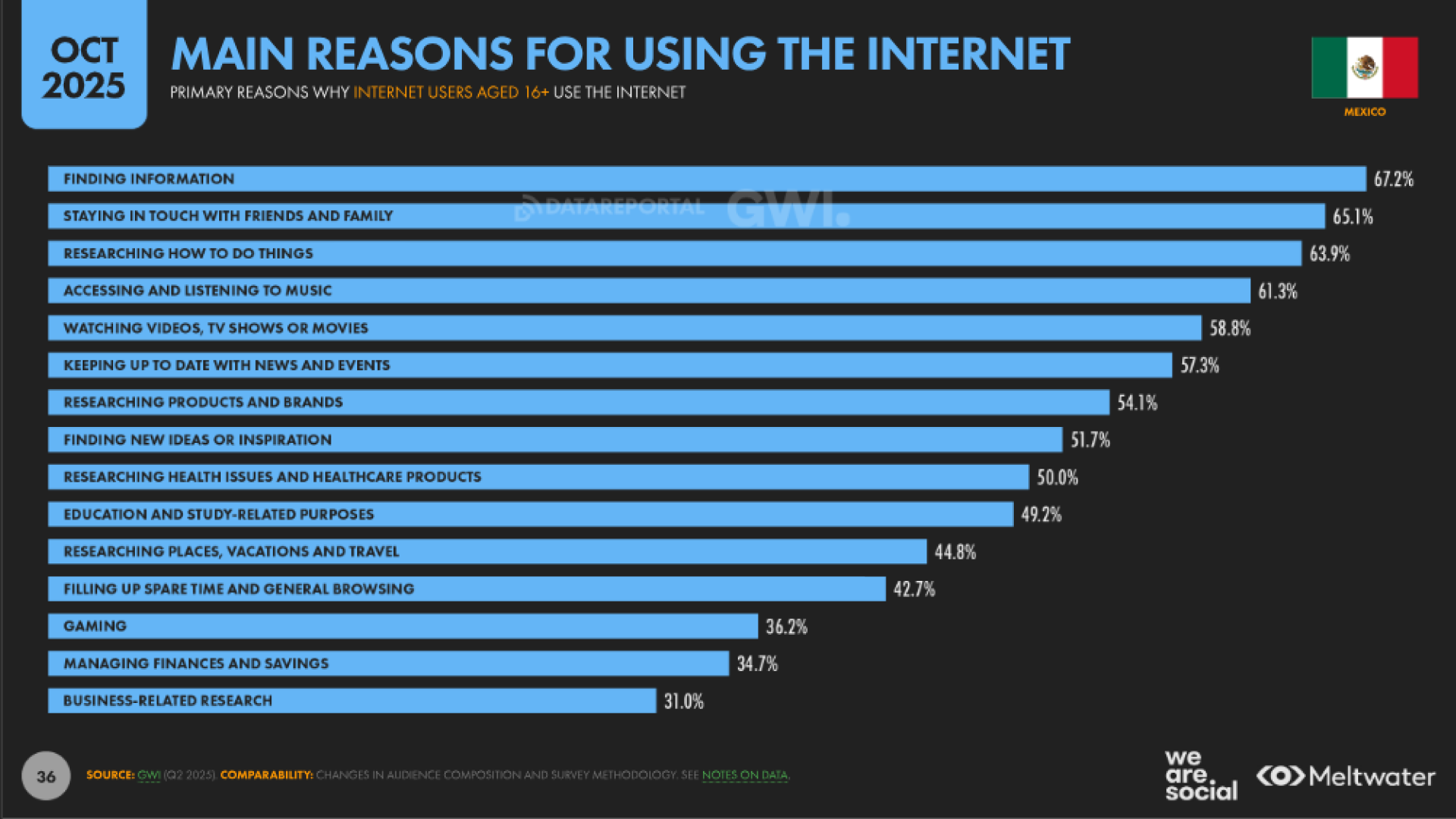
The most common reason for using the internet in Mexico is finding information, cited by 67.2% of users. Staying in touch with friends and family follows closely at 65.1%, while 63.9% go online to learn how to do different things.
Entertainment also plays an important role. More than 61% of users access music online, and 58.8% watch videos, television programmes or films. At the same time, 54.1% use the internet to research products and brands. It shows that digital platforms influence not only media consumption but also purchase consideration.
For advertisers, this creates an opportunity to combine useful content with brand communication. Campaigns that provide information, inspiration or practical value may be more relevant than advertising that focuses only on direct promotion.
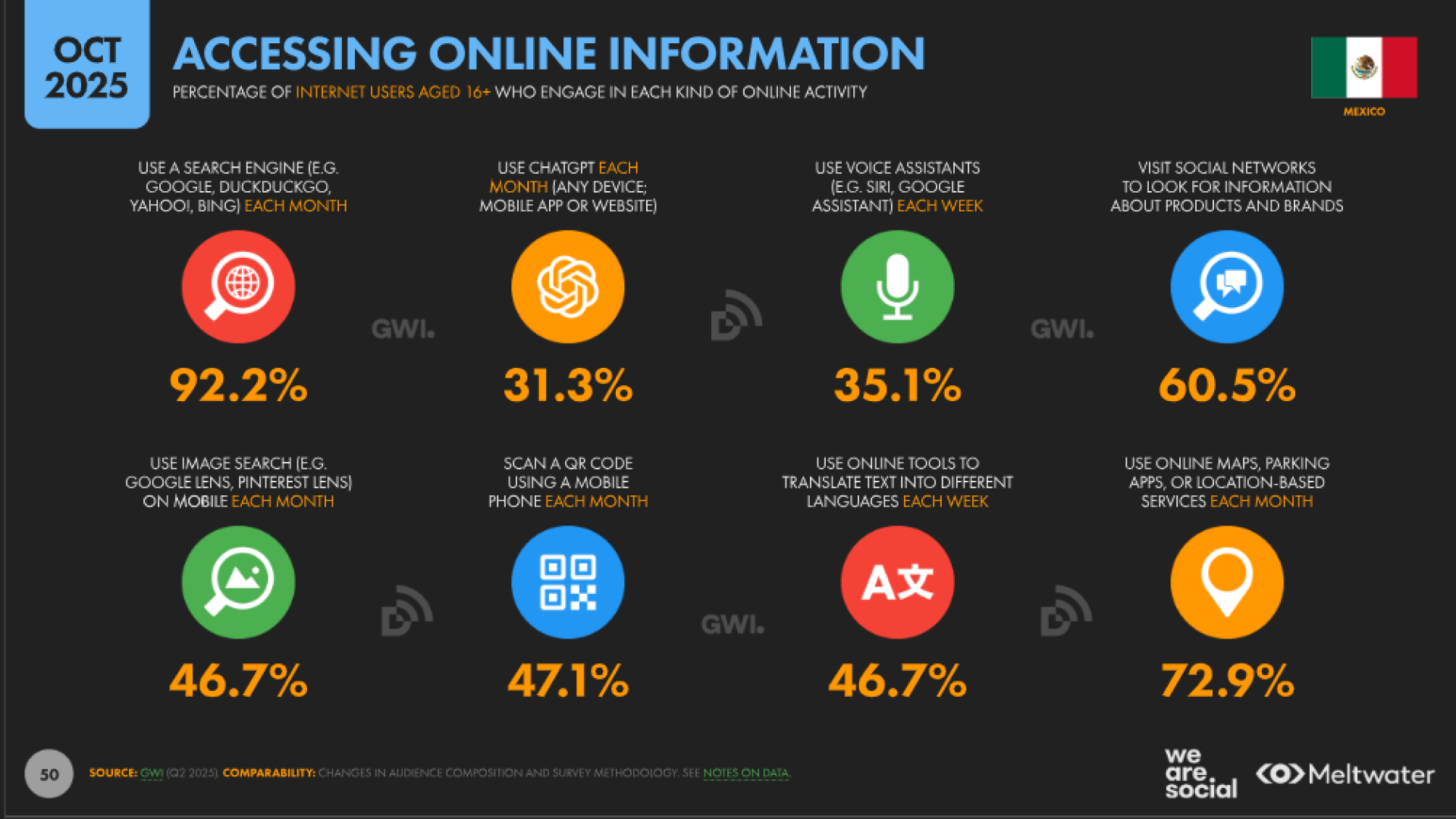
Search engines remain the primary tool for accessing information. 92.2% of Mexican internet users use them at least once a month. Online maps and location-based services are also highly popular, reaching 72.9% of users.
Social networks are becoming an important product discovery channel. Around 60.5% of users visit social platforms to look for information about products and brands. Image search is used by 46.7%, while 47.1% scan QR codes with their phones each month.
Artificial intelligence tools are also becoming part of everyday online behaviour. According to the data, 31.3% of users access ChatGPT each month.
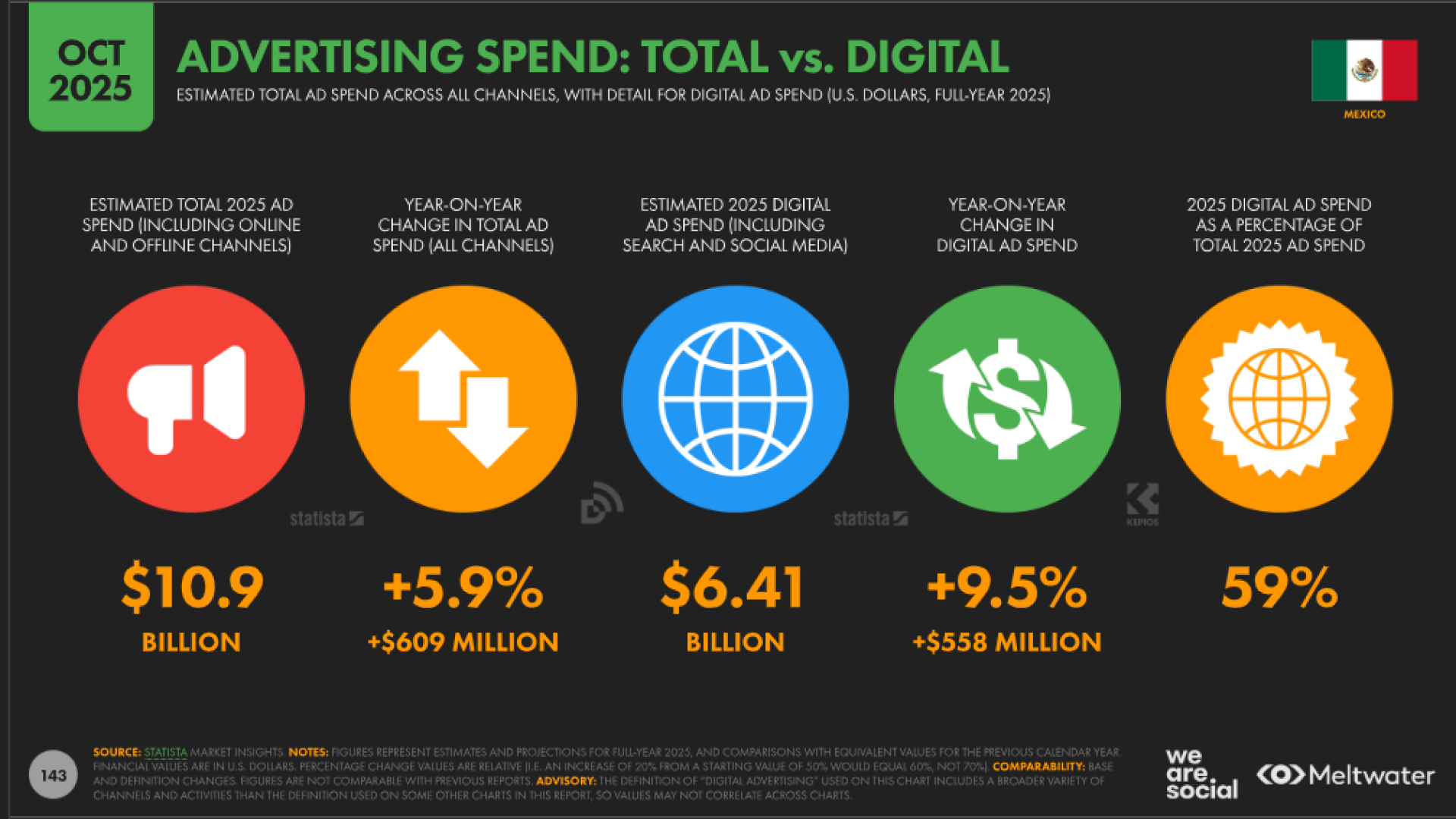
Mexico’s total advertising spend was estimated at $10.9 billion in 2025, increasing by 5.9% year on year. Digital advertising reached $6.41 billion and grew considerably faster, adding 9.5%, or approximately $558 million.
Digital already represents 59% of total advertising investment in the country. This suggests that online channels are becoming the main growth engine of the Mexican advertising market. As audiences spend more time across connected devices, brands are continuing to reallocate budgets toward measurable, data-driven and automated digital placements.
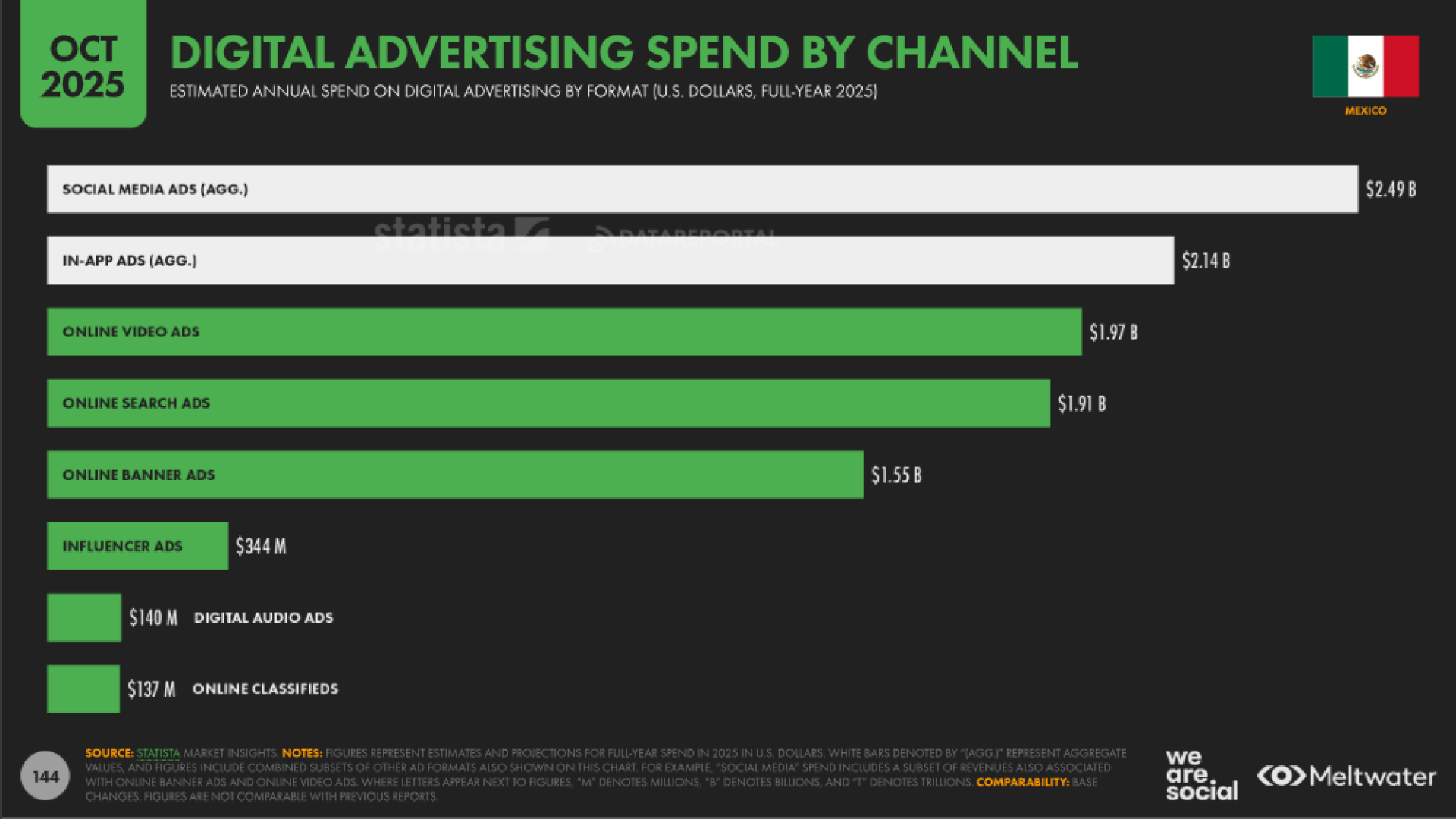
Social media is the largest digital advertising channel in Mexico, with estimated annual spend of $2.49 billion. In-app advertising follows at $2.14 billion, ahead of online video at $1.97 billion and search advertising at $1.91 billion.
The figures show that Mexico’s digital market is increasingly shaped by mobile, social and video-led formats. In-app advertising has already become the second-largest digital category. This reflects the importance of mobile applications in consumers’ daily media habits.
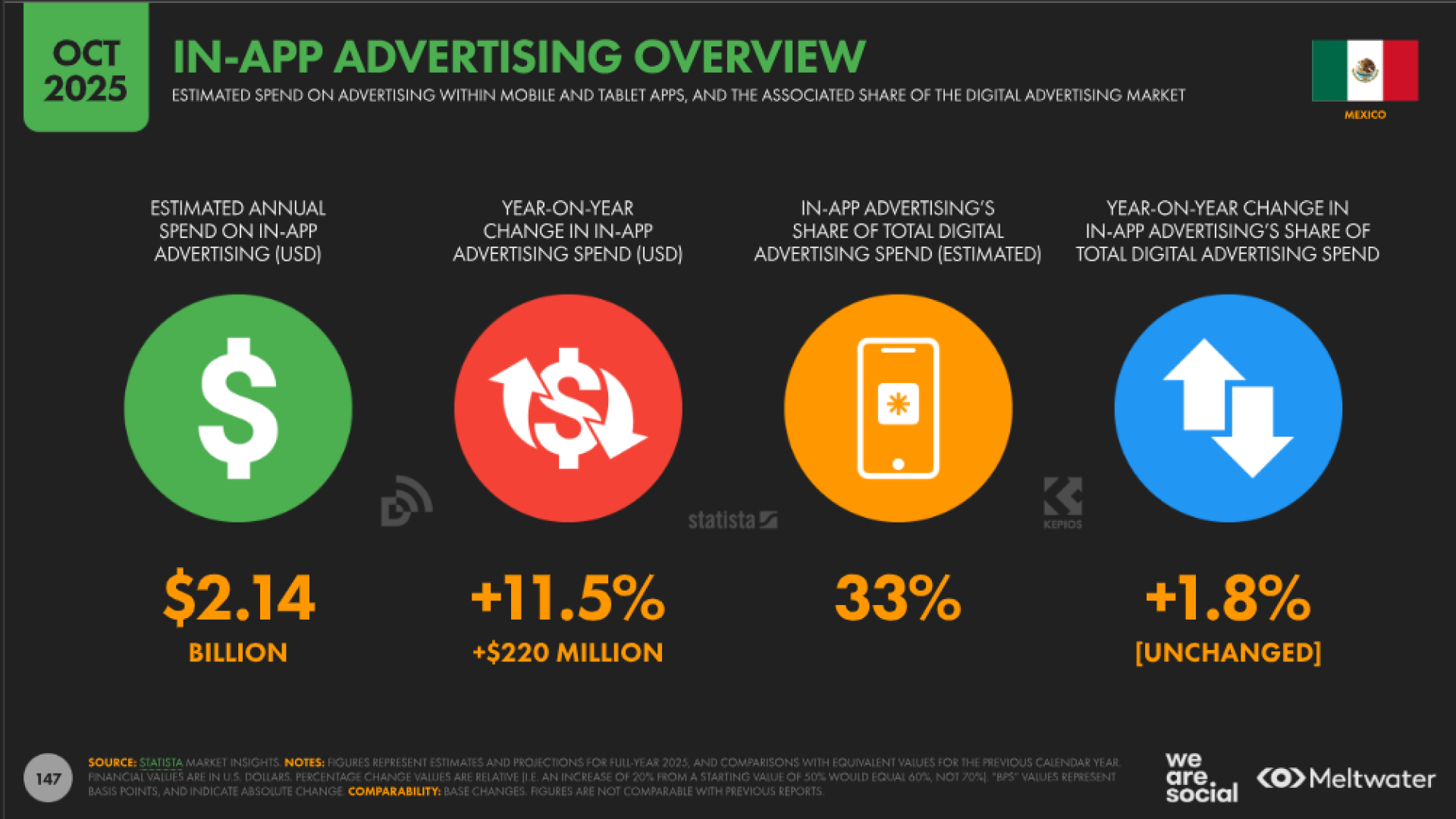
Annual investment in advertising within mobile and tablet applications reached an estimated $2.14 billion in 2025. Spending increased by 11.5% year on year.
In-app advertising represents around 33% of Mexico’s total digital advertising spend. The strong growth of this segment is supported by the country’s high level of mobile internet access and the central role of applications in everyday services.
For advertisers, the in-app environment offers more than broad reach. Campaigns can be placed within relevant application categories and adapted to users’ interests, location, device type and behaviour. This makes mobile applications particularly valuable for brands that need to combine scale with more precise audience targeting.
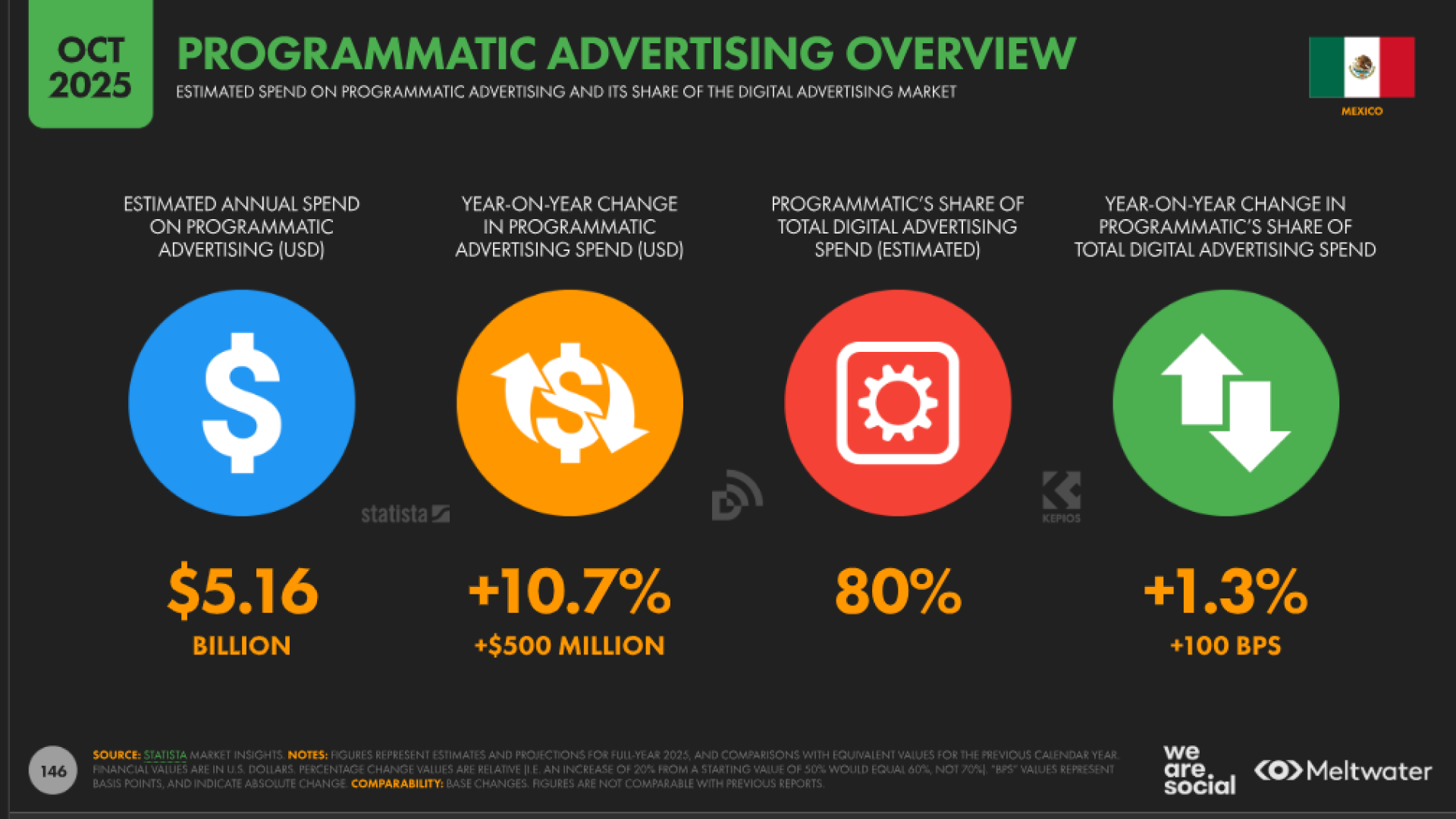
Programmatic advertising spend in Mexico was estimated at $5.16 billion in 2025, increasing by 10.7%. Automated buying now accounts for 80% of total digital advertising investment.
Programmatic is growing together with mobile, in-app, and video advertising. It helps brands reach the right audiences, change bids and placements during a campaign, and remove low-quality advertising spaces.
As people use more devices and platforms, programmatic makes campaigns easier to manage. It combines broad reach, personalized advertising, regular optimization, and clear performance measurement.
Programmatic plays a major role in Mexico’s digital advertising market. It helps brands reach large mobile audiences and select users based on interests, location, device type, and online behaviour.
Brands can manage budgets more efficiently and adjust campaigns while they are running. They can also remove weak placements and focus spending on the best-performing apps and audience segments. This improves targeting, reach, and campaign measurement.
Popular mobile formats include:
Fullscreen banners fill most of the smartphone screen. They provide high visibility and are suitable for brand awareness and product launches.
Rich Media banners include interactive elements, animation, games, sliders, or product choices. They encourage users to interact with the brand inside the ad.
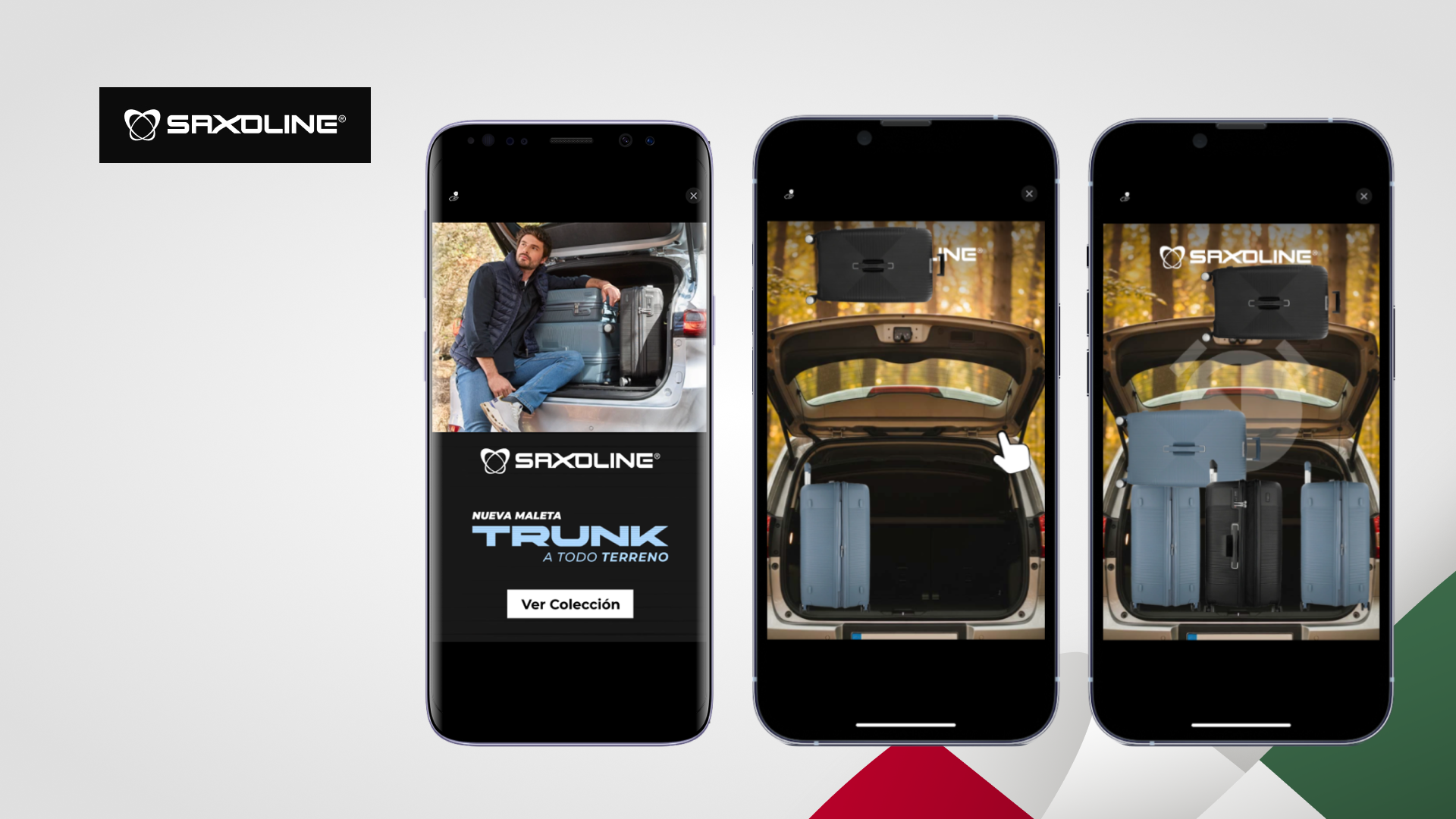
Video Interaction starts with a video and then shows an interactive banner. It combines emotional storytelling with active user engagement.
Split Screen displays video and interactive content at the same time. Users can watch the video and explore the brand’s offer without leaving the ad.
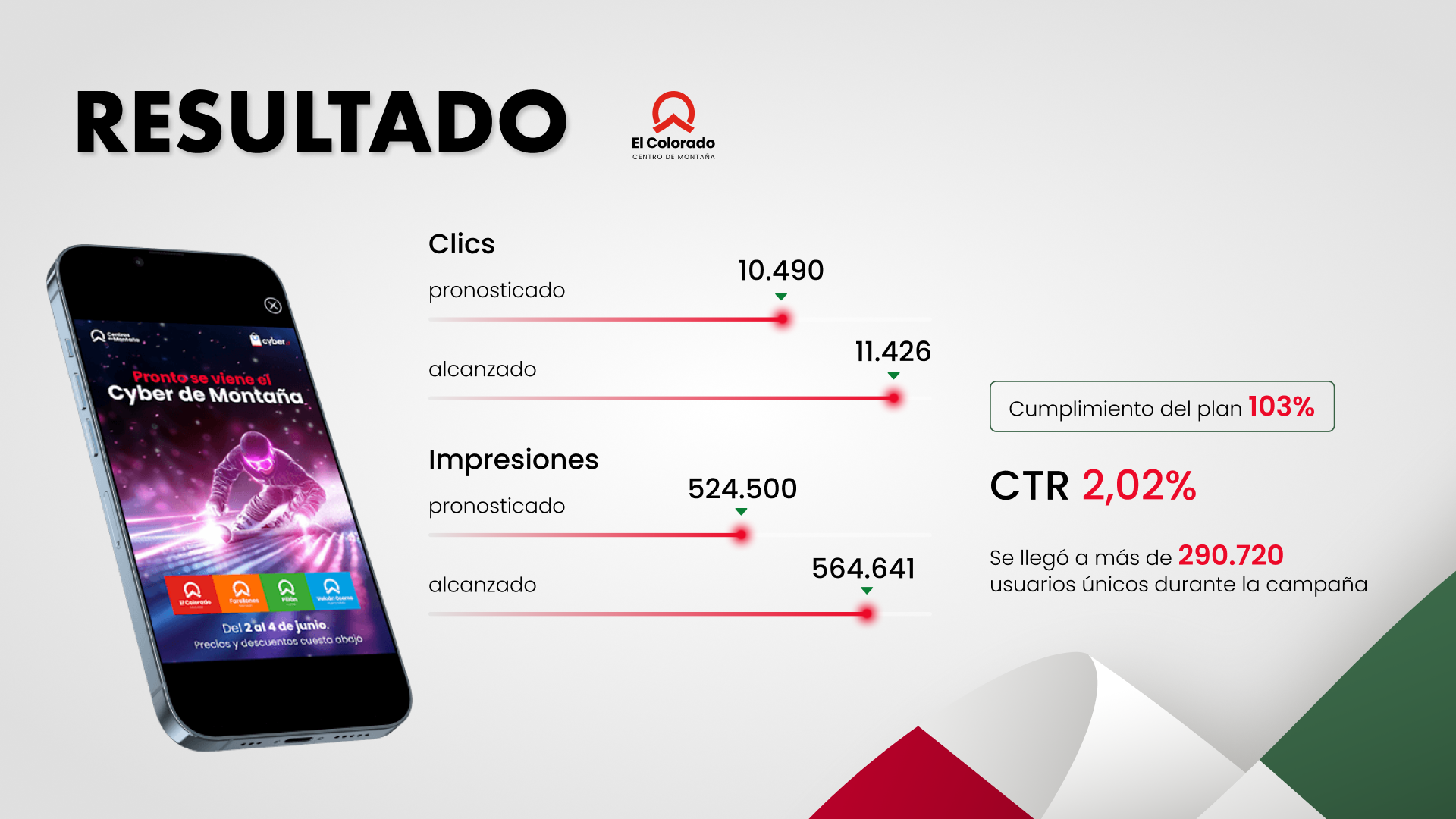
A good example is the mobile campaign for the El Colorado ski resort in Chile. The campaign promoted Cyber Day offers and drove users to a dedicated landing page. Two Rich Media creatives were used. Targeting focused on selected locations, skiing interests, travel, outdoor activities, and relevant app categories.
The campaign reached more than 290,720 unique users. It delivered 103% of the planned impressions and achieved a CTR of 2.02%.
For over 11 years, the BYYD team has been working with mobile advertising and creating banners designed for real user engagement. We help brands capture audience attention and achieve business objectives through proven mechanics.
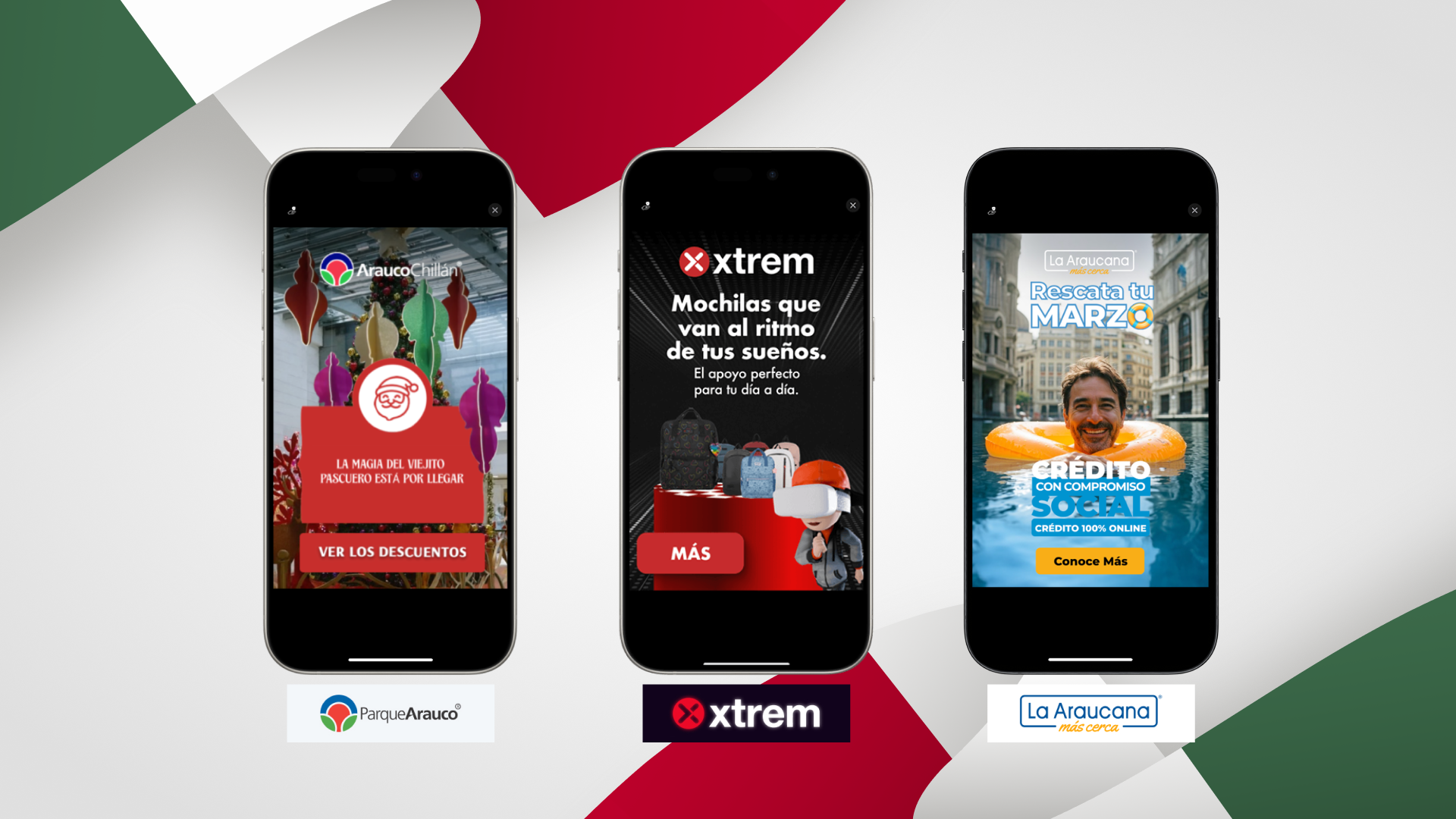
Check out our case studies and send us an email – let’s launch your next campaign together.
Found this helpful? Share it with your friends and colleagues!
For consultations and partnership inquiries:


