In modern digital advertising, a brand’s goal is not simply to achieve maximum reach but to build meaningful interactions with users. This is especially important in mobile advertising, where the same person can encounter a brand message several times a day across different apps and websites.
Too many ad impressions can create the opposite effect. Users may stop noticing ads, perceive them as intrusive, or lose interest in the message entirely. As a result, media costs increase, engagement decreases, and campaign performance declines.
According to Nielsen’s 2024 research, the optimal advertising frequency for improving brand awareness is between 5 and 9 contacts. Exceeding this range can reduce brand perception by 36%.
This is why frequency control has become a key element of successful digital campaigns. Programmatic technologies allow brands to manage the number of interactions with each user and distribute advertising contacts more efficiently.
Frequency control refers to managing how many times a specific user sees an advertising message within a defined period of time.
Repeated exposure can help increase brand awareness and strengthen message recall. Users do not always pay attention to an advertisement after the first interaction, so several contacts may be required to build interest and recognition.
However, excessive frequency can reduce campaign effectiveness. After a certain number of impressions, additional exposure provides limited value and may negatively affect brand perception.
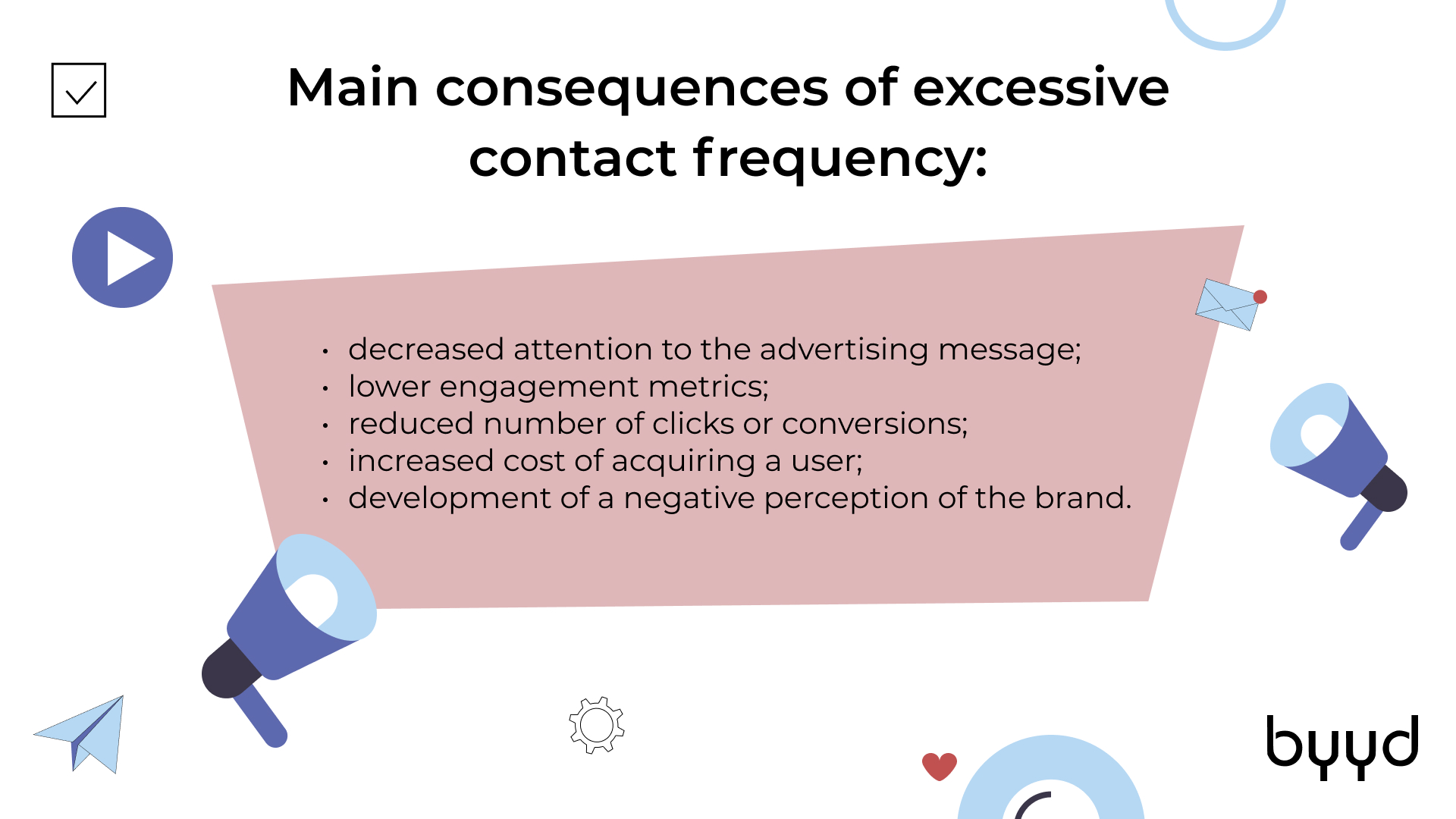
For long-term advertising campaigns, managing frequency becomes especially important. When communication continues for several weeks or months, a lack of frequency control can lead to repeatedly showing the same message to the same audience while reducing opportunities to reach new users.
According to Moloco’s Performance Through Independence report, more than half of mobile app advertising spending is concentrated on Google. Advertisers that expanded their media mix beyond major technology platforms achieved ROAS improvements of up to 214%.
This does not mean alternative channels are always more effective. However, it demonstrates that relying on a limited number of sources may increase the risk of repeated exposure to the same audiences instead of expanding incremental reach.
Audience fatigue is rarely visible through a single metric. It usually appears as a combination of signals: impressions continue to grow, while engagement with creatives and conversion rates decline.
This is especially relevant in mobile environments, where users interact with apps frequently throughout the day. If the creative remains unchanged and frequency limits are set too high, advertisers may end up paying for repeated contacts instead of increasing valuable reach.
Therefore, frequency should be evaluated together with campaign objectives and other performance indicators.
A frequency cap is not just a technical setting — it is an important part of media planning.
Before launching a campaign, marketers should define:
Effective frequency control requires:
For awareness campaigns, an excessive frequency limit can quickly reduce the share of new users reached.
For retargeting campaigns, repeated exposure may be valuable when users are already familiar with the brand and remain within a relevant communication window.
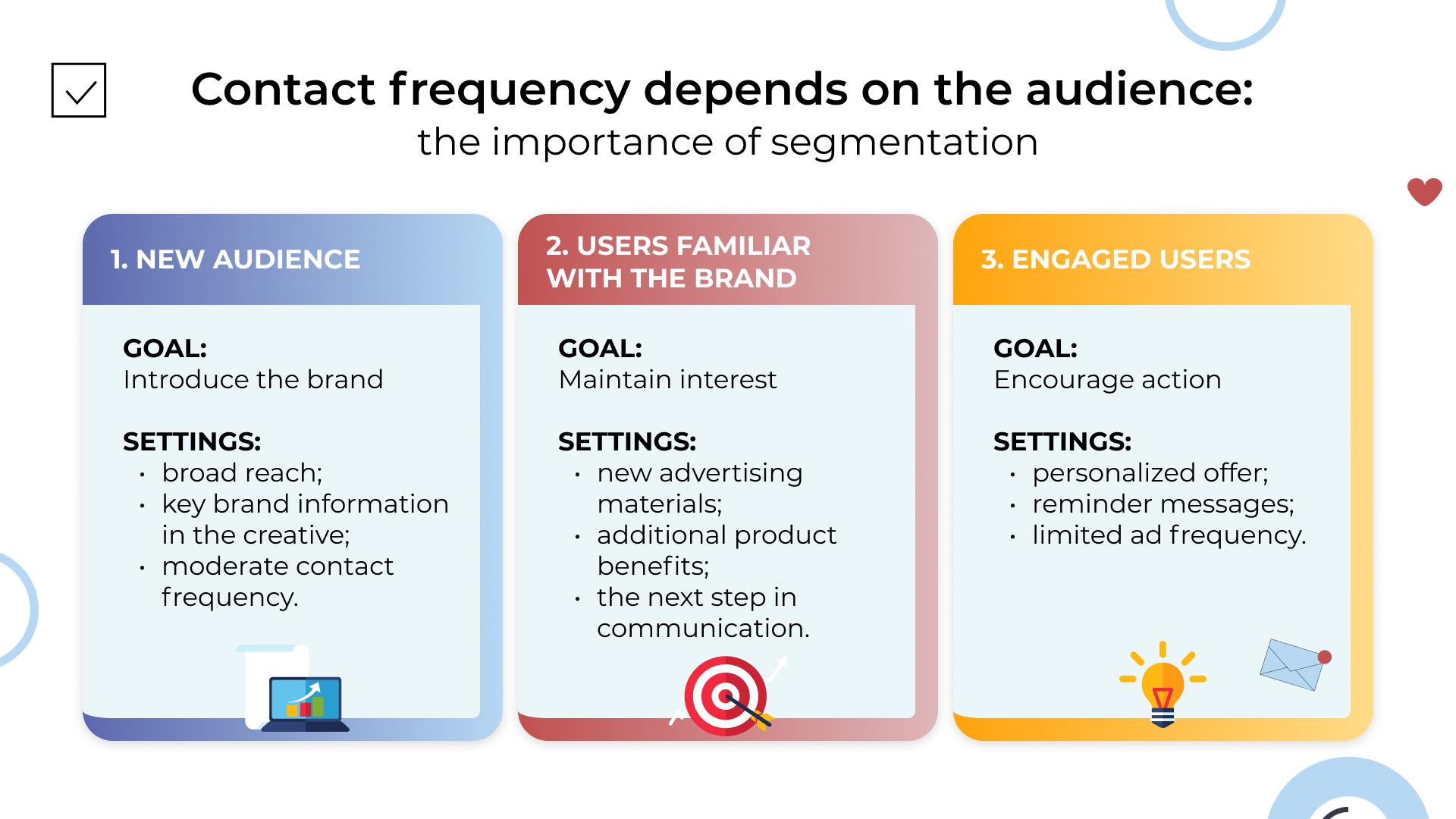
New users and engaged users should not receive the same message with the same frequency.
Each audience segment requires its own communication strategy.
For example, new users need relevant first interactions without excessive repetition, while users who have already engaged with a brand may need a different message that encourages the next step.
Programmatic advertising automates media buying and allows advertisers to make decisions at the level of individual user interactions.
The main tool of frequency control is frequency capping.
It allows brands to define how many times a specific user can see an advertisement during a selected period.
Examples:
This approach prevents situations where one user receives dozens of identical impressions while the advertising budget is concentrated on an already familiar audience.
At the same time, there is no universal frequency level that works for every campaign. The optimal approach depends on:
Effective frequency control works best when combined with accurate audience segmentation.
A user seeing a brand for the first time and a user who has already visited a website or interacted with a product are at different stages of decision-making.
Programmatic advertising allows brands to create different communication scenarios:
For users who have never interacted with the brand, the goal is to introduce the product and create interest.
Possible approaches:
For this audience, the goal is not repetition but message progression.
Examples:
If users have already shown interest, frequent generic advertising may become ineffective.
Instead, brands can use:
Segmentation helps not only reduce unnecessary impressions but also make every contact more valuable.
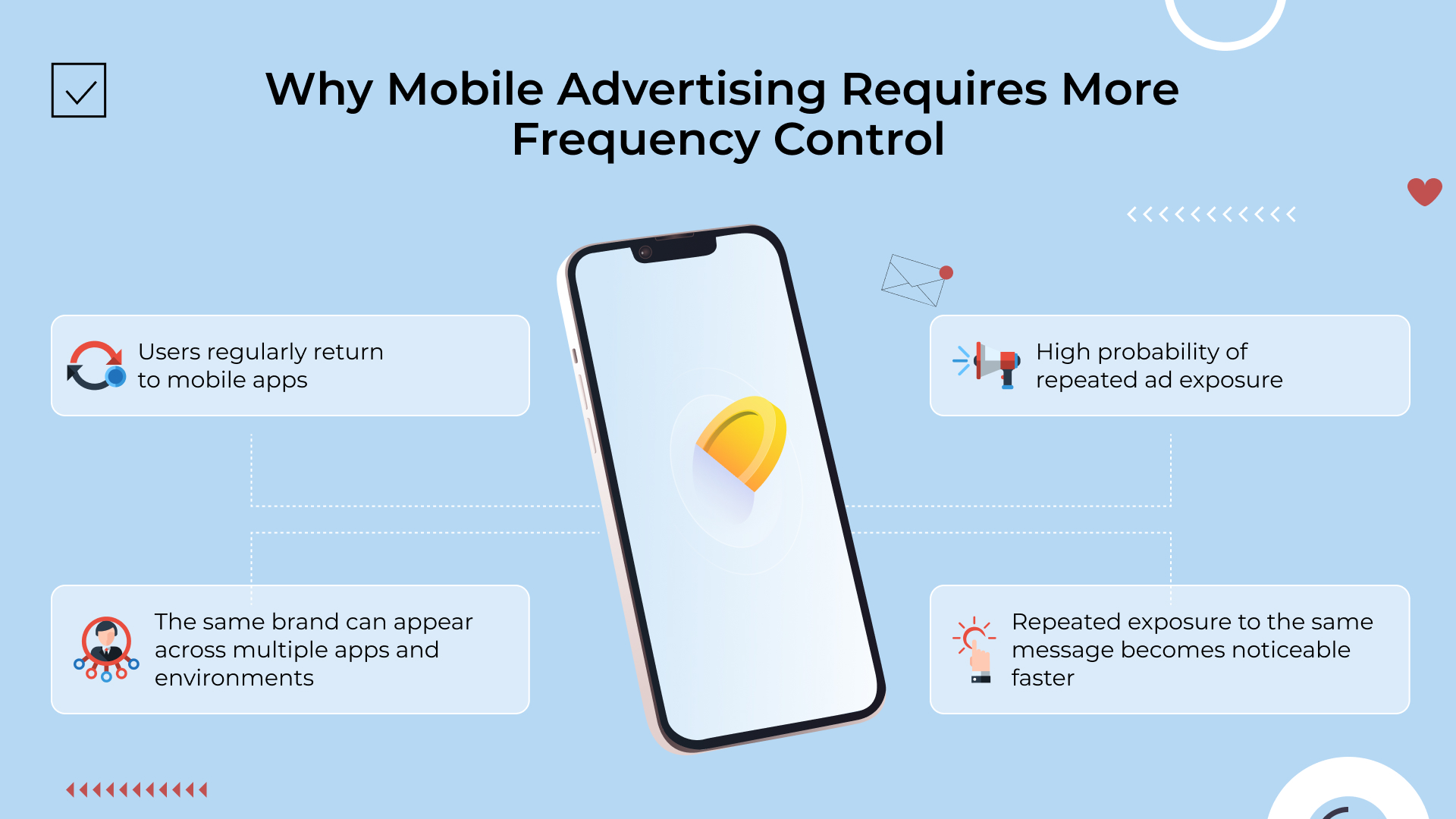
Users interact with many mobile apps every day: social networks, games, delivery services, news platforms and other digital products.
This creates several challenges:
A single user may encounter the same brand message across multiple apps within a short period.
On mobile screens, repetitive advertising messages can become noticeable and lose effectiveness more quickly.
Strong frequency control helps advertisers maintain a balance between visibility and user experience.
Long-term campaigns require attention not only to the number of impressions but also to the quality of each interaction.
Key approaches:
Before launching a campaign, define:
This helps prevent budget waste on repeated impressions among a limited audience.
Showing the same message repeatedly accelerates attention decline.
Different creative variations help maintain interest and adapt communication to different stages of the customer journey.
Brands should evaluate:
Campaign effectiveness should not be measured only by total traffic volume. Advertisers need to understand where the impression occurred, which app delivered it, which format was used, what frequency level was reached, and how this interaction influenced further user actions.
Without quality control of inventory and audiences, part of the budget may be spent on ineffective repeated contacts.
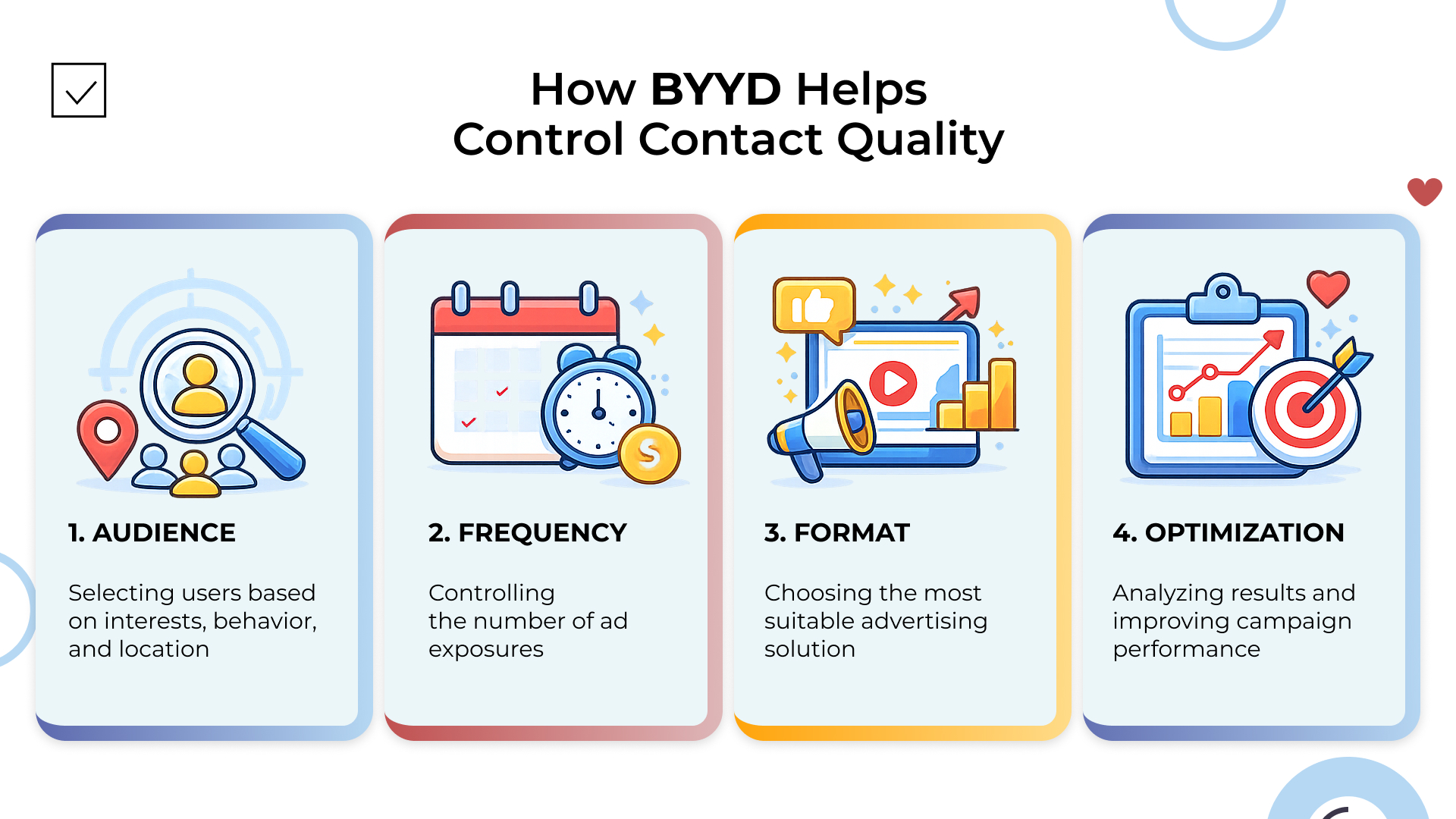
BYYD uses programmatic advertising technologies to help brands build more effective mobile communication strategies.
Within campaigns, advertisers can:
By combining data, automated media buying technologies, and mobile advertising expertise, brands can create more relevant and comfortable interactions with audiences.
The main goal of modern advertising is not to show a message as many times as possible, but to deliver the right message to the right audience at the right moment.
What is frequency control in advertising?
Frequency control is the process of managing how many times a user sees an advertising message within a specific period.
Why does high advertising frequency reduce campaign effectiveness?
After a certain number of contacts, users may stop paying attention to advertising, which can reduce engagement and increase campaign costs.
How can brands identify that frequency is too high?
Advertisers should analyze performance by audience segment and placement. If impressions increase while clicks, conversions, or installs decline, the frequency limit may need adjustment.
Should brands use the same frequency limit for all audiences?
No. Different audience groups are at different stages of interaction with a brand. New users, high-intent users, and existing customers require different approaches to frequency, creatives, and communication strategies.
Why is frequency control especially important in mobile advertising?
Users interact with smartphones and apps every day, increasing the likelihood of repeated exposure and advertising fatigue.
For over 11 years, the BYYD team has been working with mobile advertising and creating banners designed for real user engagement. We help brands capture audience attention and achieve business objectives through proven mechanics.
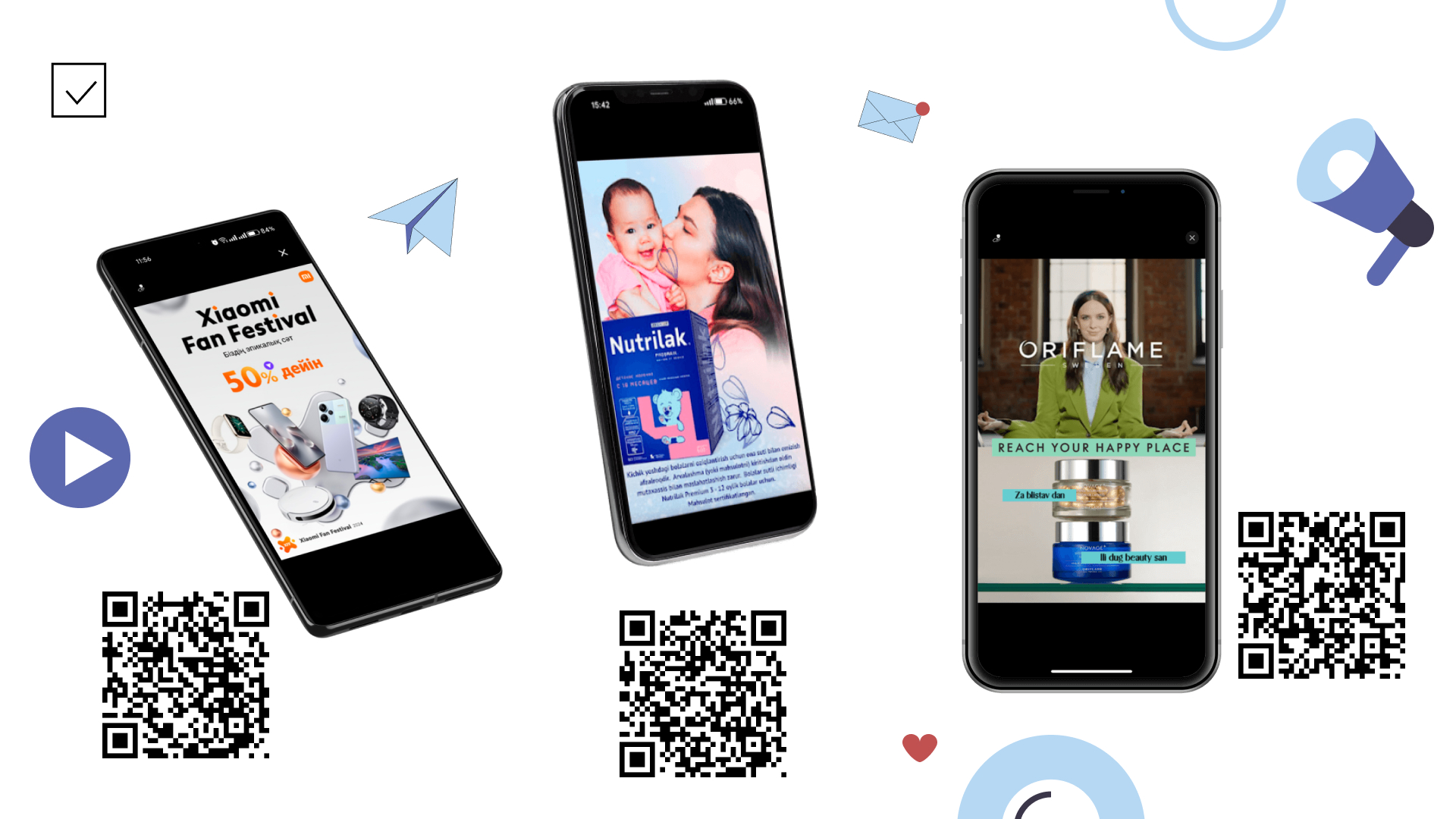
Check out our case studies and send us an email – let’s launch your next campaign together.
Found this helpful? Share it with your friends and colleagues!
For consultations and partnership inquiries:


