Digital Marketing in Mexico: How to Adapt Mobile and Programmatic Strategies to Local Audiences
Brands planning advertising campaigns in Mexico should look beyond reach and cost per click and pay close attention to traffic quality. Effective audience targeting and compelling ad creatives require a clear understanding of the local market, as regional and cultural nuances can significantly influence consumer behavior and marketing performance.
In this article, we explore how brands can localize their communication for Mexican consumers and examine the role of programmatic advertising in digital marketing in LATAM. The analysis draws on the 2024 Roland Berger report and the practical experience of BYYD, a mobile programmatic advertising platform.
Why a One-Size-Fits-All Global Strategy Does Not Work in LATAM
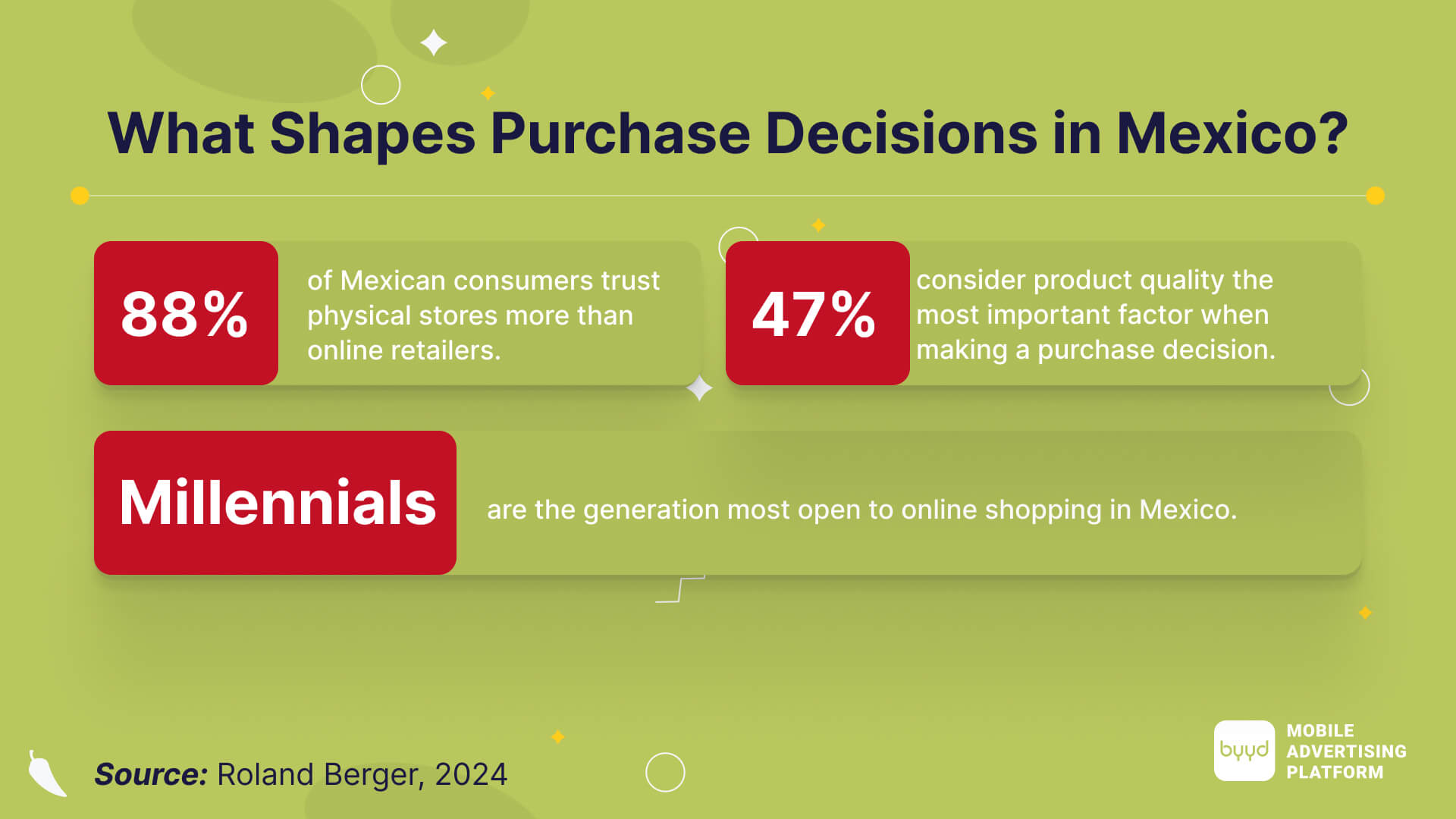
Mexico clearly demonstrates why brands cannot rely on a single global marketing template when entering LATAM. According to Roland Berger, Mexican consumers remain cautious about online shopping:
- 88% trust physical stores more than online retailers.
- 47% identify product quality as the main factor influencing their purchase decisions.
For marketers, this means that digital campaigns should not focus solely on driving online conversions or competing on price.
Communication should reinforce trust, product quality and credibility, while connecting digital touchpoints with physical retail.
Programmatic advertising makes it possible to adapt messages, formats and campaign objectives to different audience segments, product categories and stages of the customer journey—from building awareness and consideration to encouraging store visits or online purchases.
Online Shopping in Mexico Varies Strongly by Product Category
Although Mexican consumers still prefer physical stores overall, e-commerce adoption differs significantly by category.
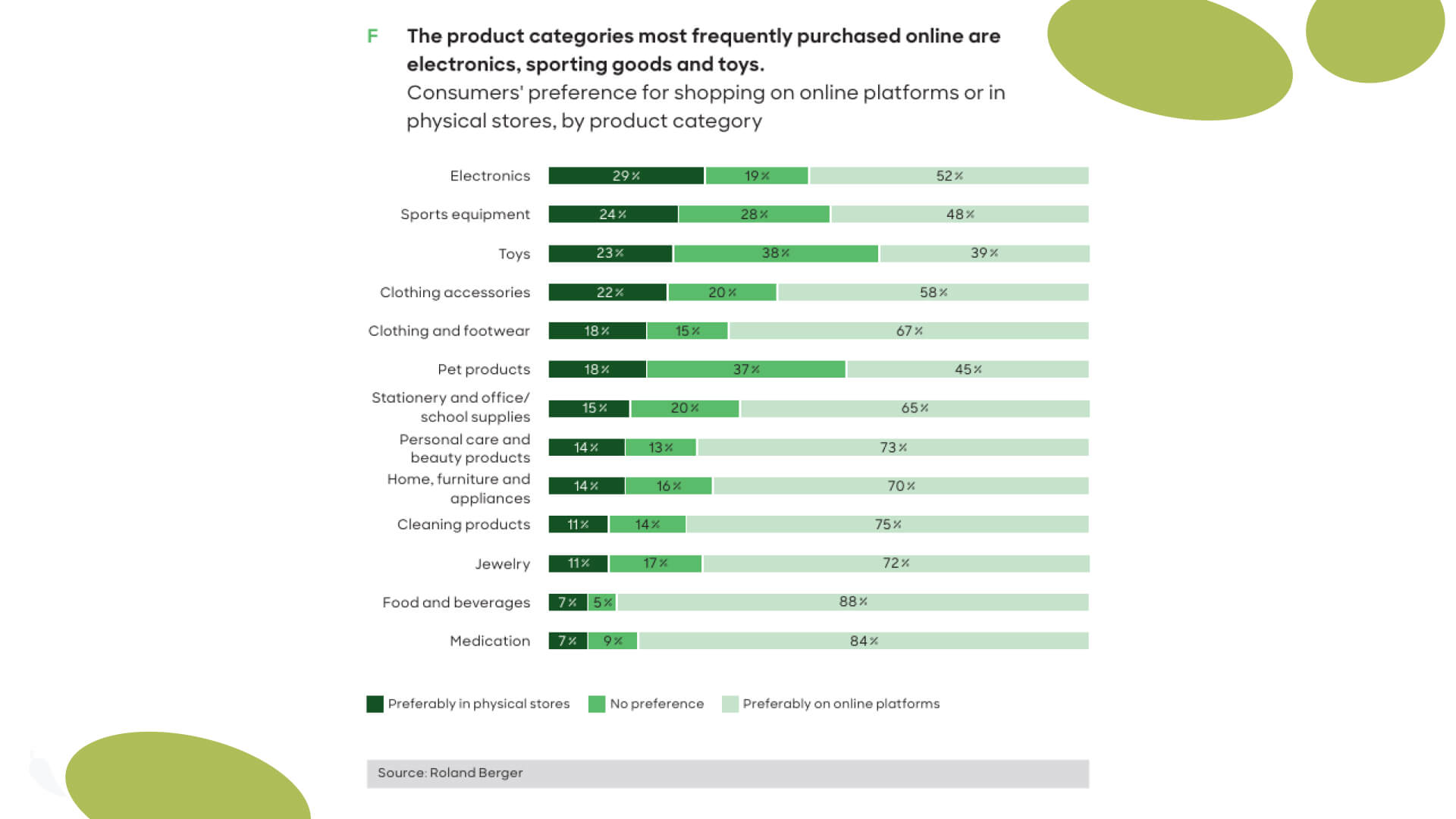
Electronics show the strongest online purchase preference at 29%, followed by sports equipment at 24% and toys at 23%.
Physical retail remains dominant for food and beverages (88%), medication (84%), cleaning products (75%), personal care and beauty products (73%), jewelry (72%), and home and household goods (70%).
Millennials are the generation most open to shopping online.
Media strategy should reflect the role of digital in each category. For electronics, sports goods and toys, programmatic campaigns can focus on conversion, dynamic product ads and retargeting.
In categories where purchases still happen mainly offline, digital advertising should support store visits and product consideration through geotargeting, local offers, store locators and proximity-based targeting.
Audience segmentation by generation, purchasing power and shopping behavior can help brands adapt both messaging and campaign objectives to different consumer groups.
Gaming Platforms Are Emerging as a Commerce Channel in Mexico
Purchases in the metaverse and on gaming platforms are still relatively uncommon in Mexico, but both environments are already building a consistent consumer base.
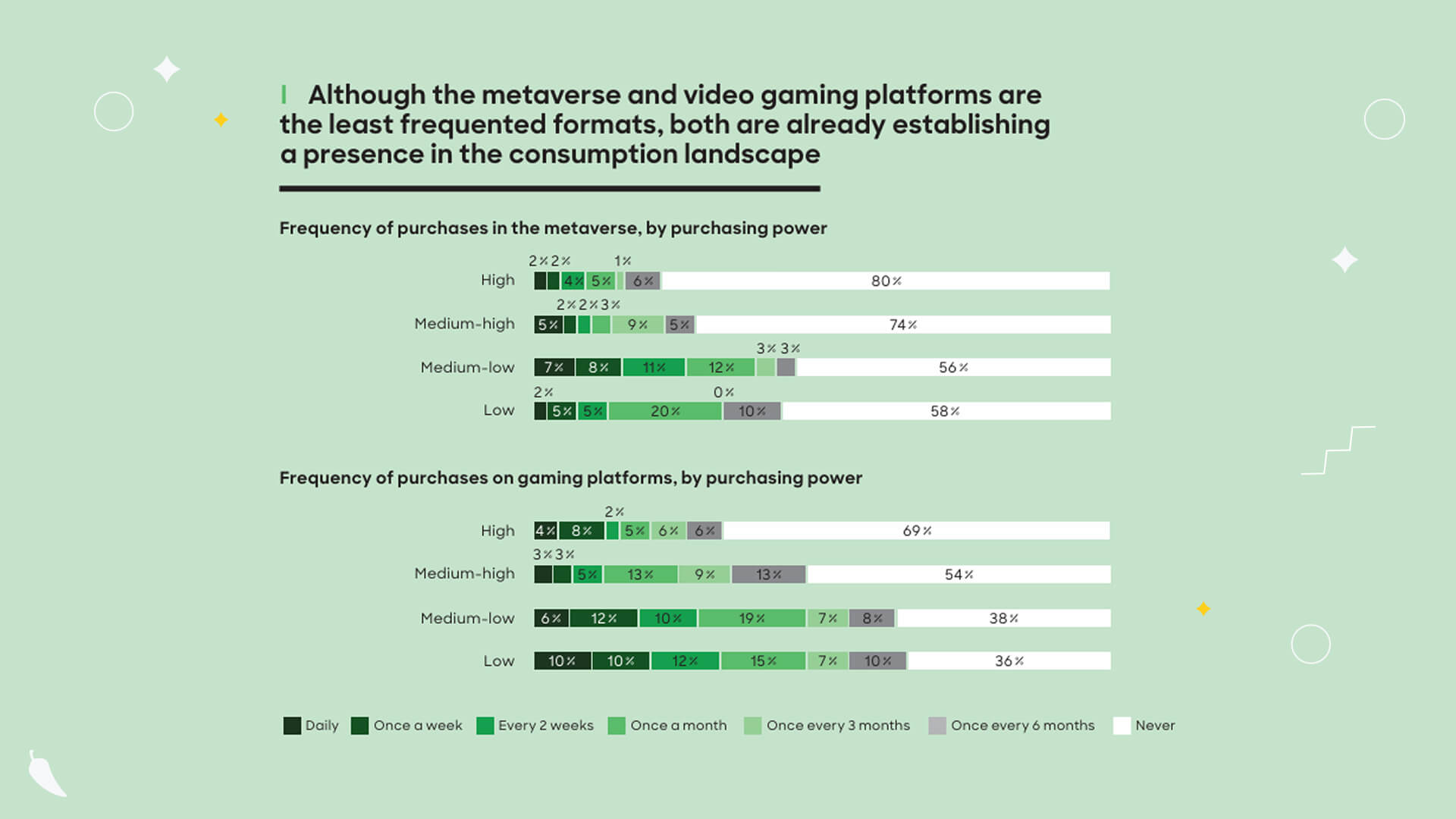
The highest levels of activity are found among consumers with low and medium purchasing power. In the metaverse, 80% of high-income consumers have never made a purchase, compared with 58% of low-income consumers and 56% of those in the lower-middle segment.
Lower-income segments are particularly active on gaming platforms, with higher shares making weekly or monthly purchases. This may be linked to the accessibility of small digital transactions, in-game items and micropayments.
Gaming apps and virtual environments can already serve as effective touchpoints for younger and more price-sensitive audiences. Programmatic campaigns can test gamified mechanics, rewarded ad formats, interactive creatives and personalized offers with a low entry barrier.
What Drives Platform Choice Among Mexican Consumers?
Consumers with higher purchasing power prioritize a fast and frictionless purchasing process, while this factor ranks much lower among low- and lower-middle-income groups. Lower-income consumers are more sensitive to additional costs, such as delivery fees and service charges.
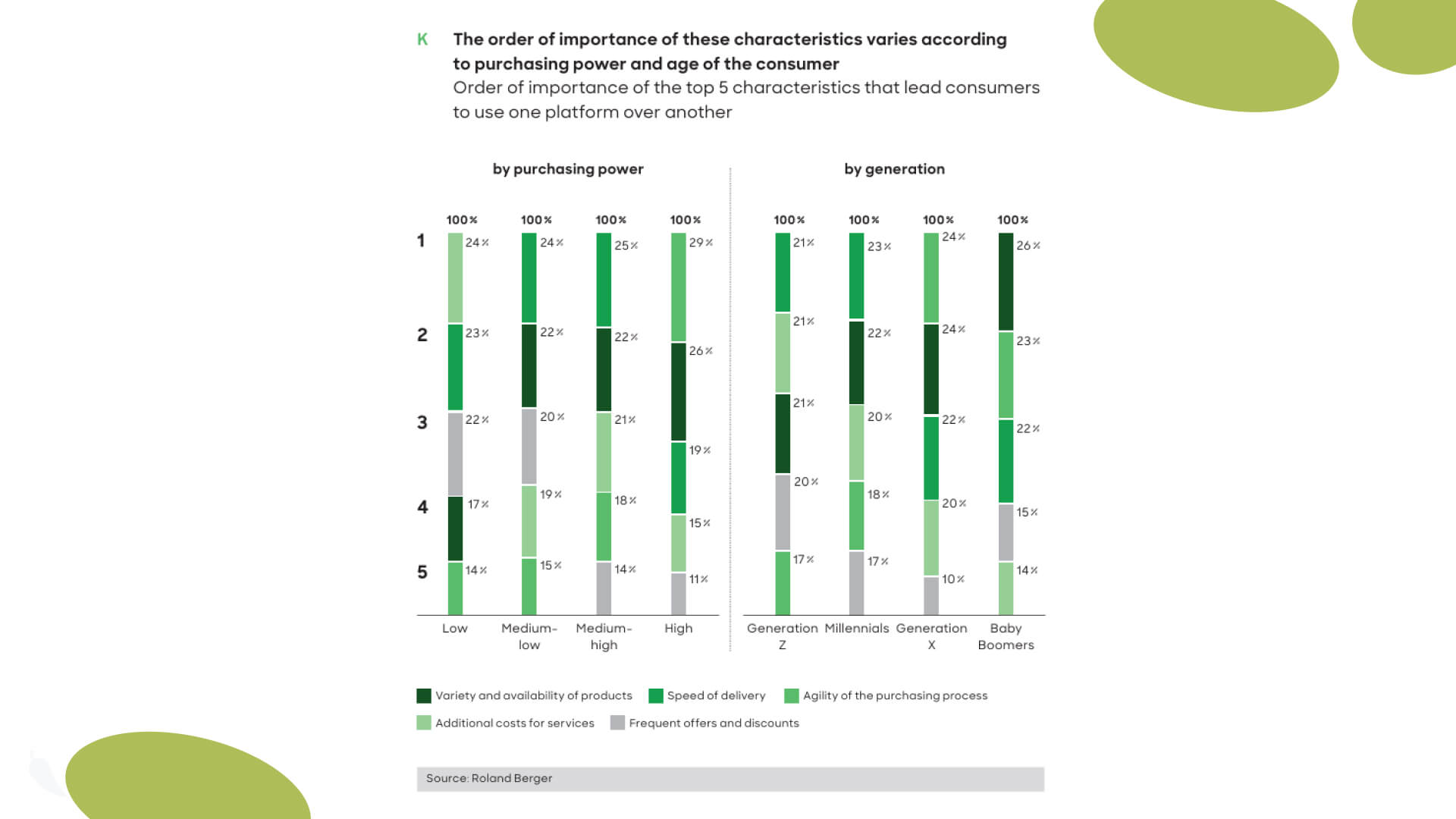
Generational differences are also clear. Generation Z places additional costs among its top priorities but gives less importance to purchasing convenience. Baby Boomers, by contrast, are less concerned about extra charges and place greater value on a simple and efficient purchasing process.
Digital campaigns in Mexico should adapt both messaging and user experience to each segment:
- For lower-income audiences and Generation Z, emphasize transparent pricing, free or affordable delivery, discounts and the absence of hidden fees.
- For higher-income and older consumers, focus on convenience, fast checkout, easy payment, product availability and a seamless purchase journey.
- Use programmatic targeting to tailor creatives, offers and landing pages by age, purchasing power, location and previous shopping behavior.
Water Conservation Leads Sustainability Priorities in Mexico
Water conservation is by far the most important environmental practice for Mexican consumers, cited by 72% of respondents as the most effective way to reduce environmental impact.
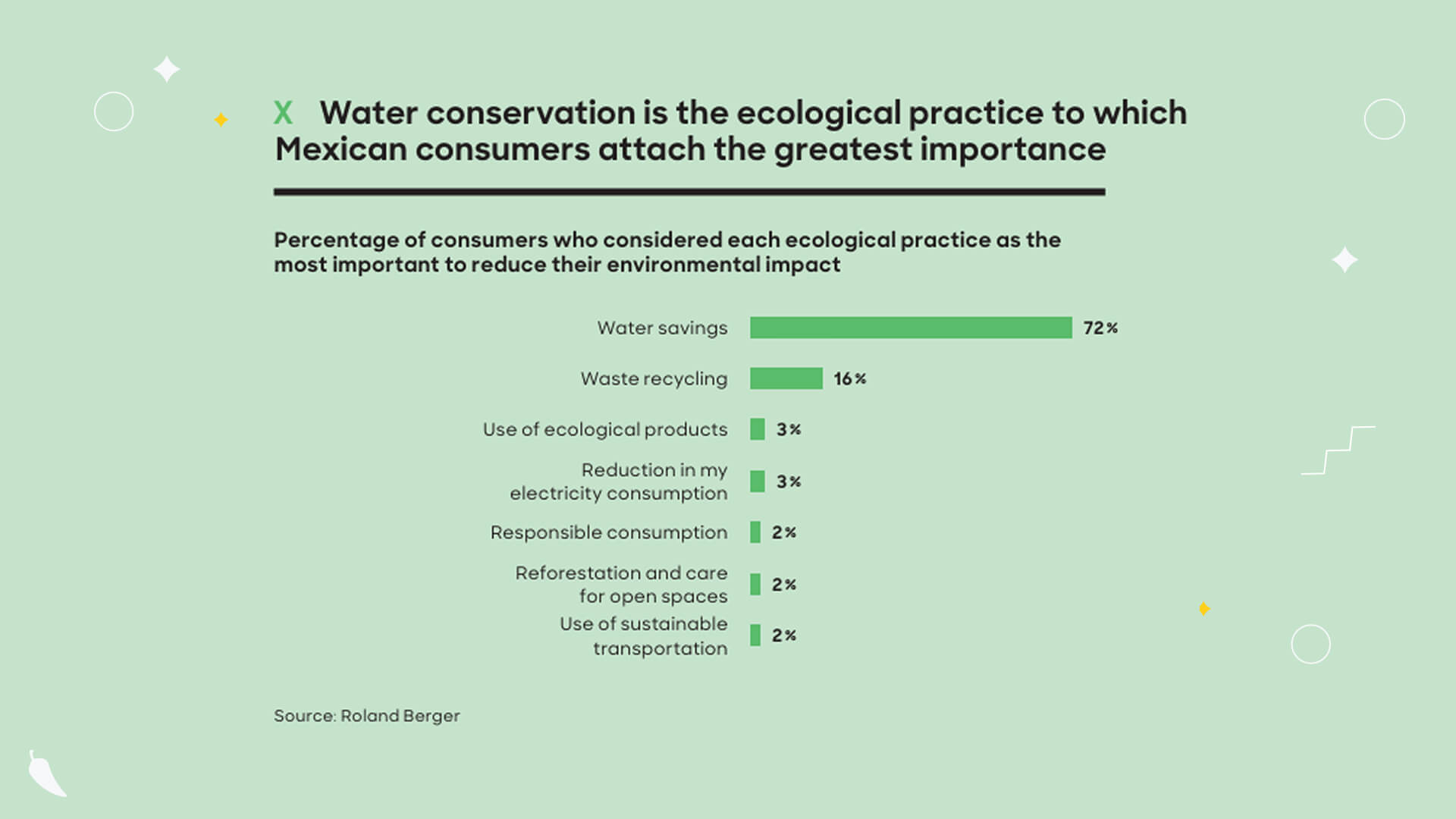
Waste recycling ranks a distant second at 16%, while the use of eco-friendly products and reduced electricity consumption each account for only 3%.
For marketers, this suggests that sustainability communication in Mexico should focus on specific, measurable water-saving benefits rather than broad environmental claims. Brands can strengthen credibility by highlighting water-efficient technologies, reductions in water use and tangible results supported by clear evidence.
Women Are More Influenced by Sustainability When Shopping in Mexico
Sustainability plays a stronger role in purchase decisions among Mexican women than among men. Overall, 59% of women consider sustainability either very or extremely important, compared with 47% of men. The difference is particularly visible at the highest level of concern: 29% of women describe sustainability as extremely important, versus 19% of men.
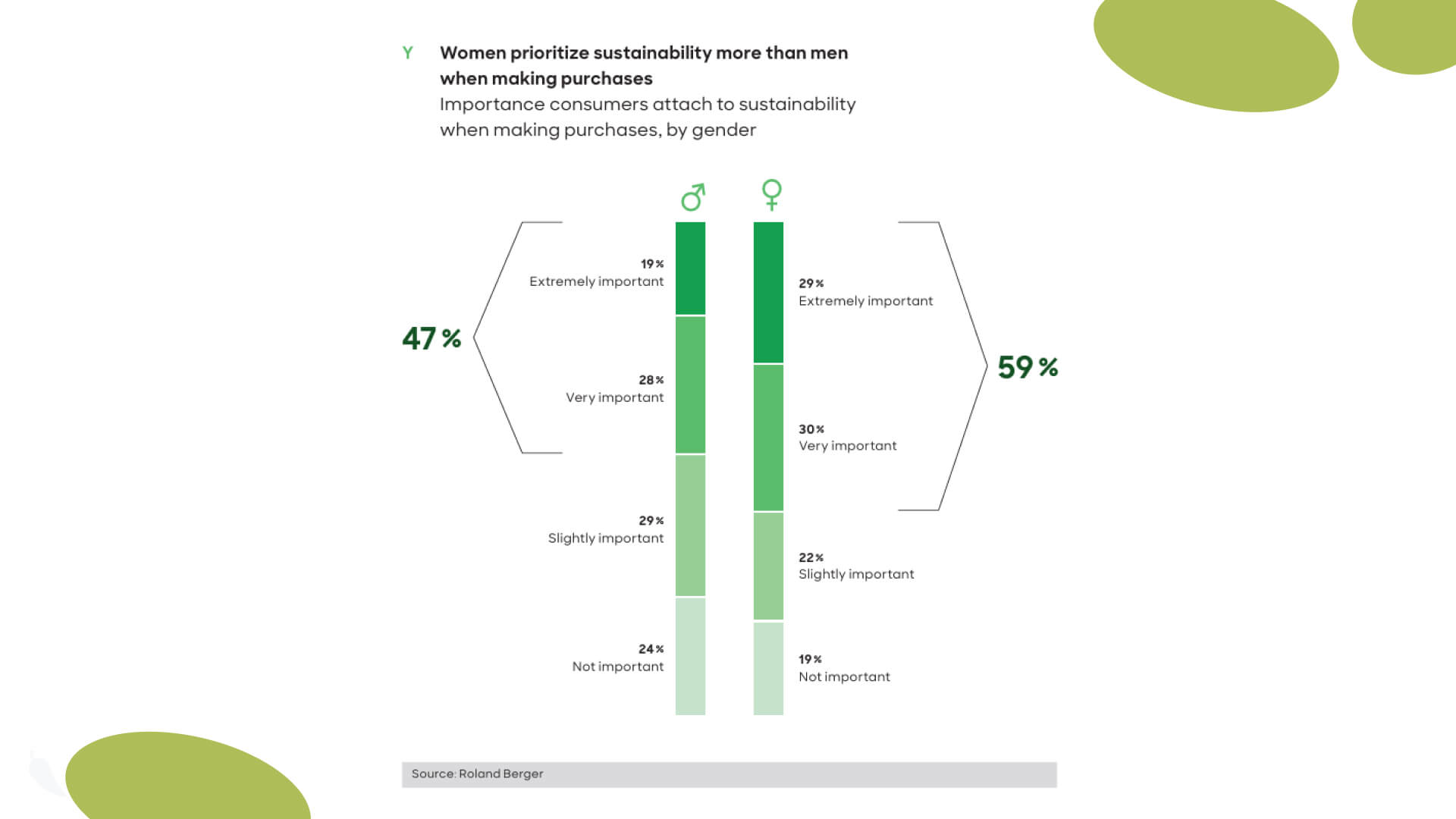
Interest also varies by product category. Women place the greatest emphasis on sustainability when purchasing cleaning products, while it is less influential in jewelry. The widest gender gap appears in clothing accessories, where women are 18 percentage points more likely than men to consider sustainability important. Pet products are the only category in which men slightly exceed women, by 2 percentage points.
Brands targeting women in Mexico should incorporate specific and credible sustainability benefits into product positioning and digital communication, particularly in cleaning products and fashion accessories. Campaigns should highlight measurable attributes such as recyclable packaging, responsible sourcing and reduced use of water or materials rather than relying on broad environmental claims.
How Mexican Culture Shapes Marketing
Marketing in Mexico requires more than translating a global campaign into Spanish. Brands need to use Mexican Spanish, local references and culturally relevant storytelling to make communication feel authentic. Campaigns linked to major events such as the Day of the Dead or Mexican Independence Day can generate strong engagement, while themes of family, friendship and community often create a deeper emotional connection.
At the same time, Mexico’s regional diversity means that one message will not work equally well across the country. Creatives, offers and media strategies should be adapted by location, income level and consumer behavior.
A mobile-first approach is essential, with digital and programmatic advertising helping brands deliver localized messages at scale. However, cultural sensitivity remains critical: brands should avoid stereotypes, support social and environmental claims with evidence, and combine digital channels with traditional media where relevant.
How AI Supports Mobile Marketing Performance
AI is already being used across mobile marketing to support creative development and campaign optimization. For brands, its main advantage is speed: it enables teams to test more hypotheses, produce more variations and identify effective combinations faster.
AI can support:
- headline and call-to-action variations;
- message adaptation for different audience segments;
- rapid exploration of visual concepts;
- production of creative variations for A/B testing;
- campaign optimization based on performance data.
However, strategic decisions should remain with the marketing team. This includes choosing which audiences to test, distinguishing genuine local relevance from random performance fluctuations, defining priority KPIs, and deciding when to scale a successful combination of audience, creative and inventory.
Digital Marketing in Mexico: key points
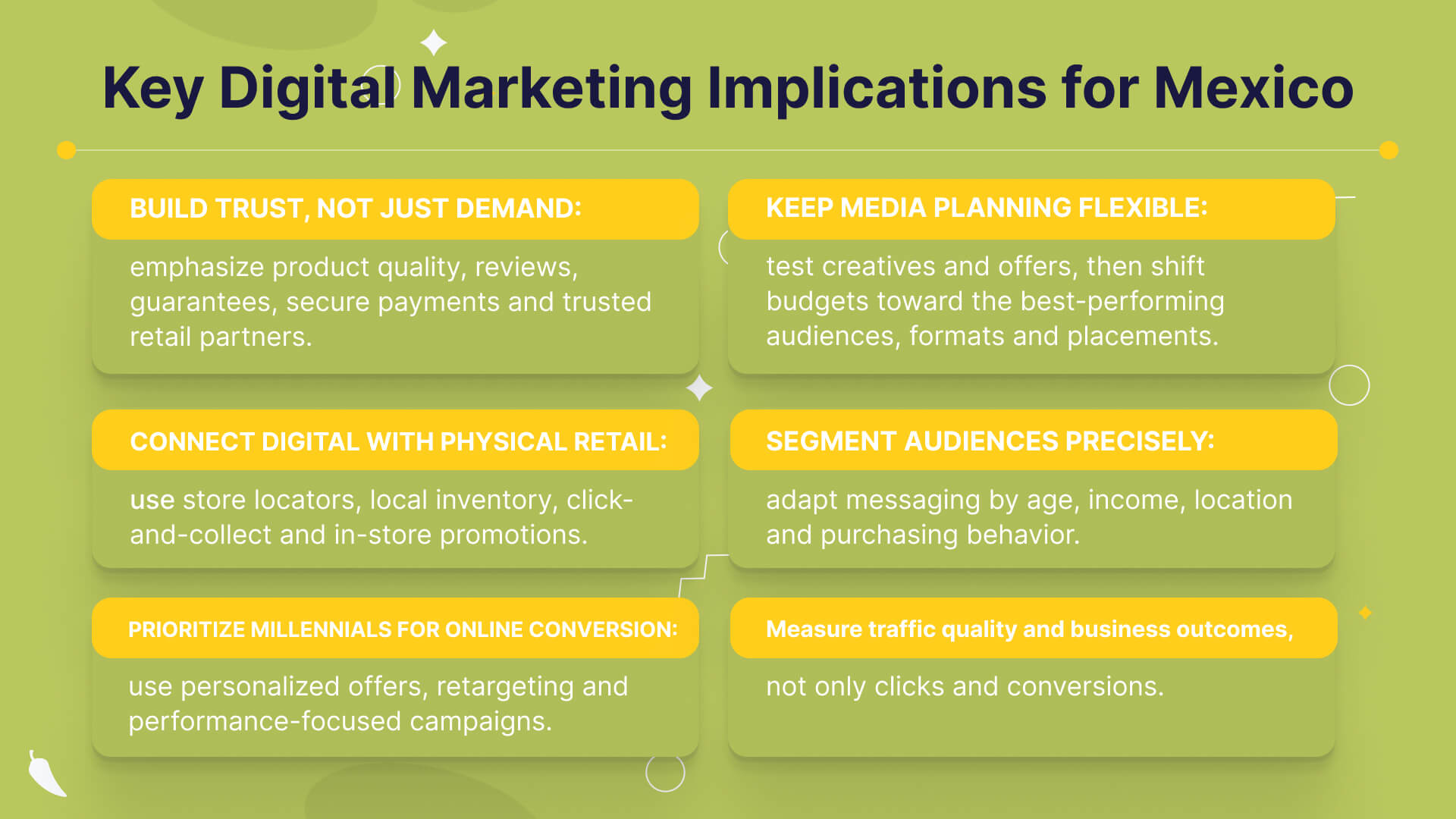
Digital campaigns should prioritize trust and product quality rather than relying only on price promotions. Use clear product information, reviews, guarantees, secure payment messages and recognizable retail partners.
Millennials should be a priority audience for conversion-focused online campaigns, while broader segments may respond better to omnichannel mechanics that connect digital advertising with physical stores.
The continued preference for physical stores means that digital campaigns in Mexico should support the entire purchase journey rather than focus exclusively on online conversions. Brands should use omnichannel strategies that connect mobile advertising, e-commerce platforms and physical retail through store locators, local inventory information, click-and-collect options and promotions redeemable in stores.
Audience segmentation is also essential. Millennials are more open to online shopping and can be targeted with conversion-focused campaigns, personalized offers and retargeting. Messaging, formats and offers should be adjusted by age, income level, location and purchasing behavior rather than using one campaign for the entire market.
Since Mexican consumers are becoming more experienced and demanding online shoppers, advertising should communicate more than price. Creatives and landing pages should clearly highlight product availability, delivery speed, product range, payment security, returns and customer support. Campaign optimization should therefore consider not only clicks and conversions, but also traffic quality.
Programmatic and In-App Advertising: How to Strengthen Digital Marketing in Mexico
In-app advertising refers to paid ads displayed within mobile applications. The programmatic ecosystem involves advertisers, ad exchanges, DSPs, publishers and SSPs. For marketers, however, the value of this model lies not in the terminology but in the level of control it provides over media buying: teams can define audience segments, select inventory, manage frequency and connect ad exposure with campaign outcomes.
In-app advertising also differs from mobile web in terms of engagement. According to AppsFlyer, in-app ads generate more than twice the CTR of mobile web ads: 0.54% versus 0.23%. This does not make in-app advertising a universal solution for every objective, but it helps explain why mobile apps remain an important channel for both performance and brand campaigns.
In this context, in-app advertising can help brands:
- extend reach beyond a single channel;
- test audience segments within the mobile environment;
- connect creatives, audiences and post-install metrics within one measurement framework.
A programmatic approach is particularly relevant when a brand needs scalable and controllable mobile reach, audience testing and access to in-app inventory. BYYD helps marketing teams move beyond reliance on a single channel, test different audiences and creative concepts, and evaluate campaign performance against predefined KPIs.
FAQ
- Why should brands localize digital campaigns for the Mexican market?
Consumer priorities vary by region, generation, income level and product category. Localized messaging, offers and creatives help brands improve relevance, trust and campaign performance.
- How can programmatic and in-app advertising support marketing in Mexico?
They allow brands to reach specific mobile audiences, control frequency, test different creatives and segments, and optimize media buying based on predefined campaign results.
- How can I contact the BYYD mobile programmatic platform?
If you are planning a mobile campaign in Mexico or considering programmatic and in-app advertising as an additional channel, contact BYYD.
For over 11 years, the BYYD team has been working with mobile advertising and creating banners designed for real user engagement. We help brands capture audience attention and achieve business objectives through proven mechanics.
Check out our case studies and send us an email – let’s launch your next campaign together.
Found this helpful? Share it with your friends and colleagues!
For consultations and partnership inquiries:
- Submit a request on our website
- Email us at hello@byyd.me