Japan remains one of the world’s most dynamic and promising mobile app markets, with significant growth potential across multiple industries. As user behavior continues to evolve, brands and developers need a deeper understanding of market trends, audience preferences, and category-specific dynamics.
In our new article, we analyze the key mobile app trends in Japan for 2026 according to Adjust’s latest report.
The research highlights important market benchmarks, user behavior patterns, and opportunities for businesses looking to strengthen their mobile strategies.
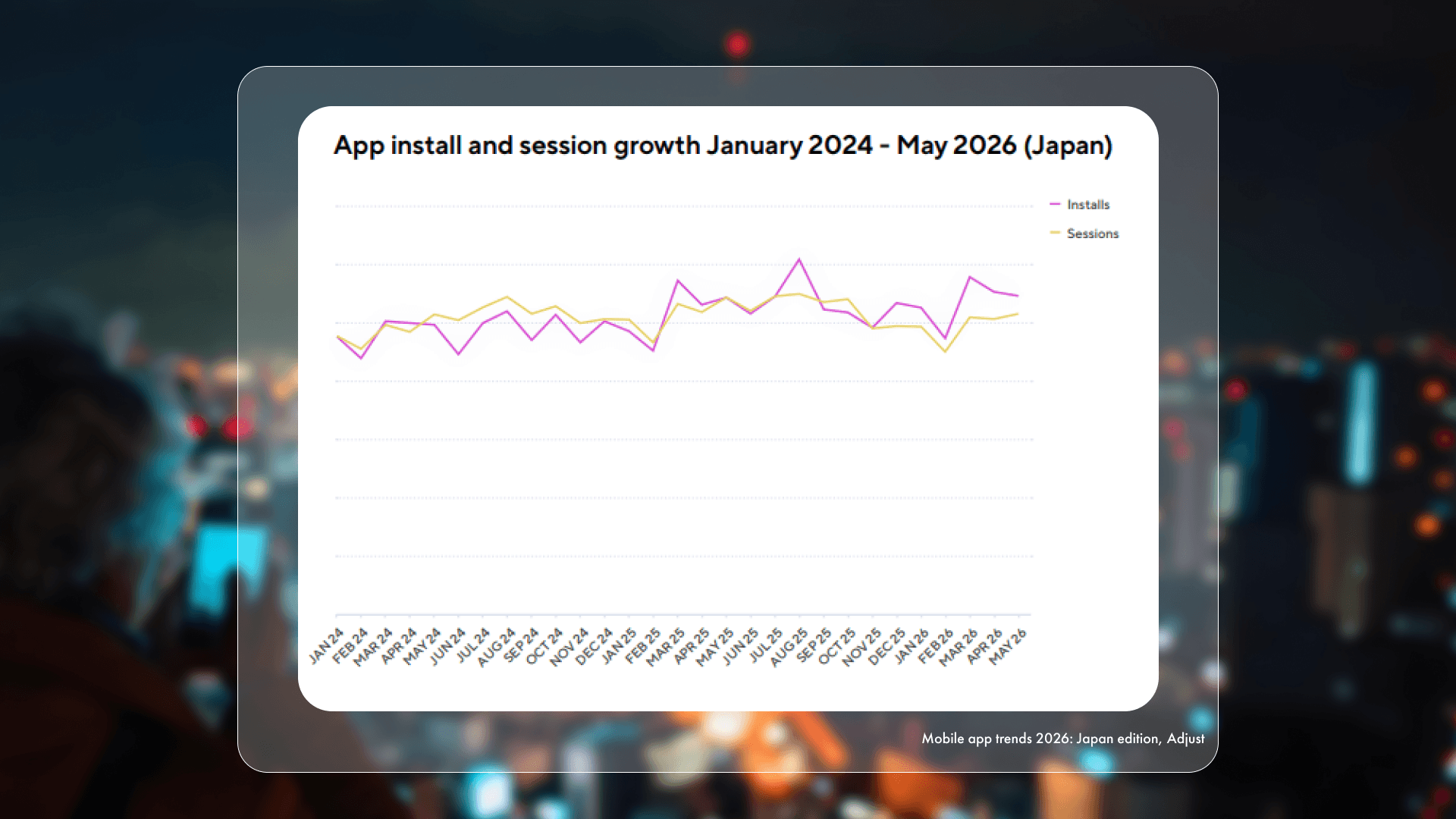
Japan’s mobile app market continues to demonstrate strong growth and remains one of the most advanced app ecosystems globally. With smartphone penetration reaching around 85%, a strong iOS presence, and high user engagement, Japanese consumers actively use both local and international apps. In 2025, users downloaded 2.65 billion apps and spent more than 114 billion hours in mobile applications.
2026 is becoming another successful year for the market: app installs increased by 4% year-over-year in the first half of the year, while sessions also continued to grow. This positive momentum highlights the ongoing potential of Japan’s mobile ecosystem for brands and marketers.
For marketers, these trends create new opportunities to reach highly engaged audiences through mobile channels. Understanding user behavior, category growth, and app engagement patterns allows brands to develop more effective acquisition strategies, personalize communication, and maximize campaign performance.
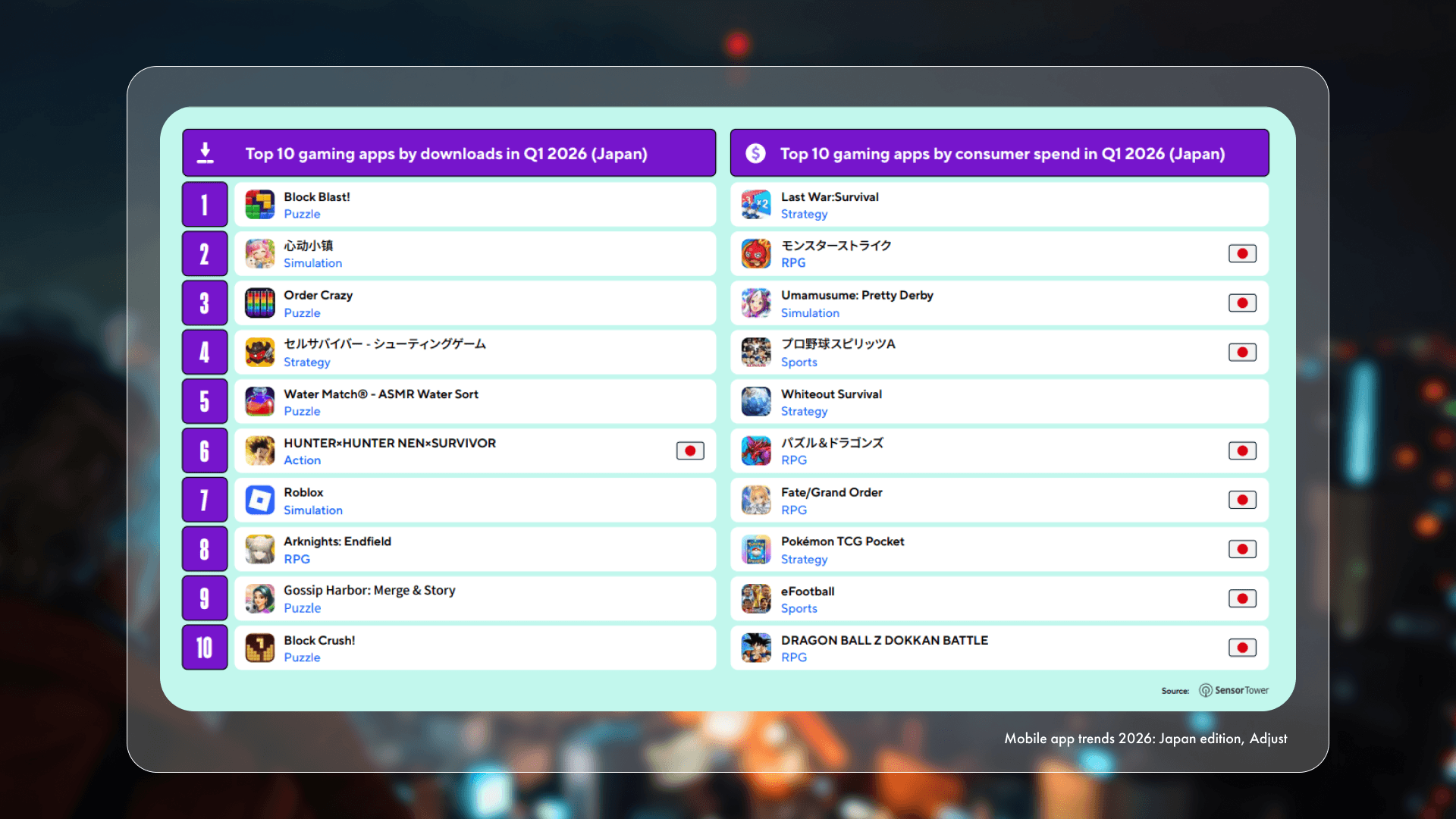
Mobile gaming continues to be one of the strongest categories in Japan’s app market, with user engagement growing across multiple genres. In H1 2026, card games demonstrated the strongest performance, with installs increasing by 18% year-over-year and sessions growing by 113%.
Other gaming categories also showed positive engagement trends: hyper casual, hybrid casual, and simulation games recorded significant session growth despite more moderate install dynamics.
Puzzle games maintained steady growth, while slots continued to attract users with increases in both installs and sessions.
These trends highlight that user engagement is becoming a key growth driver in Japan’s gaming market. For marketers, understanding category-specific behavior helps identify high-potential audiences and build more effective mobile acquisition and retention strategies.
Also, iOS accounted for 66% of gaming sessions in Japan during H1 2026, despite an equal install share with Android.
The largest gap appeared in sports games, where iOS generated 80% of sessions with 64% of installs. Strategy and action games showed a similar pattern, reaching 69% and 67% of sessions on iOS.
Hybrid casual games also continued to grow, with session duration increasing by 10% to 29.28 minutes. Strategy and hyper casual categories grew by 8% and 5%, reaching 27.09 and 27.44 minutes respectively.
Puzzle and casino games also demonstrated positive dynamics, with session duration increasing by 3% and 4% to 24.44 and 26.82 minutes.
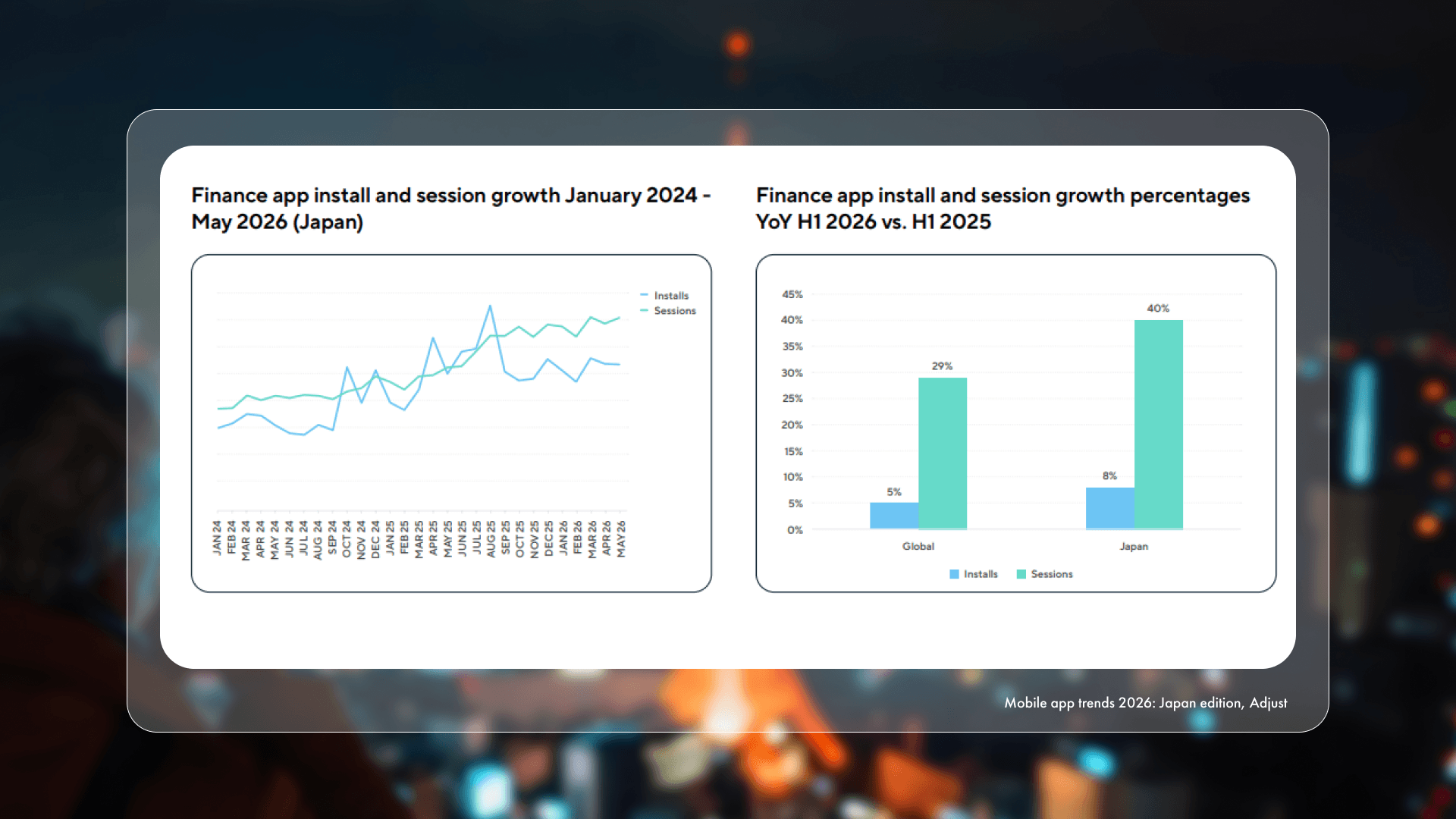
Japan’s mobile finance ecosystem continues to expand, with finance apps becoming an essential part of users’ daily routines. In 2025, finance app installs increased by 51% year-over-year, while sessions grew by 37%.
In H1 2026, the category maintained strong momentum, with finance app sessions growing by 40%, significantly exceeding global growth rates. The faster increase in sessions compared to installs highlights deeper user engagement and the growing adoption of mobile payments and digital financial services.
The strongest growth came from stock trading apps, where installs increased by 90% year-over-year. This trend is supported by changes in Japan’s investment landscape and growing interest among younger users in personal finance and investment tools.
Payment apps remain the largest segment, generating 86% of installs and 91% of sessions in H1 2026. Banking and investment apps also continue to attract users by offering convenient mobile-first financial solutions.
For marketers, the growth of finance apps creates new opportunities to reach highly engaged audiences through mobile channels. Users are spending more time inside financial applications, creating valuable touchpoints for brands looking to promote financial services, fintech products, and related solutions.
Understanding user behavior, app category dynamics, and engagement patterns allows advertisers to build more precise mobile campaigns, personalize communication, and connect with audiences at relevant moments in their digital journey.
Japan’s short drama market continues to grow rapidly as users increasingly turn to mobile platforms for short-form entertainment. Local and international streaming services are expanding their presence, adapting content specifically for mobile audiences.
Leading platforms such as DramaBox, ShortMax, and ReelShort currently dominate the market, capturing around 90% of the segment. At the same time, major streaming and media companies are investing in dedicated short drama services to attract new audiences.
The rise of short-form drama highlights a broader shift in mobile content consumption: users prefer quick, engaging, and easily accessible entertainment formats.
For marketers, this trend creates new opportunities to reach highly engaged mobile audiences through in-app advertising. Short drama platforms provide valuable touchpoints where brands can integrate personalized messages, video formats, and interactive creatives to capture users’ attention in an entertainment-driven environment.
Understanding emerging content habits allows advertisers to adapt their mobile strategies and connect with audiences through the formats they actively consume.
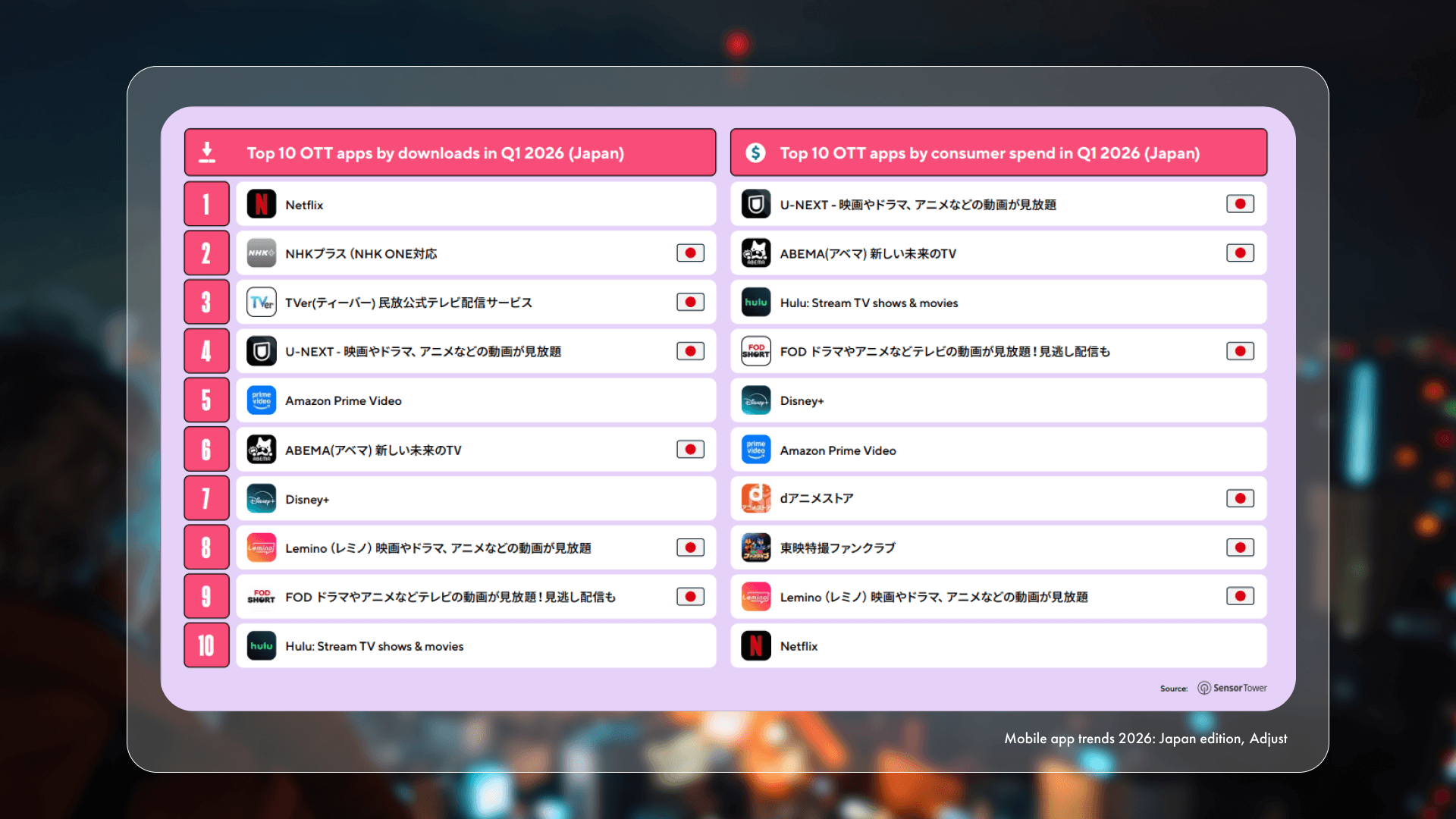
Japan’s OTT streaming market continues to expand, becoming one of the fastest-growing segments in the country’s mobile ecosystem. In 2025, video-on-demand revenue reached $7.2 billion, while streaming app downloads increased by 33.6% year-over-year. The number of active streaming users also grew significantly. It highlights rising demand for digital entertainment.
Japanese audiences show a strong preference for local content, with domestic titles accounting for the majority of streaming consumption. This creates opportunities for both local and global platforms to invest in original content, exclusive releases, and new digital entertainment formats.
The rapid growth of OTT services reflects a broader shift in consumer behavior toward mobile-first content consumption. Users increasingly engage with entertainment through smartphones, creating new opportunities for advertisers to connect with audiences in highly engaging environments.
For marketers, streaming platforms provide valuable touchpoints for brand communication through video advertising, interactive formats, and personalized campaigns.
With programmatic advertising, brands can reach audiences directly within popular streaming and entertainment apps, delivering relevant messages through engaging mobile formats. This allows advertisers to connect with users at the right moment, when they are actively consuming digital content.
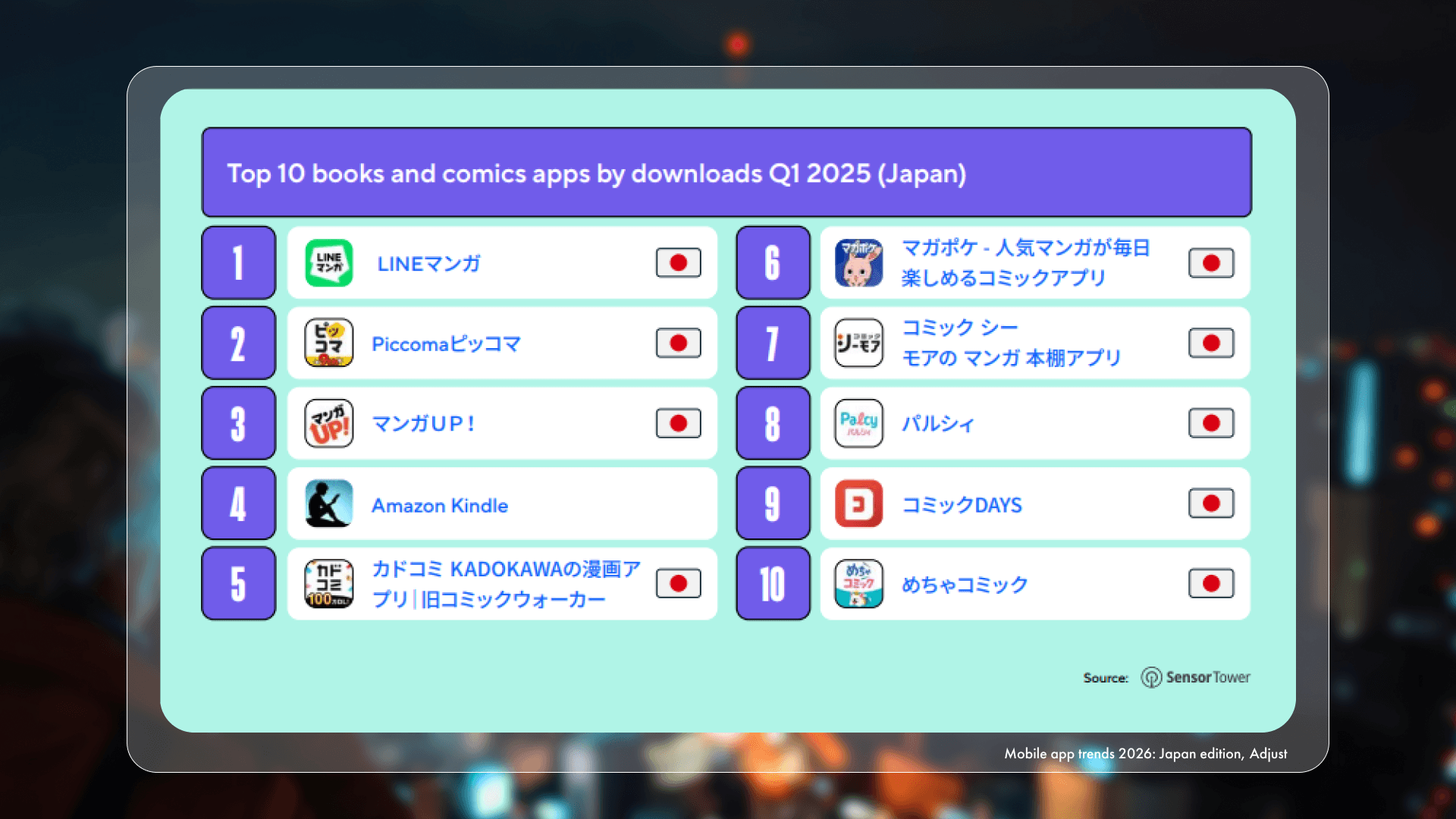
Digital comics platforms continue to attract highly engaged audiences, with apps such as LINE Manga strengthening their positions in the market.
The category is expanding beyond traditional reading experiences, connecting with other entertainment formats such as anime, gaming, and short-form drama. This creates new opportunities for publishers and platforms to build broader digital ecosystems around popular content franchises.
In H1 2026, comic app usage in Japan showed a strong preference for iOS users. iOS accounted for 60% of installs and 70% of sessions, highlighting higher engagement among Apple device users.
Users also demonstrate strong involvement with comic apps: average session duration reached 17.46 minutes in 2025 and remained high at 16.72 minutes in H1 2026, exceeding 2024 levels. Similar global trends confirm the sustained popularity of digital comics as a mobile entertainment format.
Future growth may be supported by upcoming anime adaptations based on popular manga franchises.
For marketers, the growth of comics apps demonstrates the potential of mobile entertainment environments as valuable advertising channels.
The rapid growth of Japan’s mobile app ecosystem is changing the way brands interact with consumers. As users spend more time inside gaming, finance, entertainment, streaming, and content applications, mobile apps are becoming one of the most valuable environments for reaching highly engaged audiences.
Traditional digital channels are no longer enough to capture users’ attention. Brands need to be present where consumers actively spend their time — inside the apps they use every day.
Mobile programmatic advertising allows advertisers to:
With BYYD, brands can leverage a large mobile inventory ecosystem and advanced targeting capabilities to reach Japanese users across thousands of applications. Our platform helps advertisers identify valuable audiences, select the most effective placements, and create campaigns focused not only on reach but also on real engagement.
By combining data-driven targeting, interactive ad formats, and continuous optimization, BYYD enables brands to turn mobile app usage trends into effective marketing opportunities.
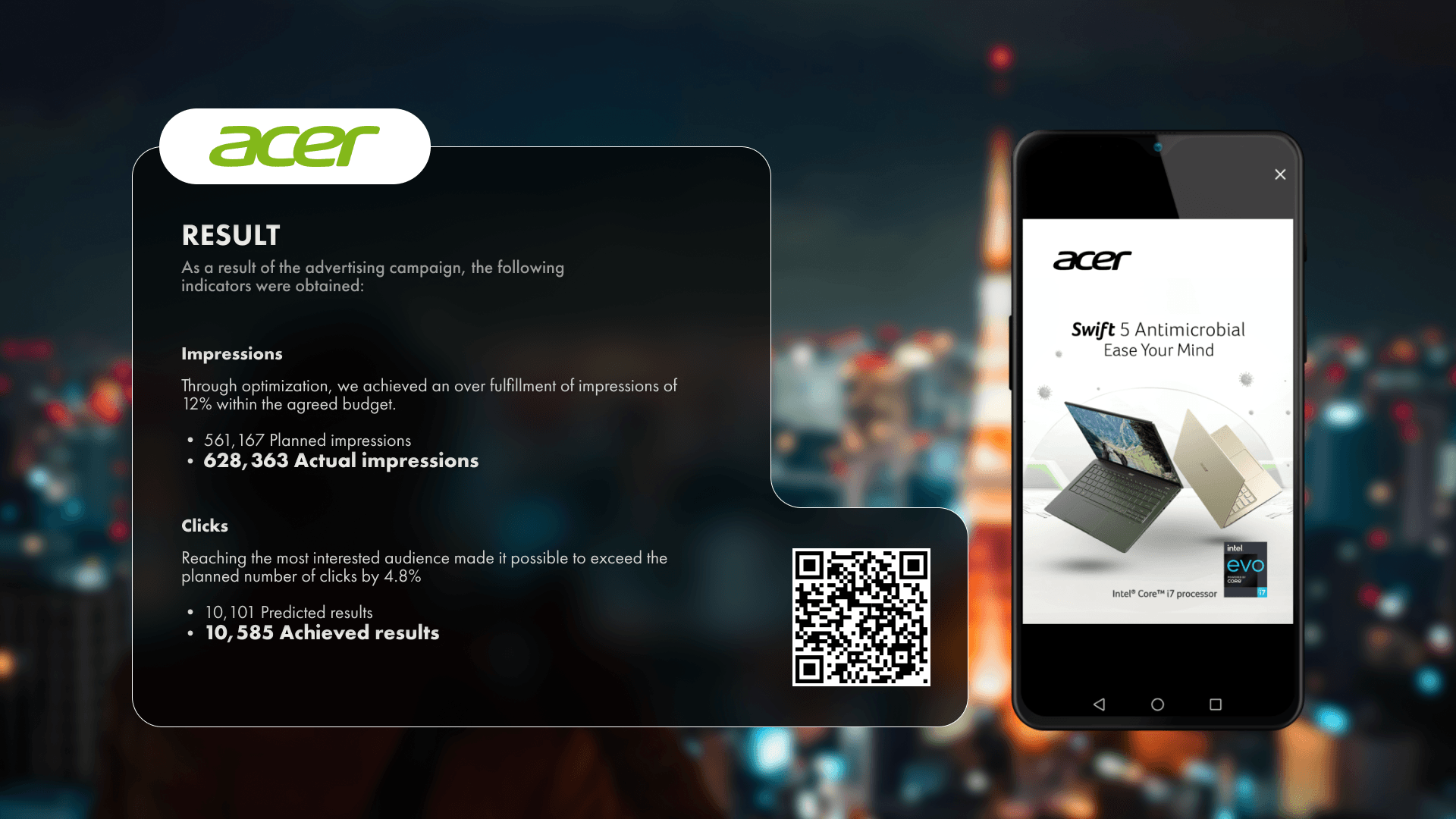
For instance, the Acer advertising campaign in Indonesia aimed to announce the virtual laptop exhibition and promote new laptop models powered by 11th-generation Intel processors.
To reach the relevant audience, BYYD used a Fullscreen format with interest-based targeting, focusing on users interested in laptops, technology, programming, electronics, gaming, and computer-related topics.
Through continuous campaign optimization based on BYYD platform insights and excluding low-performing placements, the campaign exceeded planned results: 628,363 impressions delivered vs. 561,167 planned (+12%) and 10,585 clicks vs. 10,101 planned (+4.8%), achieving a CTR of 1.68% and effectively engaging the target audience.
For over 11 years, the BYYD team has been working with mobile advertising and creating banners designed for real user engagement. We help brands capture audience attention and achieve business objectives through proven mechanics. Explore our media kit.
Check out our case studies and send us an email – let’s launch your next campaign together.
Found this helpful? Share it with your friends and colleagues!
For consultations and partnership inquiries:


