State of Mobile 2026: Key Trends Shaping the Future of Mobile Apps and Advertising
In 2026, success in mobile is no longer defined by user growth alone — it is driven by smarter monetization, deeper engagement, and the ability to capture attention in an increasingly competitive environment.
According to Sensor Tower’s State of Mobile 2026 report, generative AI became one of the biggest forces reshaping mobile, while apps across categories are evolving their revenue strategies and competing for users’ limited attention. Gaming is shifting from pure scale to efficiency, non-gaming apps are reaching new revenue milestones, and global mobile growth requires a deeper understanding of local markets.
In this article, we explore the key trends shaping the mobile industry in 2026 and what they mean for app developers, brands, and marketers looking to build stronger connections with mobile audiences.
Trend #1: Apps Surpassed Games in Revenue for the First Time
In 2025, users spent more money on non-gaming apps than on mobile games for the first time. Revenue from in-app purchases in non-gaming apps reached $85 billion, growing almost 2.8 times compared to 2020.
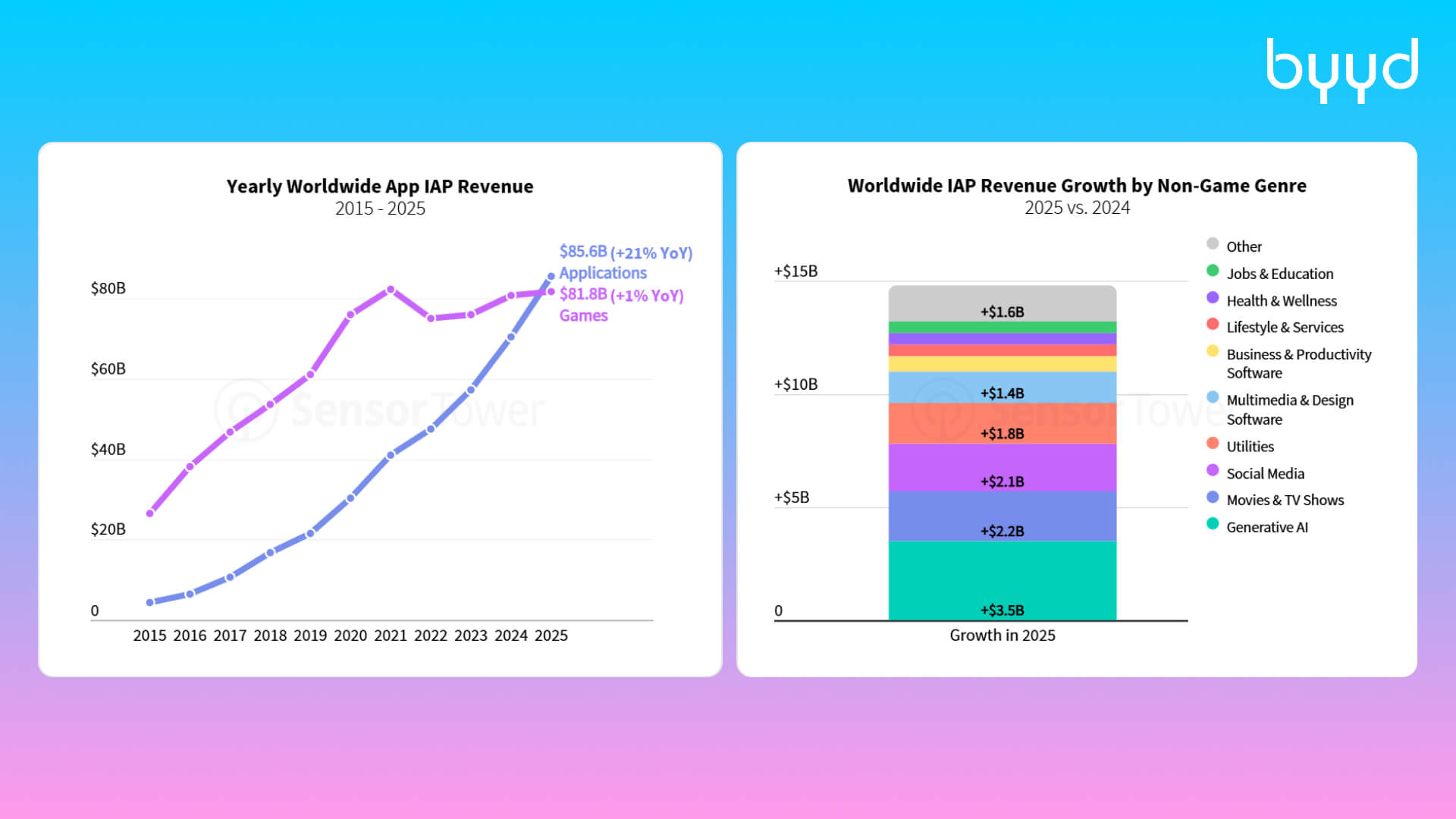
The main driver behind this growth was the rise of generative AI-powered apps. However, growth was observed across almost all categories — from social platforms and video content services to productivity tools and everyday utility apps.
At the same time, users are spending more time across a wider range of app categories. This creates new opportunities for brands to engage audiences in everyday digital scenarios, including entertainment, education, shopping, communication, and work.
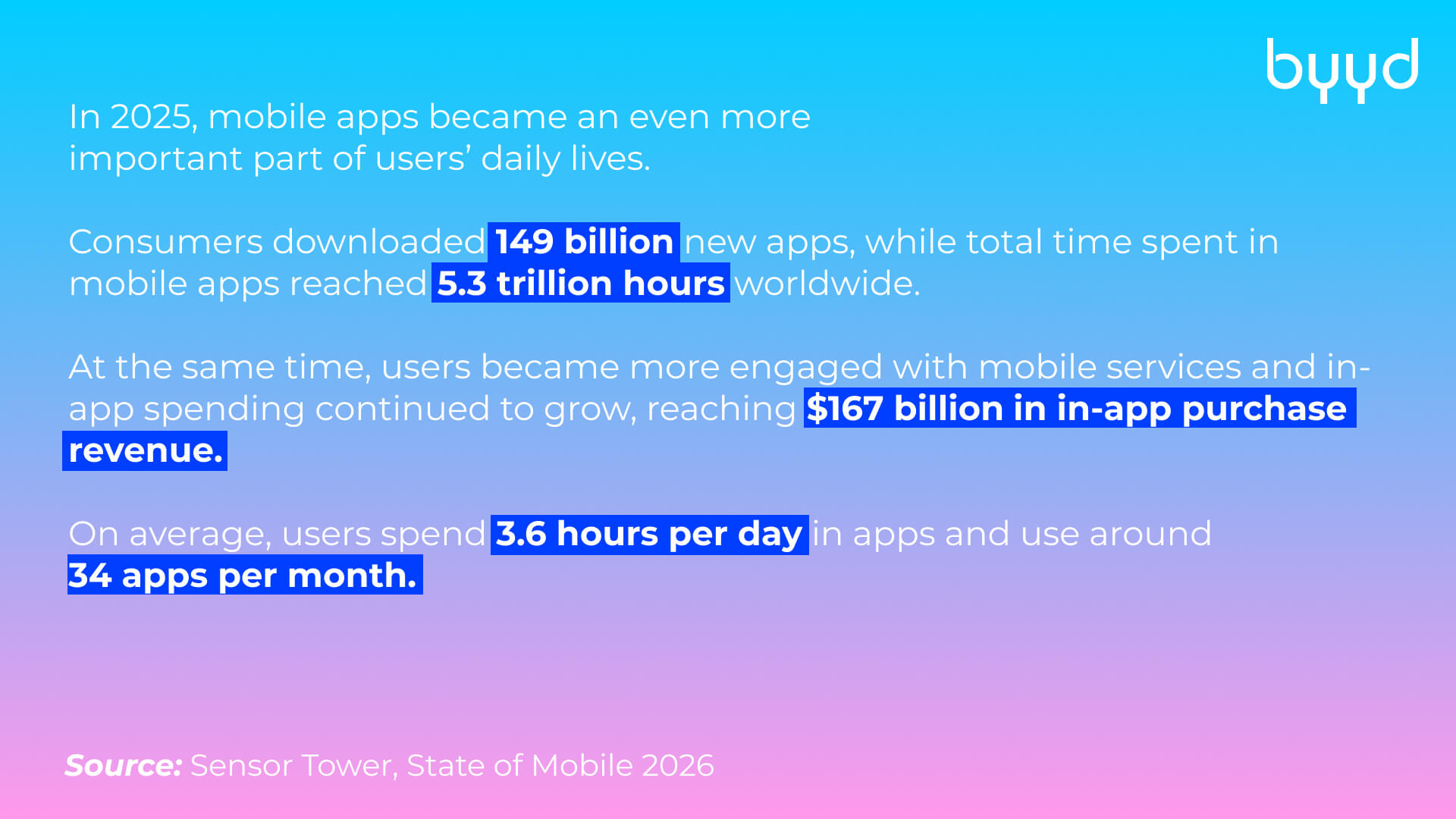
Mobile advertising allows brands to take advantage of this growing engagement by reaching users in relevant app environments, understanding their interests and behavior, and delivering messages at moments when they are most relevant to their current mobile experience.
Trend #2: Social Apps Remain the Biggest Source of User Attention
In 2025, users spent nearly 2.5 trillion hours in social apps across iOS and Android devices — more than 90 minutes per day per user.
Despite the slowdown in smartphone adoption after years of rapid growth, social platforms continue to capture a significant share of users’ daily mobile time.
Trend #3: Artificial Intelligence Creates New Opportunities for App Developers
In 2025, the mobile app market remained highly concentrated around the largest publishers. The top 1% of app publishers captured 92% of in-app purchase revenue and 81% of all downloads.
These leading publishers generated approximately $154 billion in revenue, while the remaining 99% of publishers generated only $13.1 billion combined.
However, the rapid development of artificial intelligence is gradually changing the competitive landscape. Smaller developers now have access to new tools that help them create apps faster, automate development processes, and launch products with fewer resources.
Revenue growth among the remaining 99% of publishers is outpacing the largest players: their share of in-app purchase revenue increased from 5% in 2019 to 8% in 2025.
For the mobile ecosystem, this means more new apps are entering the market and competing for user attention.
Trend #4: Local Expertise Becomes Essential for Global Growth
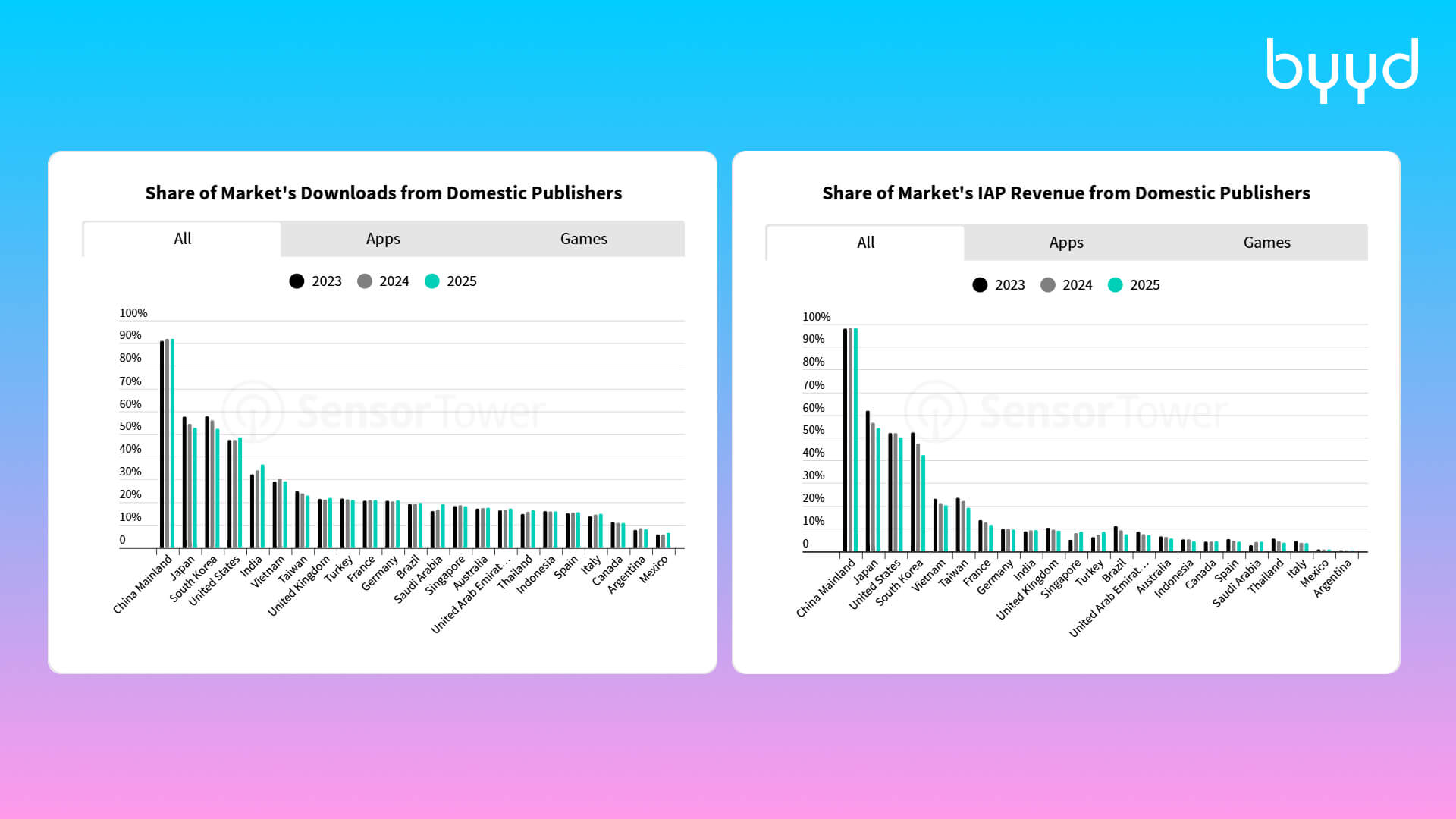
The mobile industry continues to evolve as a global ecosystem. Nearly 4 out of 5 app downloads and consumer spending on iOS and Android happen outside the country where the app was originally developed.
This demonstrates that developers have significant opportunities to scale their products internationally and reach users across multiple markets.
At the same time, competition between global and local players is increasing. The presence of international publishers varies significantly by region, while some countries are actively strengthening their domestic mobile ecosystems.
Markets such as India, Singapore, Turkey, and Saudi Arabia are among those where local apps are gaining stronger positions.
As a result, universal approaches to promotion are becoming less effective. Successful mobile campaigns require a deeper understanding of each market — including user behavior, popular app categories, local preferences, and cultural context.
Trend #5: The gaming market is shifting from download growth to maximizing the value of existing users
Growth in the gaming market is no longer driven only by acquiring new users. Developers are increasingly focused on retaining audiences, increasing revenue per player, and improving the quality of acquired users. Companies are paying more attention to long-term engagement, repeat interactions, and acquisition efficiency.
At the same time, market dynamics vary by region. Growth in in-app purchase revenue was especially noticeable in Europe, while the US market remained more stable.
In 2025, mobile gaming advertising continued to shift toward formats that help maintain user attention. Video advertising remains the dominant format.
At the same time, interactive formats and rewarded advertising are becoming increasingly important, offering users additional value in exchange for engagement with the ad.
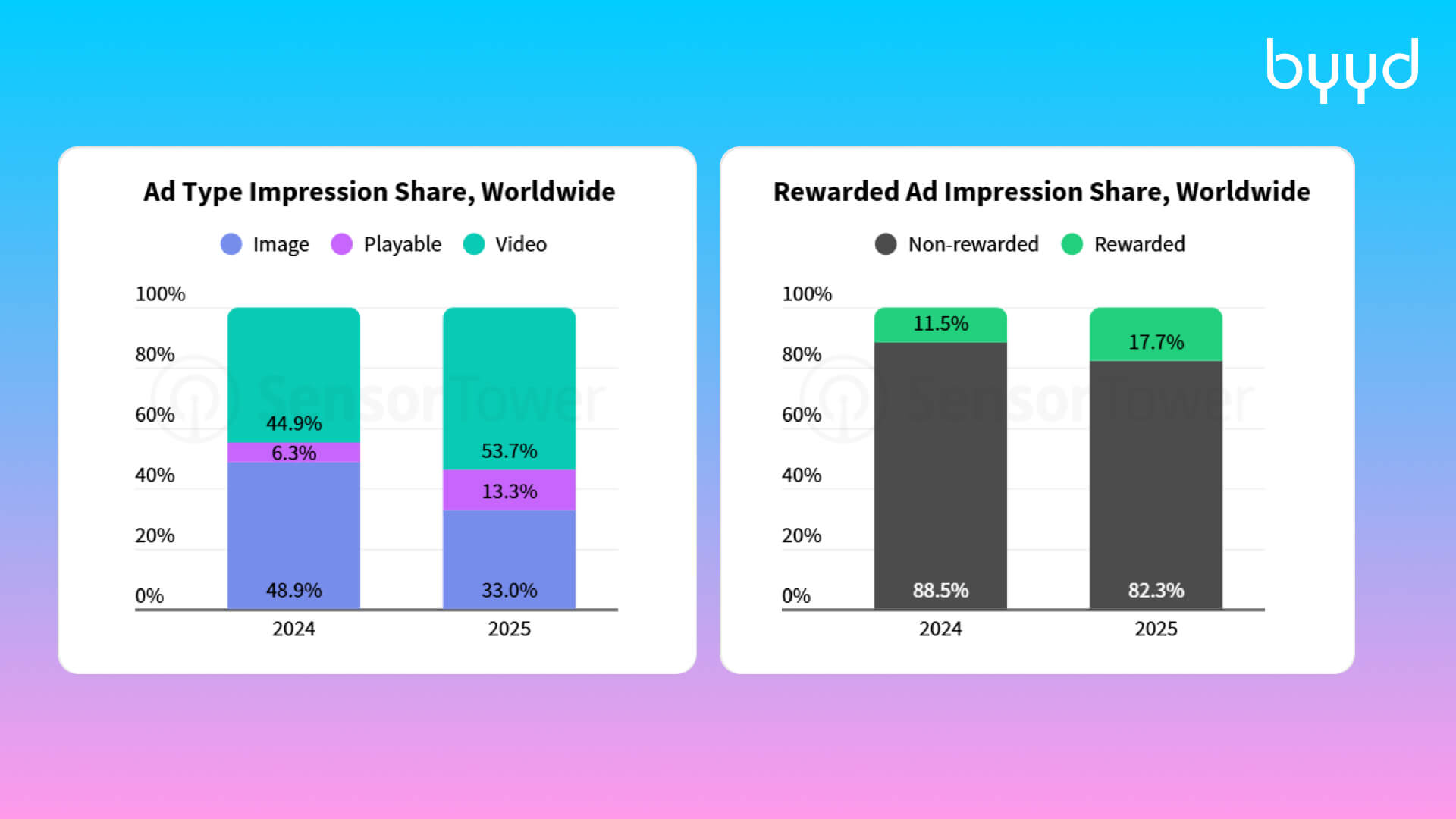
Users respond better to ads that are naturally integrated into the gaming experience and provide a clear interaction scenario.
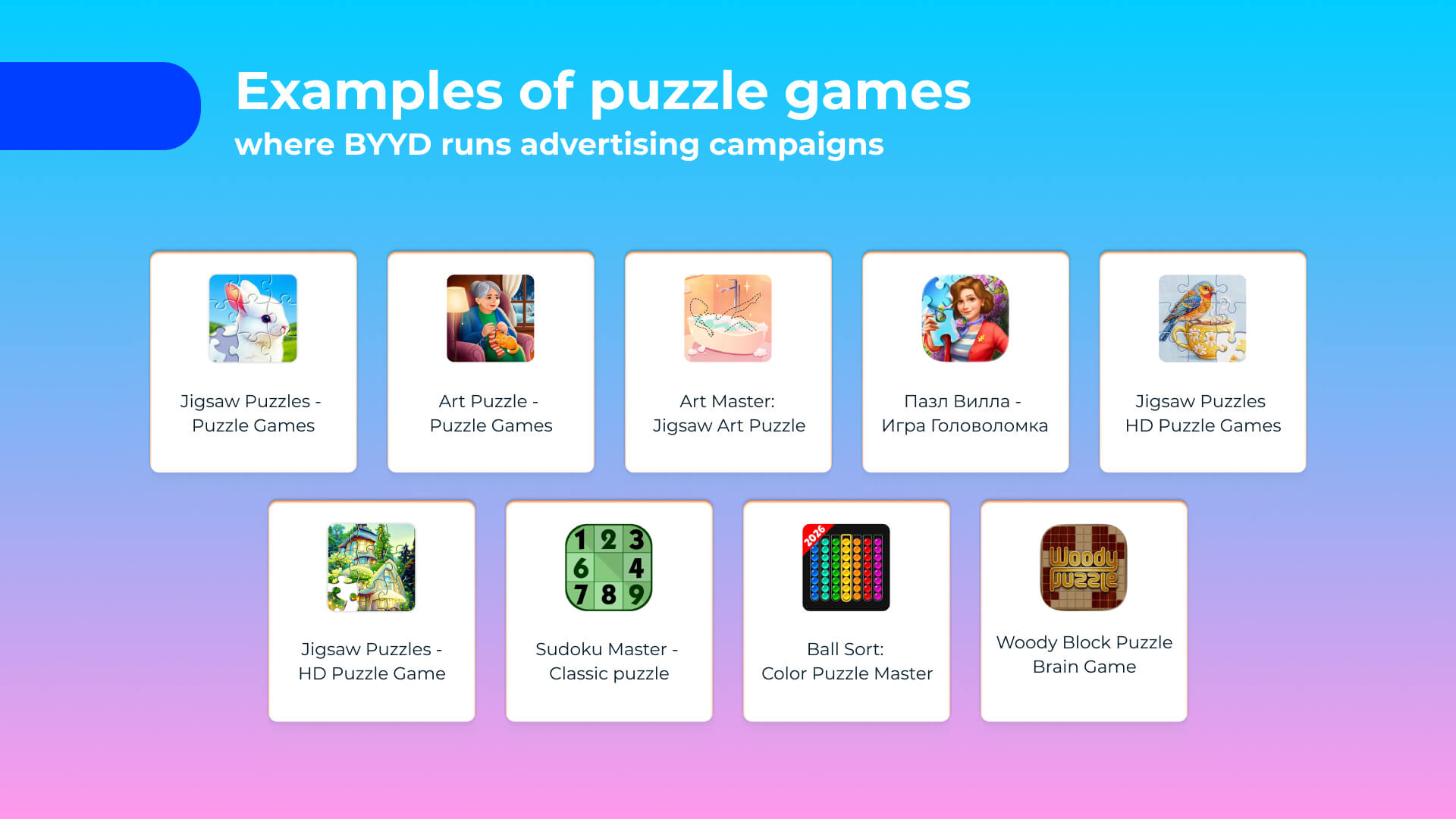
Advertising is also becoming more concentrated across app categories. Certain game genres attract significantly more advertising investment. For example, puzzle games increased their share of advertising activity by approximately 40% year over year.
In 2025, mobile gaming advertisers actively focused their budgets on Lifestyle and Puzzle categories.
Trend #6: Users are changing their digital financial habits
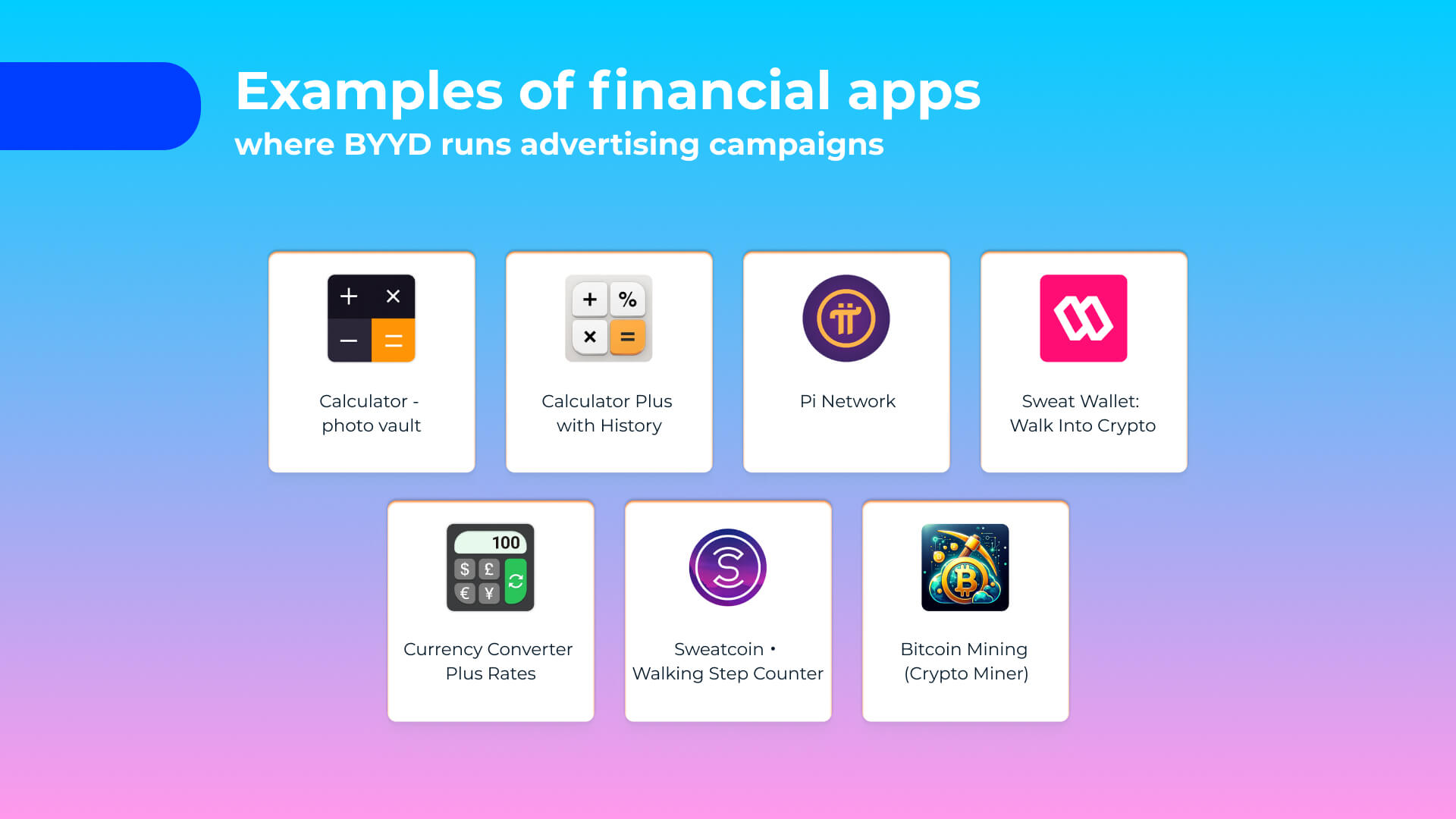
In 2025, demand for financial apps continued to grow. For example, the number of downloads surpassed 8 billion for the first time. However, growth within the category was uneven.
Users are increasingly choosing specific financial services while reducing interest in others.
The strongest growth was seen in apps related to lending and loans. Digital wallets, payment services, and solutions for everyday financial activities also continued to expand.
At the same time, investment and wealth management apps experienced declining interest, while cryptocurrency apps saw a decrease of nearly 30%.
This shows that the financial audience is becoming more segmented. Users choose apps based on specific needs and everyday financial scenarios.
Trend #7: Temu, Amazon, and Meesho maintain their positions in mobile commerce
In 2025, major online retail apps continued to dominate mobile commerce. Platforms such as Temu, Amazon, and Meesho maintained a significant share of the market.
Temu became the leading app by downloads in 2025, continuing its rapid expansion and reaching more than 530 million active users.
At the same time, Amazon remains the world’s largest player by actual app usage. In Q4 2025, the platform’s average monthly active audience reached approximately 685 million users.
Trend #8: Vietnam and the UAE are among the fastest-growing markets for travel apps
In 2025, travel app downloads increased by 3%, while the time users spent in these apps grew by 8%.
The strongest growth was recorded in Vietnam (+21%) and the United Arab Emirates (+17%). These markets became some of the leading regions for new travel app adoption.
Users increasingly rely on smartphones throughout the entire travel journey — from discovering destinations and booking flights to selecting accommodation and planning activities.
Mobile apps have become an important touchpoint with travelers at every stage of the customer journey. Mobile advertising allows brands to reach users at the right moment — for example, when they are researching destinations, planning a trip, or exploring a new city.
Mobile advertising in 2026: How brands can leverage new opportunities in the mobile ecosystem
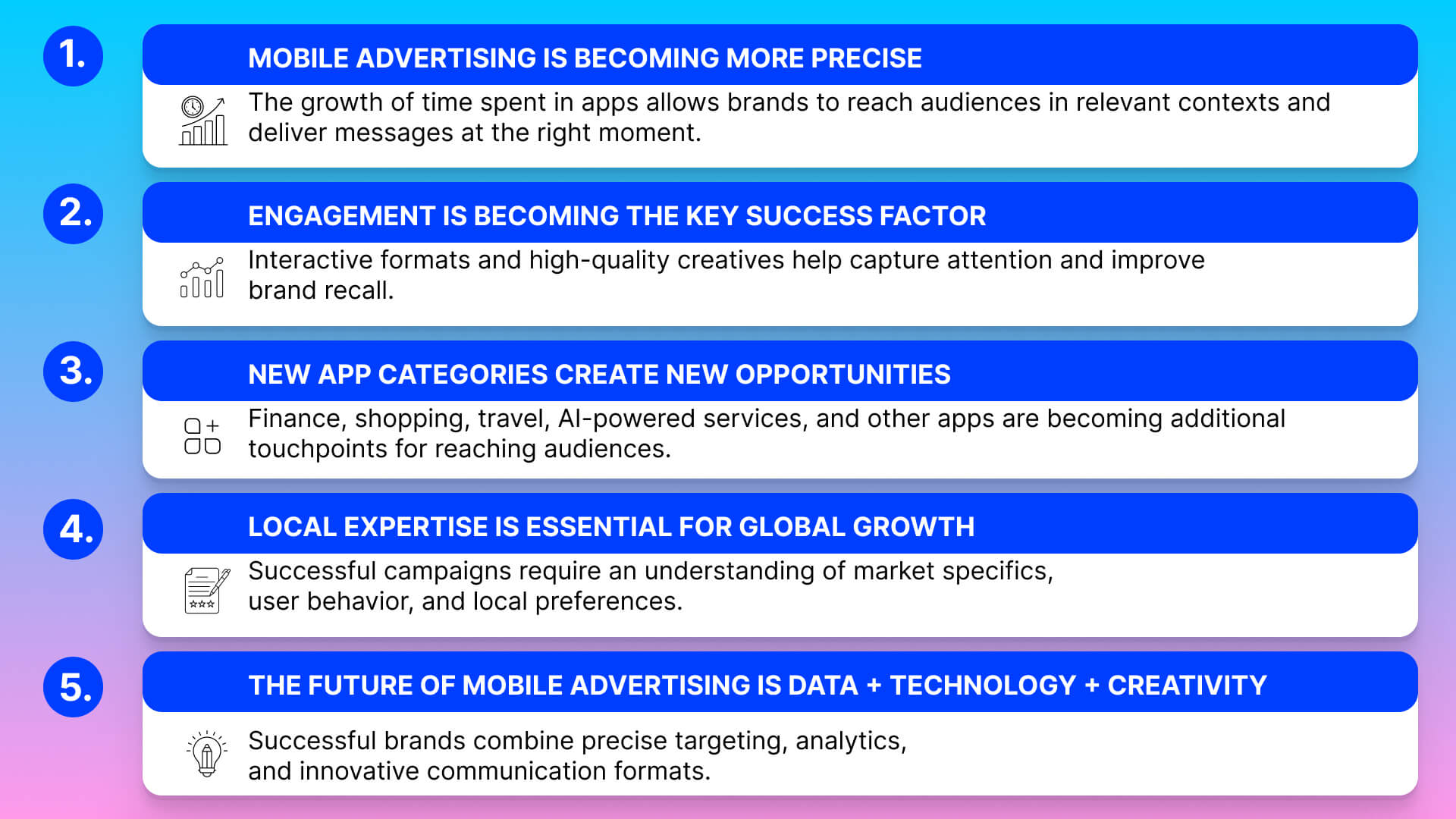
Changes in the mobile market directly influence how brands approach digital promotion. Today, success is not only about reaching a large audience — it is about reaching users in the right context, within apps that match their interests, current needs, and behavior patterns.
Mobile advertising is becoming more contextual and precise
The growing number of apps and increasing time spent in them create new opportunities for targeted communication. Users can interact with brands while watching entertainment content, playing games, planning a trip, shopping, or completing everyday tasks.
Engaging formats help brands stand out
One of the key conclusions from State of Mobile 2026 is that user attention has become the most valuable resource in the mobile ecosystem.
This is especially visible in gaming, where advertisers increasingly rely on highly engaging formats such as video, interactive mechanics, and rewarded advertising.
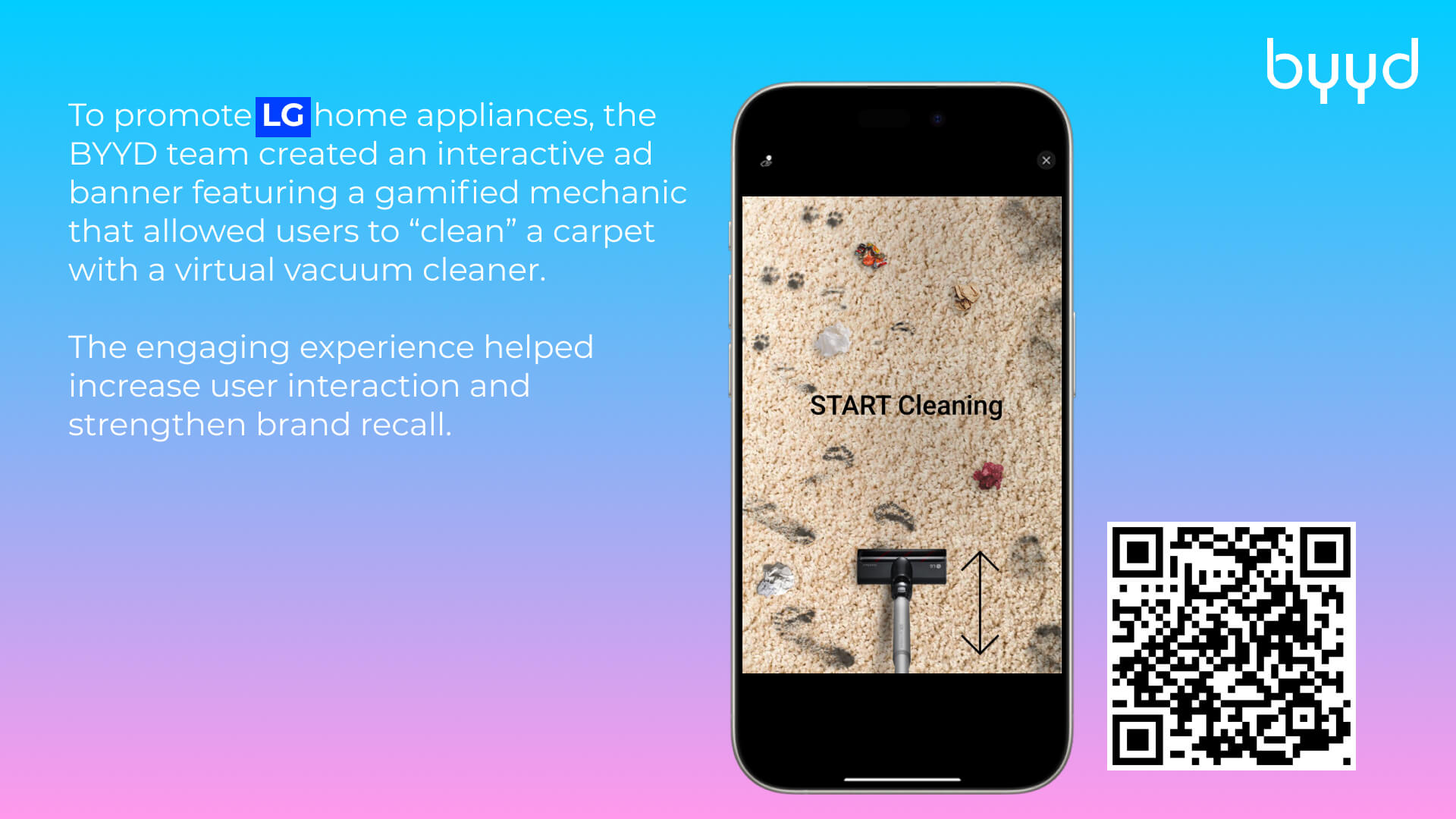
Interactive formats transform advertising from passive viewing into active participation. Users can engage directly with a brand within the ad experience.
A local approach is key to international growth
Effective mobile promotion requires understanding:
- local user behavior;
- popular app categories;
- cultural specifics;
- audience preferences across different regions.
The future of mobile advertising lies in combining data, technology, and creativity
State of Mobile 2026 shows that successful mobile advertising is built on three key elements:
- a deep understanding of the audience;
- the use of data to identify the most effective user scenarios;
- creative formats that turn advertising into an engaging experience.
This approach allows brands not only to show ads to users but also to create memorable experiences within the mobile ecosystem.
How to Contact Us
For over 11 years, the BYYD team has been working with mobile advertising and creating banners designed for real user engagement. We help brands capture audience attention and achieve business objectives through proven mechanics.
Check out our case studies and send us an email – let’s launch your next campaign together.
Found this helpful? Share it with your friends and colleagues!
For consultations and partnership inquiries:
- Submit a request on our website
- Email us at hello@byyd.me