It is becoming increasingly difficult for marketers to compete for consumers’ attention. To build more effective communication, it is important to track changes in users’ media habits. Understanding these trends helps to:
Based on the Americas Market Intelligence report, we explore media consumption trends in Latin America.
According to Endeavor forecasts, the e-commerce market in Latin America is expected to exceed $215 billion in 2026. This growth is driven by the fact that consumers are beginning to value reliable delivery and transparent pricing more.
At the same time, sales are concentrated in several major markets. Argentina, Brazil, and Mexico accounted for almost 85% of regional online sales in 2025.
Consumers in Latin America are largely mobile-oriented: 84% of purchases are made via smartphones. This shows that the smartphone is becoming not only a tool for communication and content consumption, but also a key point of purchase decision-making.
However, loyalty remains fragile. Almost half of consumers would stop buying from a mobile platform after a negative experience. The most common pain points include delivery delays and difficulties with returns.
The user journey to purchase increasingly begins and develops within the smartphone. A person can see an ad message in an app, go to a brand’s website or app, compare the offer, check delivery terms, and make a purchase decision within the same mobile environment.
That is why it is important for advertisers not only to be present in digital channels, but also to build communication around the real behavior of the audience.
Latin America has 413 million mobile Internet users, which corresponds to 64% Internet penetration in the region.
It is also important that for a significant share of users, the smartphone is the only way to access the Internet. In Mexico, Colombia, and Peru, more than 40% of users access the Internet only via mobile phones. In Brazil, this figure reaches 70%. This is why the region is essentially considered one of the world’s leading mobile-first economies.
In Argentina, users spend an average of 151.6 hours per month in apps, while mobile web accounts for only 4.8 hours. In Brazil, the figure is 103.9 hours in apps versus 5.5 hours on mobile web.
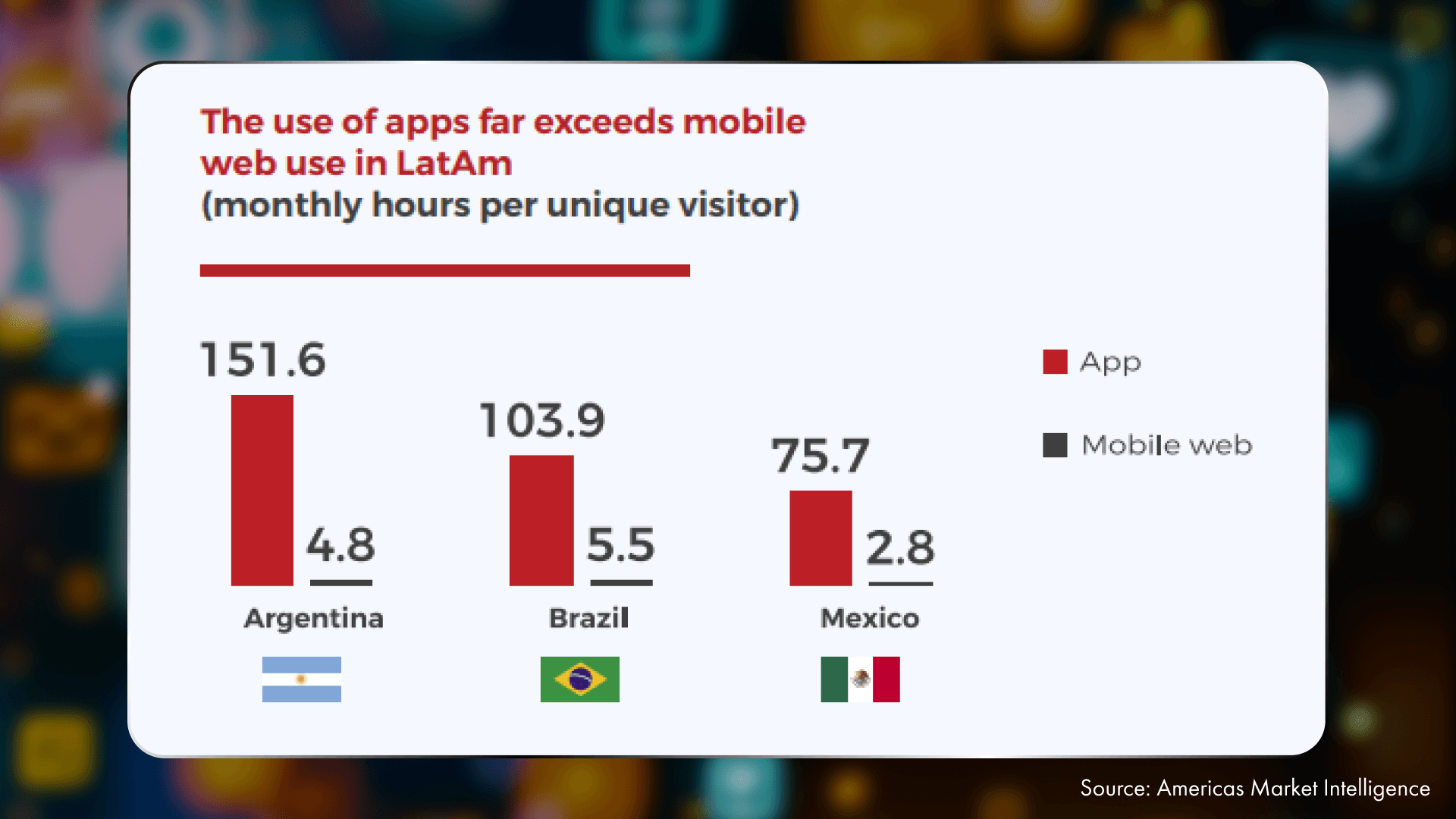
This shows that the use of mobile apps in Latin America significantly exceeds mobile web consumption.
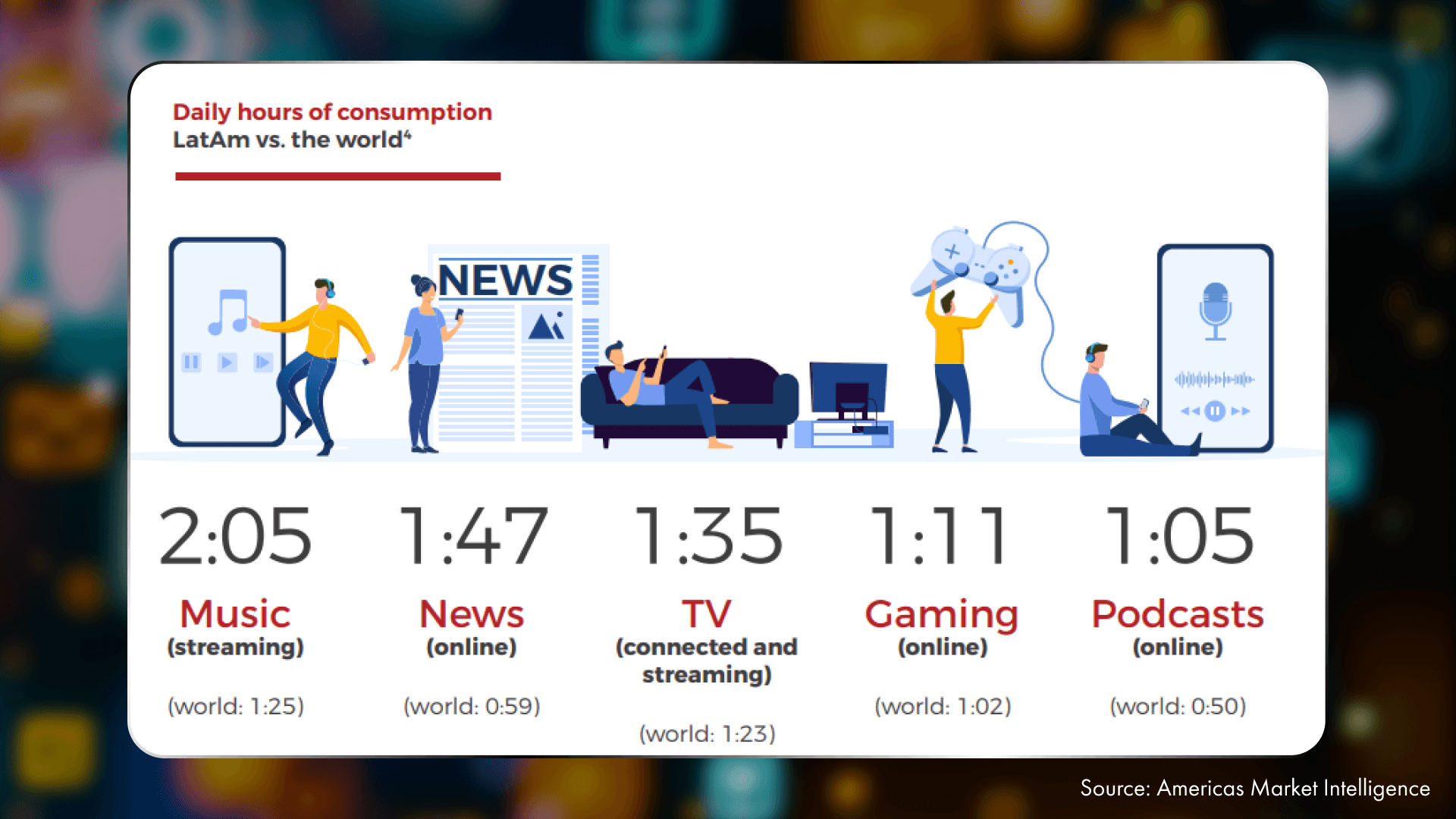
Latin America significantly outperforms global averages in daily digital content consumption. Users in the region listen to music, read news, watch streaming TV, play online games, and consume podcasts more actively.
Music streaming and online news stand out in particular. In Latin America, users spend an average of 2 hours and 5 minutes per day listening to music, compared to 1 hour and 25 minutes globally. Online news consumption reaches 1 hour and 47 minutes per day, while the global average is 59 minutes.
These data show that Latin American audiences actively distribute their attention across different digital formats. This gives brands broad advertising opportunities — from audio advertising and video formats to gaming integrations and placements in news content.
Video games play a significant role in media consumption in Latin America. The highest share of players is recorded in Brazil — 83%.
It is followed by Mexico — 78%, as well as Peru and Argentina — 76% each.
At the same time, the gaming audience in the region is not limited to teenagers and young people. In several countries, the dominant age group is millennials aged 30–44. This is typical for Argentina, Chile, Colombia, and Peru. In Mexico, on the other hand, the leading group is Generation Z aged 15–29.
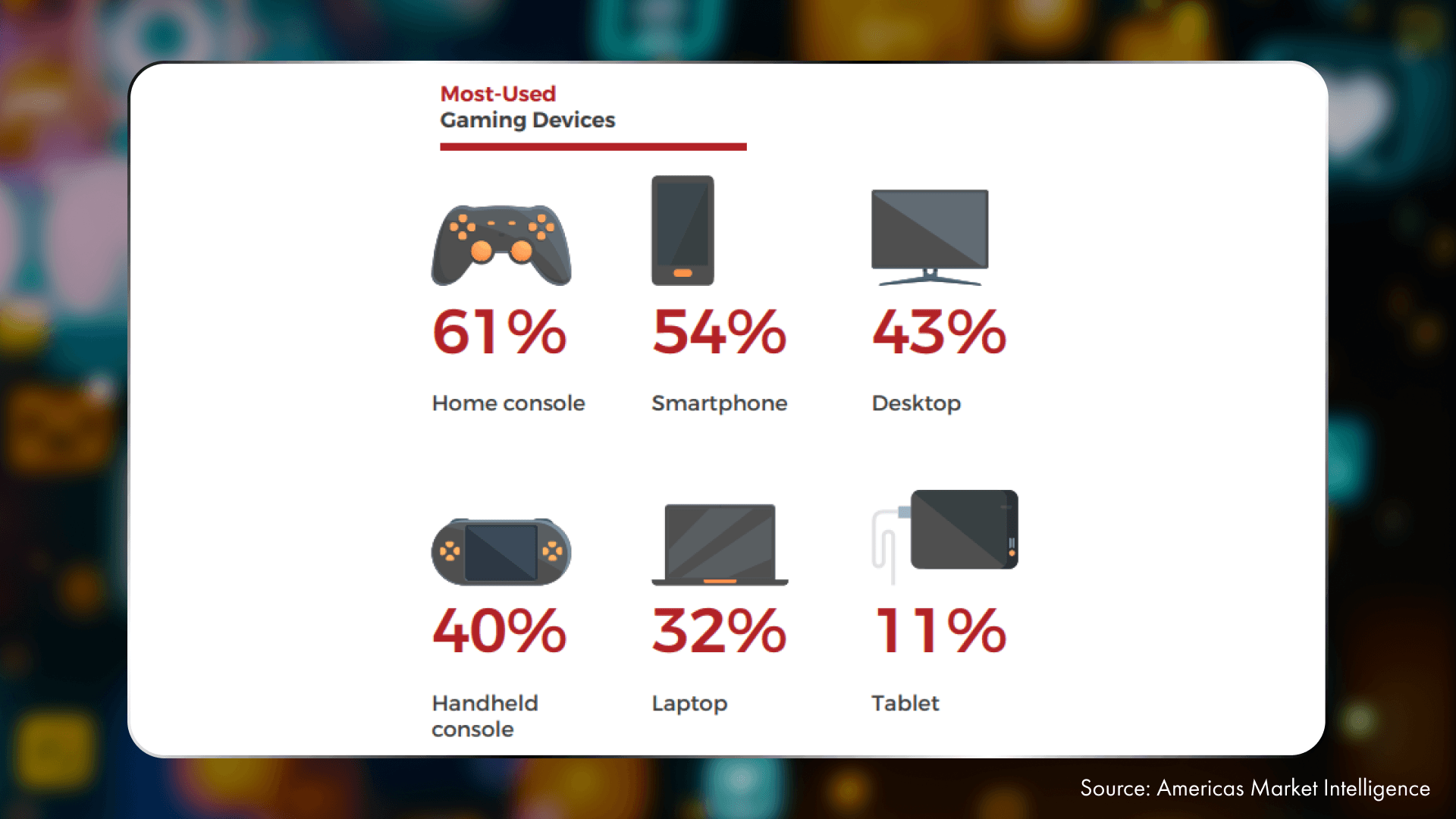
This means that gaming in Latin America is not a niche channel, but a mass digital environment with a broad audience. 54% of users use smartphones for gaming.
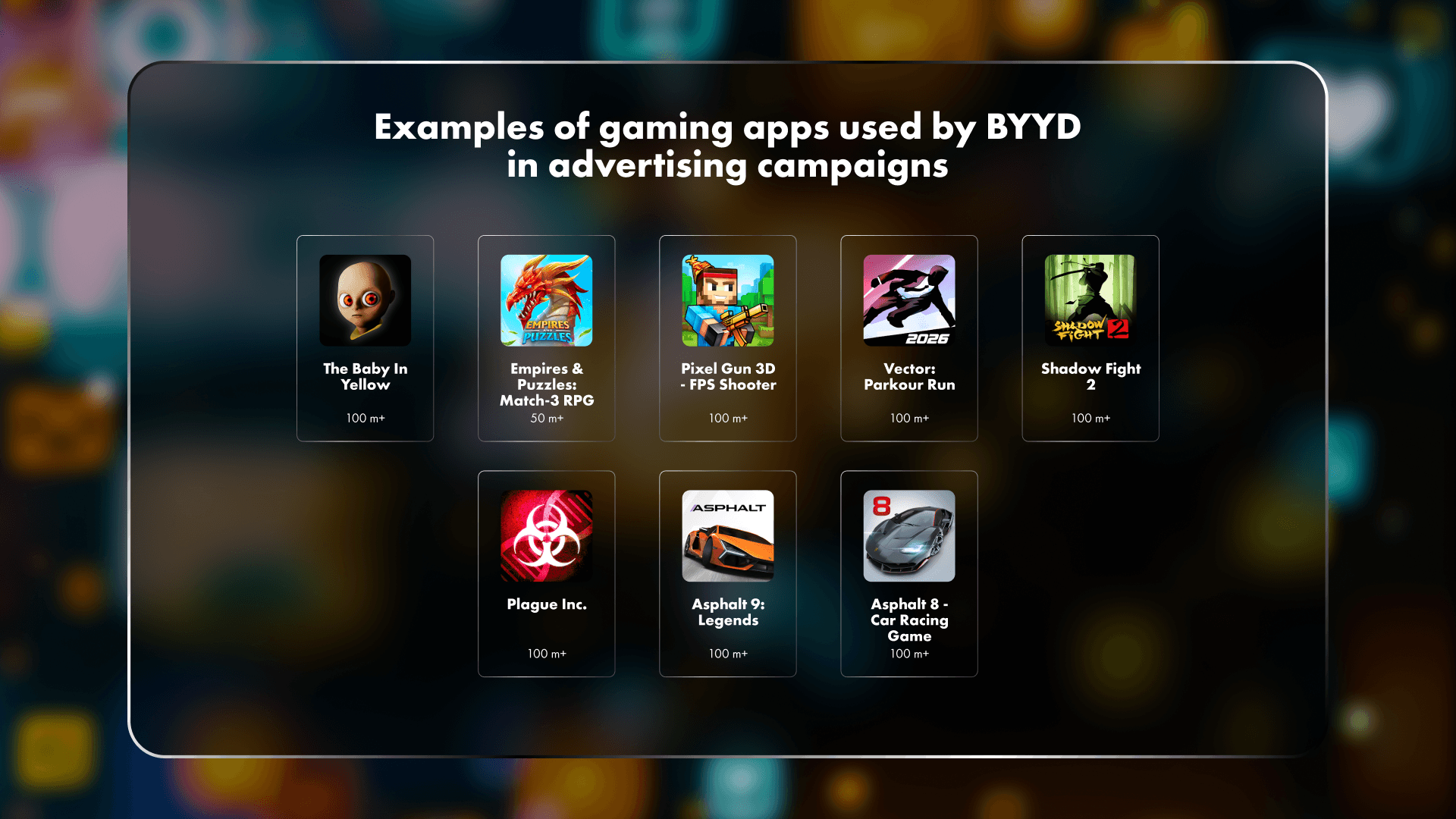
Mobile advertising through programmatic allows brands to reach audiences both inside apps and in games. For the Latin American market, this is especially relevant: gaming has already become a mass media consumption channel.
The BYYD platform uses this channel to place ads in mobile applications. Through programmatic, advertisers can target users by socio-demographic parameters, interests, geography, device type, and other characteristics, as well as select relevant app categories. This helps brands reach users at the moment when they are actively engaged with content.
In mobile games, noticeable and engaging formats work especially well: Fullscreen, Video, and Rich Media with interactive mechanics. These placements help the brand stand out and improve message recall. At BYYD, we also control ad frequency, monitor traffic quality, and optimize placements based on the performance of individual sources.
According to forecasts, by 2027, the podcast audience in Latin America may become the largest in the world.
At the same time, the smartphone is the main device for listening to podcasts, accounting for 87% of consumption. The main podcast category in Latin America is news.
On average, people in Latin America spend around 23 hours per month on social media.
Young audiences are especially active: Gen Z users aged 15–24 spend at least 48 hours per month on social media.
For brands, this is an important channel for regular communication, awareness building, and user engagement.
Social media is already competing with television as a primary source of information. At the same time, AI chatbots are beginning to emerge as another important channel for accessing information.
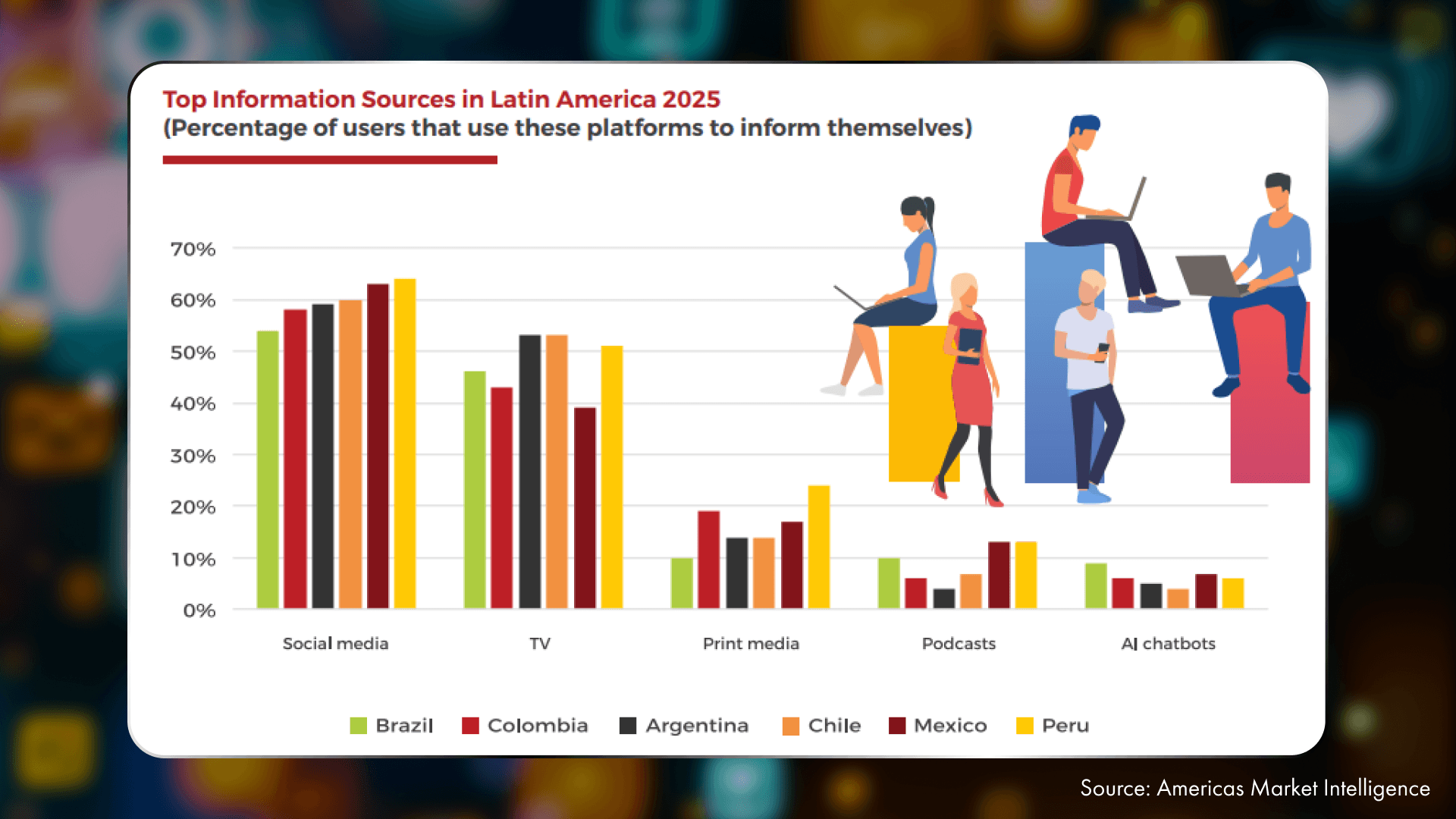
Globally, 66% of users use AI tools such as ChatGPT to search for and access information.
In Latin America, Brazil and Mexico stand out in particular. In Brazil, this figure reaches 76%, while in Mexico it is 70%. This shows that audiences in the region are increasingly turning to artificial intelligence as an additional channel for information search.
Users in Latin America spend time across different digital environments: mobile apps, games, social media, streaming, and news platforms. This makes it increasingly difficult for brands to rely on only one channel or one ad format.
Against this background, the role of programmatic advertising is growing. According to Research and Markets estimates, digital ad spend in Latin America may reach $50.1 billion in 2026 and around $70.9 billion by 2029.
Programmatic helps address audience fragmentation through flexible campaign settings and data-driven optimization. Advertisers can test different segments, formats, and app categories, track performance metrics, and reallocate budgets toward the highest-quality traffic sources.
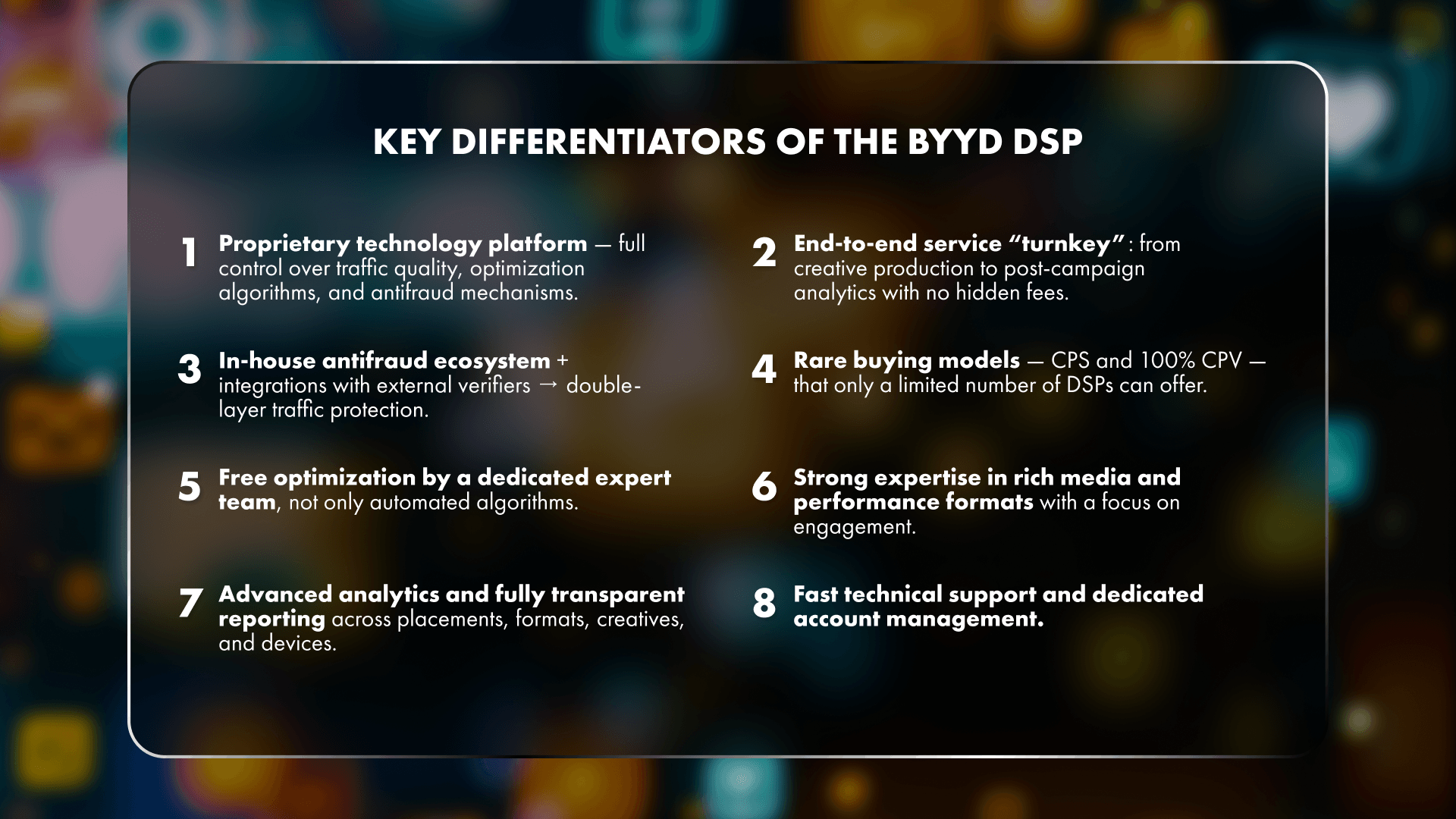
For over 11 years, the BYYD team has been working with mobile advertising and creating banners designed for real user engagement. We help brands capture audience attention and achieve business objectives through proven mechanics.
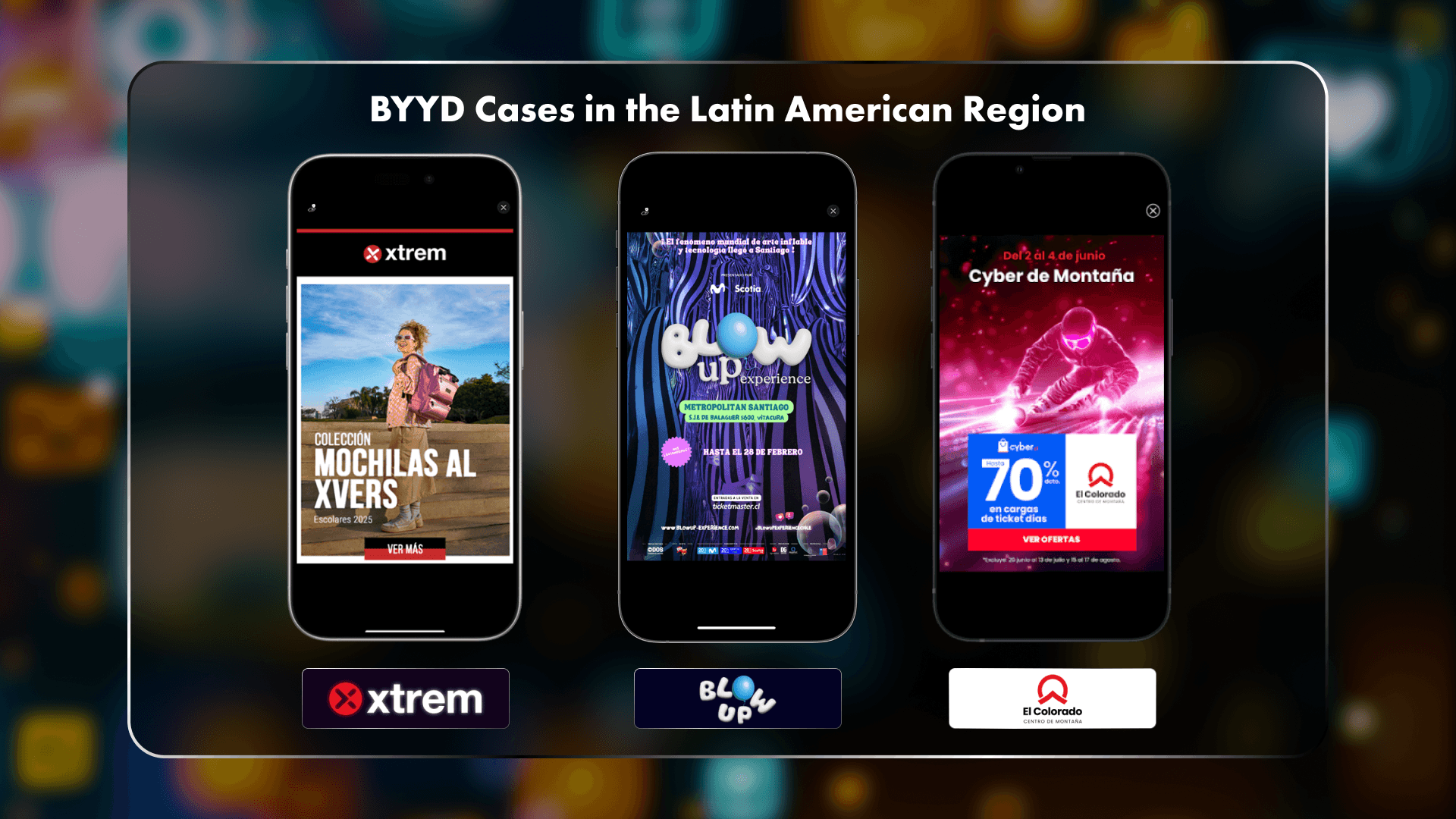
Check out our case studies and send us an email – let’s launch your next campaign together.
Found this helpful? Share it with your friends and colleagues!
For consultations and partnership inquiries:
'/%3E%3C/svg%3E)
'/%3E%3Cpath%20fill='%23b2b2b2'%20d='M241%20382q0%2016%2017%2026%2017%2011%2042%2011t42-11q16-11%2017-26V269H241'/%3E%3Cpath%20fill='%239f7e00'%20d='M241%20379q0%2014%208%2023%209%209%2021%209%2014%200%2021-9%209-9%209-23V269h-59'/%3E%3Cpath%20d='M241%20339v-70h59v110q0%2014-9%2023l-6%205v-68h-15v72q-8%200-14-4v-68zm59%2040c0%2022%2015%2032%2029%2032%2021%200%2030-18%2030-32v-40h-59'/%3E%3Cpath%20fill='%239f7e00'%20d='M266%20277v5h2v12h-3v-5h2v-5h-9v5h2v5h-4v9h3v18h-5v10h34v-10h-5v-18h3v-9h-4v-5h2v-5h-9v5h2v5h-3v-12h2v-5zm42%20101q0%2010%206%2017%206%206%2015%207%2010-1%2016-7%206-7%206-17v-29h-43'/%3E%3Ccircle%20fill='%230044ad'%20cx='329.5'%20cy='372'%20r='6'/%3E%3Cellipse%20fill='%230044ad'%20cx='300'%20cy='340'%20rx='16'%20ry='21'/%3E%3C/svg%3E)

'%3E%3Cpath%20stroke='%23000'%20stroke-width='4'%20d='m-35-37-13%2020m5%203%2013-20m5%203-13%2020m63%2042%206-9m1-2%206-9m5%203-6%209m-1%202-6%209m5%203%206-9m1-2%206-9m-96%200%2013%2020m5-3-6-9m-1-2-6-9m5-3%2013%2020m63-42-6-9m-1-2-6-9m5-3%2013%2020m5-3-6-9m-1-2-6-9'/%3E%3Ccircle%20r='24'%20fill='%23cd2e3a'/%3E%3Cpath%20fill='%230047a0'%20d='M0%200a12%2012%200%201%201%2020%2013%2024%2024%200%201%201-40-26A12%2012%200%201%200%200%200'/%3E%3C/g%3E%3C/svg%3E)
