In-app advertising gives marketers a distinctive way to communicate with their target audiences. Mobile apps create a different user context: people open an app with a specific purpose and are usually more engaged than when casually browsing a web page.
In this article, we compare web advertising with in-app advertising and examine BYYD case studies to understand how programmatic technology can improve campaign quality and performance.
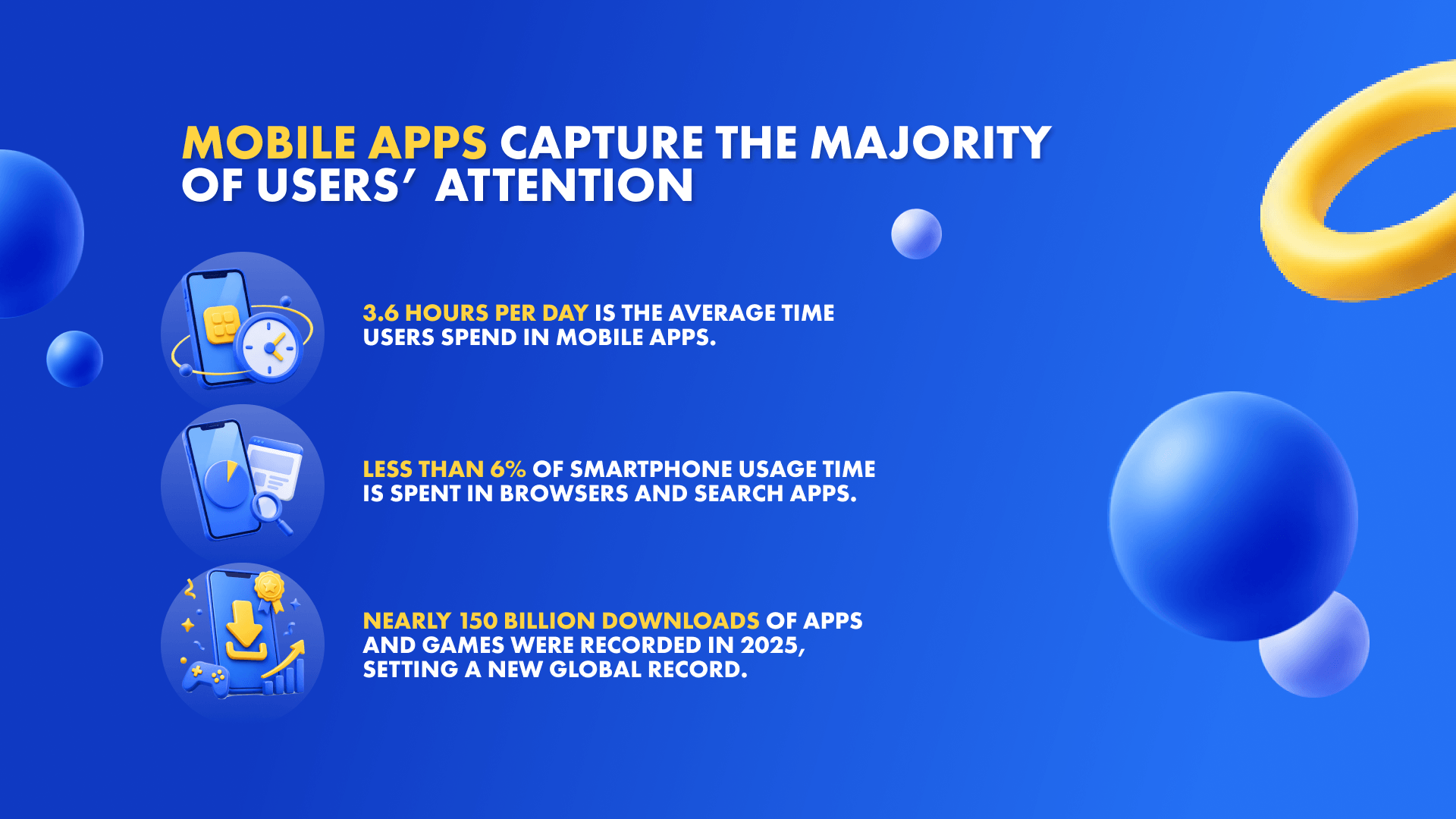
According to Sensor Tower, users spent an average of approximately 3.6 hours per day in mobile apps in 2025. At the same time, DataReportal and data.ai report that web browsers and search apps account for less than 6% of total smartphone usage time. This means that most mobile attention is concentrated inside apps.
In addition, global downloads of mobile apps and games reached almost 150 billion in 2025, increasing by 0.8% year over year. Despite the moderate growth rate, the market reached a new all-time high, confirming the lasting role of apps in users’ digital lives.
The key question is not which environment is better, but which one is better suited to a particular objective.
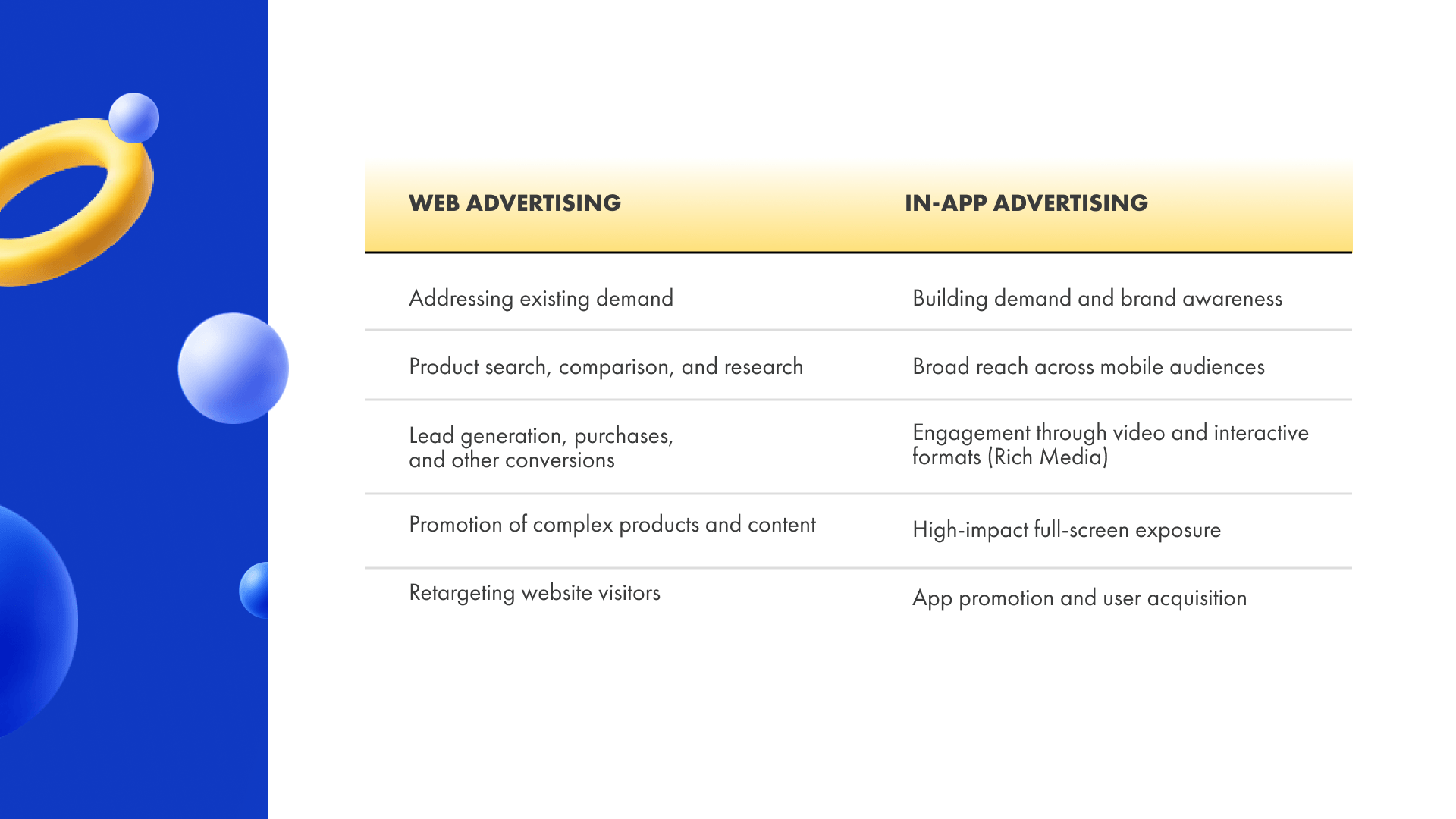
Web advertising is particularly effective when users already demonstrate clear intent. For example, when they:
The web is well suited to attracting search traffic, promoting complex products, generating leads, working with long-form content, and bringing users back to a website through retargeting.
In-app advertising is better suited to objectives related to broad reach, brand awareness, and audience engagement.
Users spend a significant part of their day in apps, while full-screen, video, and interactive formats allow brands to occupy a prominent position on the screen and create a more engaging communication experience.
The in-app environment is also effective for promoting mobile services, driving app installs, building demand, and maintaining consistent contact with audiences at different stages of the marketing funnel.
In other words, web advertising often helps brands work with existing demand, while in-app advertising helps create demand and extend audience reach.
Inside an app, users are usually engaged in a specific activity: playing, ordering products, watching content, studying, managing their finances, or communicating.
This matters for advertisers because the contact does not take place on a random web page, but within a more structured and predictable environment.
Mobile advertising makes it possible to identify relevant audience segments and show them an ad when their level of engagement is high.
For example:
In a fitness app, users are already thinking about exercise, health, and nutrition. Advertising sportswear, vitamins, or healthy food products therefore fits naturally into the context.
In a travel app, users may be choosing flights or booking a hotel. At that moment, they may be especially receptive to advertising for travel insurance, travel bank cards, eSIM services, luggage, or travel accessories.
In a navigation app, users are already on the move, making advertising for nearby petrol stations, restaurants, car washes, or automotive service offers more relevant.
In a food delivery app, users are already prepared to make a purchase. Advertising a beverage, dessert, or bank cashback offer can complement their current journey.
In a mobile game, users are focused on entertainment and interaction. As a result, playable and interactive ad formats may attract more attention than a standard banner on a website.
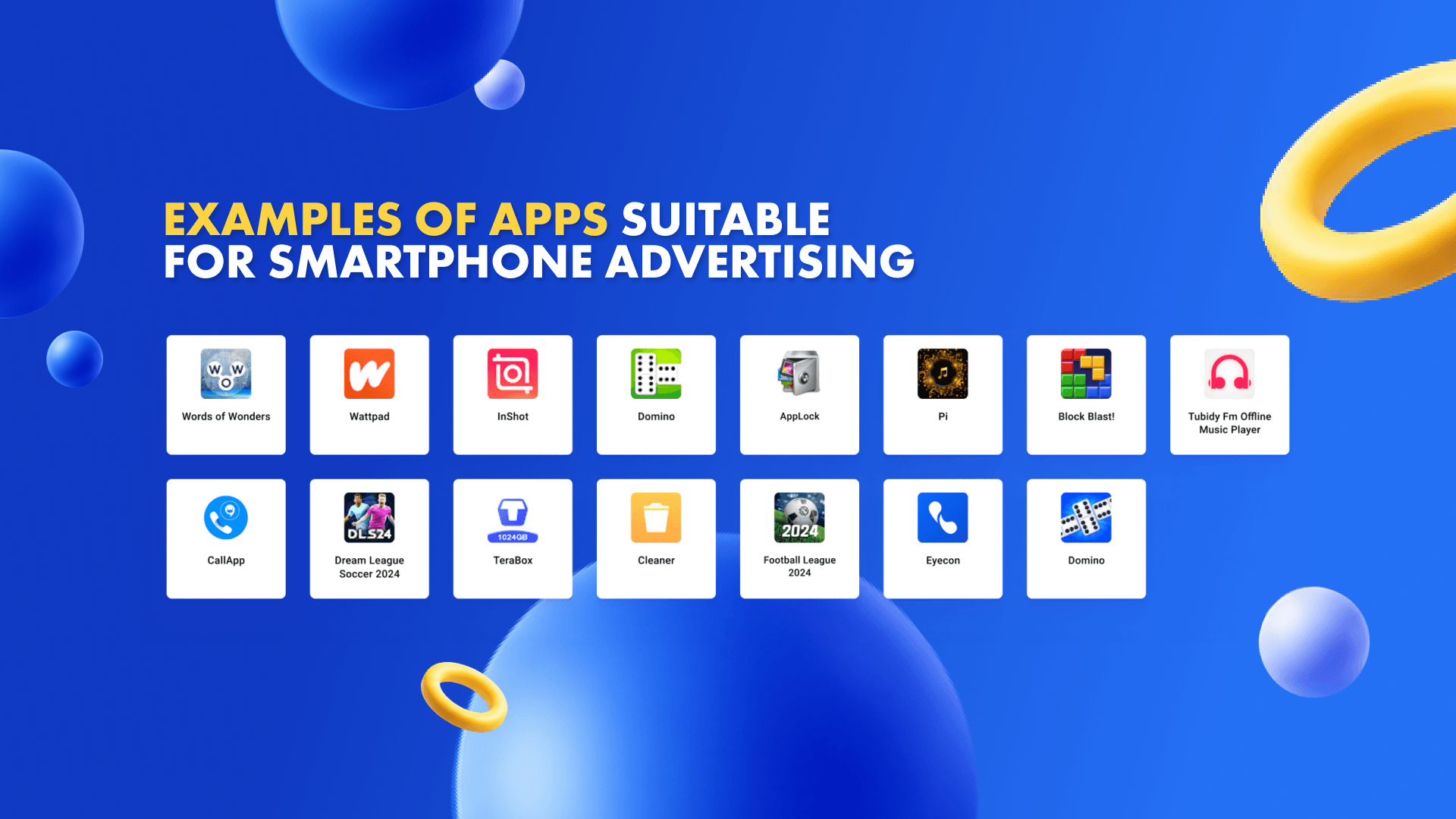
In-app advertising allows brands to reach users not only on the basis of demographic characteristics, but also according to what they are doing, what they are interested in, and which action they may be ready to take at a particular moment.
For brands, this enables more practical campaign planning. Instead of buying general “mobile reach,” advertisers can build placements around specific scenarios:
However, the fact that a user is inside an app should not be overestimated. More time spent in the environment increases the chance of contact, but results still depend on the format, exposure frequency, creative quality, and the effectiveness of the subsequent conversion funnel.
The main difference is not the screen size, but the quality of the advertising contact and the range of available tools.
According to IAS, the average global viewability rate for mobile in-app advertising reached 74.2% in 2024, compared with 68.4% for mobile web advertising.
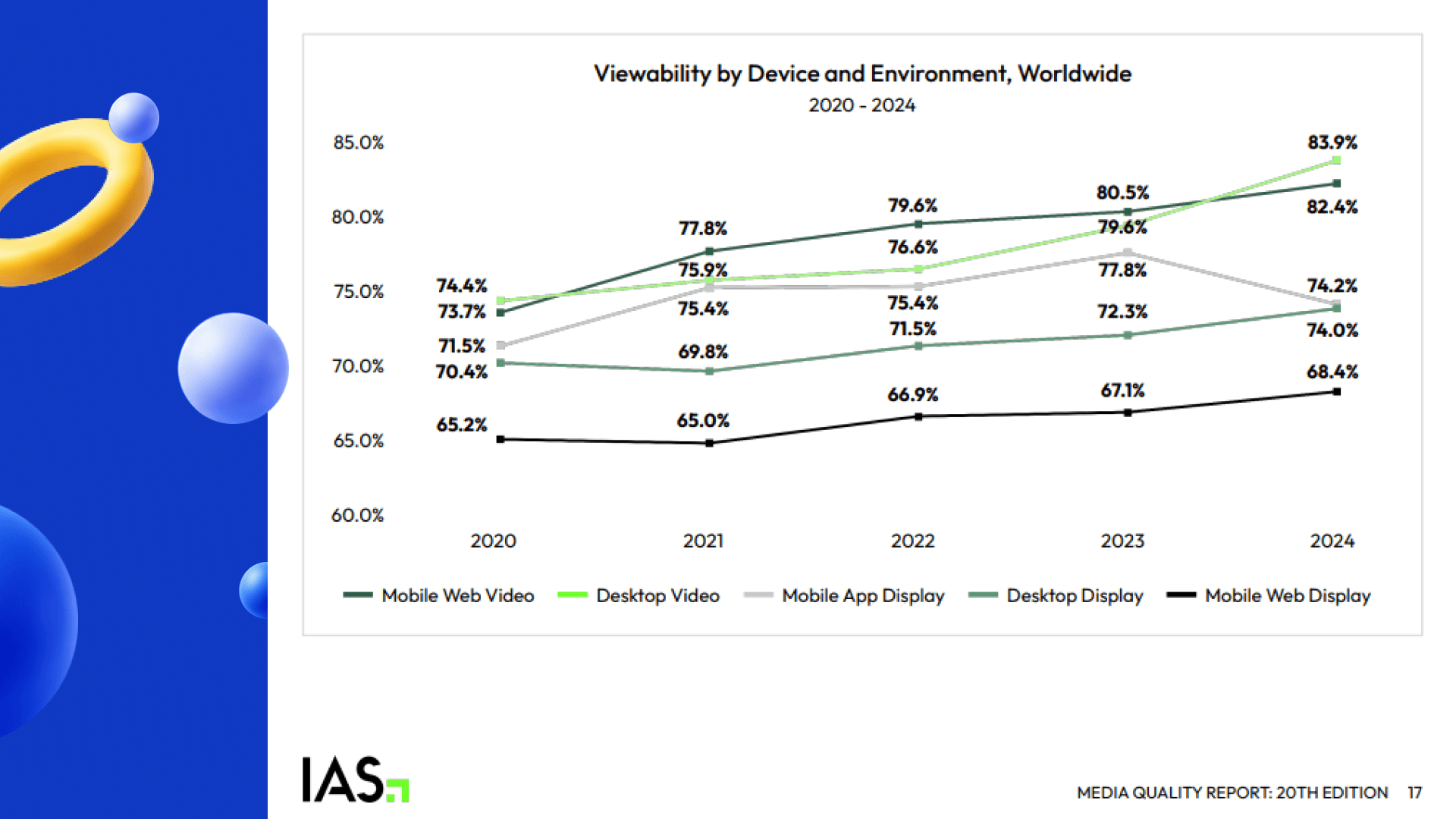
This difference is partly explained by the nature of the advertising contact. Inside apps, the creative often occupies a significant part of the screen or appears in a full-screen format. On a web page, an ad unit may be located outside the visible area or disappear quickly as the user scrolls.
Viewability shows the percentage of ad impressions that had an opportunity to appear within the user’s field of vision. It is a fundamental media-planning metric: when an impression is not viewable, click-through rate, conversions, and reach may provide a distorted picture of campaign effectiveness.
In-app advertising supports static banners, video ads, interactive ads, native formats, rewarded video, full-screen ads, and playable formats.
This range enables marketers to select a format for a specific objective rather than using the same banner at every stage of the customer journey.
For example, video is suitable for demonstrating a product or showing how it can be used. Rewarded video is based on voluntary viewing in exchange for a clear benefit inside the app. A playable format allows users to experience the product mechanics before clicking or installing the app.
Interactive ads are particularly useful when users are invited to take action directly within the creative: swipe through images, reveal additional information, launch an animation, or interact with different ad elements.
Such formats do not guarantee conversion, but they provide more opportunities to explain the offer and measure audience engagement.
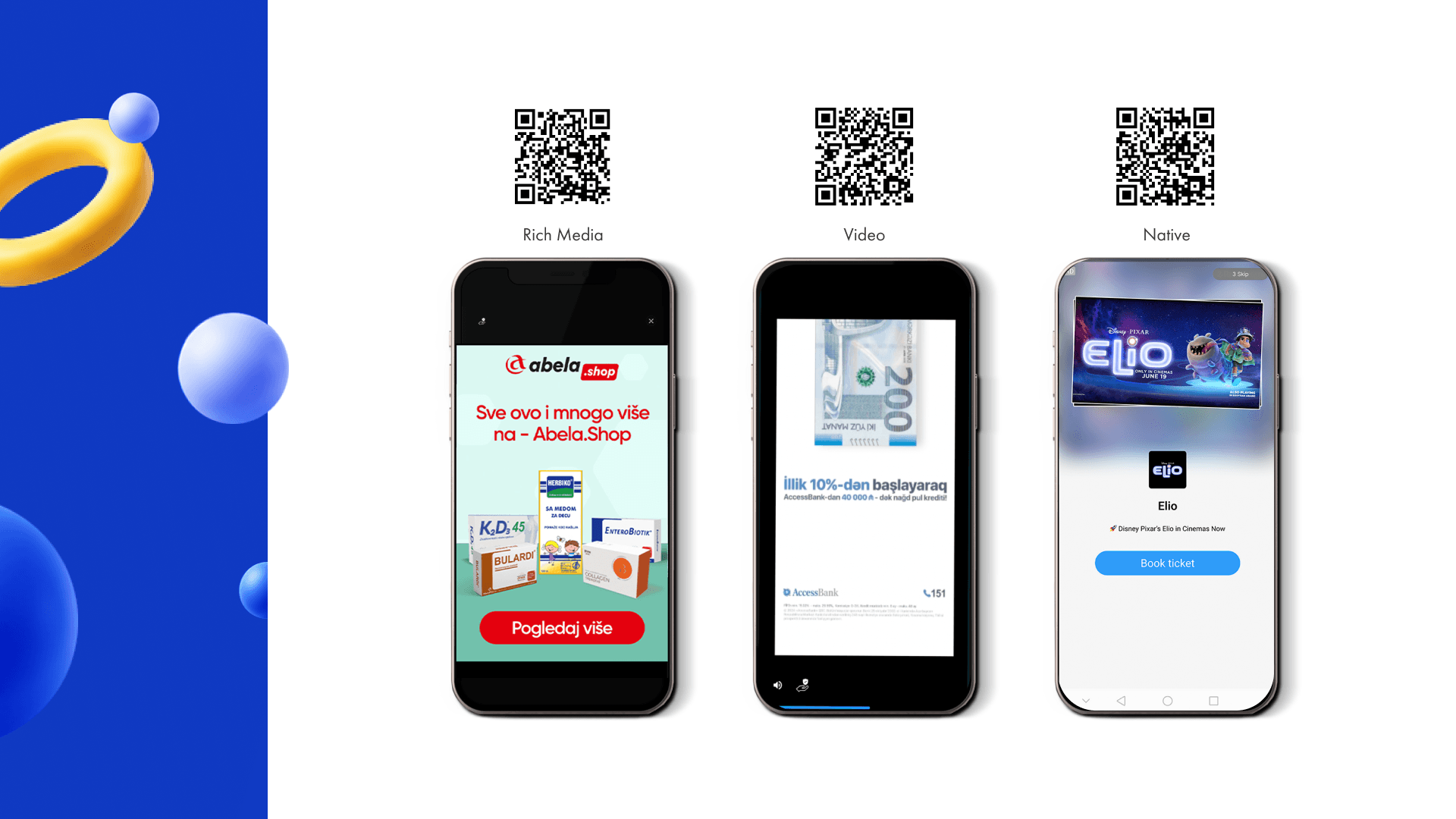
In-app advertising does not succeed because of one isolated metric. Its strength comes from a combination of factors: users spend more time in apps, ads are more likely to appear within the visible part of the screen, and the variety of formats supports different stages of audience interaction — from initial brand awareness to app installs, purchases, and repeat engagement.
At the same time, in-app advertising should not completely replace advertising on websites. An effective strategy allocates the budget according to the campaign objective:
BYYD is a programmatic platform for purchasing advertising inventory inside mobile apps. It enables brands to reach relevant audiences using demographic characteristics, interests, behavioural signals, and data from major third-party providers.
The main advantages of BYYD include:
This approach helps brands build consistent, measurable communication with their audiences across different stages of the customer journey.
For over 11 years, the BYYD team has been working with mobile advertising and creating banners designed for real user engagement. We help brands capture audience attention and achieve business objectives through proven mechanics.
Check out our case studies and send us an email – let’s launch your next campaign together.
Found this helpful? Share it with your friends and colleagues!
For consultations and partnership inquiries:


