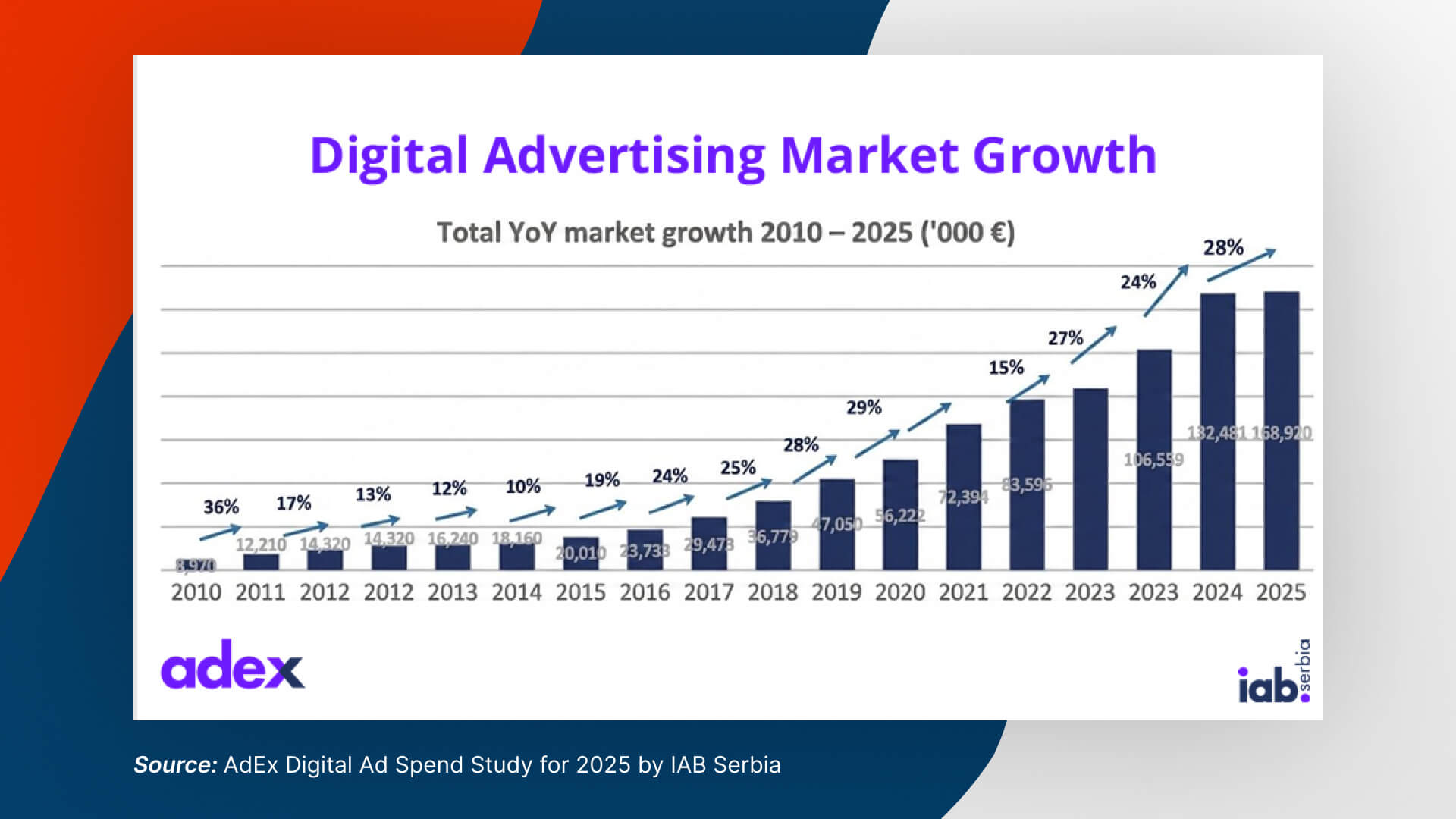
In 2025, Serbia’s advertising market reached €168.92 million. The Serbian digital sector is one of the fastest-growing in the Balkans. Digital continues to play an important role and is becoming one of the key areas for developing audience communication.
The Serbian market is interesting not only because of the dynamics of advertising investment, but also because of the way the structure of digital placements is changing: the role of online video, mobile, programmatic tools, and more precise targeting is growing. For brands and agencies, this opens up new opportunities — from reach-driven campaigns to more personalized interaction with users.
In this article, we explore how digital marketing in Serbia is structured, which channels are shaping the market, and why programmatic advertising is becoming an important part of its growth. We have also gathered comments from industry experts to show how market players assess current changes, the prospects of digital, and the opportunities available to advertisers.
According to DataReportal, by the end of 2025, Serbia had 6.13 million unique internet users, while internet penetration stood at 91.8%.
The main trend is the steady growth of digital advertising in Serbia: from 2010 to 2025, the market volume increased from €8.97 million to €168.92 million, almost 19 times. The dynamics have been especially noticeable in recent years: after 2020, the market began to grow faster, and in 2025 it added another 28% compared to the previous year.
This shows that digital is gradually becoming one of the key channels for advertising investment, while brands are increasingly reallocating budgets toward online placements.
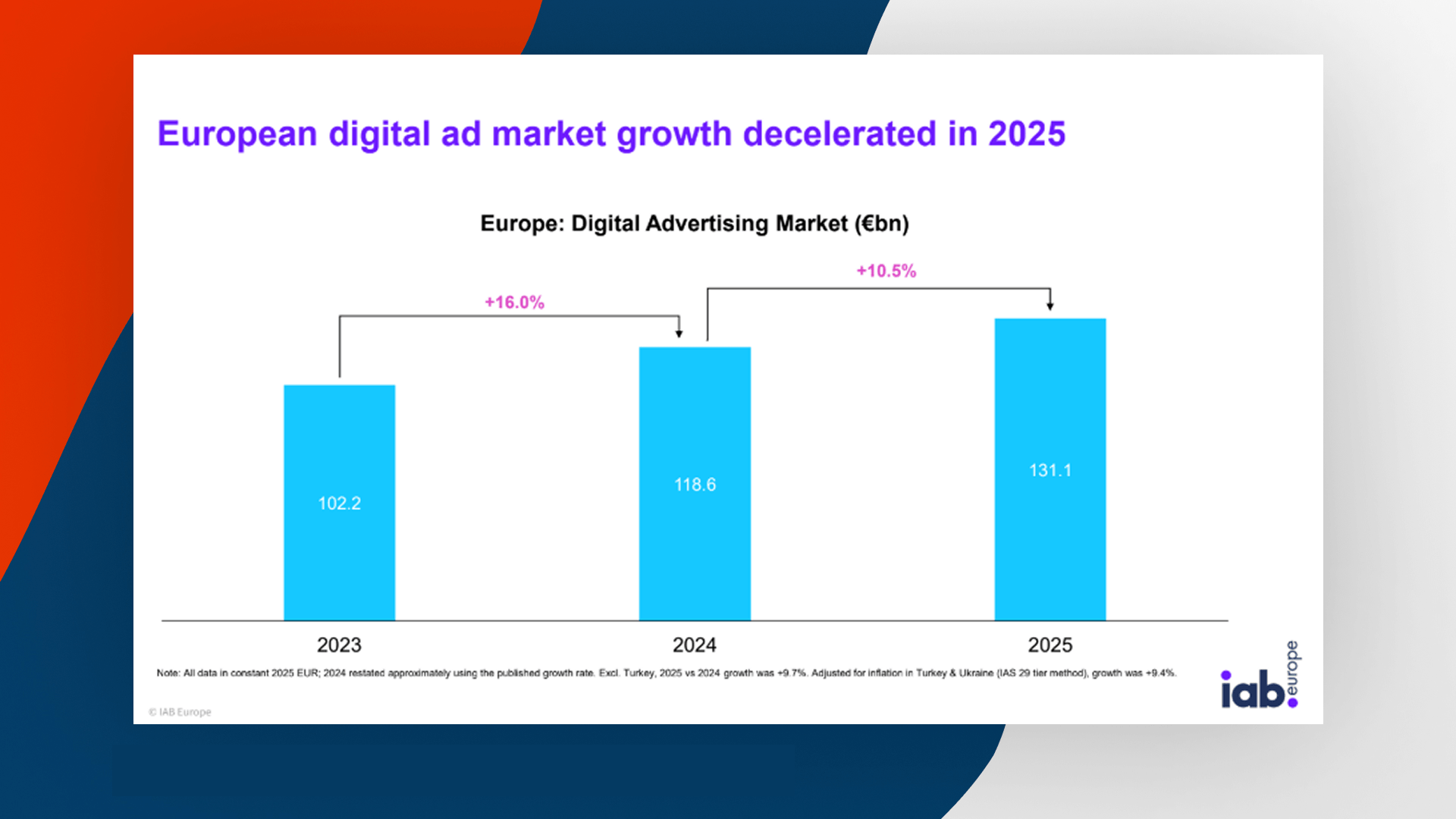
According to the IAB Europe AdEx Benchmark 2025 Report, in 2025, Europe’s digital advertising market continued to demonstrate resilience, growing by 10.5% to reach €131.1 billion.
Search remained the largest advertising format, accounting for 35.2% of total investment, although its share declined from 36.5% in 2024. Social advertising increased its share from 25.1% to 27.1%, while Retail Media rose from 9.6% to 10.2%. Display accounted for 21.9% of the market, compared with 23.0% a year earlier.
Video-led formats were among the main growth drivers. Total video advertising increased by 19.6% to €34.0 billion and, for the first time, represented more than half of all Display investment in Europe.
The transition to programmatic buying also accelerated. Programmatic ad spend rose by 10.9%, from €14.2 billion in 2024 to €15.8 billion in 2025, significantly outperforming non-programmatic Display, which grew by only 1.5%.
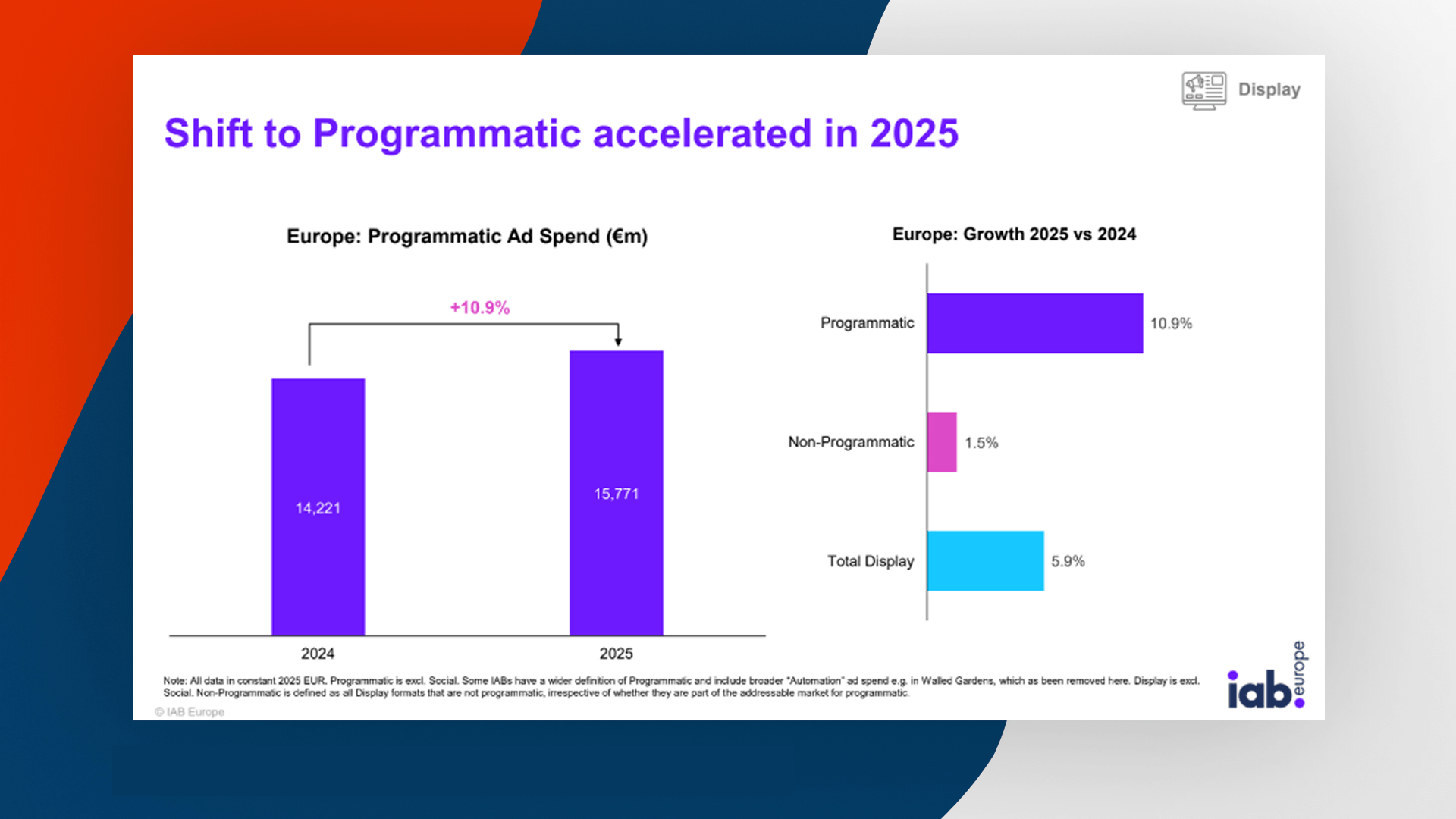
These results show that the European market is increasingly shifting toward automated media buying, video-first formats and data-driven advertising environments.
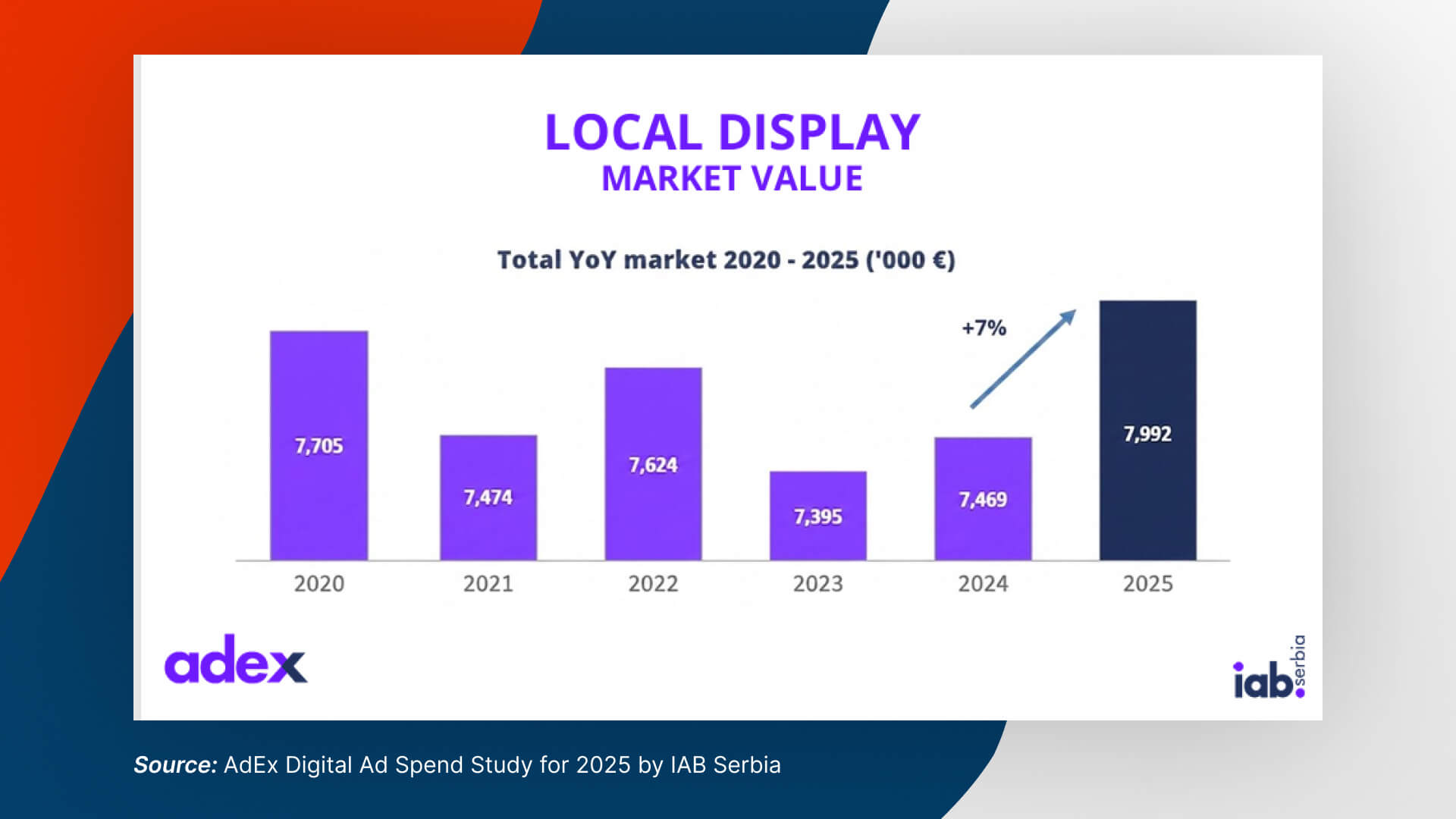
In 2020, the volume of local display advertising in Serbia amounted to €7.705 million, after which it declined to €7.474 million in 2021. In 2024, the market volume reached €7.469 million.
In 2025, the figure grew to €7.992 million, representing a 7% year-on-year increase. Thus, the local display segment remains stable and is gradually moving to a higher level.
To clarify, the local display segment includes both direct media buying on local publishers and programmatic buying conducted through programmatic deals.
According to Digital 2026: Serbia, 96% of users access the internet via smartphones, while 22% do so via tablets.
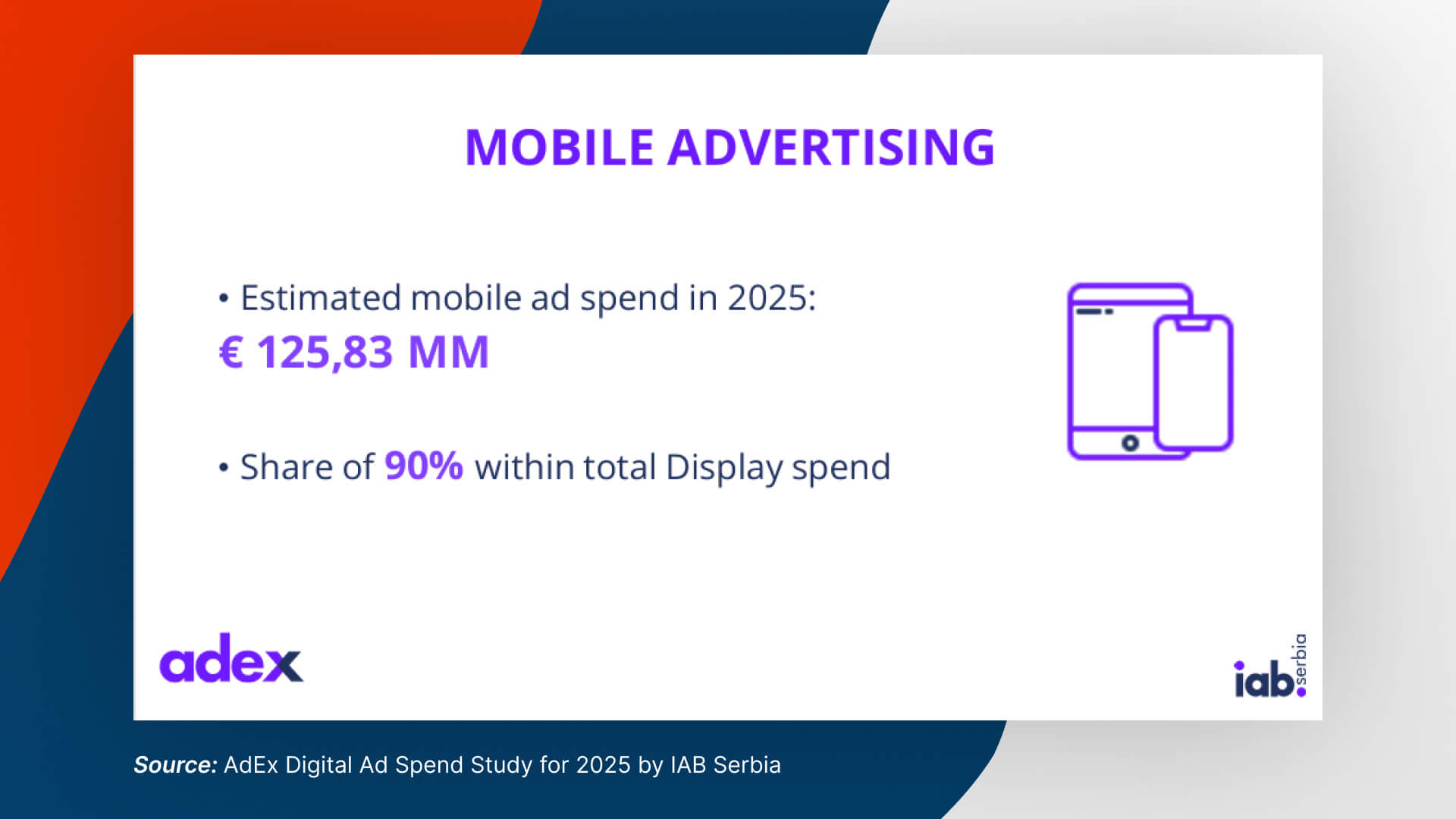
In 2025, mobile advertising spend is estimated at €125.83 million, accounting for 90% of total display spend. This means that mobile placements effectively form the core of the display segment. Advertisers are increasingly investing in mobile inventory as audiences consume content through smartphones, apps, and mobile versions of services.
Social media remains one of the fastest-growing areas of digital advertising in Serbia. In 2025, total social ad spend increased from €46.6 million to €60.05 million, showing 28.8% year-on-year growth. The most dynamic channel was TikTok: its volume reached €3.3 million, with growth of 303%. This points to the rapid strengthening of short-form video content and growing brand interest in new formats for audience engagement.
Among additional digital channels, influencer marketing remains the largest, reaching €4.535 million with 8% growth. SEO reached €1.36 million and grew by 15%, showing continued interest in organic traffic and long-term work with search demand.
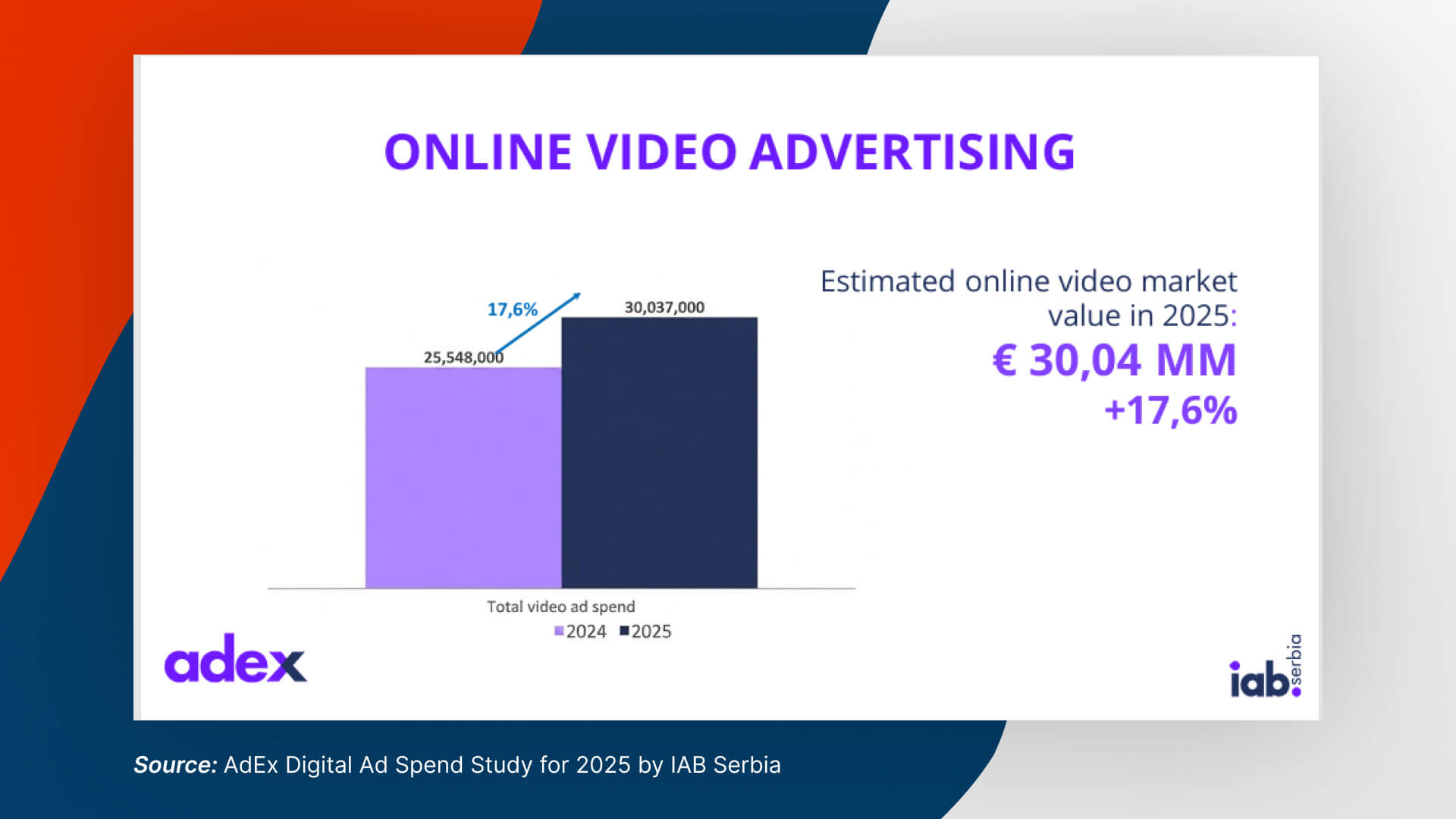
In 2025, Serbia’s online video advertising market was estimated at €30.04 million, which is 17.6% higher than the previous year.
The key takeaway is that online video remains one of the fastest-growing areas of digital advertising. This growth is driven by increasing video content consumption, the development of mobile and streaming environments, and brands’ demand for more engaging communication formats. Video allows advertisers not only to reach audiences, but also to convey emotions more effectively, showcase products, and strengthen the memorability of advertising messages.

Una Barišić, Director of Operations at IAB Serbia:
In 2026, AI is no longer viewed as an emerging trend – it has become part of everyday work across the industry. What makes this shift particularly important is that AI is not only changing how content is produced, but also how campaigns are planned, optimized, measured, and scaled. In many organizations, it is already influencing workflows, resource allocation, and decision-making processes. At the same time, as consumers interact with content and platforms in increasingly fragmented ways, data-driven marketing has become even more important. The challenge is no longer access to data, but the ability to turn data into meaningful insights and business decisions. As automation becomes more advanced, the value of high-quality data and contextual signals continues to grow, helping advertisers deliver more relevant and effective communication.
According to HubSpot, 67% of marketing teams say AI helps them save 10 or more hours per week. At the same time, 68% report that AI has significantly improved their productivity, giving them more time to focus on strategic planning and finding more effective ways to communicate with customers.

Nemanja Cuturilo, Head of Business Development for EE region BYYD:
The use of AI in marketing across Europe is expanding rapidly: major companies, including BYYD, are increasingly integrating such solutions into their workflows. For example, in media buying, machine learning algorithms help reduce inefficient impressions by more accurately identifying audiences with a high probability of response. Importantly, these technologies operate within privacy-preserving approaches. At BYYD, we use AI to support key stages of advertising campaigns — from creative and video production to anti-fraud, optimization, and AI Targeting. It helps speed up processes and improve data-driven decisions, while strategy, quality control, and final interpretation remain in the hands of our specialists.

Selena Radovic, Head of Digital at Media House RS:
AI — which for years was the invisible engine driving algorithms “behind the scenes” — has become visible to everyone through generative tools and by taking over manual and repetitive tasks, finally freeing up time for strategists and creatives to focus on what AI still cannot do: a deep understanding of the local mentality, empathy, and defining the umbrella brand strategy.

Marina Todorovski, Digital Media Buying Director at Media Pool:
In Serbia, AI is currently used more in creative processes than in media buying itself, with smaller brands likely to adopt campaign automation faster than larger ones. At the same time, AI is already playing an important role in analyzing both internal and external factors, with strong potential in real-time marketing and in-flight campaign optimization. However, there is still room in our market for greater reliance on marketing information systems to ensure consistent and relevant insights for planning.
According to the data, in-app advertising in Serbia is estimated at $53.9 million in 2025. This makes it one of the largest digital advertising channels in the market, following social media ads and online banner ads. In-app advertising is already ahead of online video ads, search ads, classifieds, influencer ads, and digital audio in terms of annual spend.
The segment also continues to grow: in-app ad spend increased by 8.7% year-on-year, adding $4.3 million compared to the previous year. Its share of total digital advertising spend reached 30%.
Una Barišić, Director of Operations at IAB Serbia:
Rather than seeing one channel outperform all others, we are witnessing deeper integration across channels and formats. Mobile remains the primary environment where consumers spend their time, making it one of the most important touchpoints for brands. Video continues to dominate attention across platforms, while social media increasingly serves as a discovery and decision-making channel rather than just a communication channel. At the same time, in-app environments are becoming increasingly valuable due to high engagement levels and the ability to reach users in moments of active attention. Programmatic advertising continues to evolve through automation and smarter use of data, while retail media is emerging as one of the most promising areas for future growth.
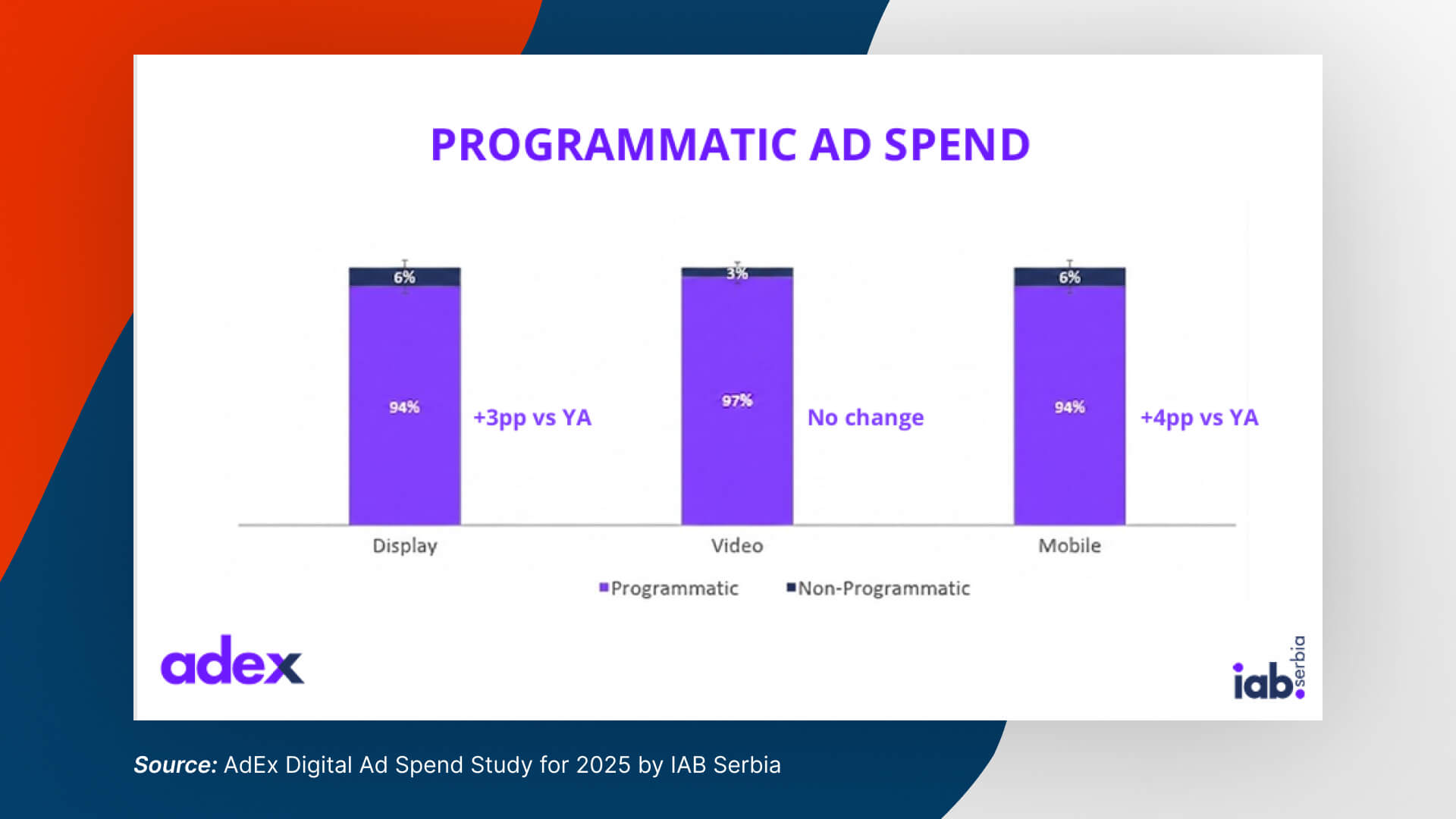
The high share of programmatic across key digital segments stands out. Programmatic accounts for 94% of display, 97% of video, and 94% of mobile. This confirms that automated buying has already become the standard mechanism for digital placements, especially in mobile advertising and video formats.
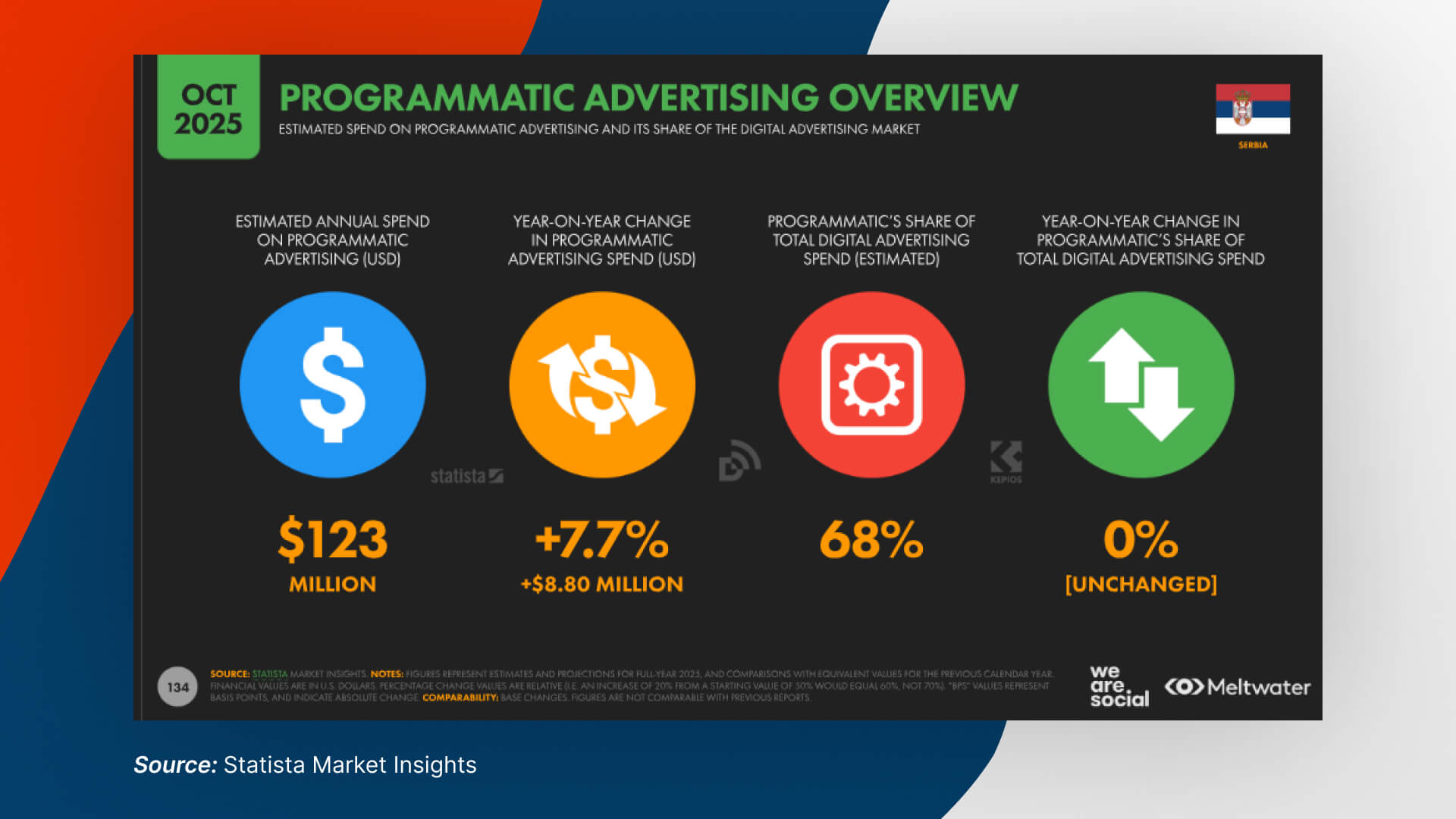
Programmatic advertising plays a major role in Serbia’s digital market. Estimated annual spend on programmatic advertising reached $123 million in 2025, growing by 7.7% year-on-year. At the same time, programmatic accounts for 68% of total digital advertising spend, which means that automated buying is no longer a niche tool but a standard part of digital media planning.
Marina Todorovski, Digital Media Buying Director at Media Pool:
Programmatic offers the greatest potential, as it enables seamless ad placement across a broad mix of channels, including traditional media, through unified platforms. At the same time, AI-driven tools are gaining importance by automating campaign setup and unlocking new optimization opportunities. Looking ahead, one of the most interesting directions is the integration of PR content into programmatic ecosystems, which could significantly accelerate how brands engage with media partners.
The main advantage of programmatic is that it allows advertisers to buy not just inventory, but relevant audience contact. Campaigns can be targeted by socio-demographic parameters, interests, behavior, location, device type, operating system, and other audience signals. This helps brands reach users who are more likely to be interested in the product or service, instead of relying only on broad media placement.
In mobile advertising, programmatic also gives advertisers more control over the app environment. Brands can select relevant app categories, prioritize high-performing placements, exclude unsuitable inventory, and optimize campaigns based on real performance data. This is especially important for in-app campaigns, where the quality of the app, user behavior, engagement level, and context of interaction can strongly influence campaign results.
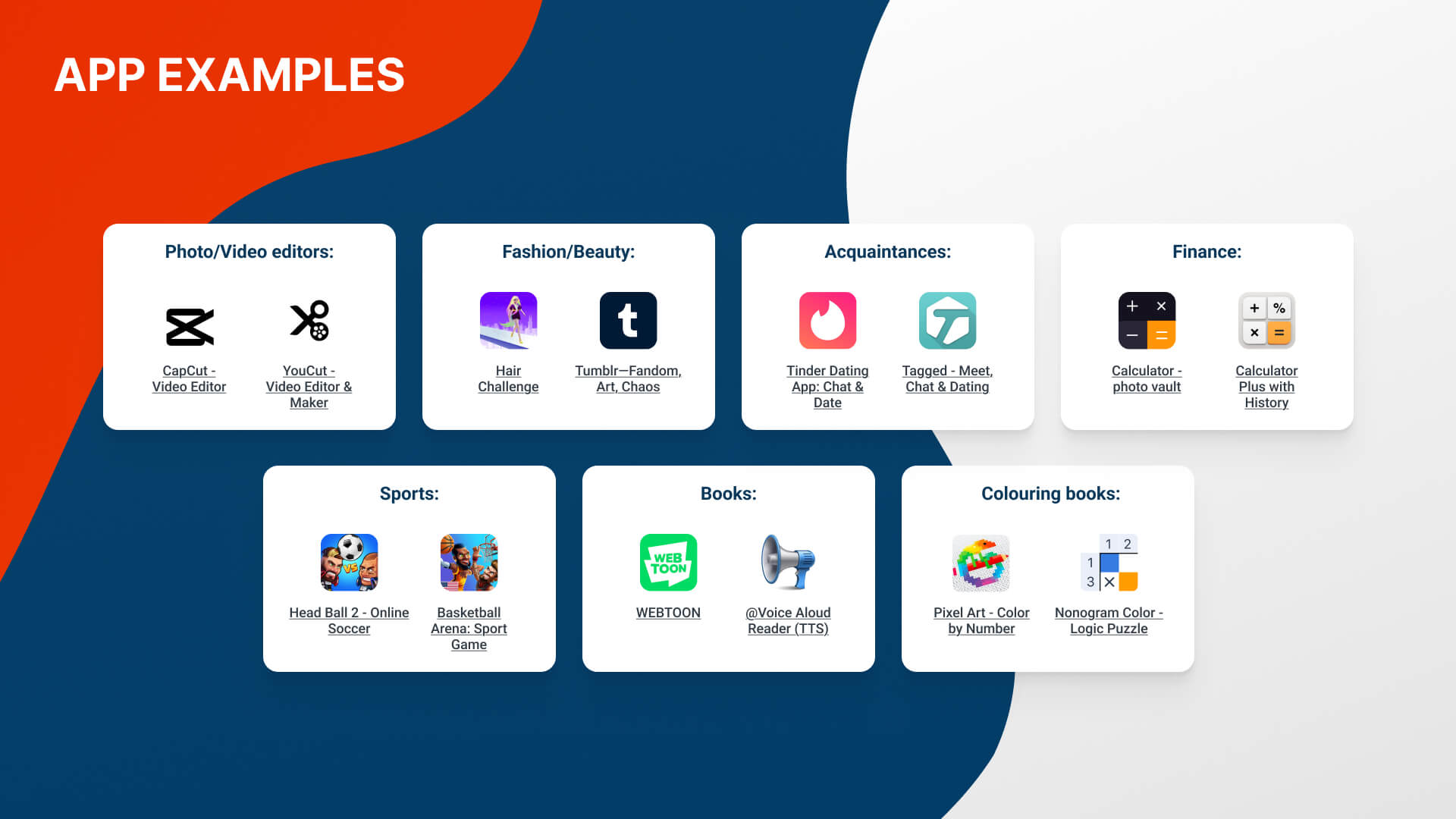
As a result, programmatic helps make digital advertising more flexible, measurable, and efficient. It allows brands to combine reach with precision, adapt campaigns in real time, and allocate budgets toward the audiences, apps, and formats that deliver the strongest performance.
Nemanja Cuturilo, Head of Business Development for EE region BYYD:
The Serbian digital advertising market is clearly moving toward a more automated, mobile-first and data-driven model. The growth of in-app, video, social media and programmatic shows that advertisers are increasingly looking for channels that combine scale, precise targeting and measurable performance. At BYYD, we follow these trends by building campaigns around personalization, audience data and continuous optimization: we select relevant app environments, adapt targeting to user behavior and optimize placements on a daily basis to improve campaign efficiency. At the same time, AI-based anti-fraud solutions help us identify suspicious traffic patterns, reduce inefficient impressions and protect clients’ budgets, while our specialists remain responsible for strategy, quality control and final campaign decisions.
Selena Radovic, Head of Digital at Media House RS:
According to the official IAB AdEx report for Serbia for 2025, the domestic digital market continues its strong growth, led by the Social, Video, and SEM segments, while advertisers primarily focus on combating ad saturation through the Attention Economy. Given the continuous rise of video content, the focus is on maximizing advertising efficiency through video formats — primarily those on social media — while CTV (Connected TV) advertising is also breaking into the digital media mix in our market.
Una Barišić, Director of Operations at IAB Serbia:
The Serbian digital advertising market continues to mature, and one of the most noticeable changes, as we’ve seen in the last AdEx report, is that the gap between local and more developed digital markets has become significantly smaller. Trends, technologies, and new approaches reach our market much faster than they did a few years ago, making it increasingly difficult to predict which developments will have the biggest long-term impact. Among the trends currently shaping the market the most are AI adoption, the continued growth of creator-led content, retail media development, and changes in the way people search for information, discover content, and make purchasing decisions. These shifts are influencing not only media planning and campaign execution, but also broader business strategies across brands and agencies.
Marina Todorovski, Digital Media Buying Director at Media Pool:
“In 2026, we are seeing existing trends accelerate, with retail media advertising standing out as the most prominent, expanding beyond major supermarket chains into other retail categories. At the same time, CTV (Connected TV) is gaining momentum, despite a still limited platform ecosystem, while programmatic continues to play a critical role by making campaign management more efficient. Ultimately, as channels and formats diversify, management platforms are consolidating, pointing towards greater centralization soon.
To learn more about mobile advertising or to launch an in-app campaign:


