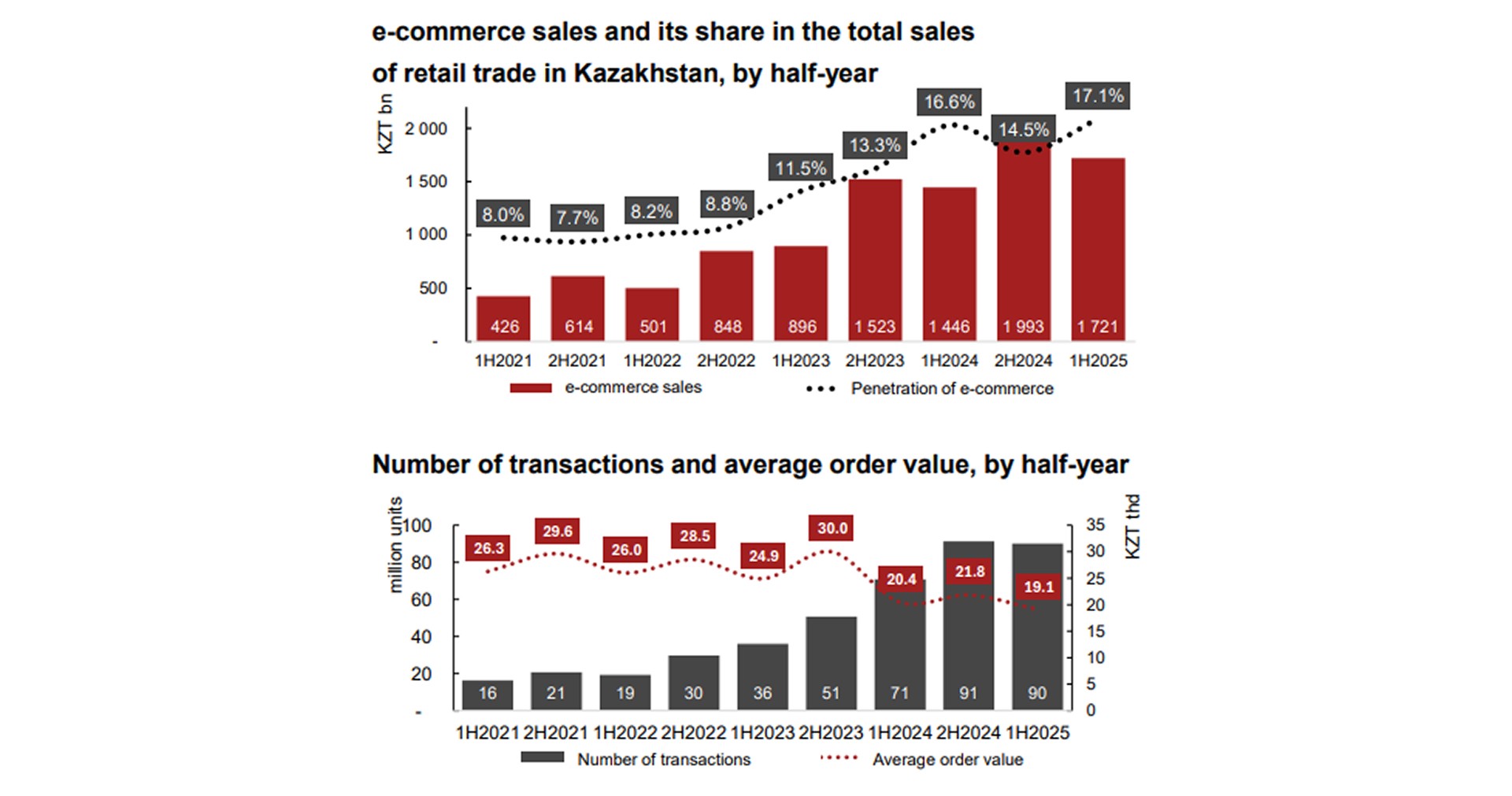
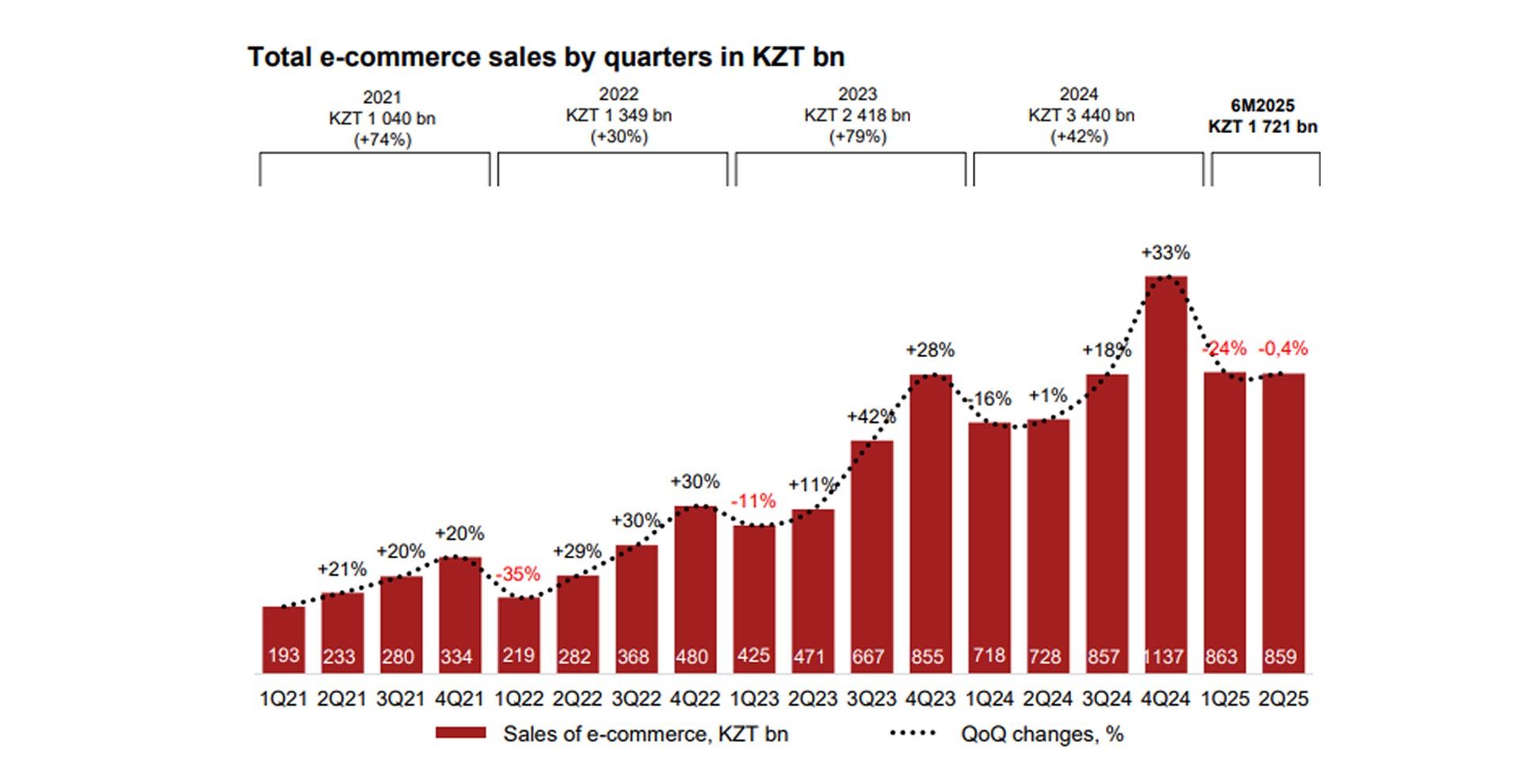
In the first half of 2025, Kazakhstan’s retail e-commerce market reached 1.7 trillion tenge, growing by 19% year-on-year.
The main driver of market expansion is not a rise in average order value, but an increase in purchase frequency:
Marketplaces play a central role in this growth, accounting for 92% of online sales value and 96% of all e-commerce transactions.
The market is gradually splitting into two distinct models:
This indicates that Kazakhstan’s e-commerce market is moving toward a more mature model, where online shopping becomes a regular part of consumer behavior.
In this article, we analyze the development of Kazakhstan’s e-commerce market based on the Strategy& report and provide digital advertising statistics from the Central Asian Advertising Association.
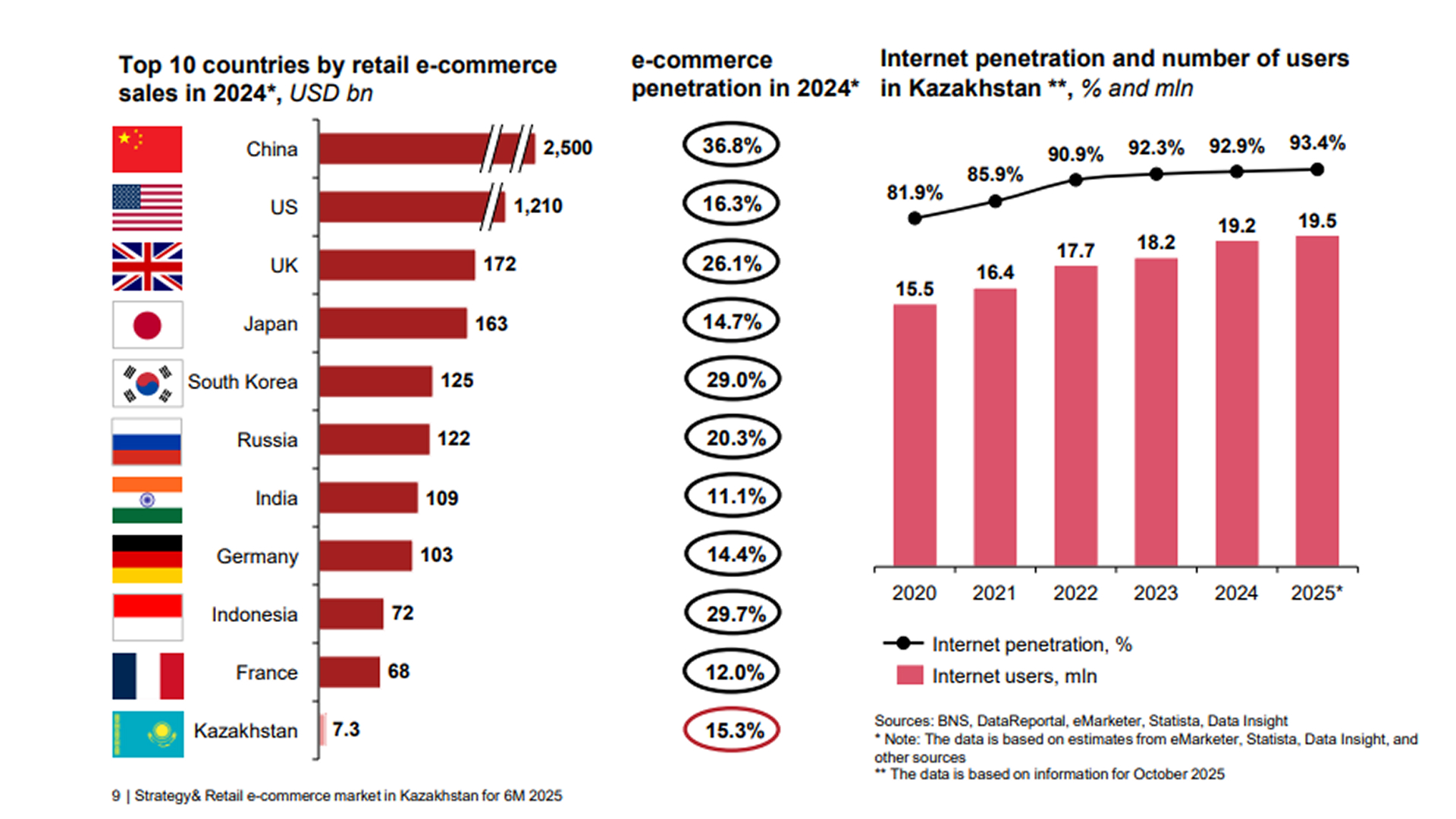
In 2024, Kazakhstan’s online retail market reached approximately $7.3 billion, while e-commerce accounted for 15.3% of total retail sales. By the first half of 2025, this share had increased to 17.1%, approaching the projected global average level of around 20.5%.
One of the key growth factors is the country’s high level of digital adoption. Internet penetration in Kazakhstan increased from 81.9% in 2020 to 93.4% in 2025.
During the same period, the number of internet users grew from 15.5 million to 19.5 million people. This creates a strong foundation for further e-commerce expansion and wider adoption of digital consumer channels.
At the same time, Kazakhstan’s e-commerce market remains smaller compared with the largest global markets, such as China, the United States, and the United Kingdom.
However, in terms of online retail penetration, Kazakhstan is already comparable with several developed markets and continues to narrow the gap. For retailers and brands, this means that digital touchpoints, marketplaces, and mobile channels will play an increasingly important role in the consumer journey.
The growth of Kazakhstan’s e-commerce market is increasingly driven by higher purchase frequency rather than larger basket sizes.
In the first half of 2025, the number of online orders increased by 27%, reaching 90.1 million transactions.
At the same time, the average order value continued to decline — falling to 19.1 thousand tenge, down 6% year-on-year. In US dollar terms, the average order value decreased to $37.3, which is 18% lower than in the first half of 2024.
This trend shows that online shopping is becoming more frequent and habitual: consumers are increasingly using digital channels for everyday purchases, even as the average basket size gradually decreases.
Several factors are supporting e-commerce growth in Kazakhstan:
New payment methods, improved delivery services, and overall digitalization are making online shopping accessible to a broader audience, contributing to sustainable transaction growth.
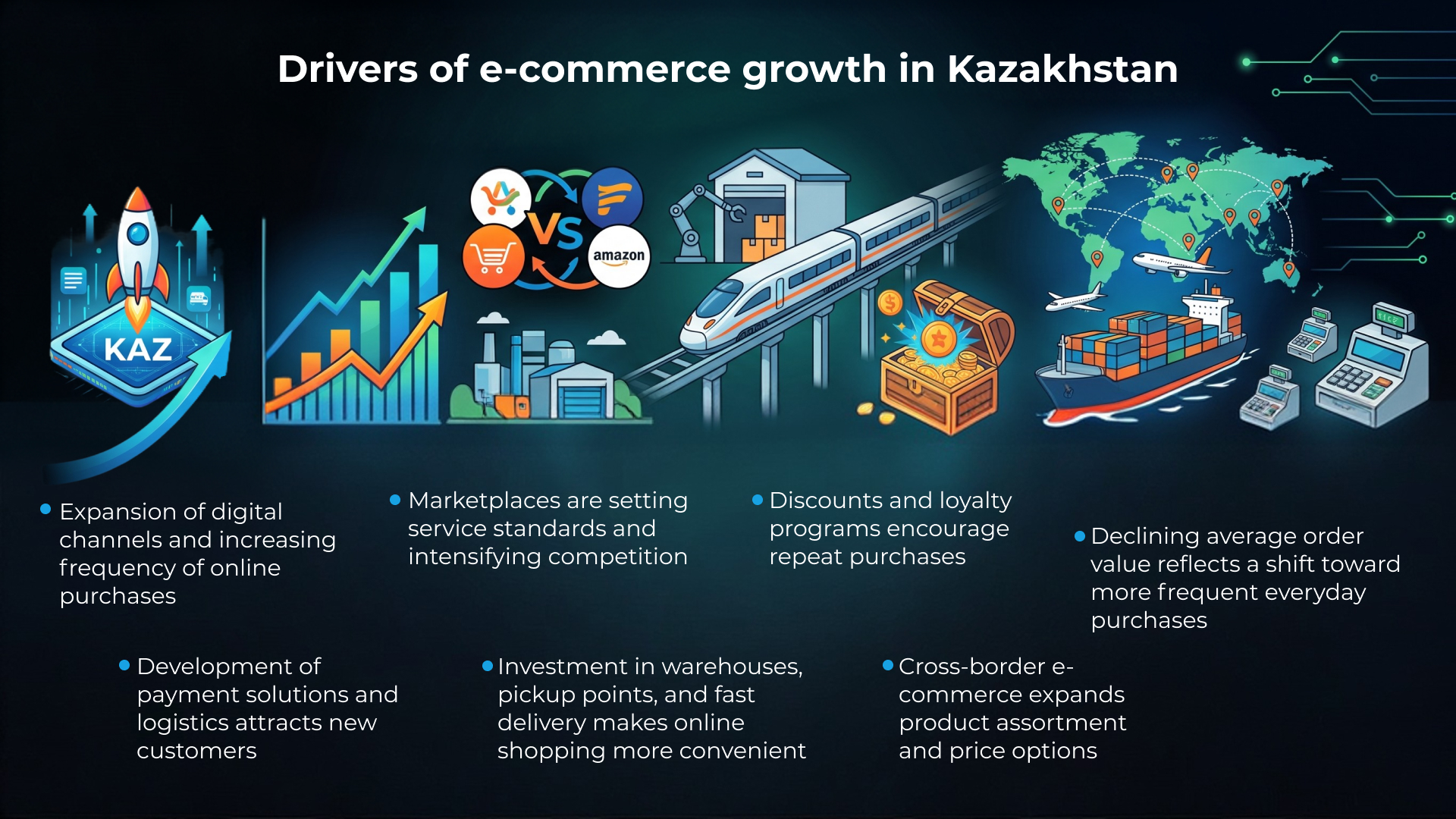
Marketplaces play a significant role in shaping this development. They are setting new standards for convenience, increasing competition, and driving the growth of supporting infrastructure, including fulfillment centers, pickup points, and fast delivery services.
Discounts, loyalty programs, and promotional mechanics also encourage users to return for repeat purchases.
Cross-border commerce is another factor supporting market expansion, as it increases product variety and provides consumers with more opportunities to compare prices.
At the same time, the combination of declining average order values and growing marketplace share highlights an important shift in consumer behavior. Online channels are increasingly used not only for expensive or occasional purchases but also for regular everyday shopping.
Therefore, future market growth will be driven less by higher basket values and more by an increase in transaction volume.
Marketplaces continue to expand their role despite the decline in average order value:
The key conclusion is that marketplaces are becoming the primary channel for frequent and affordable purchases, while retailers’ own online stores are increasingly focused on higher-value transactions.
This confirms the division of the market into two segments: mass everyday purchases and higher-value categories.
According to the Central Asian Advertising Association, Kazakhstan’s advertising market reached 60.2 billion tenge in the first half of 2025, growing by approximately 18% year-on-year.
Internet advertising became the largest segment, accounting for 31.8 billion tenge, or around 53% of total advertising investment.
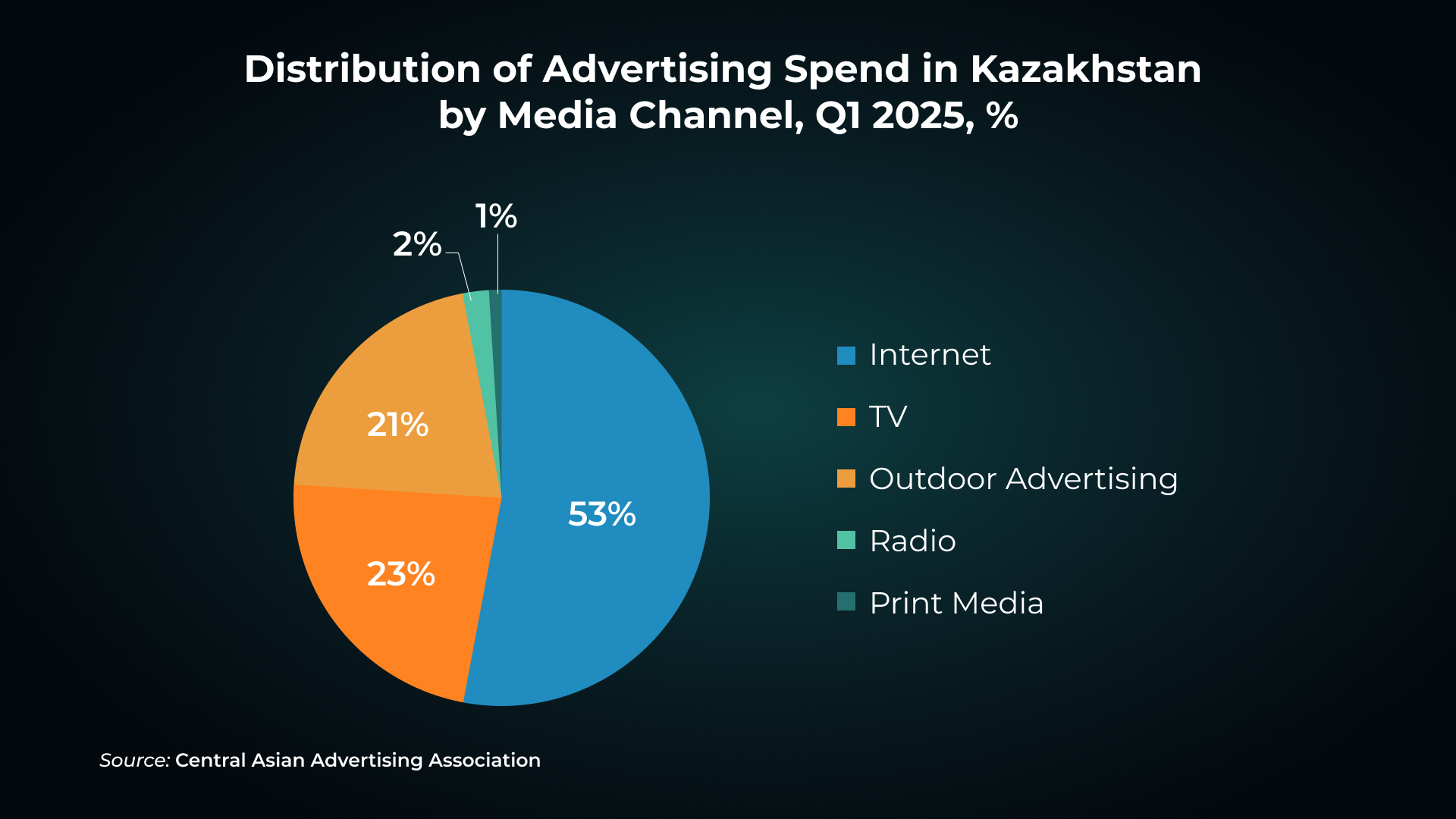
Digital advertising has therefore become the dominant force in the market, continuing to gain share as traditional media demonstrate more moderate growth.
Within digital advertising, significant structural changes are also taking place.
Social media became the largest segment, capturing almost 40% of digital advertising budgets.
The Central Asian Advertising Association highlights the popularity of short-form vertical video and the development of automated advertising solutions as key growth factors. TikTok also remains an important part of advertisers’ media strategies.
At the same time, demand-driven advertising continues to gain importance. Paid search accounted for 15.8% of digital advertising, with particularly strong growth during the second quarter.
Search advertising remains especially relevant for e-commerce and financial services, where users often enter digital channels with a clear purchase intent. Google remains the leading search platform, while Yandex continues to strengthen its position.
The structure of video advertising is also changing.
Budgets are gradually shifting from traditional online video toward shorter and platform-native formats, including Shorts and other vertical video formats.
This reflects a broader trend: advertisers are following user attention, which is increasingly concentrated around mobile devices and short-form content.
Retail media is another rapidly developing segment. Although it currently accounts for only 2.1% of the digital advertising market, it demonstrates some of the highest growth rates.
The ability to reach consumers directly on e-commerce platforms, including Kaspi.kz, makes retail media particularly attractive for campaigns focused on sales and measurable business outcomes.
Influencer marketing represents approximately 3–4% of digital advertising budgets, but the approach itself is changing. Creator content is increasingly used not only for individual brand integrations but also as advertising material that can be scaled through paid social promotion.
Overall, Kazakhstan’s digital advertising market is moving toward greater concentration around several key ecosystems: social platforms, search, video, and e-commerce.
Automation is becoming increasingly important as advertisers rely more on algorithms for audience selection and campaign optimization.
At the same time, the evaluation of advertising effectiveness is changing. Brands are moving beyond simple reach metrics and focusing more on the quality of interaction: audience relevance, engagement, frequency of contact, and user actions.
Creative quality is also becoming a critical success factor. In an increasingly competitive attention economy, brands need formats that are adapted to mobile consumption patterns and relevant to specific audiences.
As a result, mobile formats and programmatic advertising enable brands not only to achieve scale but also to reach specific audiences, optimize campaigns based on performance data, and engage users throughout different stages of the customer journey.
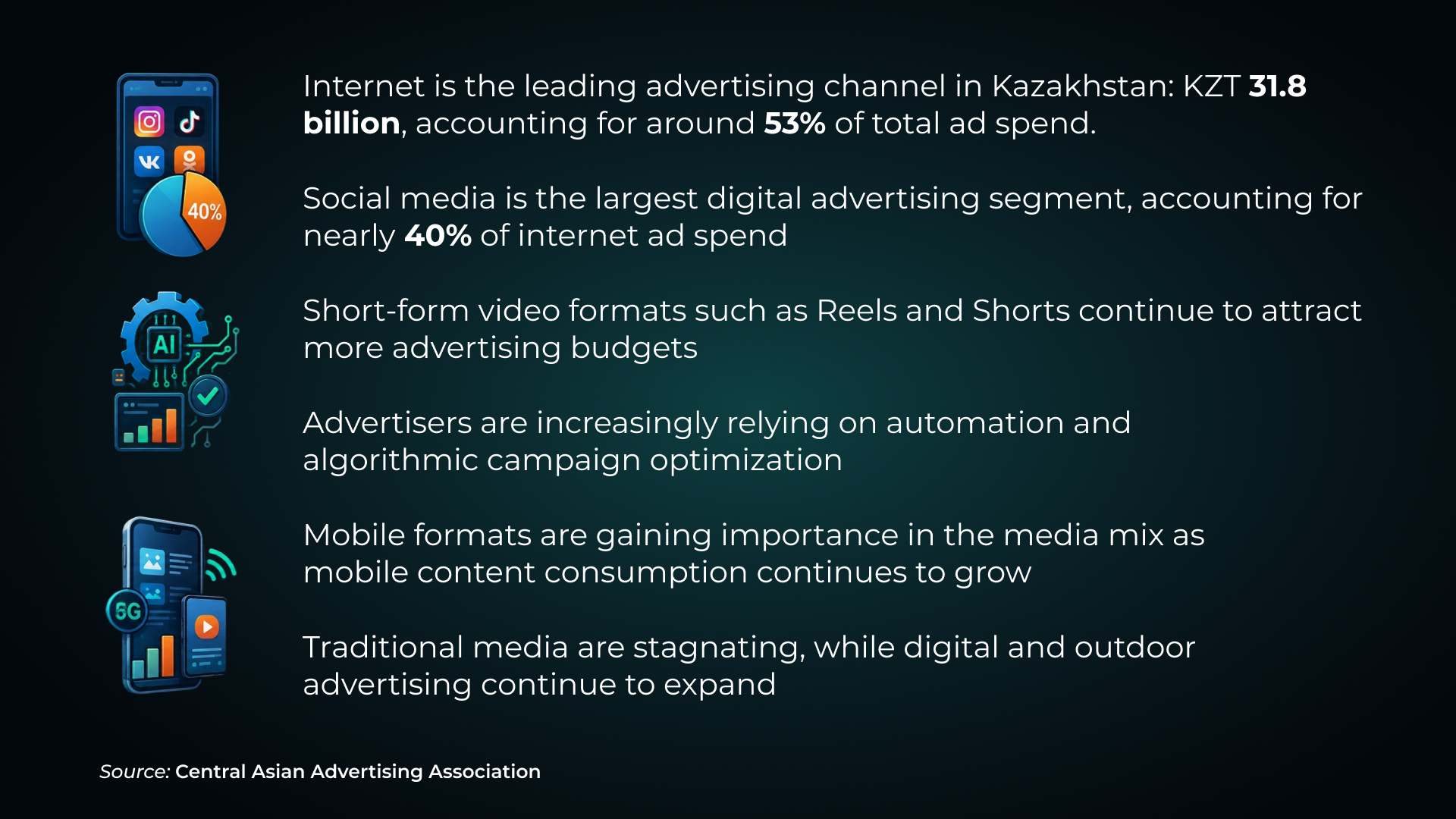
The growth of digital advertising, mobile consumption, e-commerce, and automation creates favorable conditions for further programmatic development in Kazakhstan.
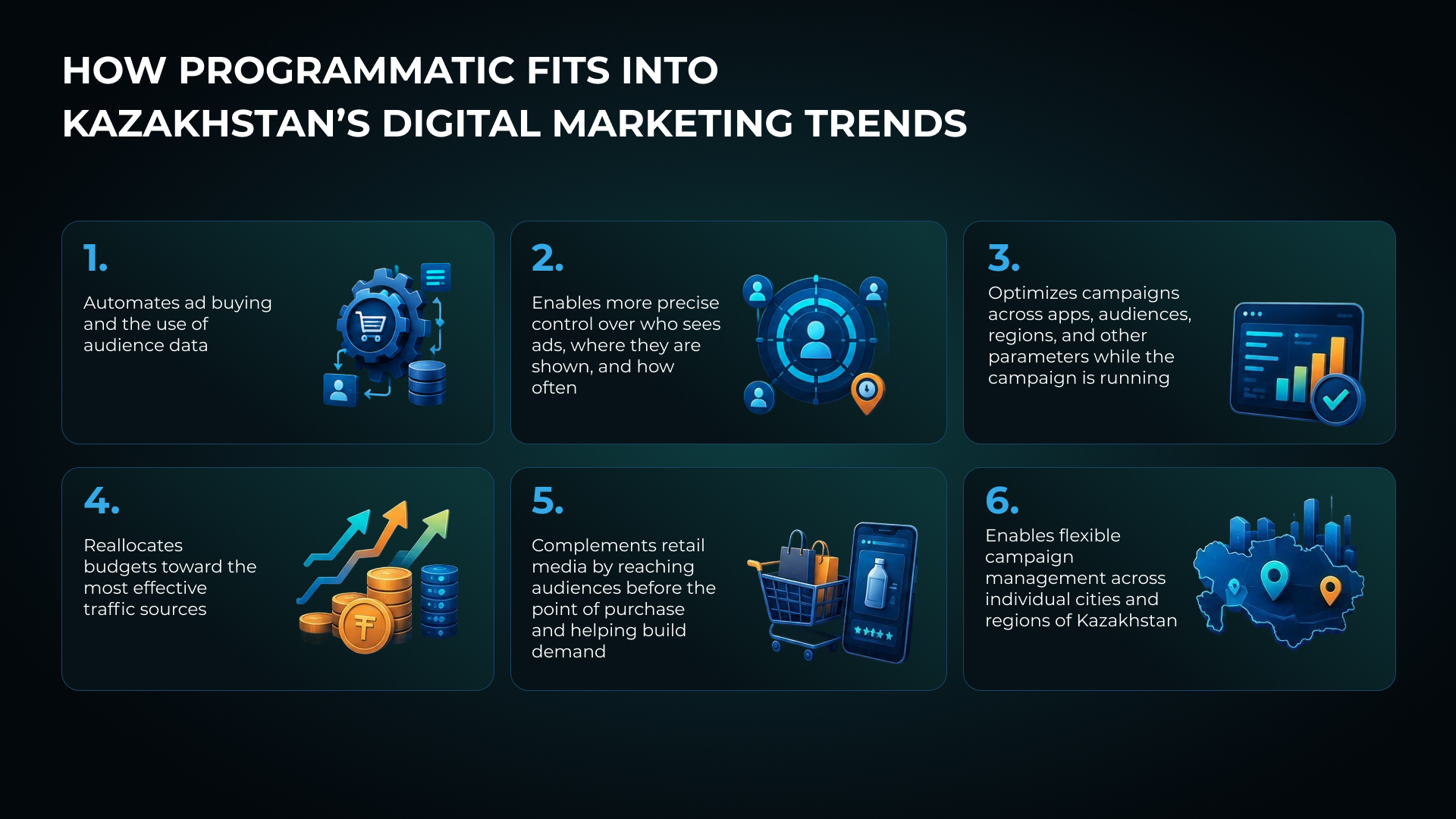
As digital channels capture a larger share of advertising budgets, brands need more than just additional impressions — they need better control over who sees the advertisement, where it appears, and how frequently users are exposed to it.
Programmatic advertising addresses this need through automated media buying and audience-based targeting. Instead of selecting individual websites or applications, brands can reach specific user segments and optimize campaigns based on actual performance.
Another major trend in Kazakhstan’s digital advertising market is the increasing use of algorithms for campaign management and optimization. Programmatic follows the same direction.
During campaign delivery, systems analyze performance across applications, publishers, audiences, locations, and other parameters, reallocating impressions toward the most effective sources.
Therefore, automation is used not only for media buying itself but also for continuous campaign improvement.
Kazakhstan’s digital market is gradually moving from simple reach acquisition toward more precise and automated audience engagement.
The growth of mobile formats, e-commerce, and algorithm-driven optimization continues to accelerate this shift.
Within this ecosystem, programmatic occupies a position between traditional mass-reach media channels and performance-driven tools focused on existing demand.
It enables brands to find relevant audiences in the mobile environment, use engaging formats, control frequency, and continuously optimize campaigns based on real performance results.
Check out our case studies and send us an email – let’s launch your next campaign together.
Found this helpful? Share it with your friends and colleagues!
For consultations and partnership inquiries:


