Just a few years ago, B2B marketing was associated primarily with cold outreach, email campaigns, and direct sales. Today, the supplier selection process has changed significantly.
Procurement professionals increasingly approach B2B buying with the expectations of B2C consumers. They want a clear digital journey with fewer unnecessary steps. This shift is visible worldwide and is driven by expectations around convenience, speed, transparency, and self-service.
Today’s B2B buyer is more digital, more mobile, and more demanding when it comes to the quality of communication. Buyers expect to receive relevant information in a convenient format, whether they are working from a desktop computer or using a smartphone throughout the day.
This is why mobile advertising is becoming an important tool for B2B marketing. It allows brands to engage audiences at different stages of the decision-making process, increase brand awareness, and build demand among potential customers.
First of all, procurement behavior is increasingly shaped by habits developed in everyday life. People want to find information quickly and compare options easily. According to eMarketer, Millennials and Gen Z dominate B2B buying groups.
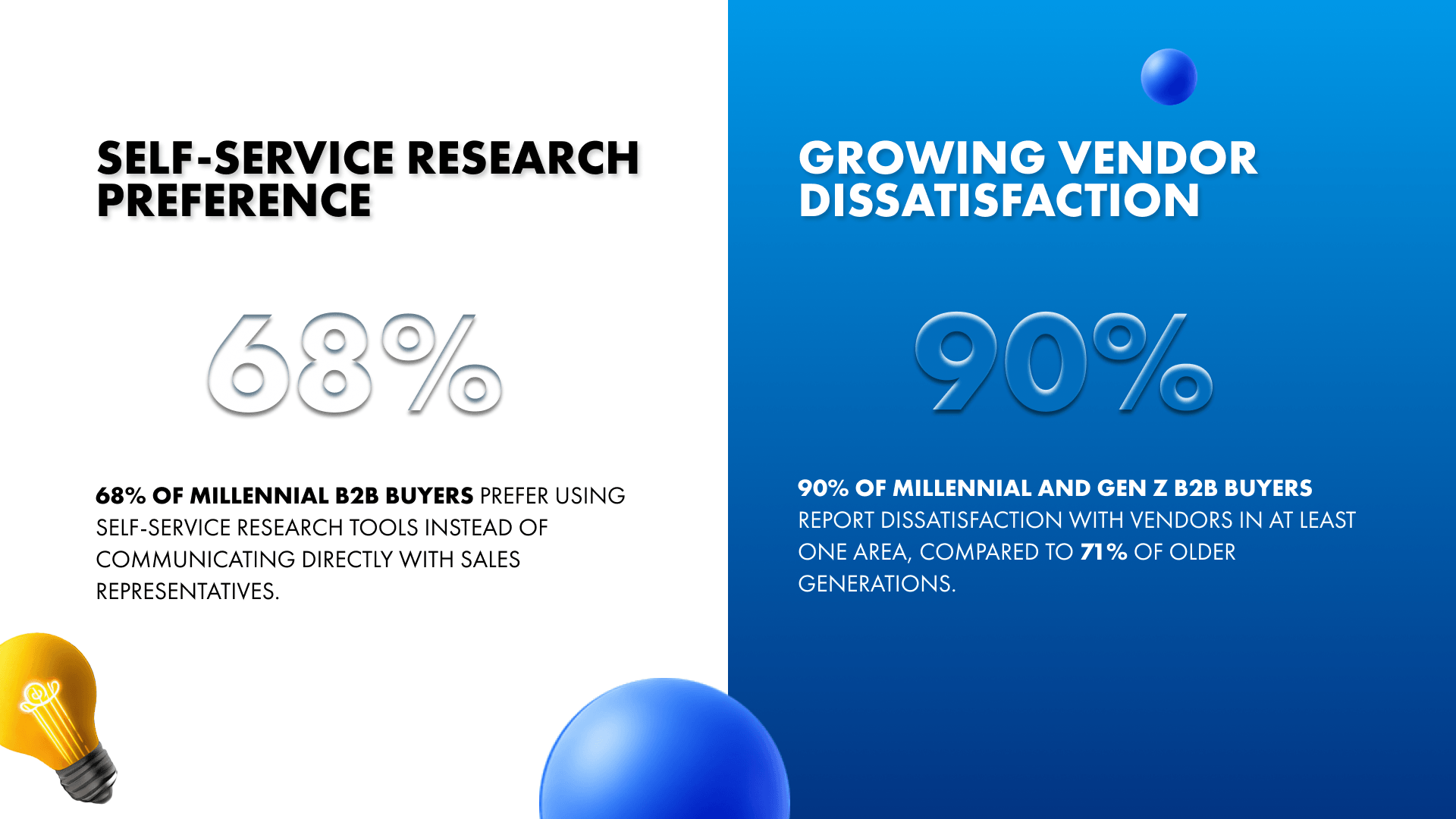
This matters for brands. These decision-makers do not like barriers or unnecessarily long customer journeys. They expect convenience, clear navigation, and independent access to information. eMarketer also points to growing demand for self-service and a digital-first buying journey.
As a result, a website is no longer just a digital storefront. It should help buyers navigate their options and reduce uncertainty. For B2B marketing, this means creating digital environments that help users move through the decision-making process independently.
In addition, B2B buyers look for different arguments depending on their role in the decision-making process. Business stakeholders assess practical value and the impact of a solution on business performance; finance professionals focus on reliability, transparency of terms, and cost efficiency; while IT teams evaluate functionality, security, and integration capabilities.
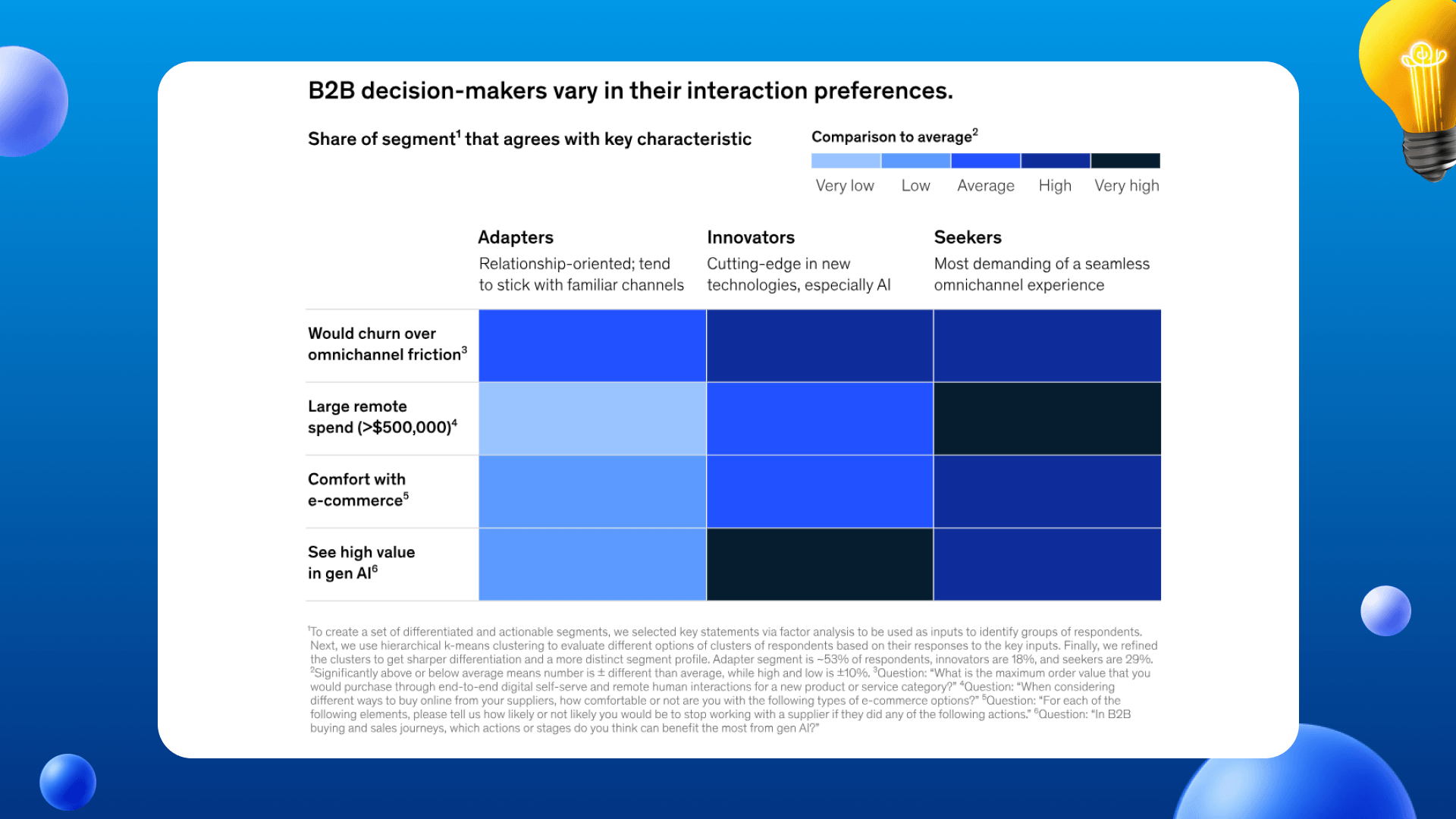
This makes a universal marketing message less effective. B2B marketing needs to adapt communication to different groups involved in the buying process.
According to Gartner research, around 70–80% of B2B buyers prefer to conduct independent online research and explore products before contacting a sales representative.
Buyers use an average of more than 10 interaction channels when choosing a supplier.
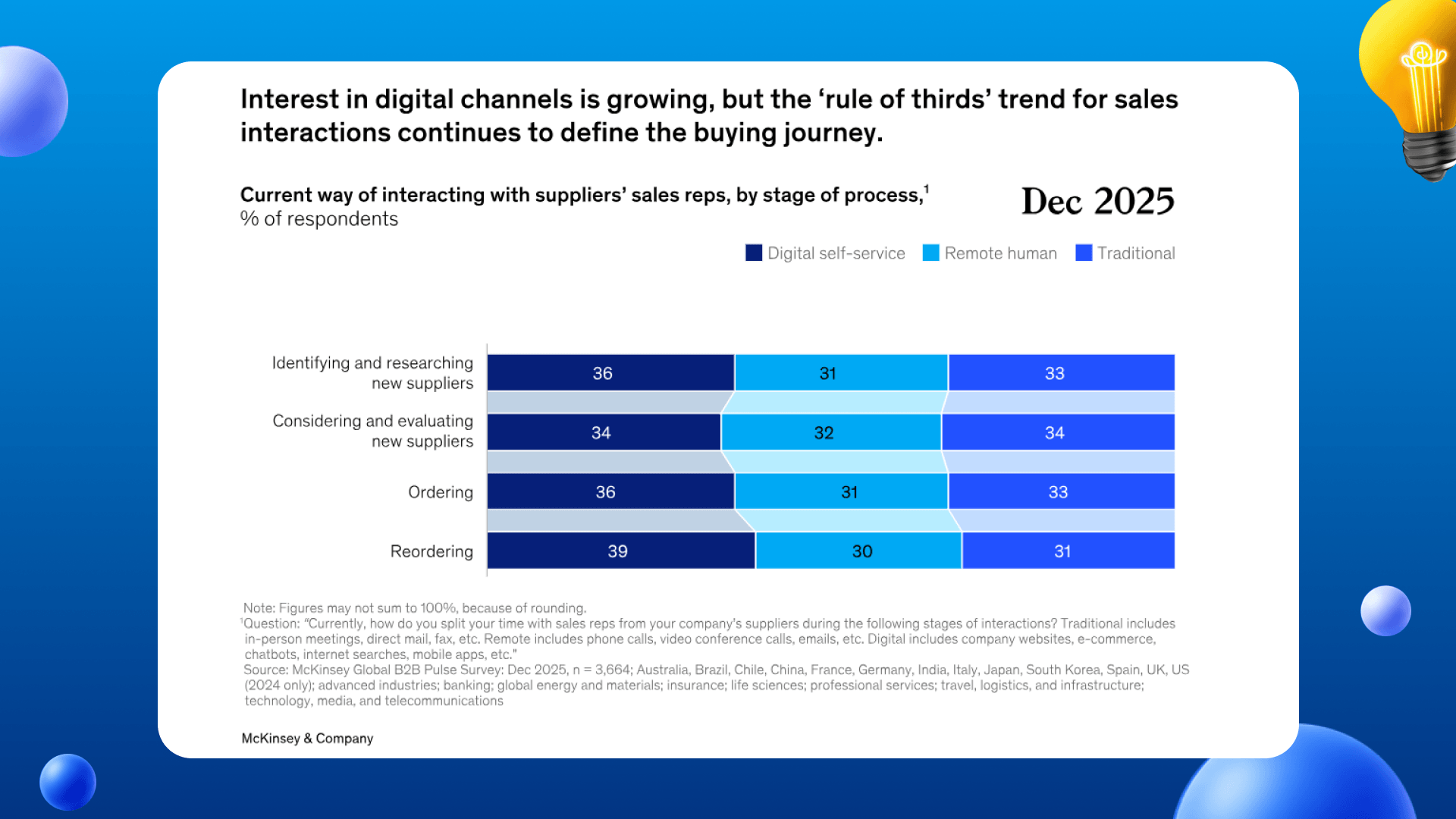
According to McKinsey, despite growing interest in digital channels, B2B buyers continue to use a balanced engagement model, with roughly one-third of their time spent on each type of interaction — the so-called rule of thirds.
Searching for and researching new suppliers:
Considering and evaluating suppliers:
Ordering:
B2B customers no longer wait for a salesperson to suggest a solution. They independently search for information, explore product features, compare suppliers, and assess company reputation.
This means that the role of B2B marketing has changed. It is no longer enough to work only with existing demand. Brands need to establish a presence at the early stages of the buying journey and influence consideration before a direct request is made.
Mobile advertising used to be seen primarily as a tool for B2C brands. However, the development of the mobile ecosystem has changed this perception.
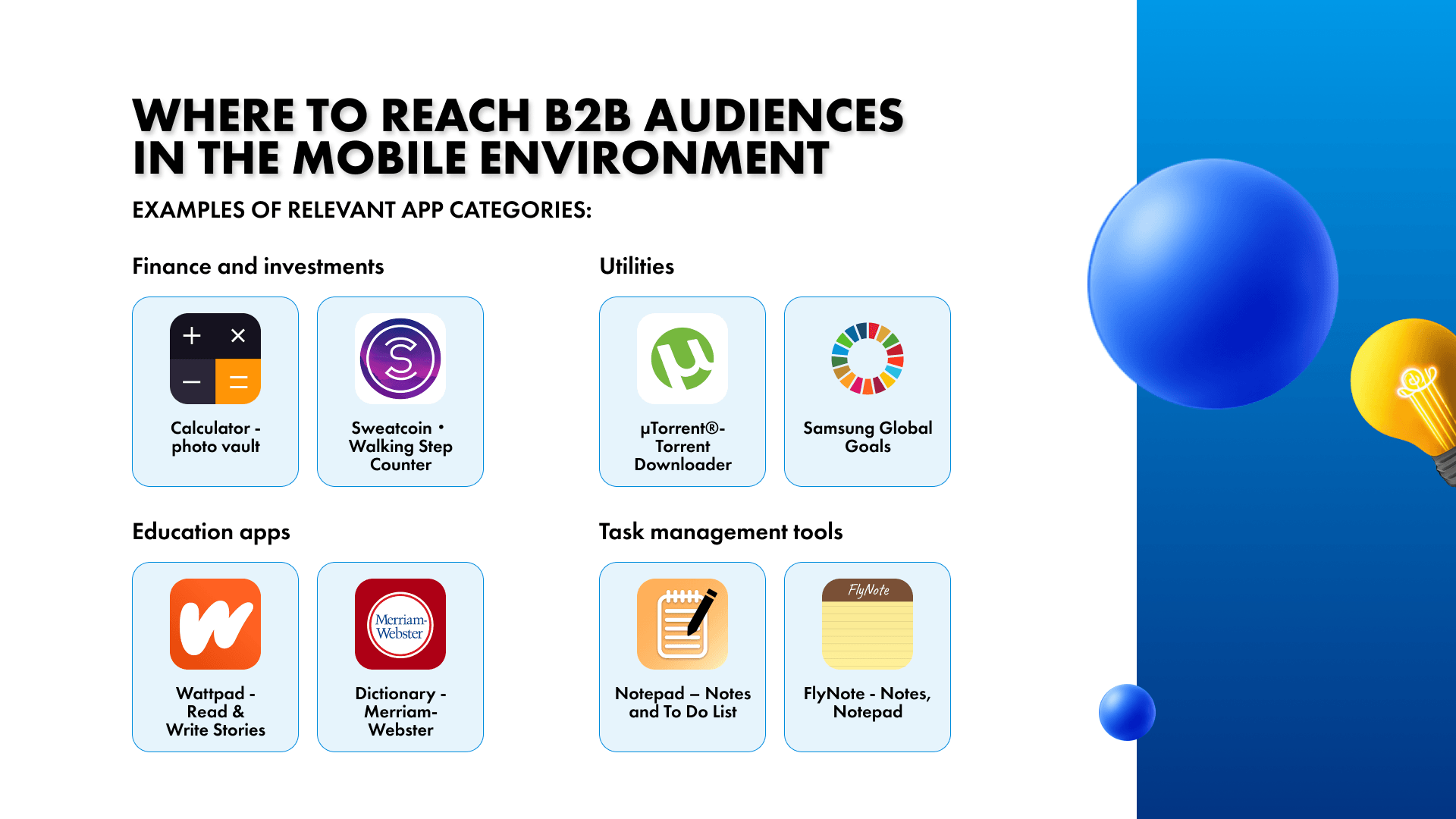
Today, apps are used not only for entertainment but also for professional tasks. Mobile advertising allows brands to reach audiences in a natural digital environment where users are already engaged with content.
For example, advertising in mobile apps can reach audiences across:
For B2B marketing, this creates additional opportunities to reach decision-makers beyond traditional business websites and search environments.
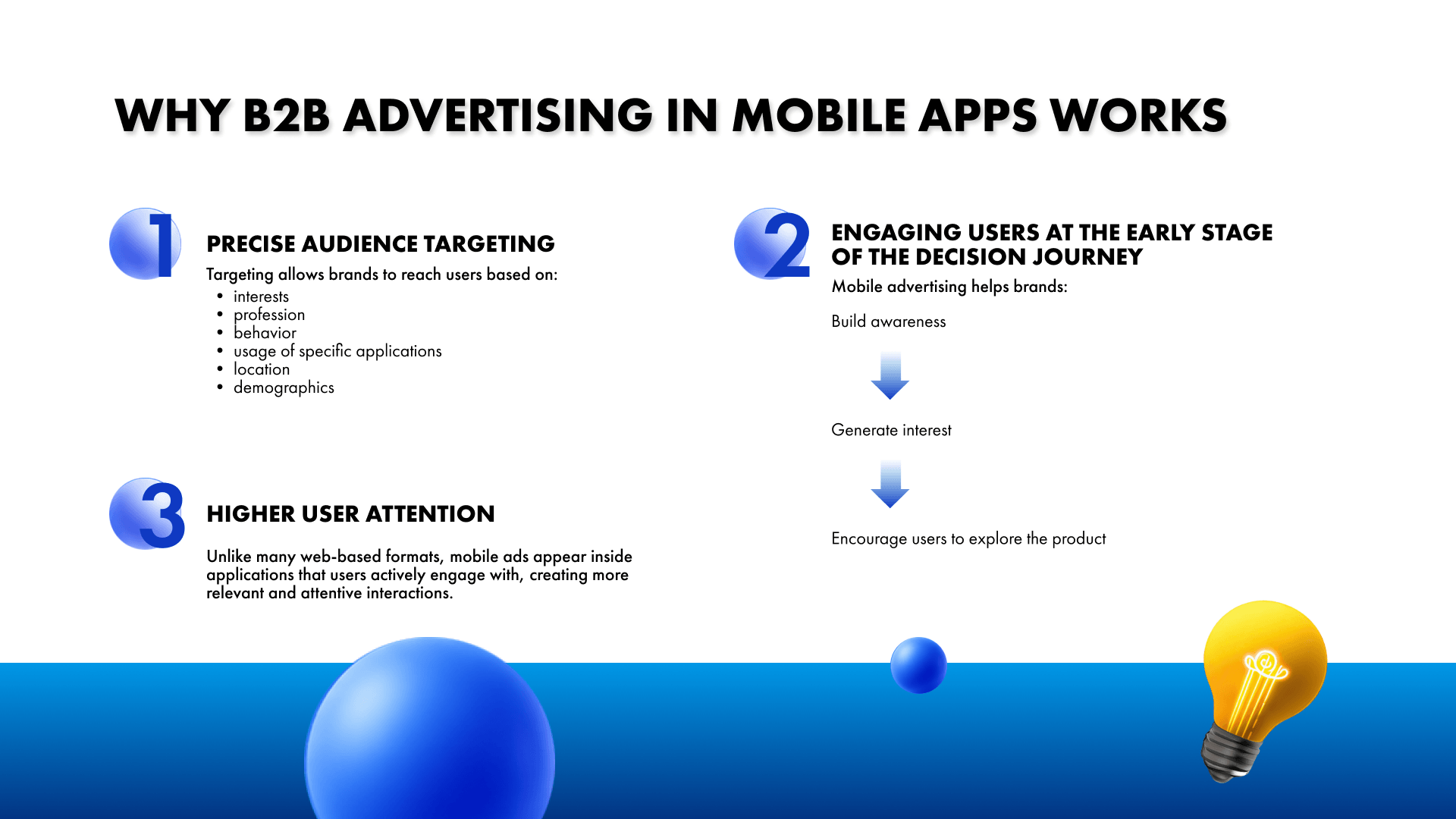
The buying journey is increasingly shifting toward earlier stages, which means that direct sales involvement often begins later. According to a Madison Logic report, 90% of the B2B buying journey is completed before contact with the sales team.
This makes every touchpoint before a direct sales conversation especially important. Otherwise, the brand risks being excluded from consideration.
What this means in practice:
Procurement behavior is also changing when it comes to content formats. According to eMarketer, video content is particularly useful for younger buyers. As a result, short videos and visual comparisons are becoming increasingly valuable.
One of the key advantages of mobile programmatic advertising in B2B marketing is that brands can engage potential customers not only when they are actively searching for a solution, but also earlier in the journey, helping build awareness and trust in advance.
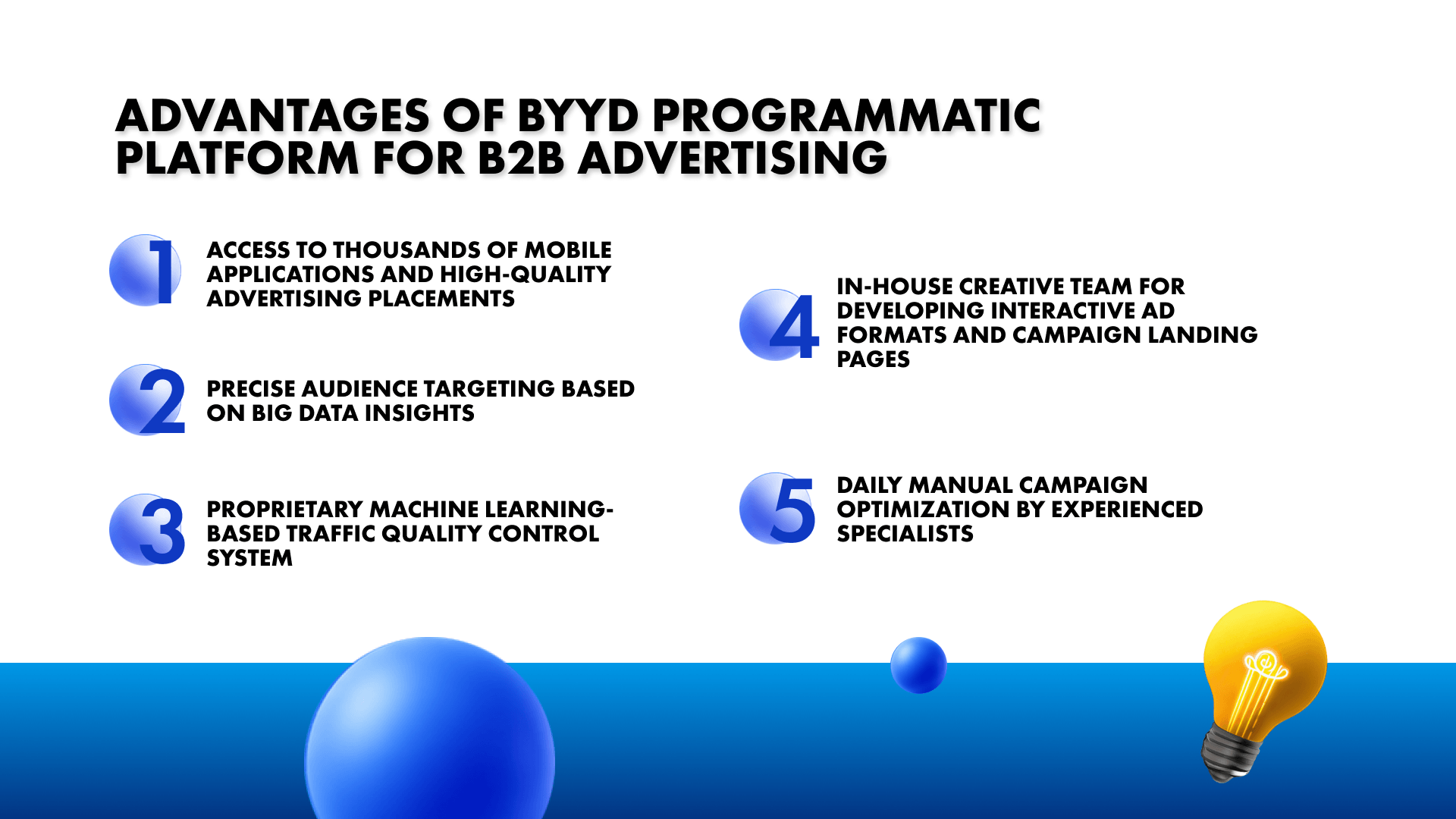
With BYYD, brands gain access to thousands of mobile apps, precise targeting capabilities, traffic quality control technologies, and campaign optimization based on real performance metrics. This allows B2B marketing teams to reach relevant audiences and build communication with users at different stages of the business decision-making process.
Yes, particularly in terms of expectations around the buying experience. Today’s B2B buyers are accustomed to convenient digital experiences in their everyday lives. They want to find information quickly, explore solutions independently, and compare options easily. At the same time, the B2B buying process remains more complex and often involves multiple stakeholders within an organization.
Because the B2B buyer journey begins long before contact with the sales team. Advertising in mobile apps helps brands stay visible during the early stages of consideration and generate interest before a direct inquiry appears. This makes mobile advertising an increasingly relevant part of B2B marketing.
Yes. The mobile ecosystem includes many services used by professional audiences, including financial apps, business services, news platforms, educational services, and analytics tools. With programmatic technology, brands can identify relevant users based on interests, behavior, and digital signals. This gives B2B marketing additional opportunities to reach decision-makers throughout their daily digital activity.
Because different professionals participate in the decision-making process and evaluate a product from different perspectives. Business leaders focus on business outcomes, finance teams prioritize efficiency and transparency, while IT specialists look at functionality and security. Effective B2B marketing therefore needs to adapt messaging to different roles and stages of the buying journey.
For over 11 years, the BYYD team has been working with mobile advertising and creating banners designed for real user engagement. We help brands capture audience attention and achieve business objectives through proven mechanics.
Check out our case studies and send us an email – let’s launch your next campaign together.
Found this helpful? Share it with your friends and colleagues!
For consultations and partnership inquiries:


