South Korea’s digital market is shaped by widespread internet access, heavy mobile use, and growing adoption of AI tools. This article draws on DataReportal’s October 2026 to examine how people use digital services, where consumer spending is moving, and how advertising is evolving. Advertising and ecommerce figures are estimates for the full year 2026.
Together, these trends offer brands a snapshot of the country’s digital landscape and useful context for planning campaigns.
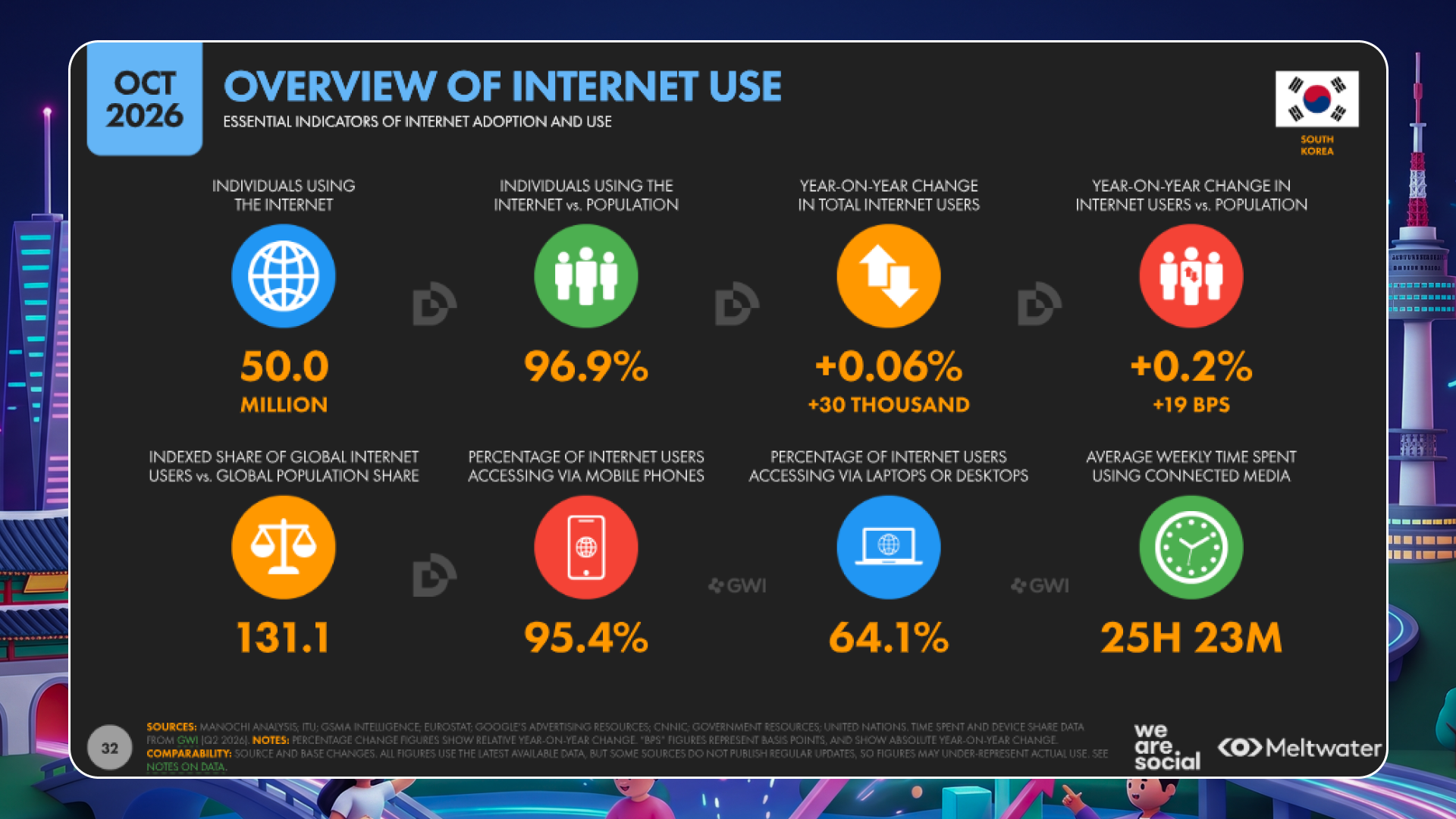
South Korea had 50 million internet users, equivalent to 96.9% of the population. The number of users grew by 30,000 year on year (+0.06%).
People spend an average of 25 hours and 23 minutes per week using connected media. For brands, high internet adoption means the opportunity lies in reaching the right people with relevant messages and managing how often they see them.
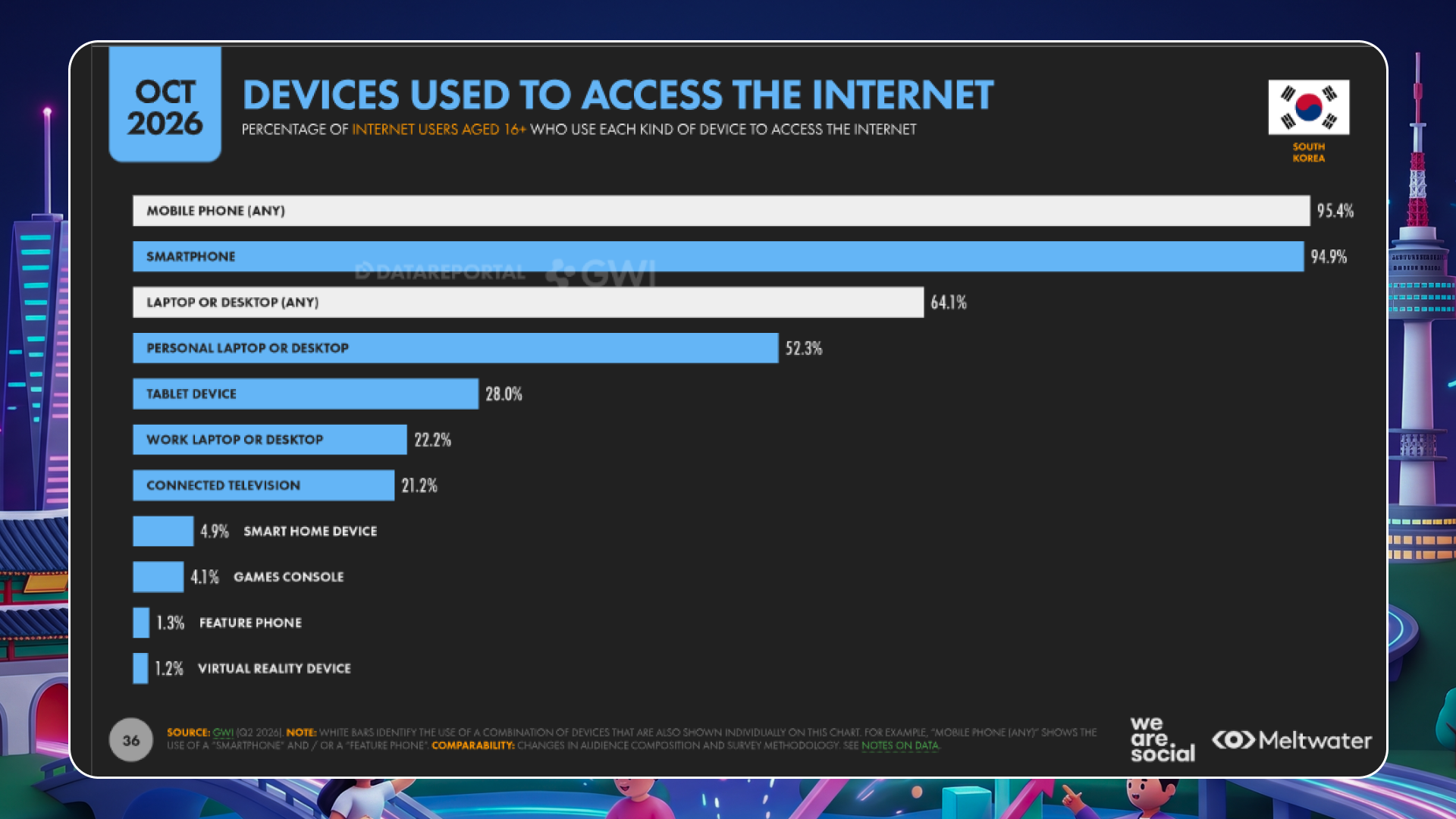
Among internet users aged 16 and over, 95.4% access the internet on a mobile phone, and 94.9% use a smartphone. Laptops and desktops also play a major role: 64.1% use either device, while 52.3% use a personal laptop or desktop.
Other devices include tablets (28%), work laptops or desktops (22.2%), and connected TVs (21.2%). Games consoles are used by 4.1%, smart home devices by 4.9%, feature phones by 1.3%, and virtual reality devices by 1.2%.
South Korea’s digital market is mobile-first, but the audience is not limited to smartphones. Brands should check how their ads and landing pages perform across different screens and device types.
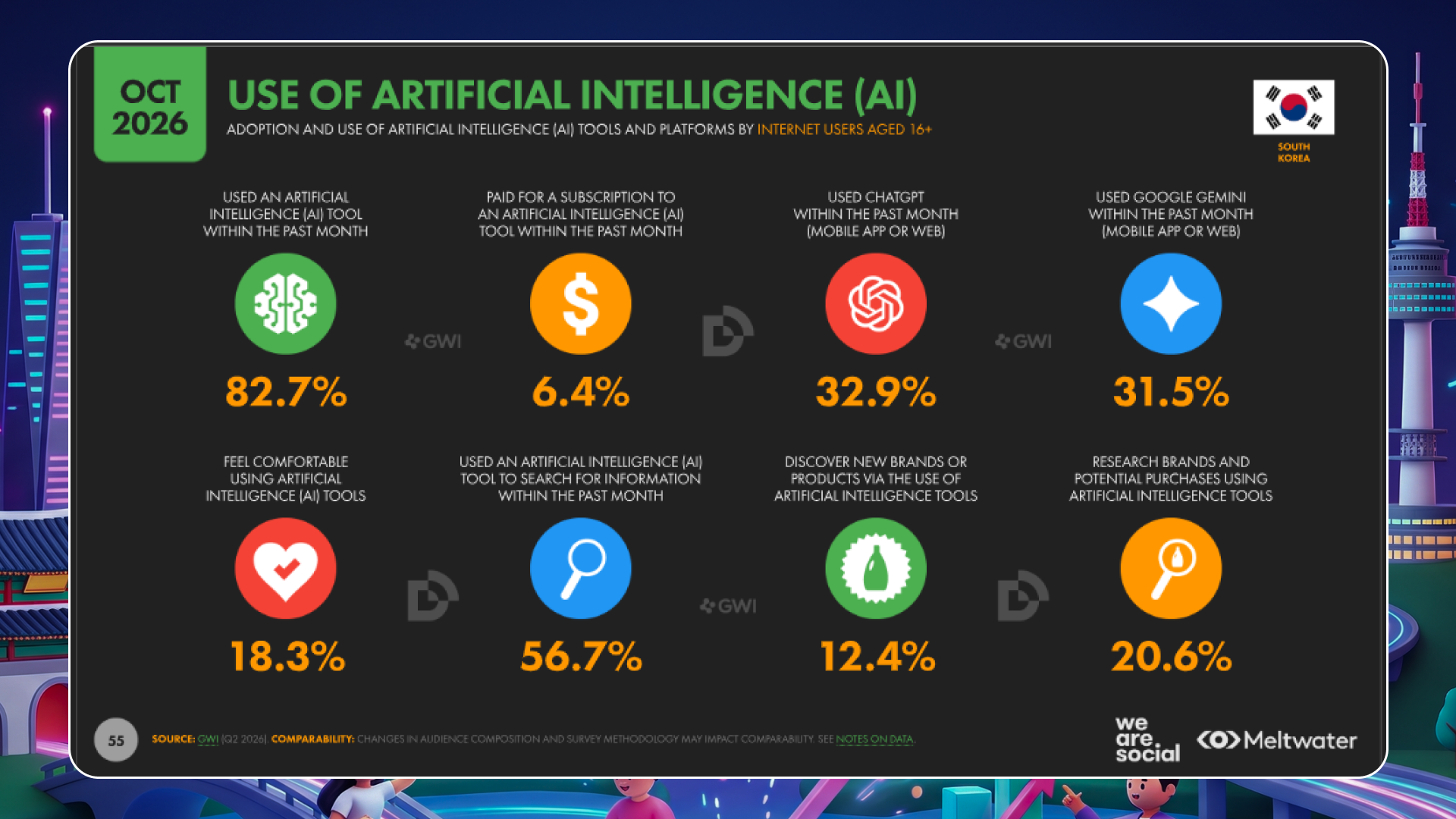
82.7% of internet users aged 16 and over used an AI tool. ChatGPT was used by 32.9%, and Google Gemini by 31.5%.
The most common reported use was searching for information (56.7%). Other activities included researching brands and potential purchases (20.6%) and discovering new brands or products (12.4%). Meanwhile, 18.3% said they feel comfortable using AI tools.
These figures suggest that AI is already part of everyday digital behavior, especially for information discovery. Brands should keep product and service information clear, accurate, and easy to find across digital channels.
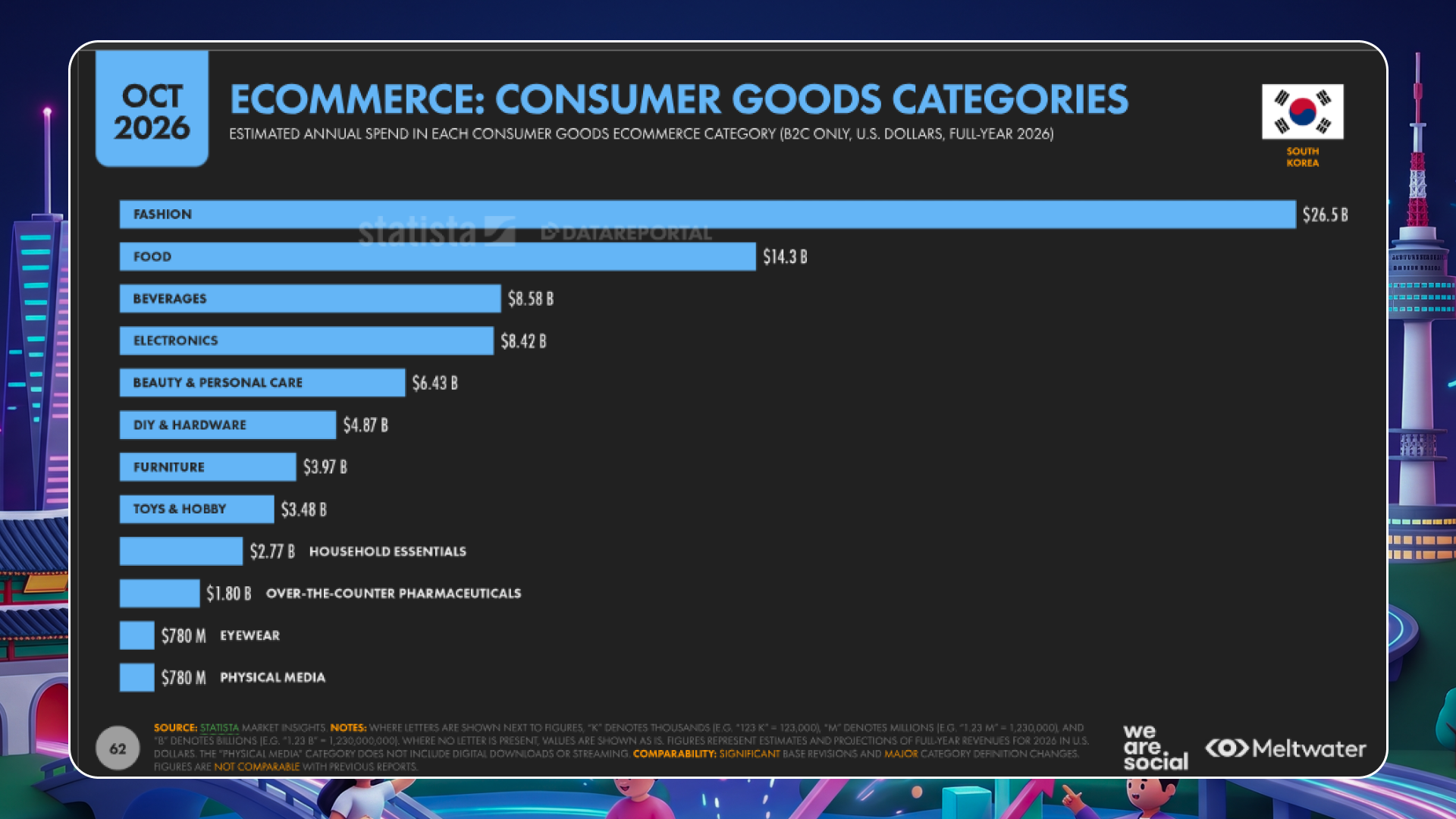
Fashion was the largest consumer goods ecommerce category in South Korea, with estimated annual spending of $26.5 billion. Food ranked second at $14.3 billion, followed by beverages ($8.58 billion), electronics ($8.42 billion), and beauty and personal care ($6.43 billion).
Other categories included DIY and hardware ($4.87 billion), furniture ($3.97 billion), toys and hobby products ($3.48 billion), and household essentials ($2.77 billion).
The category breakdown shows the range of products consumers buy online. For brands, detailed product information and a smooth path from discovery to purchase can help support decisions in this competitive environment.
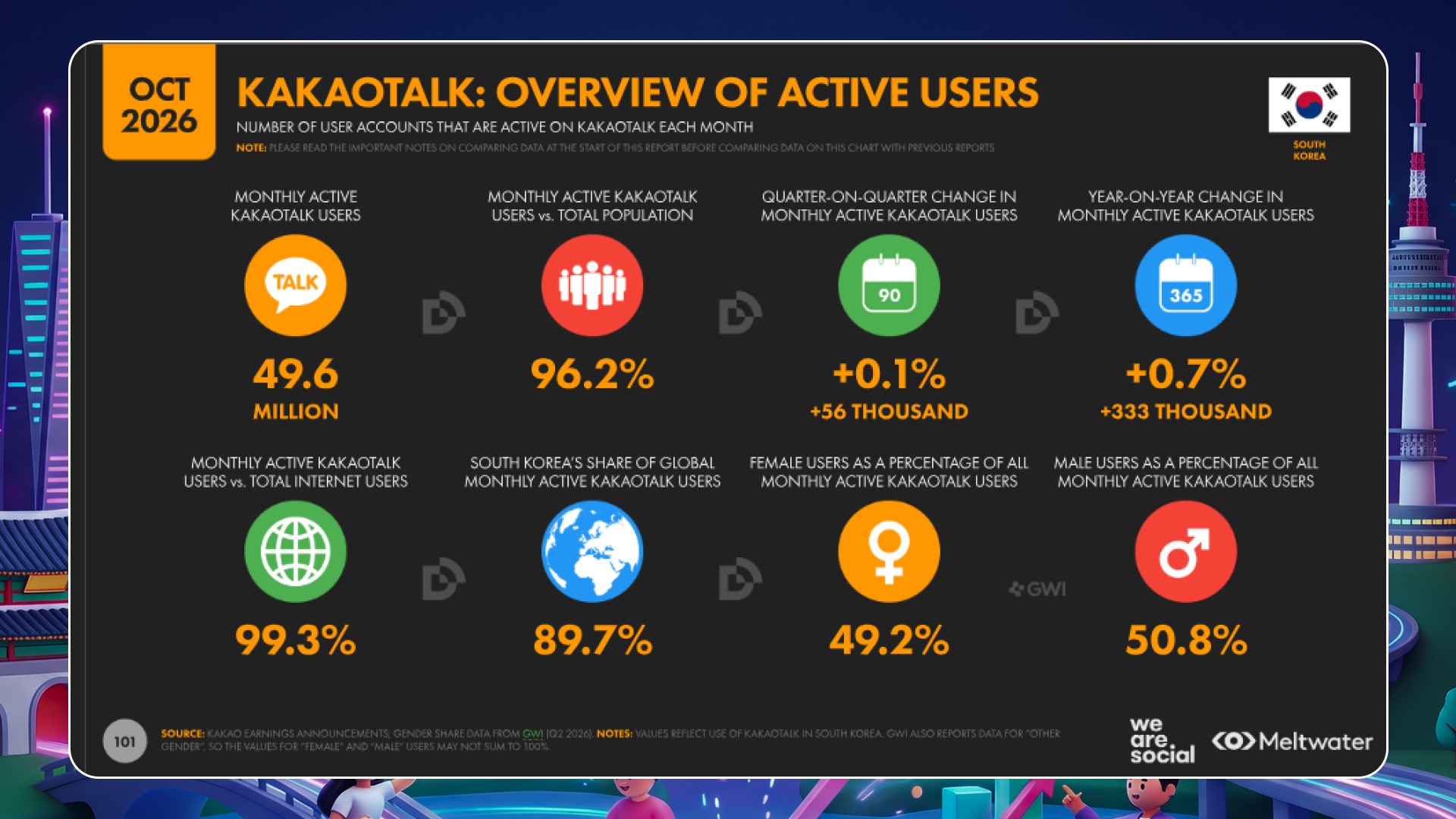
KakaoTalk had 49.6 million monthly active users, equivalent to 96.2% of South Korea’s population. Its audience grew by 333,000 year on year (+0.7%).
Monthly active users amounted to 99.3% of the country’s internet users. South Korea accounts for 89.7% of KakaoTalk’s global monthly active users. The platform’s audience was 49.2% female and 50.8% male.
KakaoTalk’s scale makes it a significant part of the country’s digital ecosystem. Brands planning communications in South Korea should understand the role local platforms play in how people connect and engage online.
Total advertising spend in South Korea was estimated at $20.2 billion in 2026, up 4.2% year on year ($820 million). Digital advertising accounted for $14.6 billion, or 72% of total ad spend.
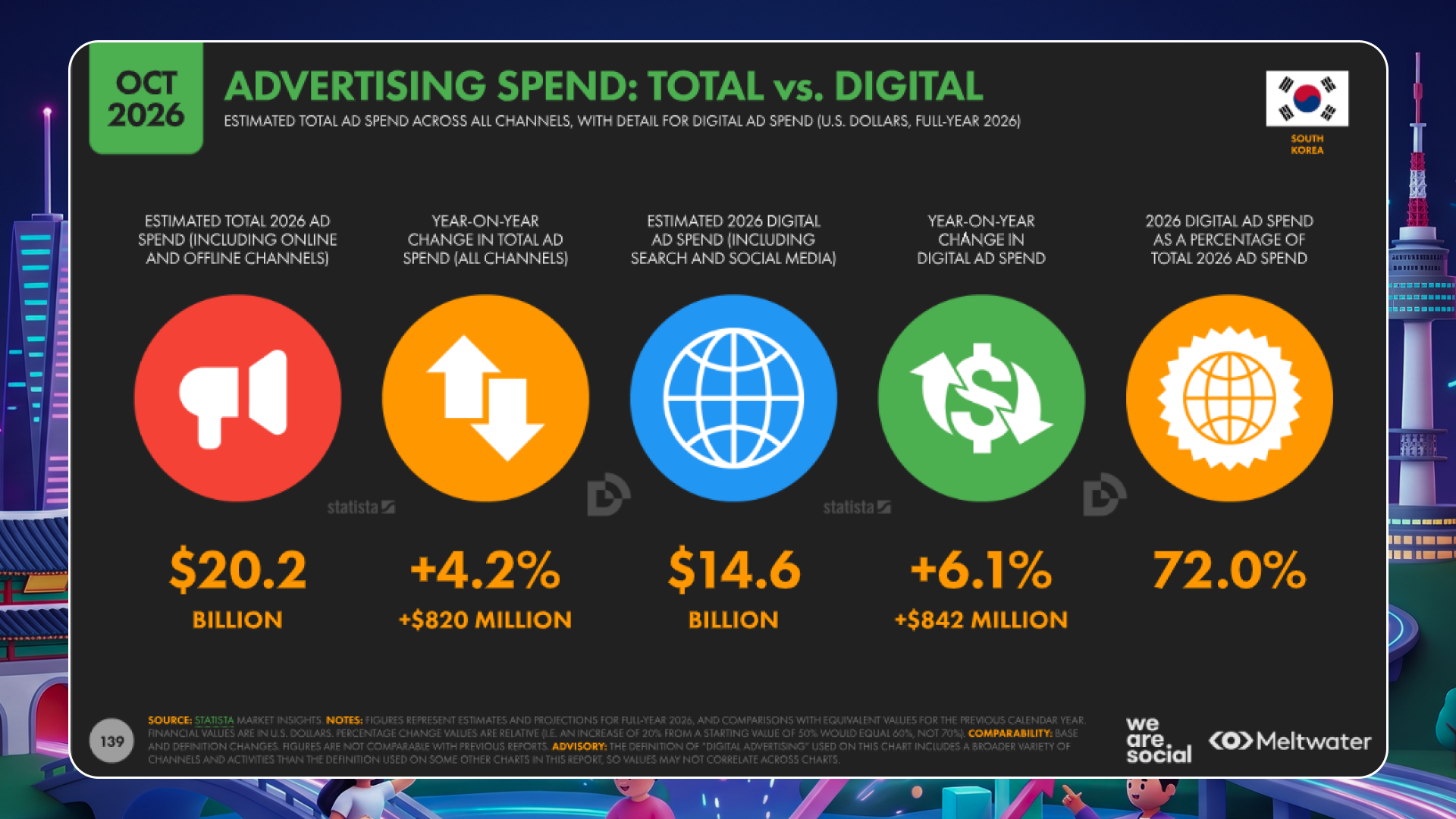
Digital advertising is therefore expanding faster than the overall market. This makes digital channels increasingly important in media planning.
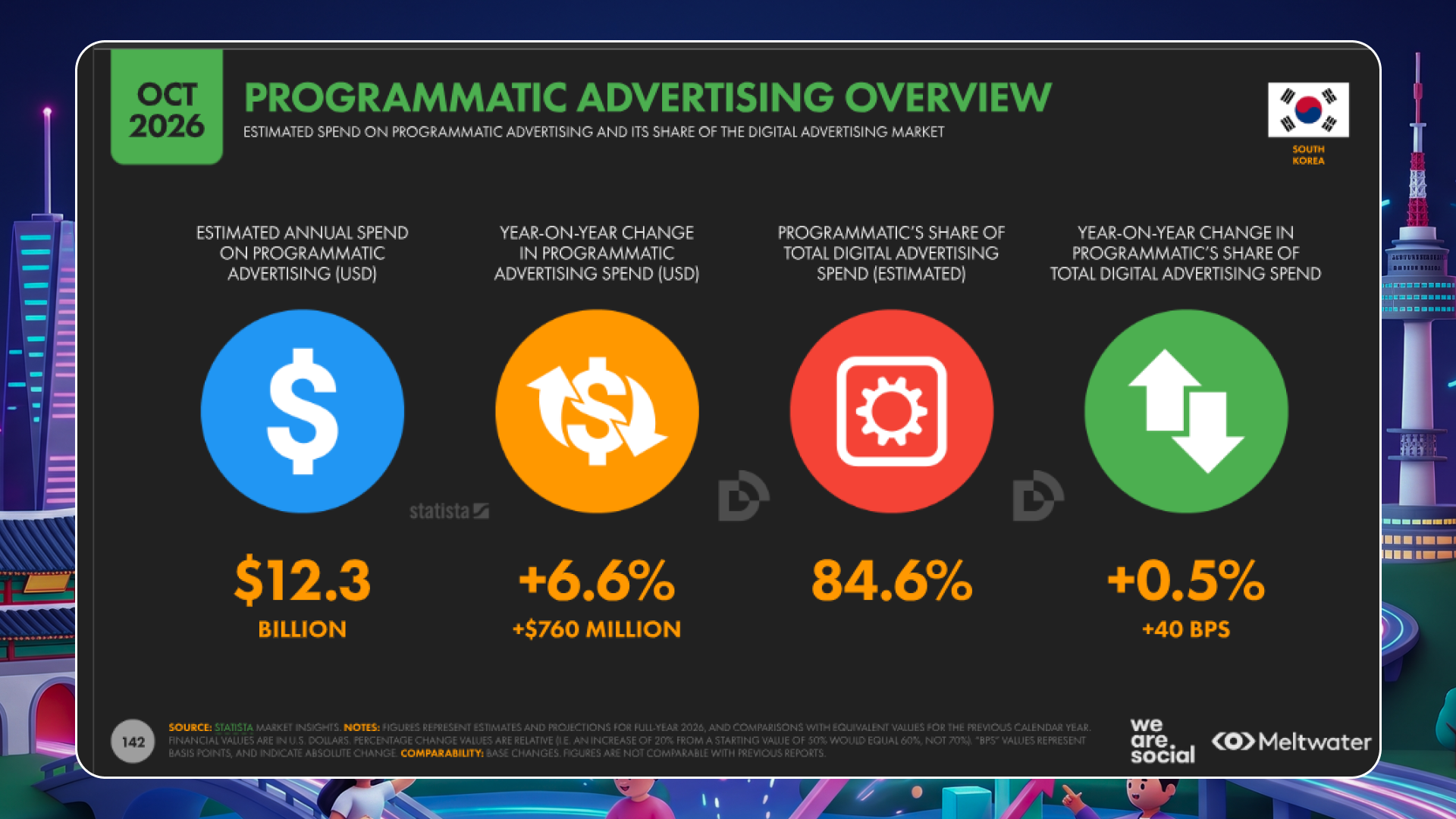
Programmatic advertising spend was estimated at $12.3 billion in 2026, up 6.6% year on year ($760 million). Programmatic accounted for 84.6% of total digital ad spend.
This makes automated buying a major part of South Korea’s digital advertising market. Programmatic helps advertisers manage campaigns across multiple placements and adjust delivery against defined objectives. Its effectiveness depends on factors such as inventory quality, audience settings, frequency, and campaign measurement.
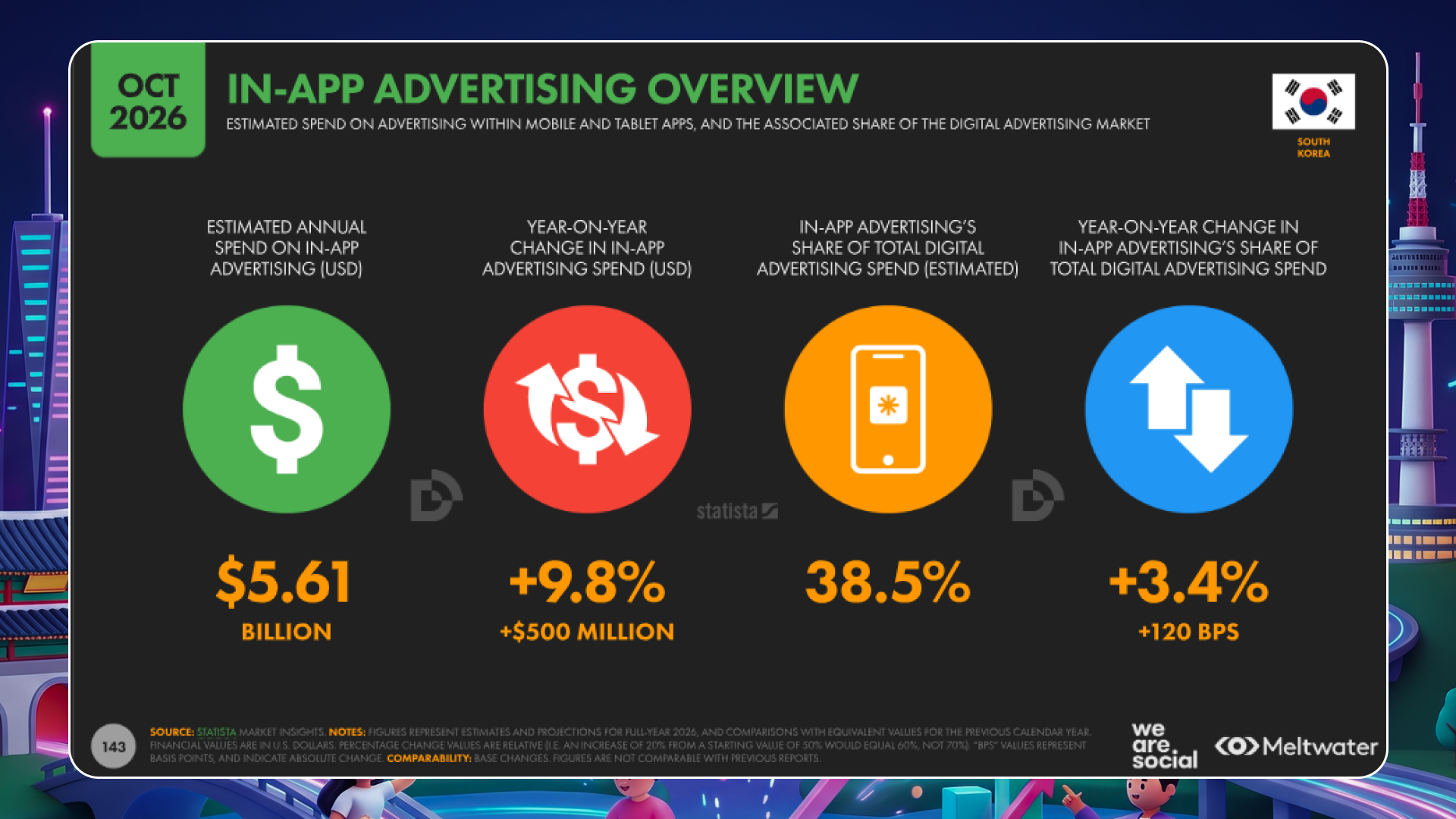
Annual in-app advertising spend was estimated at $5.61 billion, an increase of 9.8% ($500 million) year on year. In-app ads represented 38.5% of total digital advertising spend.
The growth of in-app advertising reflects the central role mobile apps play in people’s digital lives. For brands, apps offer opportunities to reach audiences in relevant contexts, using formats suited to mobile screens.
South Korea’s digital market combines high internet adoption, extensive smartphone use, broad AI uptake, and a large, growing digital advertising sector. Programmatic can help brands coordinate campaigns across digital placements, reach relevant audiences, and optimize delivery as results come in.
To make that approach work, advertisers should pair automation with careful oversight: monitor traffic and inventory quality, manage frequency, and evaluate performance against business goals. This helps connect media investment with outcomes across the customer journey.
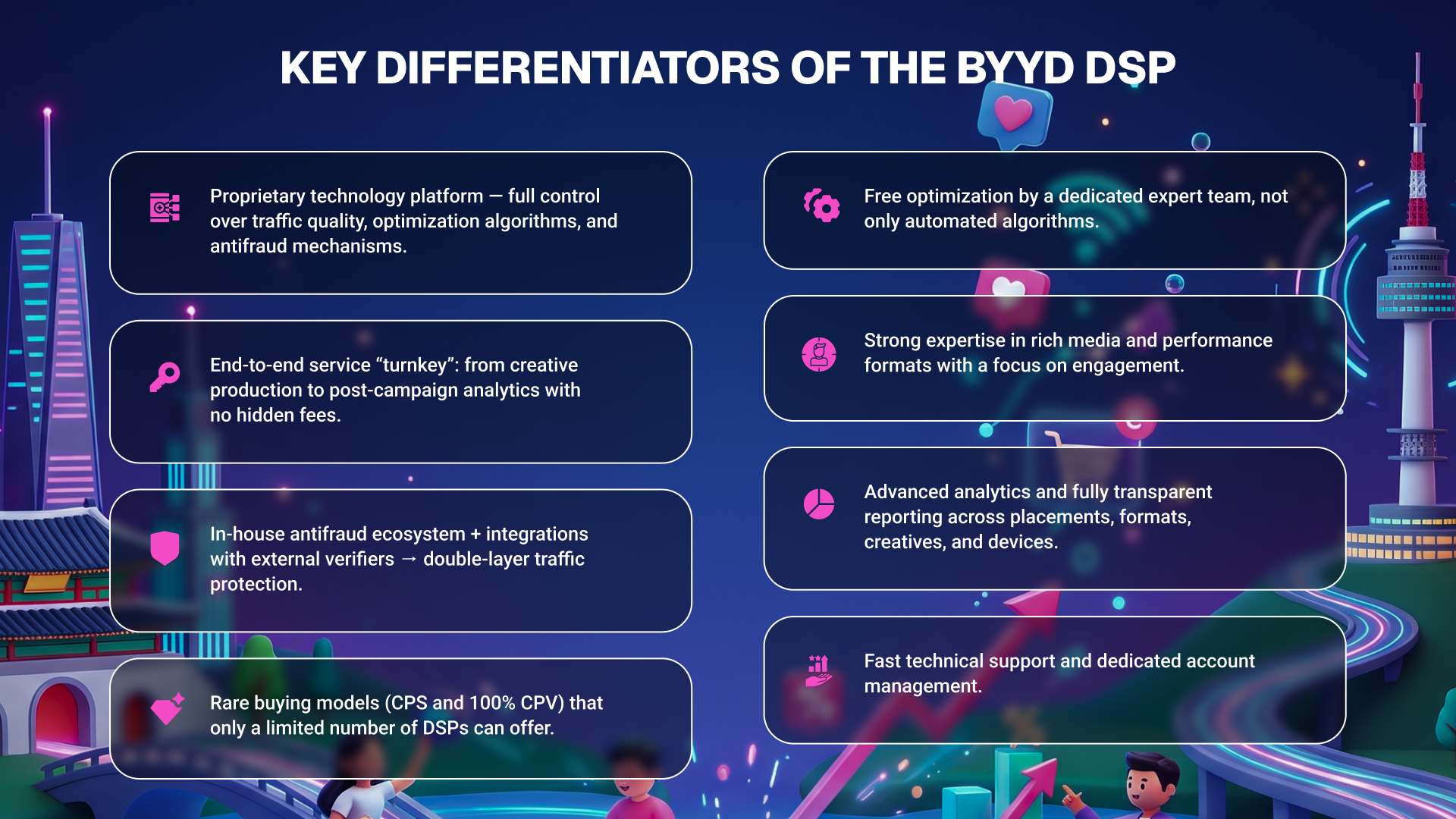
For more than 11 years, BYYD has been helping companies with mobile advertising and continuously improving its tools to meet the evolving needs of the market. Check out our case studies and send us an email – let’s launch your next campaign together.
Found this helpful? Share it with your friends and colleagues!
For consultations and partnership inquiries:


