Artificial intelligence has shown that its capabilities go far beyond speed and efficiency. When used thoughtfully, these technologies help brands understand their audiences more deeply and make more informed decisions.
In the Kantar Marketing Trends 2026 report, experts highlight key marketing trends in the use of AI and consumer behavior. We look at the key findings and explain how mobile advertising is changing as artificial intelligence develops.
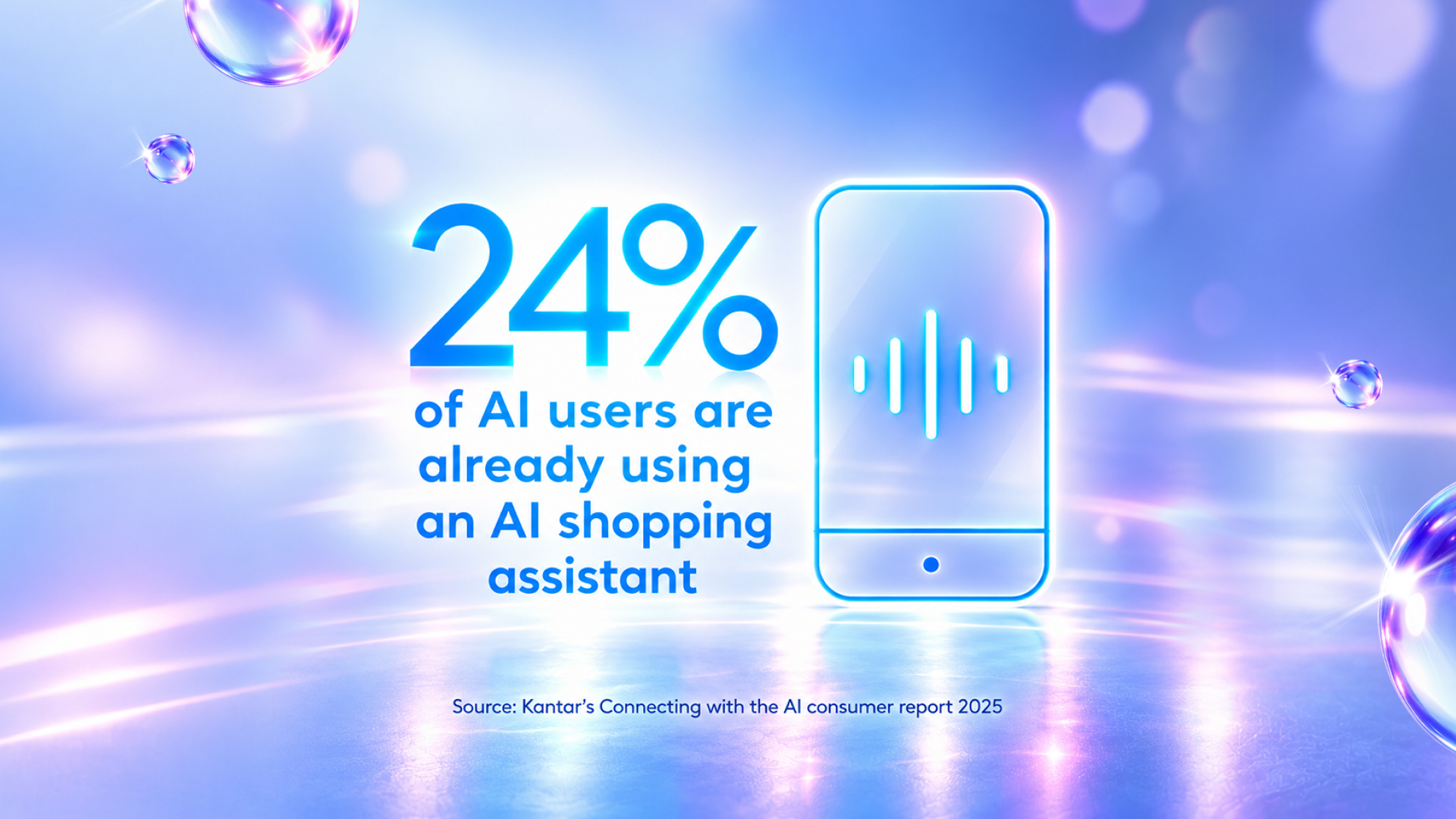
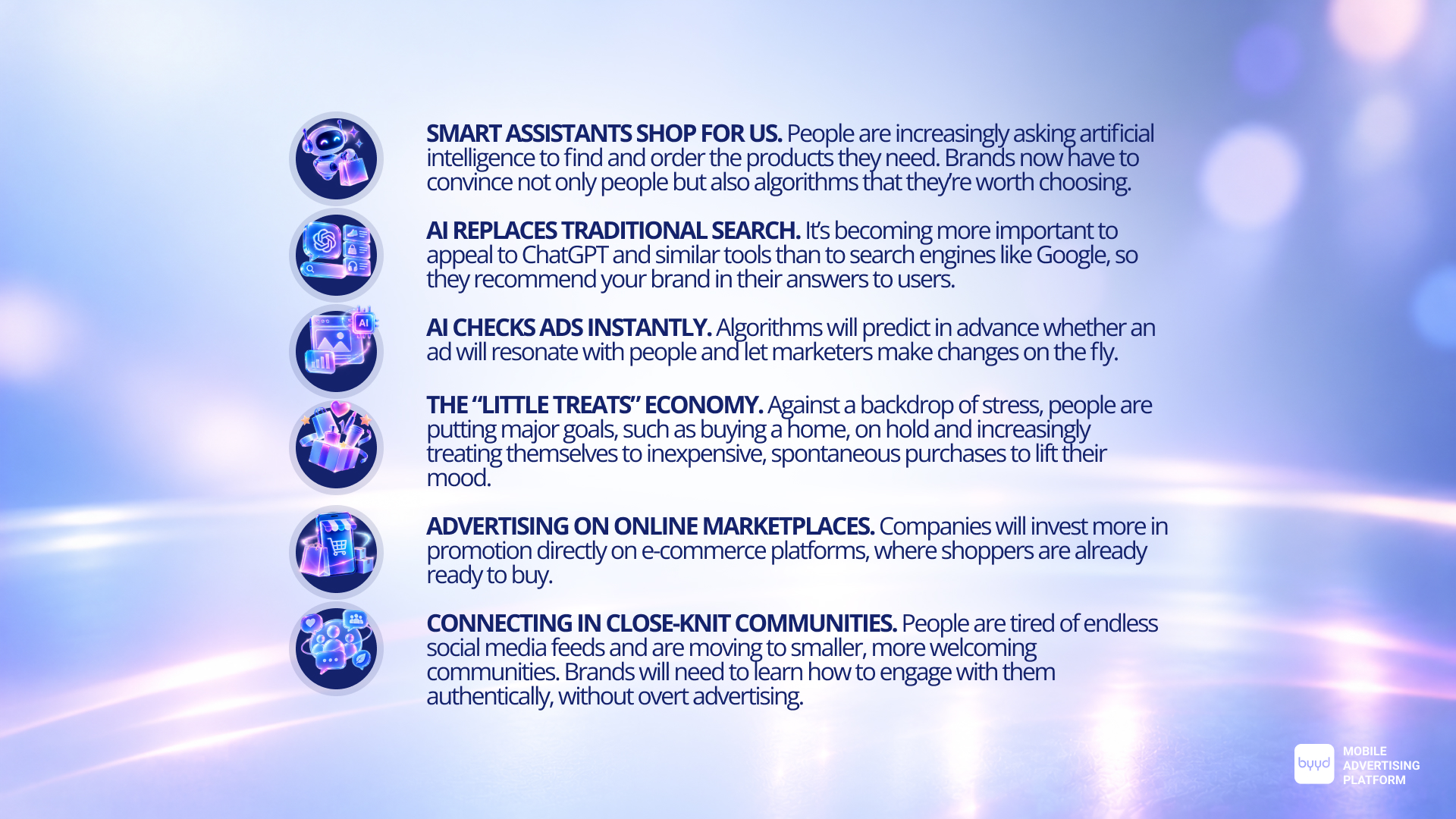
People are increasingly delegating routine purchases—from mascara to subscriptions—to smart algorithms. Statistics show that 24% of users already use AI agents for shopping. Marketers once needed to win over only people; now they also need to earn the trust of machines that make choices on users’ behalf.
To keep pace with this trend, brands need to adapt product descriptions, instructions, and specifications so AI can find and interpret them instantly. Optimizing for algorithms is becoming just as important as creating emotional advertising for people.
In 2026, chatbots and agents are taking the place of search engines. Users are no longer looking for links; they want ready-made answers.
If a language model knows nothing about your product, it will never recommend it.
That’s why it’s important to create clear, structured, useful content that machines can easily interpret. This could include step-by-step instructions and recipes. A brand’s goal is to become the default answer in AI databases.
Companies are starting to use synthetic data—virtual replicas of real people or products whose behavior is 95% similar to the real thing.
This makes it possible to predict market reactions without risking a brand’s reputation.
In other words, marketers can quickly and inexpensively test hundreds of hypotheses, new products, and advertising messages on “virtual shoppers” before spending real budgets on a launch.
In response to economic uncertainty and the growing inaccessibility of major life goals, such as buying a home, consumers are turning to the “pleasure economy.”
The takeaway for brands: give customers reasons to treat themselves. Launch affordable premium products in mini sizes and enable purchases directly on social media, so it takes just a couple of seconds to go from wanting something to buying it.
Today, playing it safe can cost more than taking a risk. However, innovation should start with real customer problems, not with a desire to use the latest technology.
Running fast, low-cost experiments can uncover new growth opportunities sooner than spending a long time planning the perfect strategy.
People are tired of performative tolerance. Inclusion in 2026 means expanding the market by genuinely addressing the needs of audiences that were previously overlooked.
Instead of simply featuring different people in advertising, adapt the products and services themselves to meet the needs of underrepresented groups. This opens the door to a new, loyal audience and directly drives sales growth.
Social media feeds are crowded with repetitive advertising, while organic reach is declining. Users are moving to private chats, niche forums, and micro-communities where expertise and genuine conversation matter.
That’s why it’s better to join focused interest groups with genuinely useful information and expertise, rather than direct advertising. The trust built in these communities can translate into sales.
Mobile advertising, supported in part by big data, helps brands find the right users and integrate advertising messages naturally into moments when people are actively using mobile apps.
As a result, users are less likely to be annoyed by a banner and more likely to take a closer look at the product. Targeting and daily optimization of placements help brands reach specific people who are interested in a product or service. And a well-designed creative that offers value and relevance encourages users to visit the brand’s website.
BYYD, a mobile programmatic platform, also offers AI-generated video featuring virtual characters and coordinates the process of securing copyright for the video. Read more in this article.
For more than 11 years, BYYD has been helping companies with mobile advertising and continuously improving its tools to meet the evolving needs of the market. Check out our case studies and send us an email – let’s launch your next campaign together.
Found this helpful? Share it with your friends and colleagues!
For consultations and partnership inquiries:


