Digital trends in Japan in this article are based on DataReportal’s report, which presents figures for internet use, devices, ecommerce, and advertising in Japan. The charts are dated October 2026. Advertising and ecommerce estimates refer to the full year 2026.
Together, the figures show a highly connected population, a strong preference for mobile access, and continued growth in digital advertising and online shopping. Here are the key findings and what they may mean for brands.
Japan had 105 million internet users, equivalent to 85.5% of the population. The number of users declined by 584,000 year on year (-0.6%), while internet use as a share of the population remained unchanged.
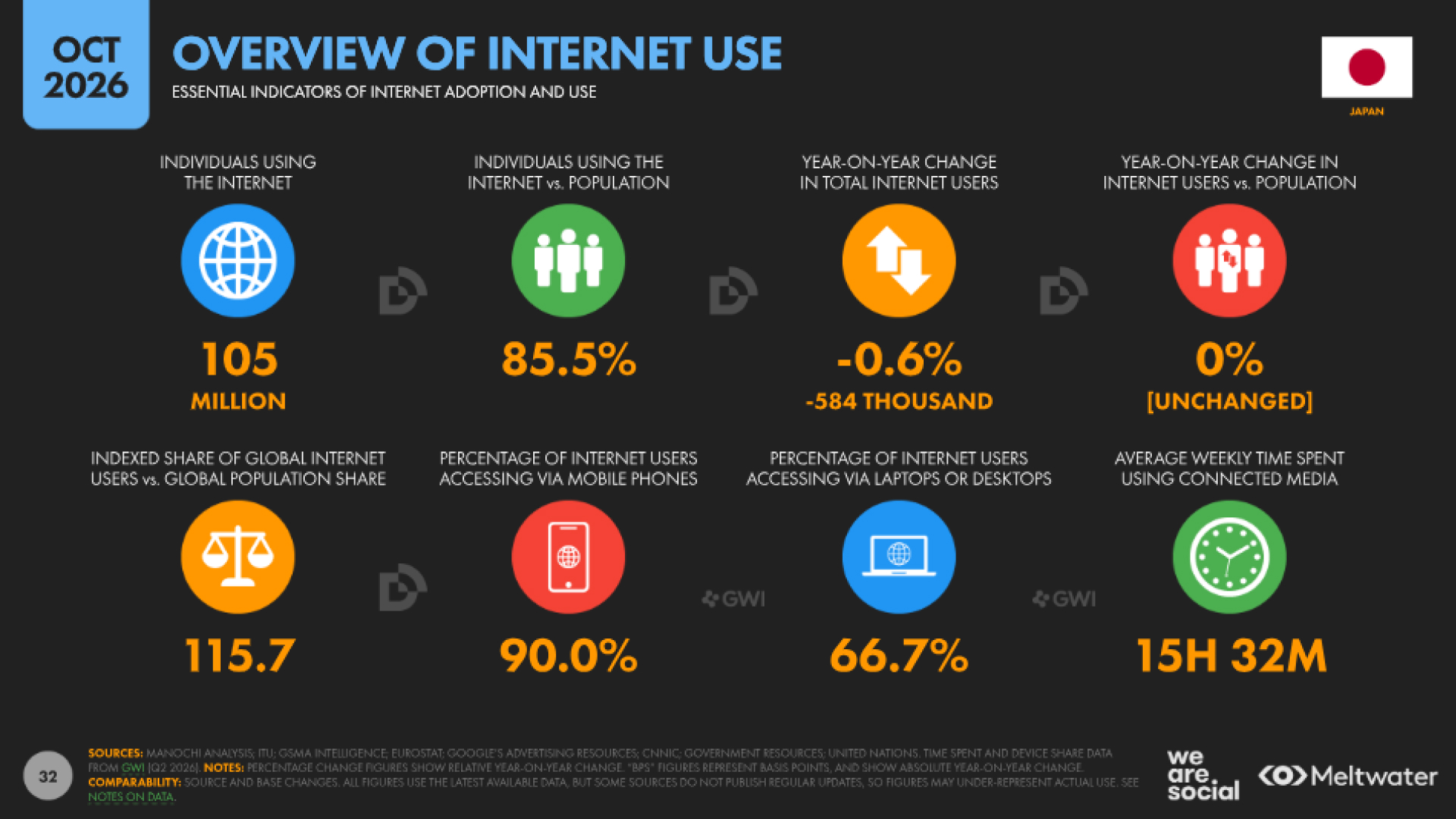
DataReportal also gives Japan an indexed share of global internet users relative to its share of the global population of 115.7. This suggests Japan’s share of internet users is higher than its share of the world’s population.
People in Japan spend an average of 15 hours and 32 minutes per week using connected media. The figures suggest that the opportunity for brands lies in reaching existing users effectively, with relevant messaging and thoughtful frequency management.
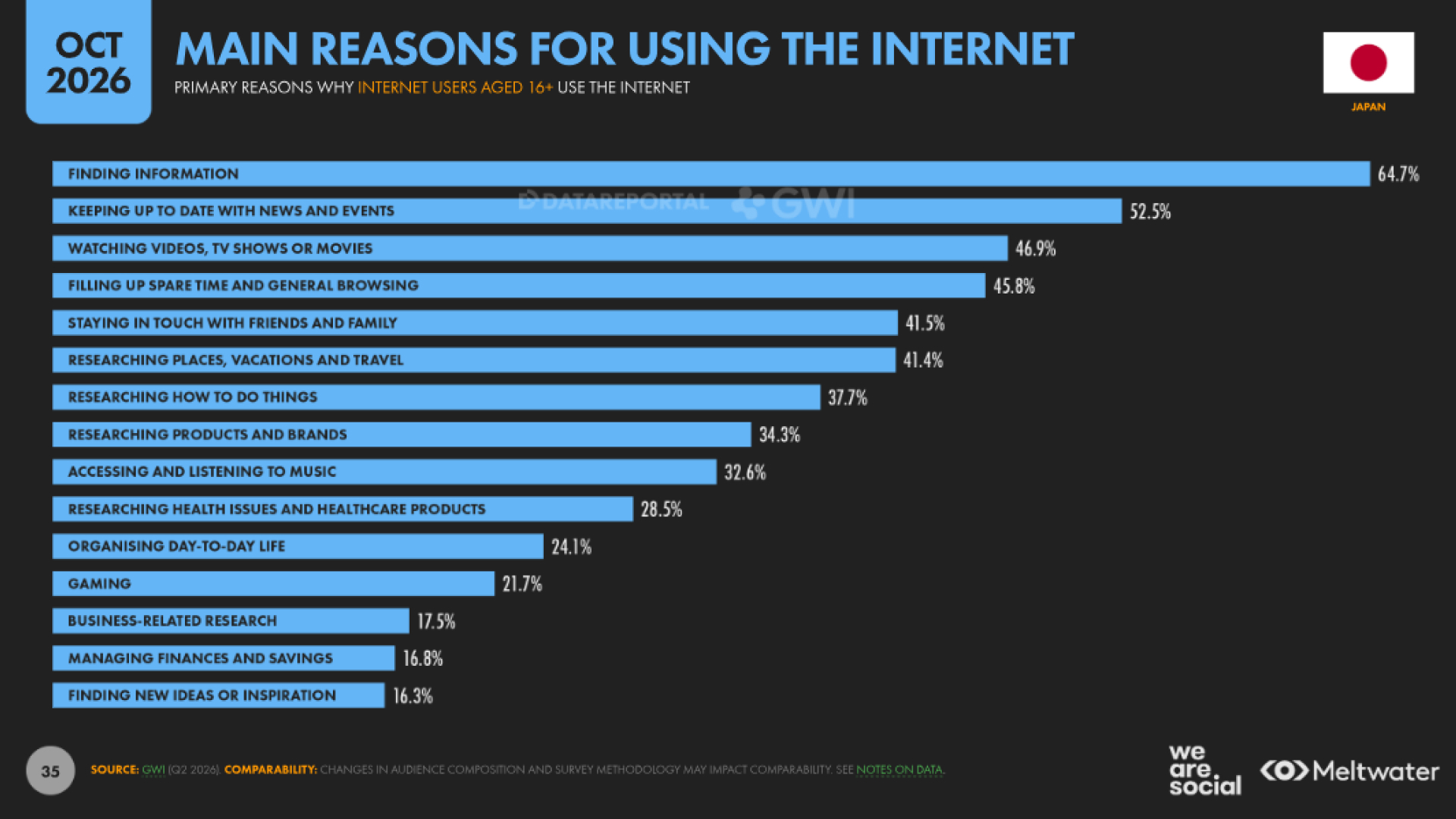
The most commonly reported reason for using the internet is finding information (64.7%). Other leading activities include keeping up with news and events (52.5%), watching videos, TV shows, or movies (46.9%), and general browsing or filling spare time (45.8%).
Staying in touch with friends and family ranks next at 41.5%, followed closely by researching places, vacations, and travel (41.4%). Researching products and brands is cited by 34.3% of internet users.
These figures show that online activity serves both practical and entertainment needs. For brands, that makes it important to match the message and format to what people are doing in each digital environment.
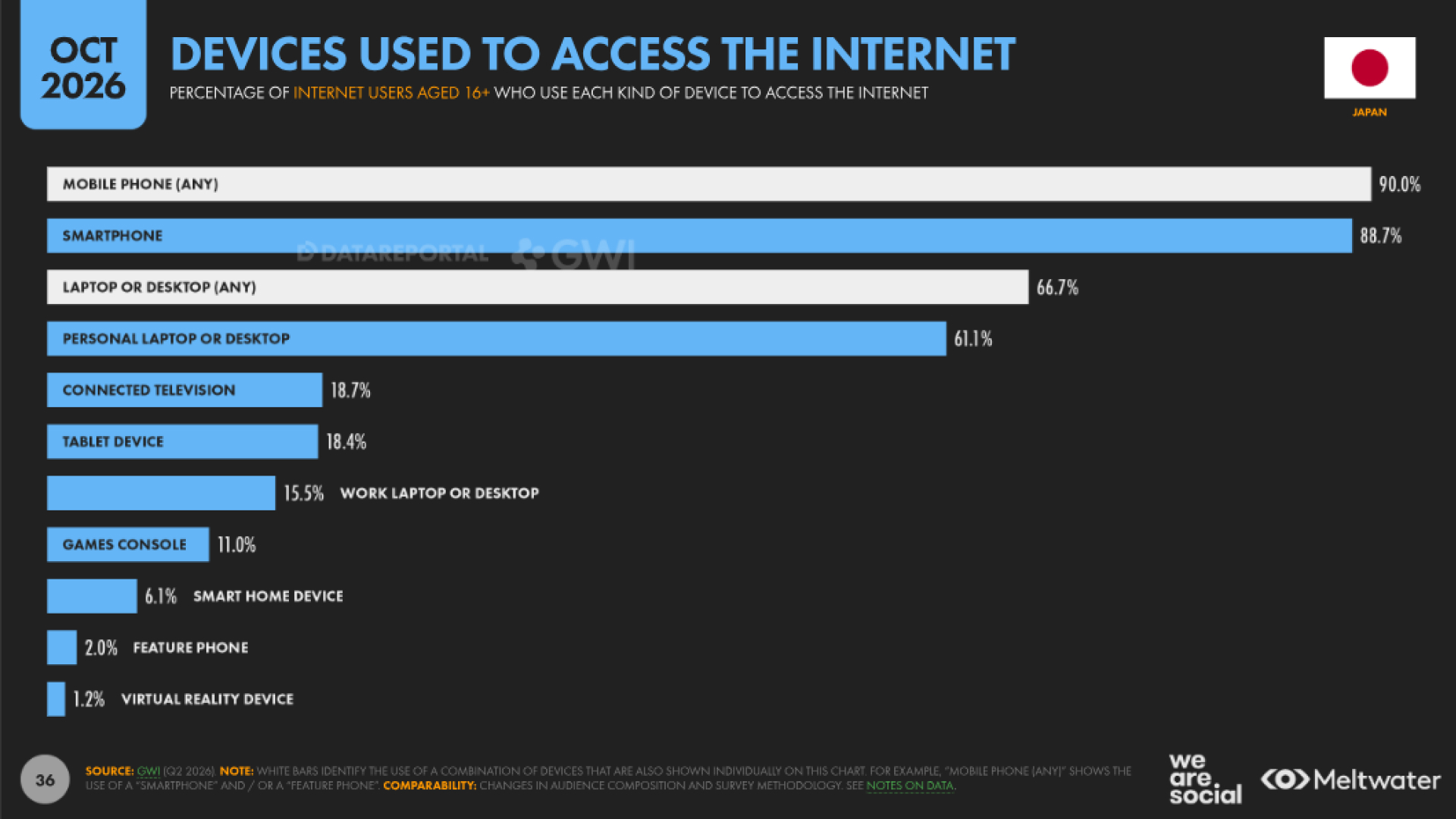
Among internet users aged 16 and over, 90% access the internet on a mobile phone, and 88.7% use a smartphone. Laptops and desktops also play a substantial role: 66.7% use either device, while 61.1% use a personal laptop or desktop.
Other connected devices reach smaller but notable audiences. Connected TVs are used by 18.7%, tablets by 18.4%, and work laptops or desktops by 15.5%. Games consoles account for 11%; smart home devices, feature phones, and virtual reality devices are used by 6.1%, 2%, and 1.2%, respectively.
The digital trends in Japan point to a multi-device audience. Brands should make sure that creatives and landing pages work well on smartphones while also considering computer and connected-TV experiences.
In October 2026, iOS generated 63.58% of mobile web page requests in Japan, compared with 36.40% for Android. Other operating systems accounted for just 0.02%.
An estimated 96.9 million people in Japan purchased consumer goods online in 2026, up 6.3% year on year, or 5.7 million people. Annual online spend reached $197 billion, an increase of 11.8% ($21 billion).
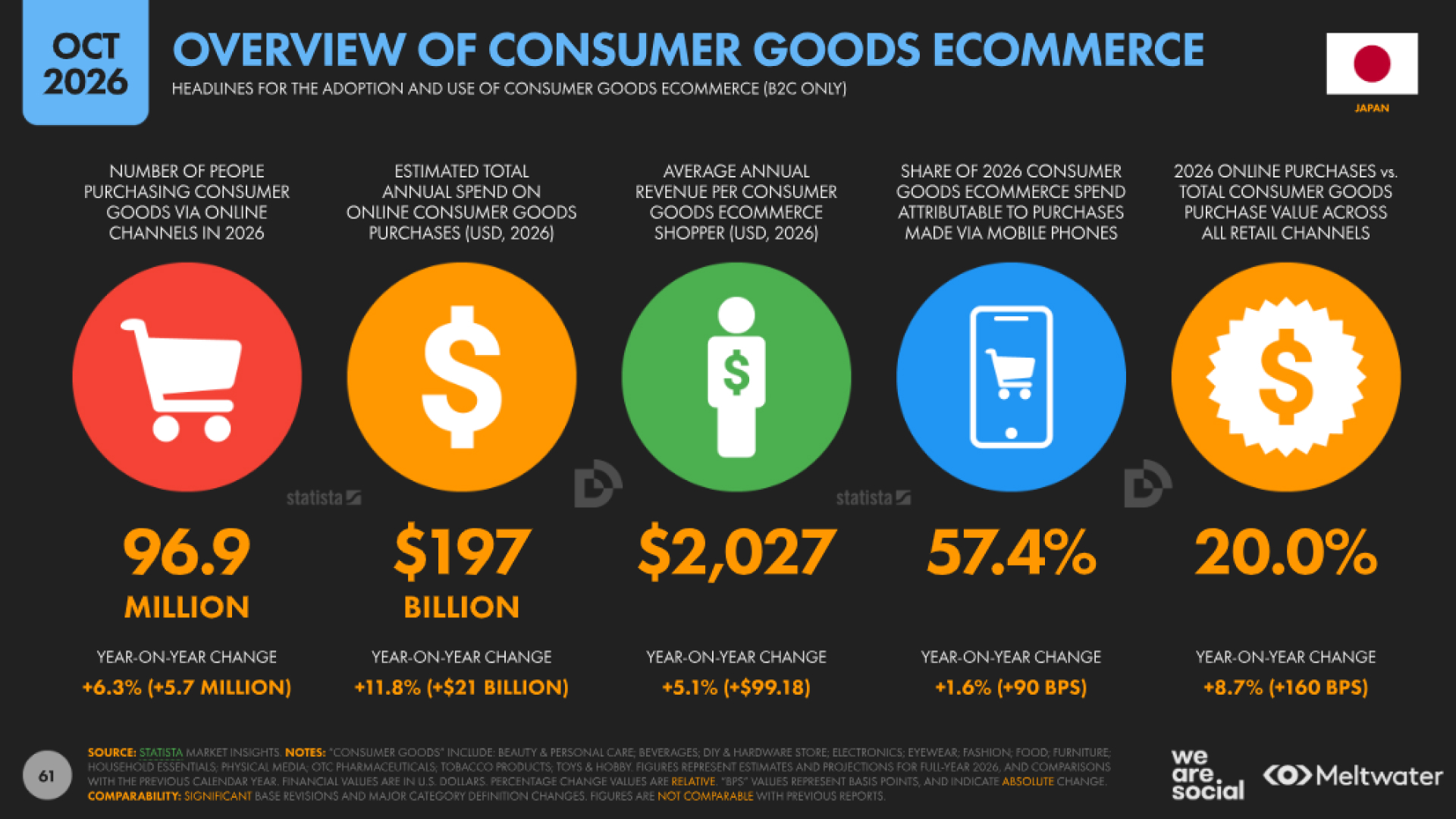
Average annual spend per ecommerce shopper was $2,027, up 5.1%. Mobile phones accounted for 57.4% of consumer goods ecommerce spend, while online purchases represented 20% of total consumer goods retail value.
For brands, ecommerce is both a large sales channel and an important part of product discovery. The mobile shopping experience deserves particular attention: shoppers need to be able to review products, move through checkout, and pay without friction.
Fashion was the largest consumer goods ecommerce category, with estimated annual spend of $58.2 billion. Food ranked second at $36.5 billion, followed by beverages ($22.7 billion), electronics ($22.5 billion), and beauty and personal care ($22.1 billion).
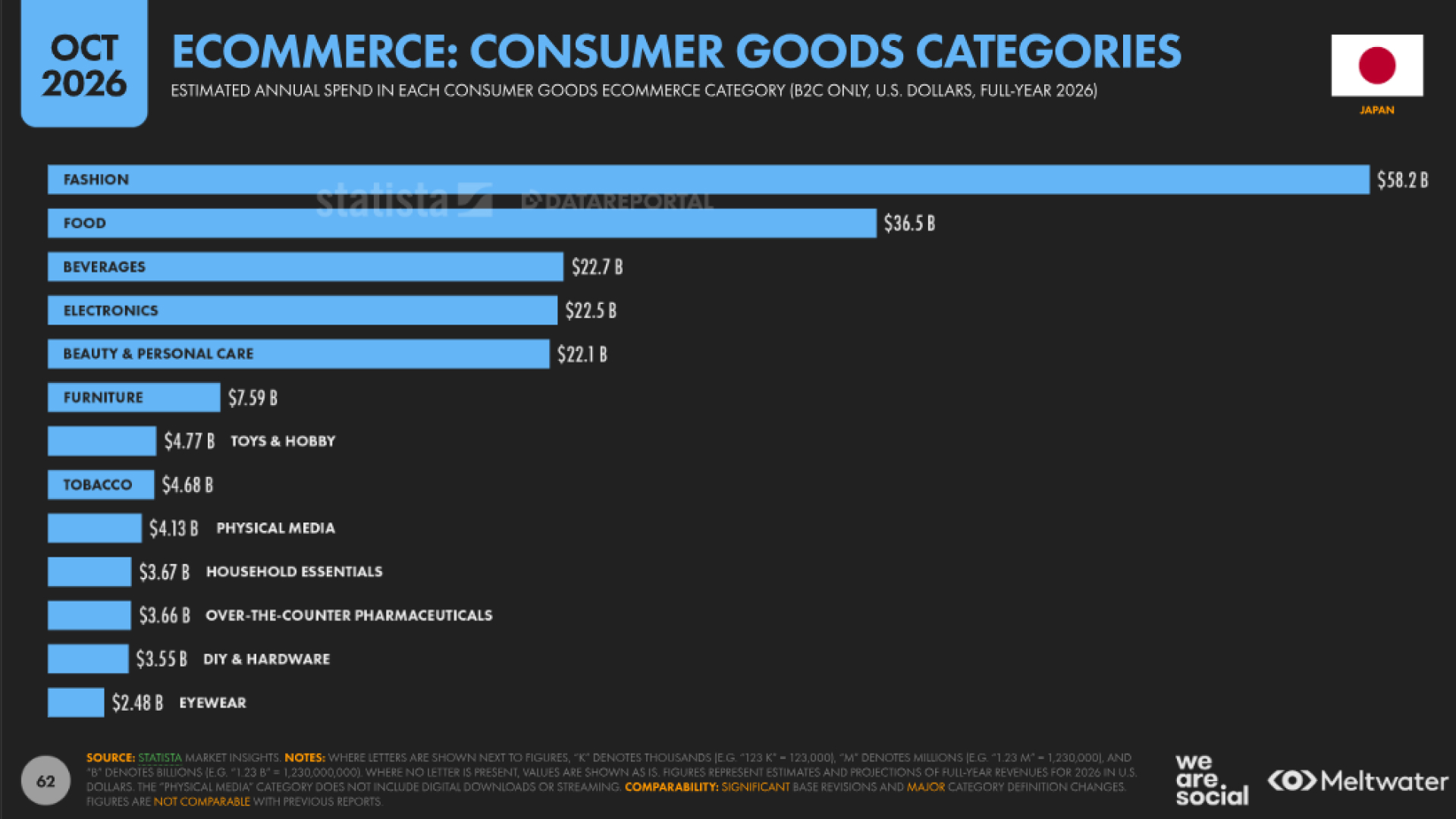
Other categories included furniture ($7.59 billion), toys and hobby products ($4.77 billion), tobacco ($4.68 billion), and physical media ($4.13 billion). Household essentials, over-the-counter pharmaceuticals, DIY and hardware, and eyewear each generated between $2.48 billion and $3.67 billion.
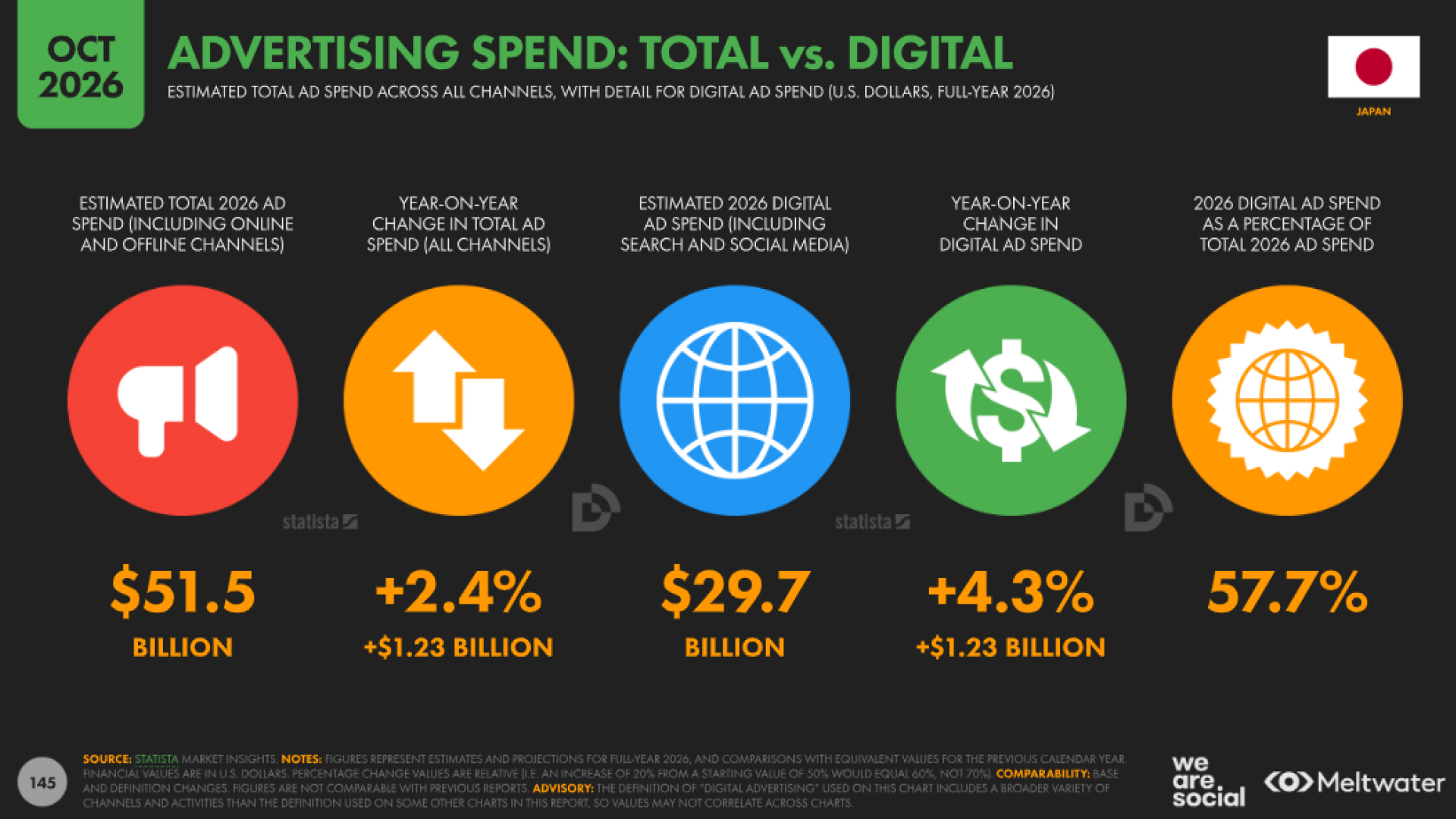
Total advertising spend in Japan was estimated at $51.5 billion for 2026, up 2.4% year on year. Digital advertising accounted for $29.7 billion, or 57.7% of total ad spend, and grew by 4.3%.
Digital advertising is therefore expanding faster than the overall market. This shift reinforces the role of digital channels in media planning, while making it increasingly important to understand how different formats and placements contribute to campaign goals.
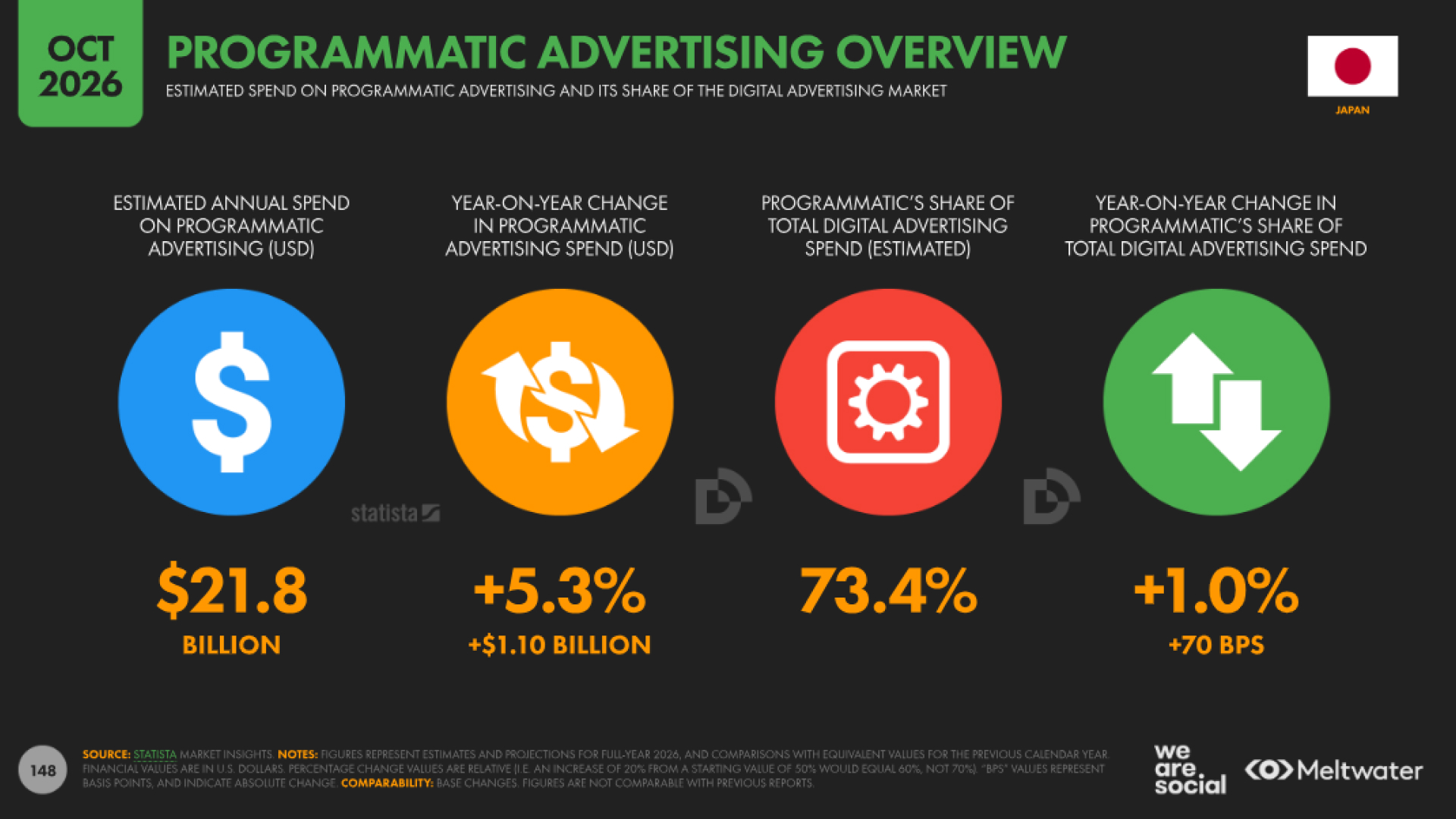
Programmatic advertising spend was estimated at $21.8 billion in 2026, a 5.3% increase from the previous year. Programmatic represented 73.4% of total digital advertising spend, and its share rose by 1 percentage point, or 70 basis points, year on year.
This is one of the clearest digital trends in Japan for advertisers: automated buying has become a central part of the digital media market. It allows campaigns to run across many placements and be adjusted against defined objectives. To get value from that flexibility, advertisers need to monitor inventory quality, audience settings, frequency, and performance.
The digital trends in Japan point to a market where internet use is widespread, mobile access is common, and ecommerce and digital advertising continue to expand. Programmatic can help brands manage campaigns across digital placements, respond to performance data, and reach audiences in relevant environments.
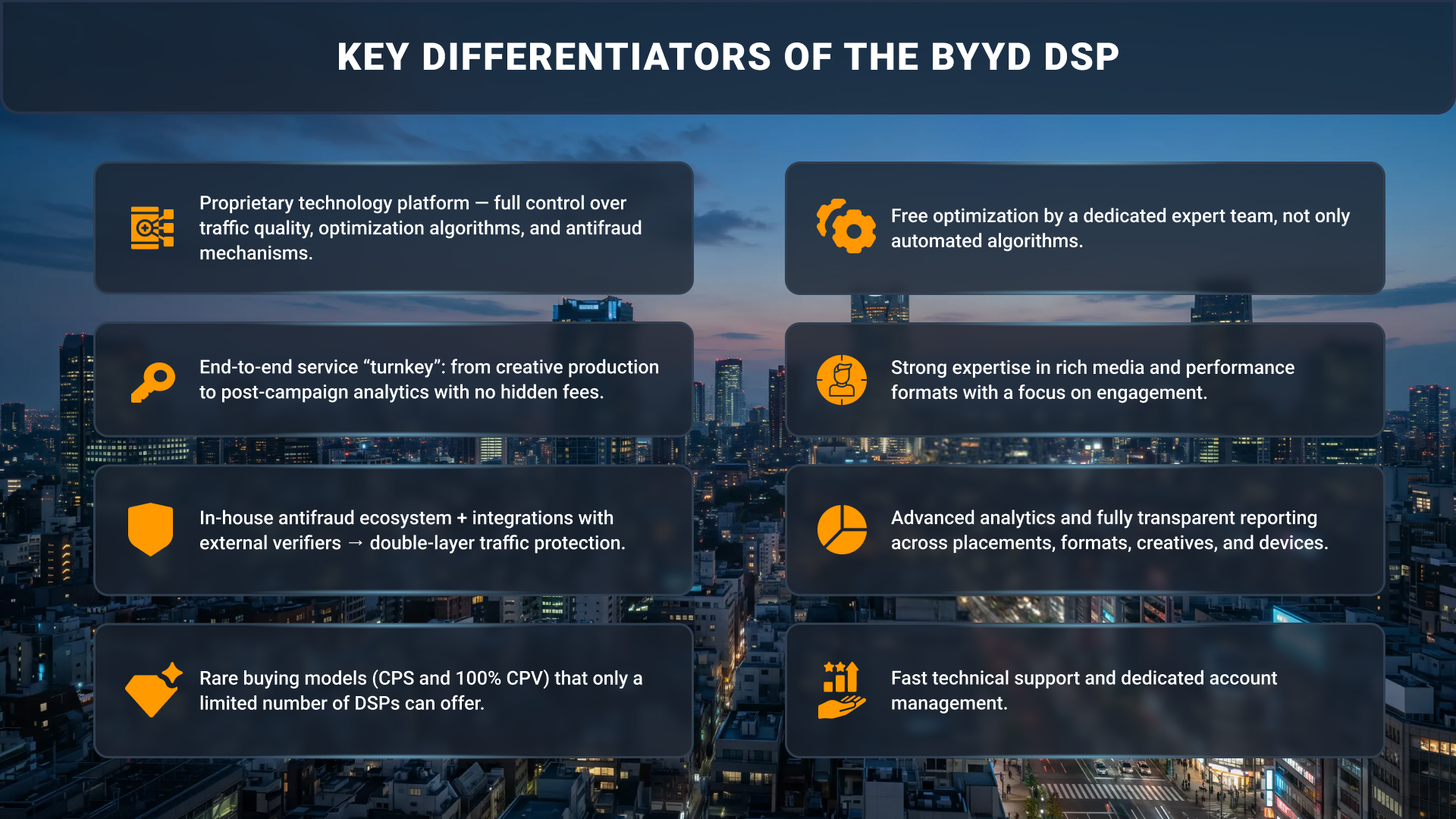
For more than 11 years, BYYD has been helping companies with mobile advertising and continuously improving its tools to meet the evolving needs of the market. Check out our case studies and send us an email – let’s launch your next campaign together.
Found this helpful? Share it with your friends and colleagues!
For consultations and partnership inquiries:


