Content is growing, but audience attention is not keeping pace. Generative AI speeds up content production, advertising platforms automate media buying and optimization, and search and recommendation systems increasingly select answers and products for users. In this environment, brands face two related challenges: making themselves understandable to algorithms and earning people’s trust.
This does not mean simply publishing more or “optimizing for AI.” Visibility can put a brand on the shortlist, but it does not guarantee that people will find it convincing or choose it over competitors.
We explore how to combine algorithmic visibility, human persuasiveness, and measurable results.
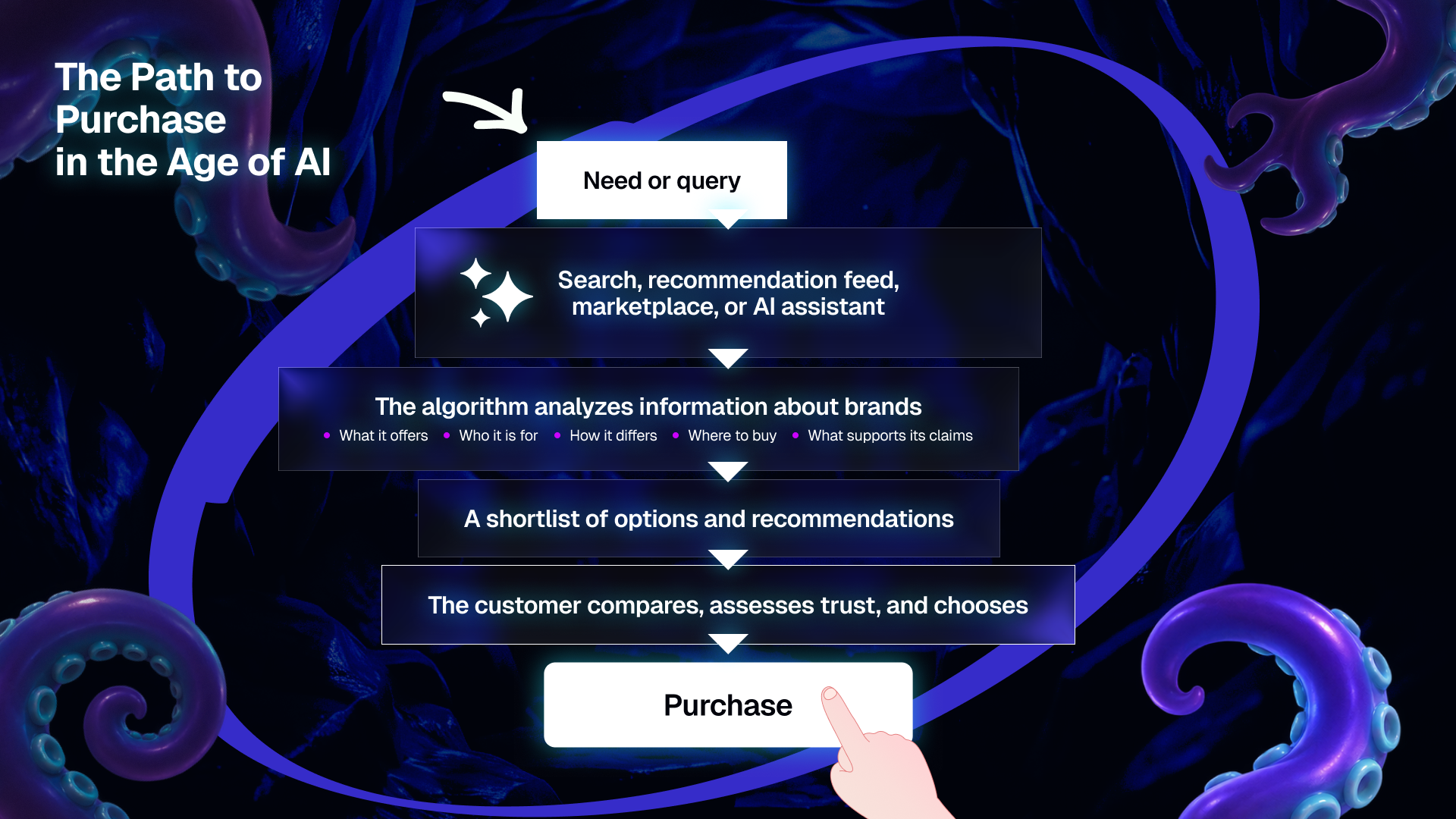
In the past, users typically made their way from a search query to a website, compared options, and then made a purchase. Now, some of this journey can take place within a recommendation feed, a marketplace, or a conversation with an AI assistant. The system suggests options, briefly explains the differences, and helps users choose.
According to Kantar, 24% of AI users already turn to assistants for help with shopping. Kantar notes that brands need to be visible to these systems by providing up-to-date, well-structured, and useful information about their products and services.
This changes what is expected of content. It is not enough for an algorithm to encounter a brand name in a large volume of text. It needs clear information about:
The more accurate and consistent this information is across the website, product listings, and other sources, the easier it is for a system to present the brand accurately to users.
But people still make the final decision. Even when an assistant or recommendation generates a shortlist, buyers need clear reasons to choose a particular option.
AI makes it possible to create and adapt text, images, and videos for different channels faster. But production speed alone is not an advantage: generic content quickly fills the space and makes it harder to find genuinely useful information.
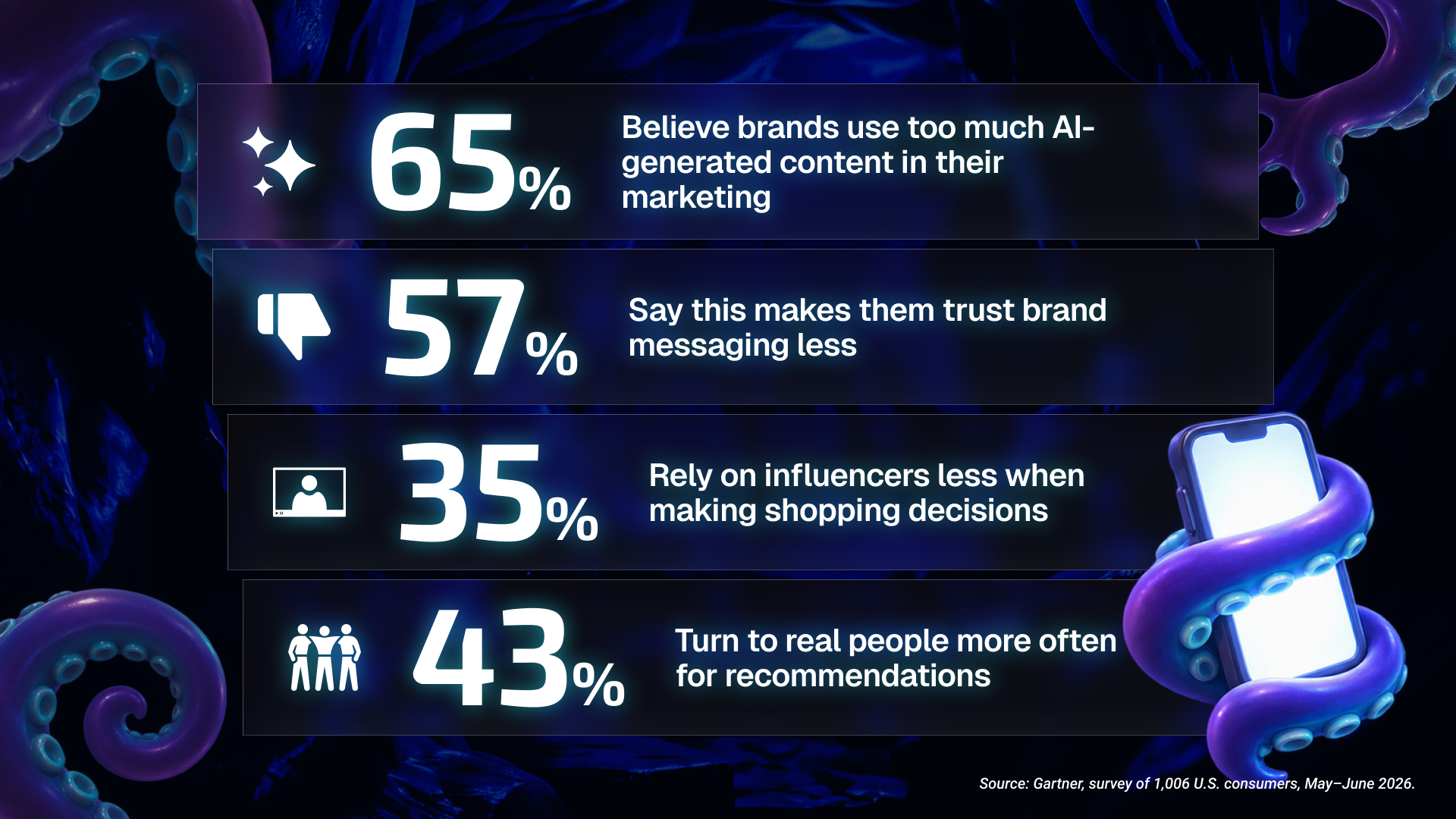
A Gartner study of 1,006 U.S. consumers found that 65% believe brands produce too much AI-generated content in their marketing materials. Another 57% say this makes them trust brand messaging less. At the same time, 43% have started relying more on real people for shopping information and recommendations, while 35% rely less on influencers. These findings are specific to U.S. consumers and should not be treated as a universal measure of audiences in all markets.
The goal for marketers is not to avoid AI, but to use it to improve the quality and relevance of their communications. AI can help research audience queries, develop creative variations, or adapt a message to a platform’s format. People still need to check the facts, tone, brand fit, and whether the content answers a real customer question.
A practical approach can be built around several principles:
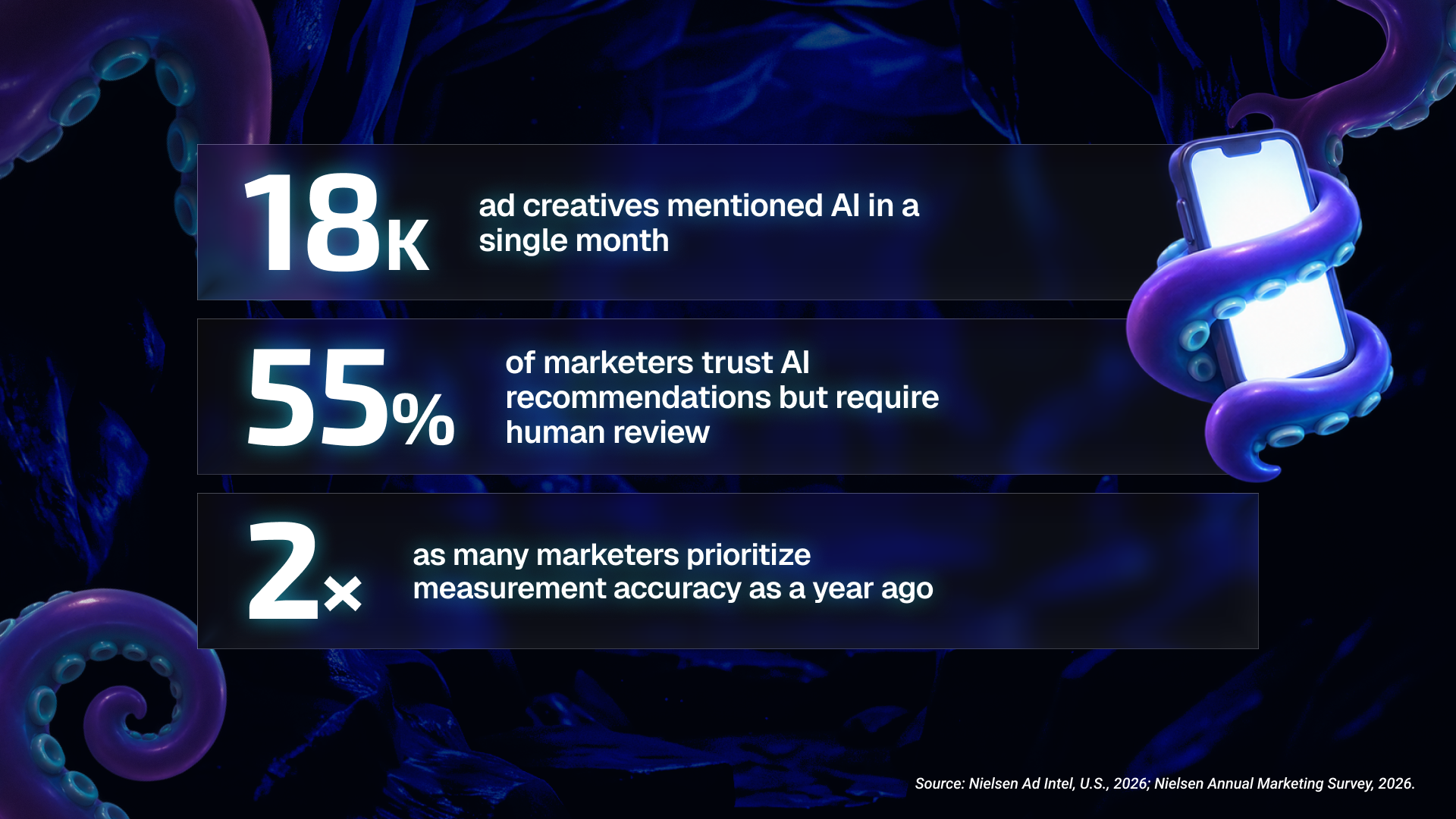
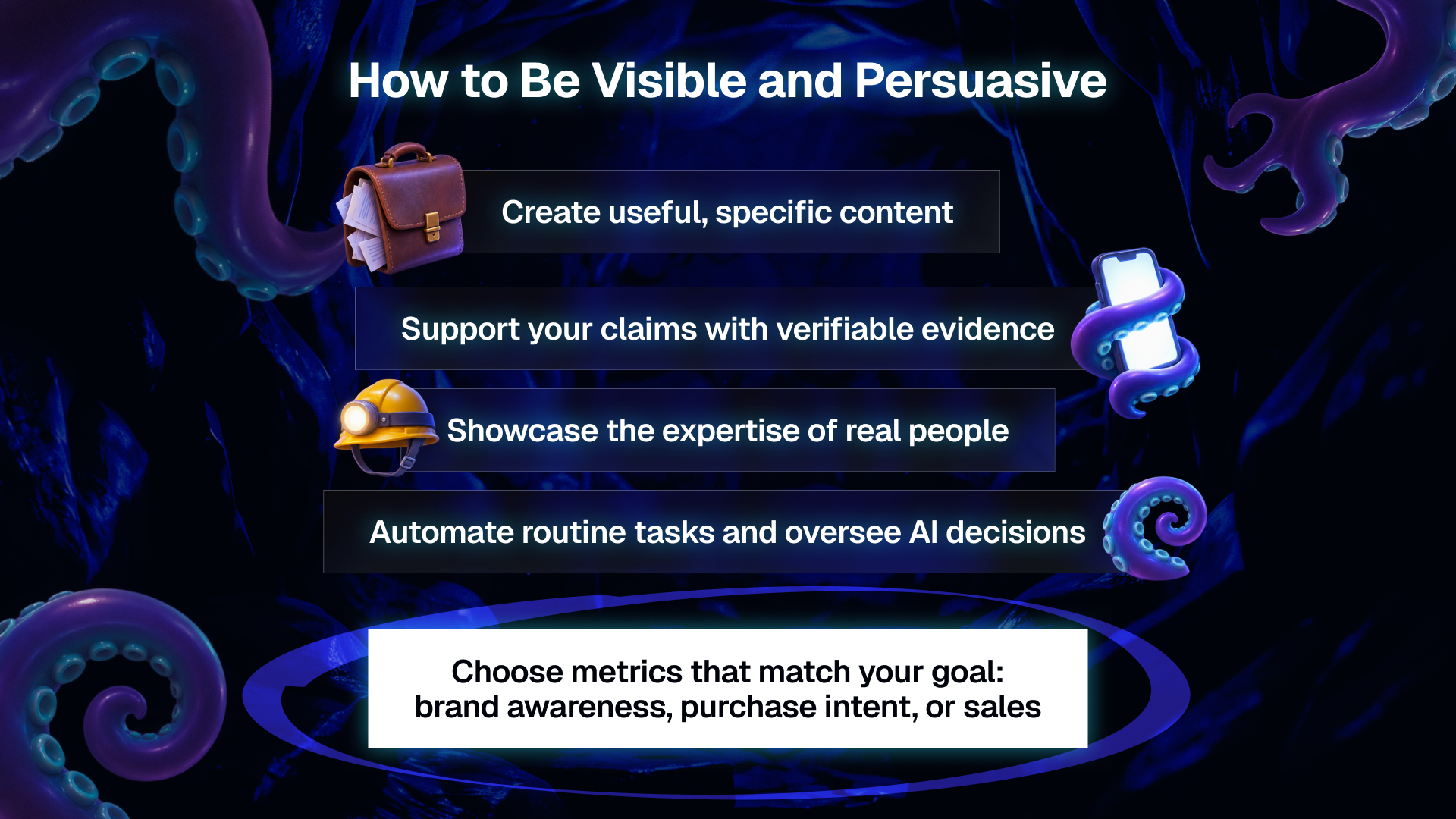
In today’s media environment, brands need to work on two levels at once. Algorithms need clear structure, relevance, and accessible information. People need usefulness, evidence, expertise, and an honest tone. Businesses need a measurement system that connects advertising exposure to intermediate effects and sales.
That is why content, automation, and analytics should be planned as one integrated system. Content helps a brand enter the consideration set, human evidence builds trust, and measurement shows whether attention translates into awareness, purchase intent, and real results. These metrics complement one another, but none can replace the others.
Mobile programmatic advertising through BYYD helps brands reach relevant audiences in apps and connect with them in the right format, from video and fullscreen ads to interactive Rich Media.
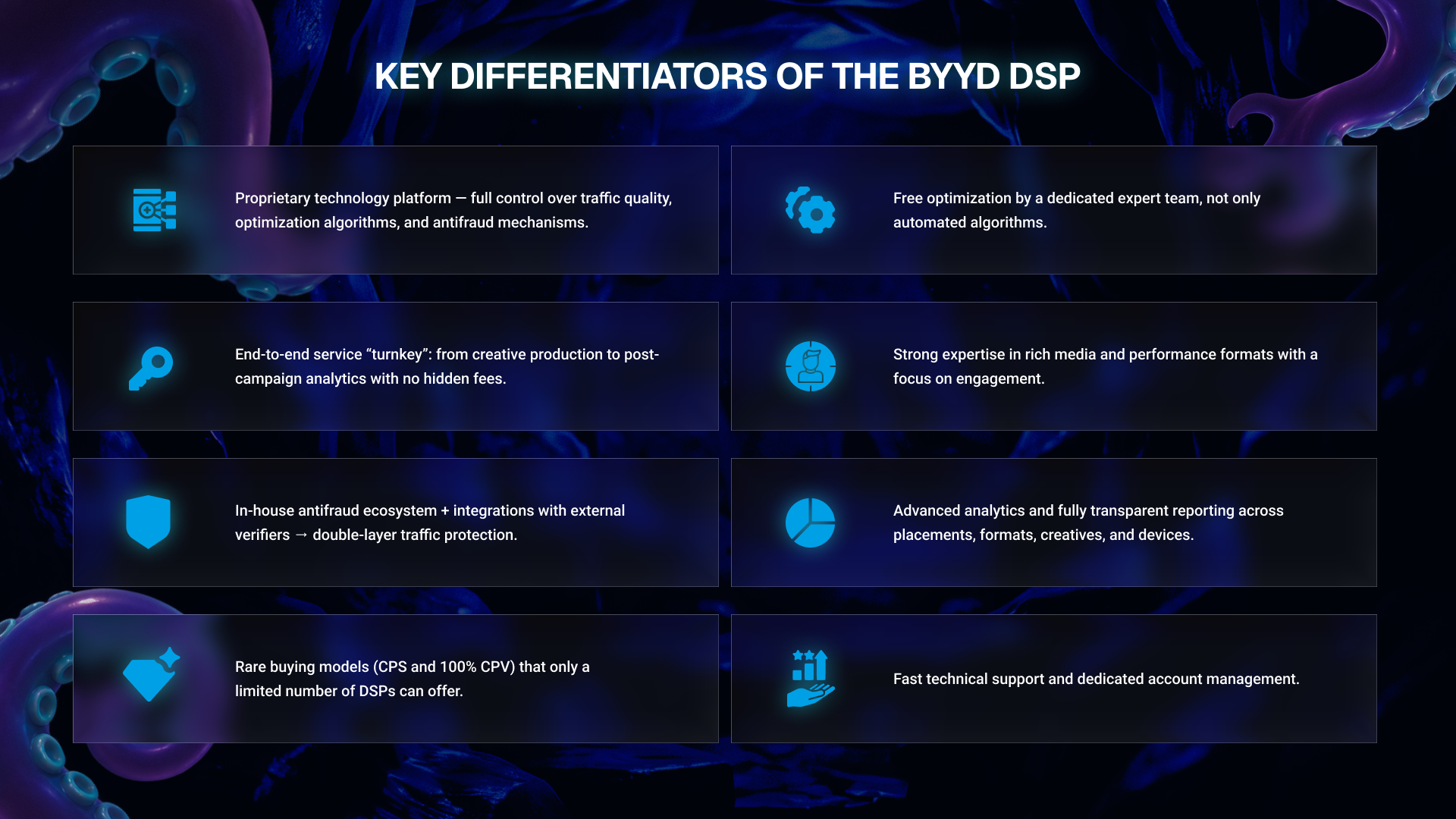
Algorithms help manage placements and optimize campaigns against defined metrics, while specialists monitor traffic quality and optimization. With the right analytics tools or research in place, results can be measured beyond clicks and views to include traffic, conversions, changes in brand awareness, and campaign impact on sales.
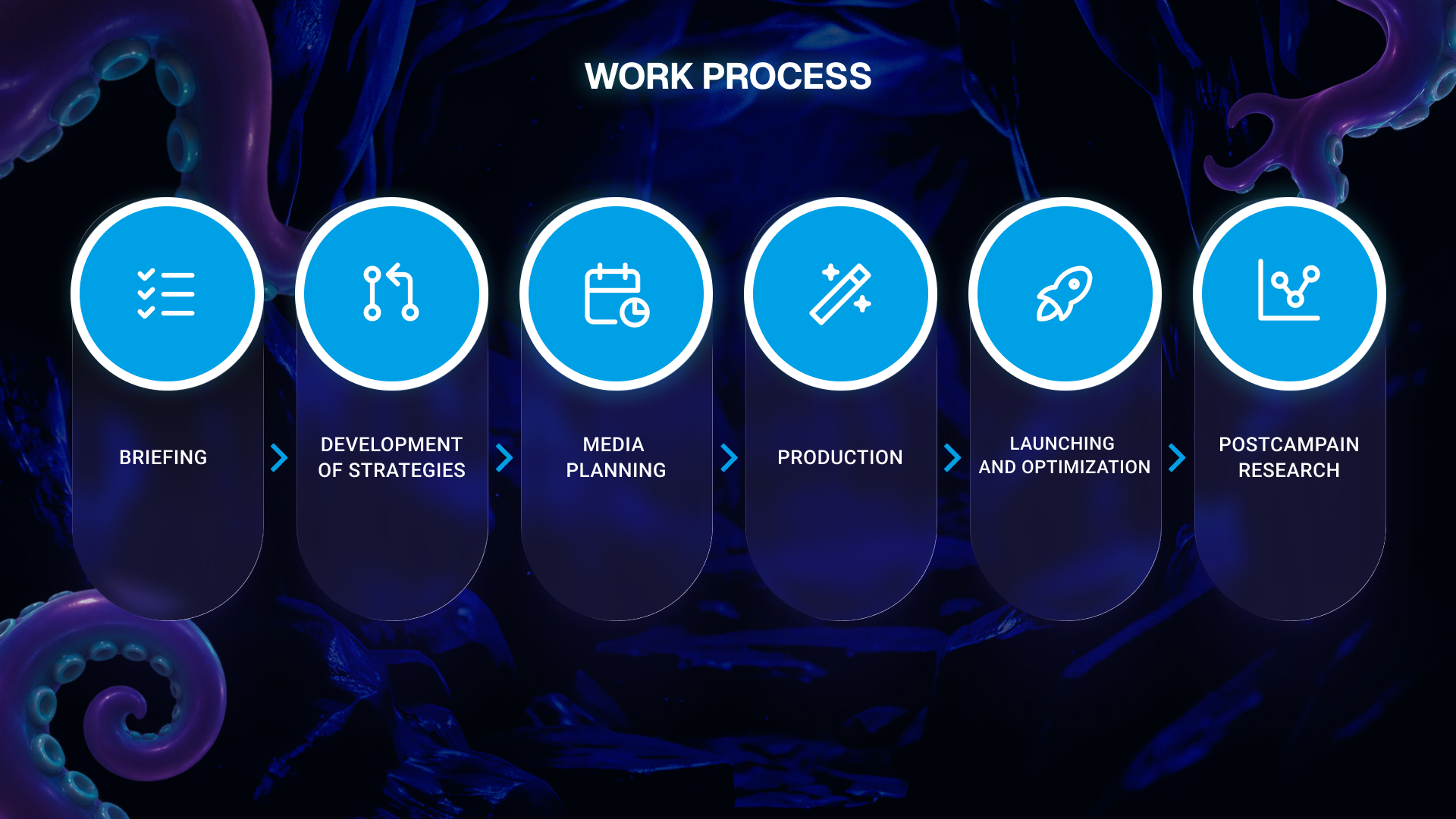
For more than 11 years, BYYD has been helping companies with mobile advertising and continuously improving its tools to meet the evolving needs of the market. Check out our case studies and send us an email – let’s launch your next campaign together.
Found this helpful? Share it with your friends and colleagues!
For consultations and partnership inquiries:


