New Year 2027 marketing will combine technology with the warm emotions associated with the holiday. According to a PwC study of US consumers, shoppers plan to keep a closer eye on their spending but are not ready to give up gifts and traditions. At the same time, interest is growing in nostalgia, in-person gatherings, and gifts that help people take a break from screens.
Artificial intelligence is already helping shoppers find products and compare prices. At the same time, Gen Z especially values offline experiences. 78% of them plan to shop for gifts in person. For brands, this is a signal: a New Year campaign should do more than offer a good deal — it should become part of happy memories.
We explore how New Year marketing is changing, highlight the main trends in consumer behavior during the pre-holiday season according to PwC’s report, and look at the role of mobile advertising in promotion.
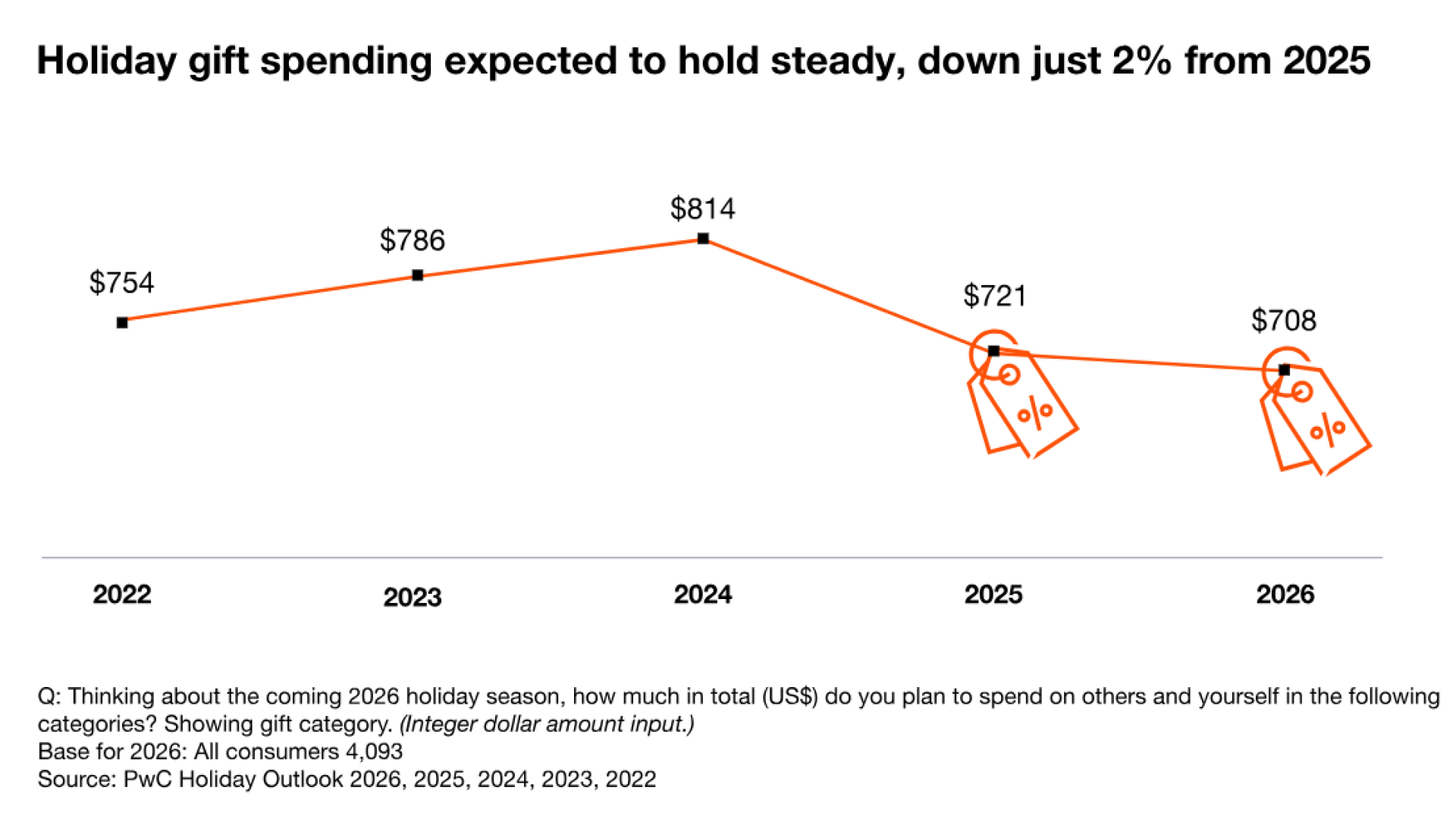
After falling from a peak of $814 in 2024, expected spending on gifts has stabilized. It was $721 in 2025 and is forecast to reach $708 per person in 2026. This suggests that consumers are more likely to plan their purchases carefully than to give up gifts.
For brands, this trend means competing for budgets that consumers have already set aside. Clear value, timely discounts, and gift ideas worth adding to a holiday wish list all matter.
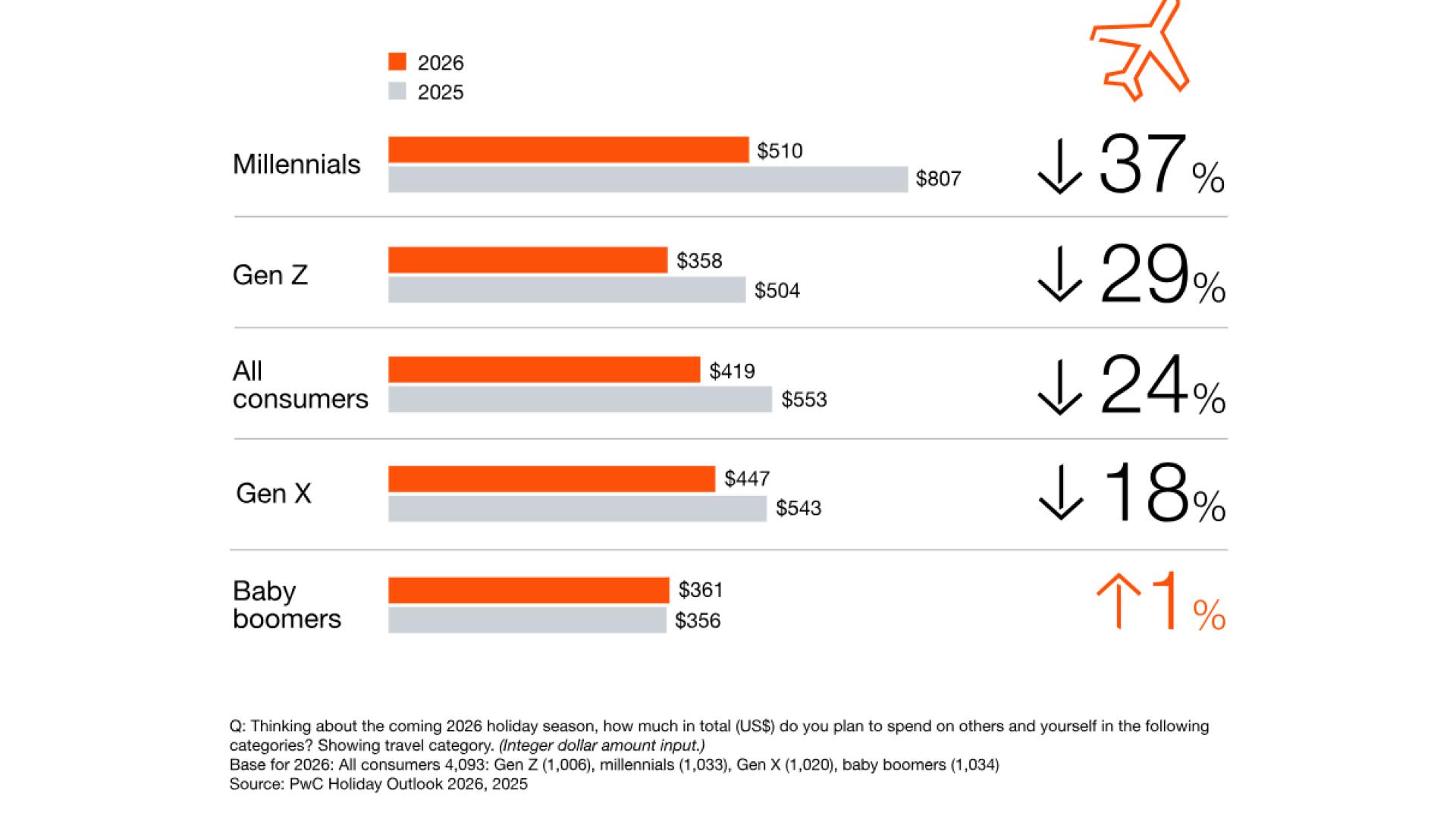
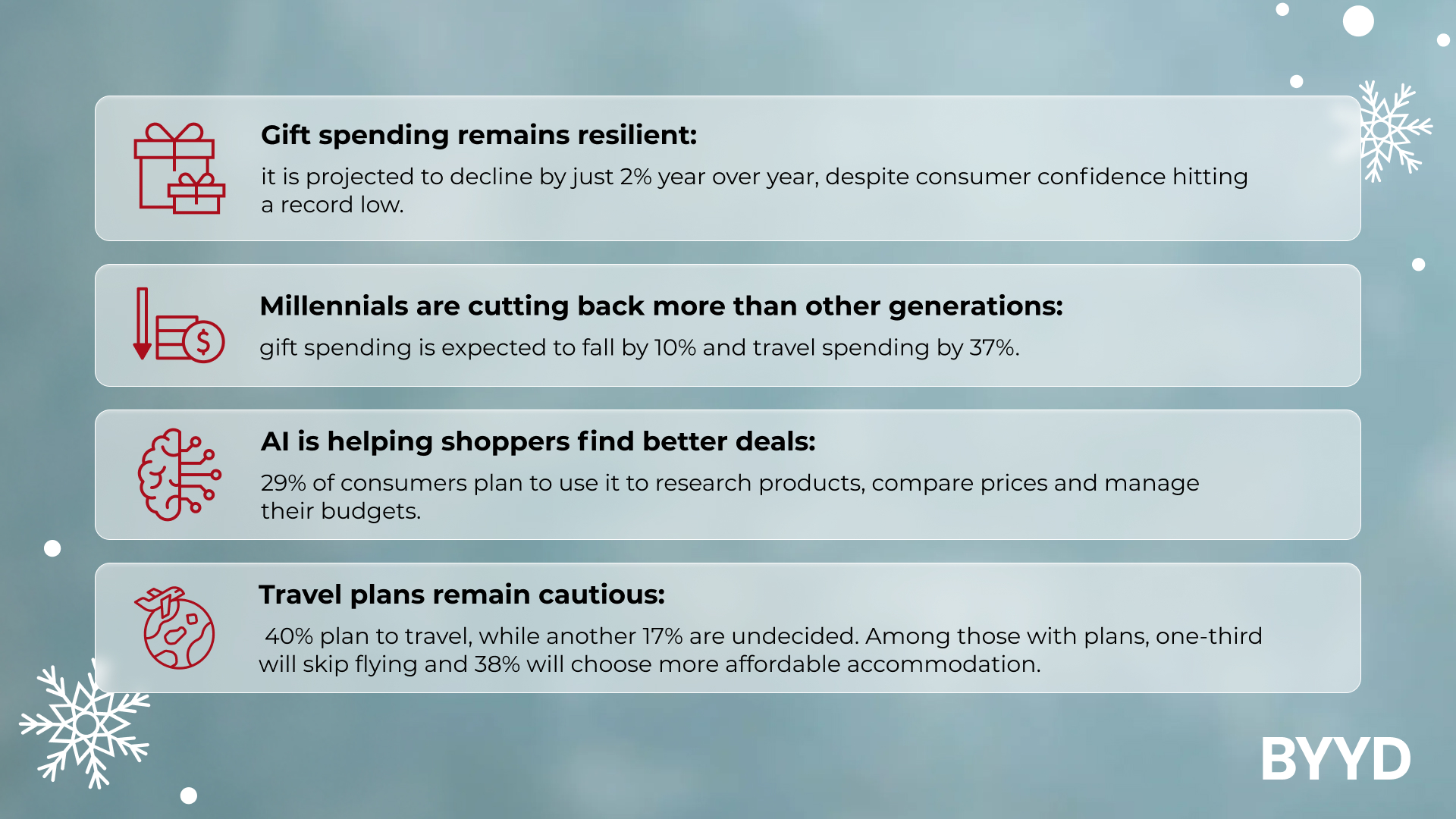
Millennials report the sharpest cuts in holiday spending of any generation. Their gift budget is down 10% year over year, while spending on travel is down 37%.
The reason is a peak in financial commitments, including mortgages, raising children, and household expenses. Yet, as they are at the height of their careers and earning potential, they remain key contributors to the holiday season in terms of total spending.
Both Millennials (-37%) and Gen Z (-29%) are significantly cutting their travel budgets while trying to minimize cuts to gift spending (down 10% and 9%, respectively). Consumers are optimizing secondary travel costs — flights, hotels, and fuel — to protect what matters most: gifts and time with family.
While Gen Z and Millennials have to cut their budgets, Baby Boomers show the opposite trend. Free from the burden of mortgages and supporting dependents, they have disposable income and are helping fund shared family gatherings and experiences.
The share of shoppers using AI for holiday shopping has grown to 29%, up from 22% a year earlier.
AI has established itself as a digital assistant:
Consumers are reluctant to let AI platforms handle transactions directly. 64% of users browse ideas with AI, then open a separate browser tab and go to a retailer’s website.
At the same time, 68% say they use AI specifically to find unexpected gift ideas, rather than simply to look for items they have already chosen. This is especially common among Gen Z (73%) and Millennials (70%).
Although 75% of users believe AI will make shopping easier, more than half of shoppers do not know how to use it effectively:
The season’s main paradox: Gen Z is more eager than any other generation to disconnect from screens.
78% of Gen Z prioritize nostalgic, screen-free gifts, compared with 64% of all consumers. In addition, 81% of Gen Z choose offline activities, and 63% say a shared holiday dinner matters more to them than any material gift.
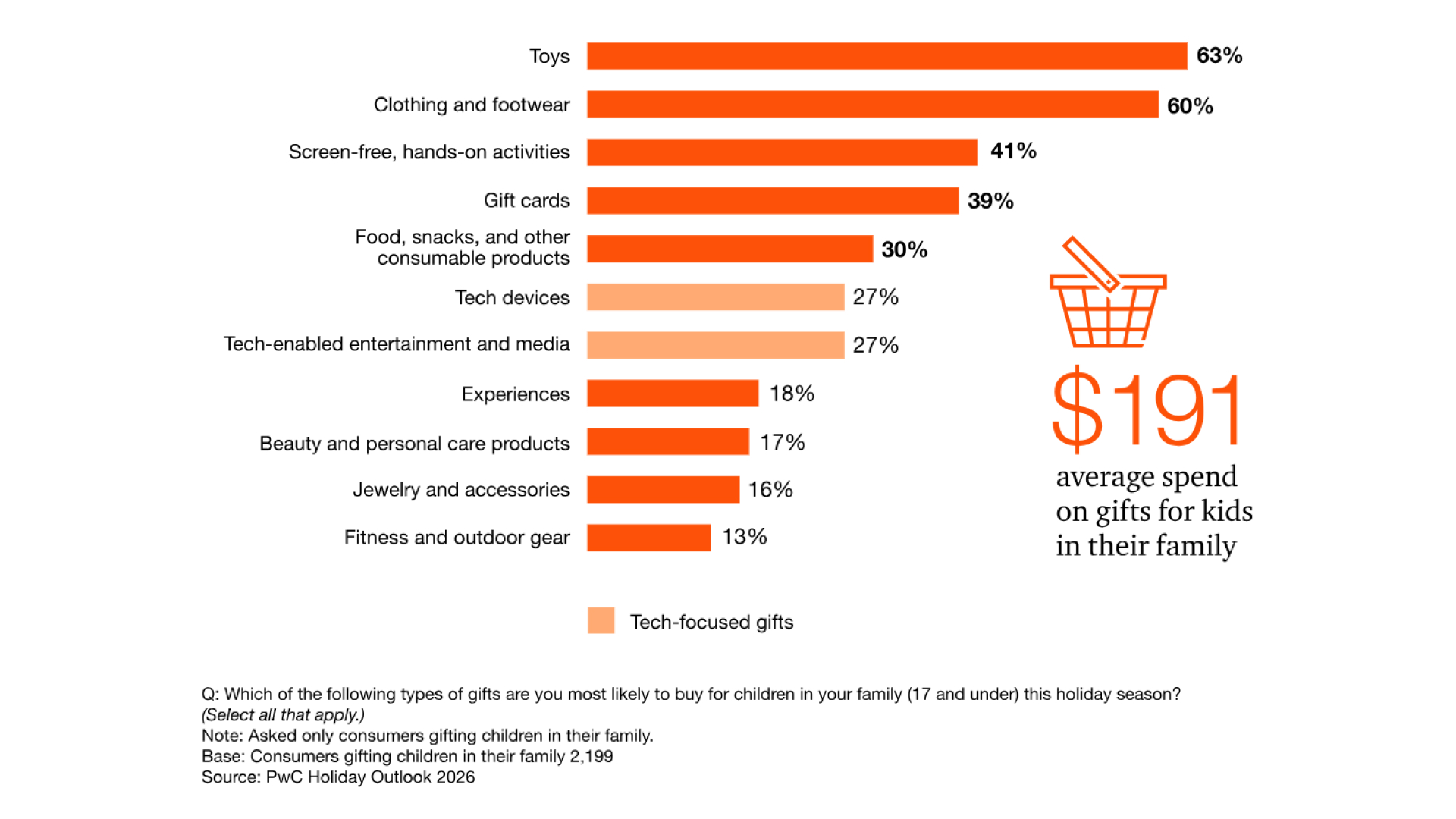
41% of shoppers buying gifts for children choose board games, books, arts and crafts supplies, and puzzles, while only 27% plan to give gadgets and digital media. Consumers are deliberately choosing tangible experiences over technology.
Interest in tech gifts for children comes with a strict filter:
Gen Z is bringing classic mall shopping back into fashion:
Across the market, physical retail remains in the lead.
52% of all shoppers choose gifts in stores, compared with 42% who use search engines and 14% who turn to AI. The gap widens at checkout: 60% make purchases in brick-and-mortar stores, compared with 38% on brand websites and just 4% through AI.
Mobile advertising through the BYYD platform helps brands support the shift toward in-store shopping with hyperlocal targeting. A campaign can target audiences near a retail location — down to just a few meters away. This lets brands reach nearby shoppers and invite them into the store, for example with a message about a holiday promotion or a curated gift selection.
PwC’s data shows that shoppers are planning their spending more carefully, but are in no hurry to give up gifts and holiday traditions. For brands, this means it is important to do more than attract attention with a discount: they need to show the value of their offer and help shoppers find the right gift.
The season’s key trends include steady spending on gifts alongside cuts to travel budgets, the growing role of AI in product and idea discovery, and increased interest in nostalgia and offline experiences.
The last trend is especially pronounced among Gen Z: young shoppers value screen-free gifts, shared activities, and the atmosphere of traditional shopping. AI, meanwhile, is still mostly used to explore options and compare prices, while many purchases are made through a separate channel — on a website or in a store.
For holiday campaigns, this means brands should combine attractive offers with emotional messaging and be present in the channels where audiences look for ideas, compare products, and make purchase decisions.
Programmatic automates the purchase of ad impressions in mobile apps and lets brands tailor campaigns to specific audiences, locations, and objectives. For example, a brand can show a gift guide to users interested in a particular category or deliver a local offer to audiences in a specific area.
Mobile formats fit naturally into the in-app experience and help showcase products in an engaging way, inspiring users as they make their choices.
Ads can direct users to a brand’s or retailer’s website, where they can continue comparing options and complete their purchase. This aligns with shopper behavior: people use digital tools to find ideas, but often make their purchases through a separate channel.
During a campaign, programmatic lets brands track impressions, clicks, views, and other available metrics, then adjust their placements accordingly. This gives brands the flexibility to test creatives and offers, manage their budget, and engage audiences at different stages of pre-holiday communication.
For more than 11 years, BYYD has been helping companies with mobile advertising and continuously improving its tools to meet the evolving needs of the market. Check out our case studies and send us an email – let’s launch your next campaign together.
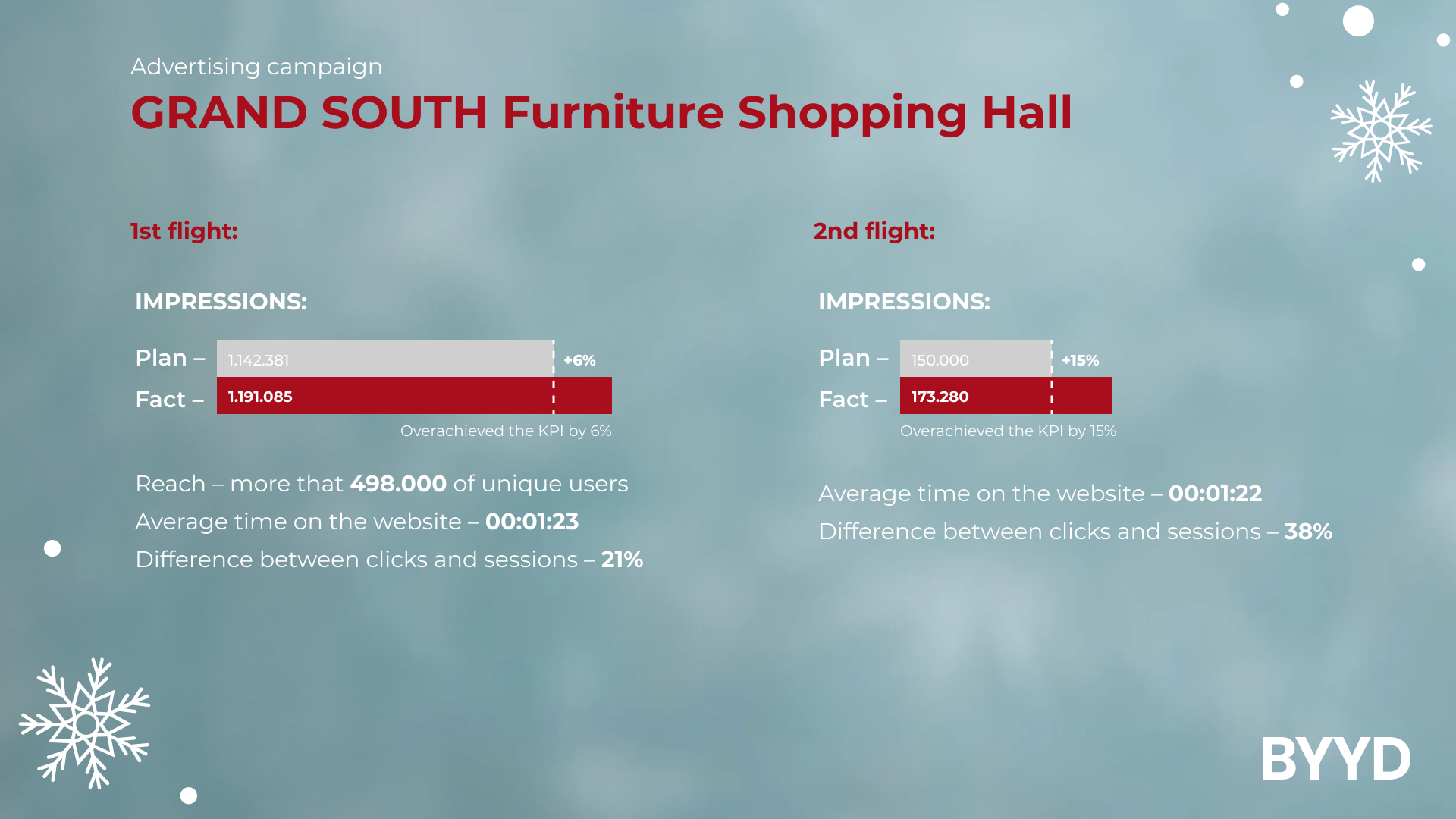
For example, for GRAND SOUTH Furniture Shopping Hall, BYYD ran a two-flight holiday campaign across the CIS to announce Christmas sales and drive users to the client’s website.
In the first flight, Fullscreen Interstitials reached more than 498,000 unique users and helped build an audience for retargeting; socio-demographic targeting was combined with relevant interests, including furniture, home buying, and interior design, as well as income criteria. The campaign delivered 1,191,085 impressions against a plan of 1,142,381, exceeding the target by 6%, with an average website visit duration of 1 minute 23 seconds.
In the second flight, Rich Media banners with a button linking to the website re-engaged the collected audience and generated 173,280 impressions against a plan of 150,000, exceeding it by 15%; average time on site was 1 minute 22 seconds. The campaign achieved a CTR of 2.46%.
Found this helpful? Share it with your friends and colleagues!
For consultations and partnership inquiries:


