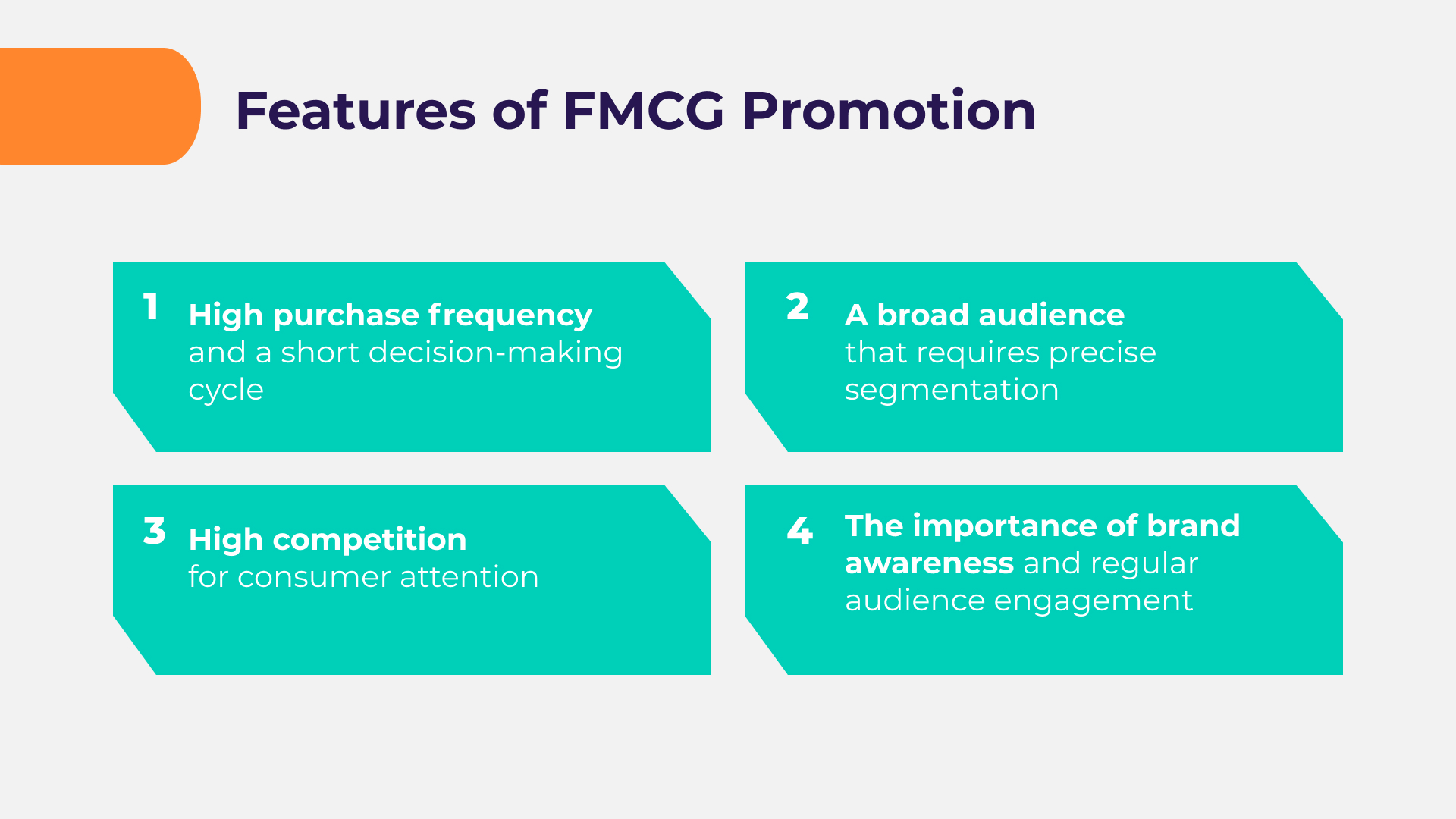
FMCG marketing has its unique features. These products are purchased frequently, and decisions are made quickly. However, brand awareness often begins well before the purchase.
To retain customers, brands need to focus on building awareness. Additionally, they need to be present in the online space at the right moment for the consumer. This is particularly relevant as 75% of buyers use digital channels to choose a brand.
Against this backdrop, mobile advertising has become one of the most effective tools for promoting FMCG brands. In the article, we discuss the trends shaping FMCG marketing today, how consumer behavior is evolving, and why programmatic plays a crucial role in promotion.
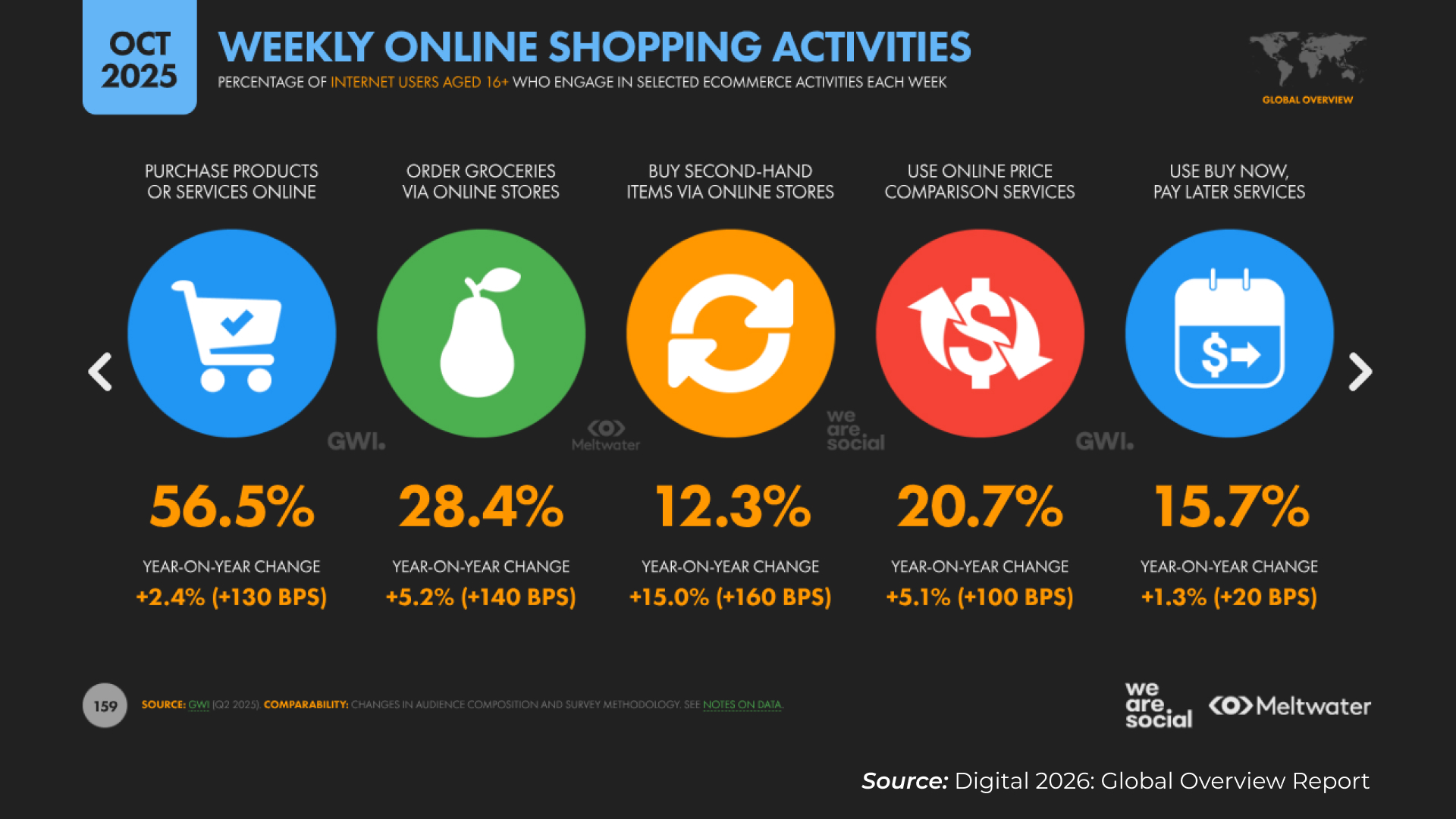
E-commerce has already become a regular weekly habit. According to Data Reportal, 56.5% of internet users over 16 years old make online purchases weekly. Additionally, 28.4% order products through online stores, and 20.7% regularly use price comparison services.
For the FMCG segment, this is important because it’s not just about digital interest, but about an established consumption model. Users regularly choose, compare, order, and make decisions in the digital environment.
FMCG brands need more than just offline presence and traditional media advertising. Significant daily demand is now forming in mobile environments.
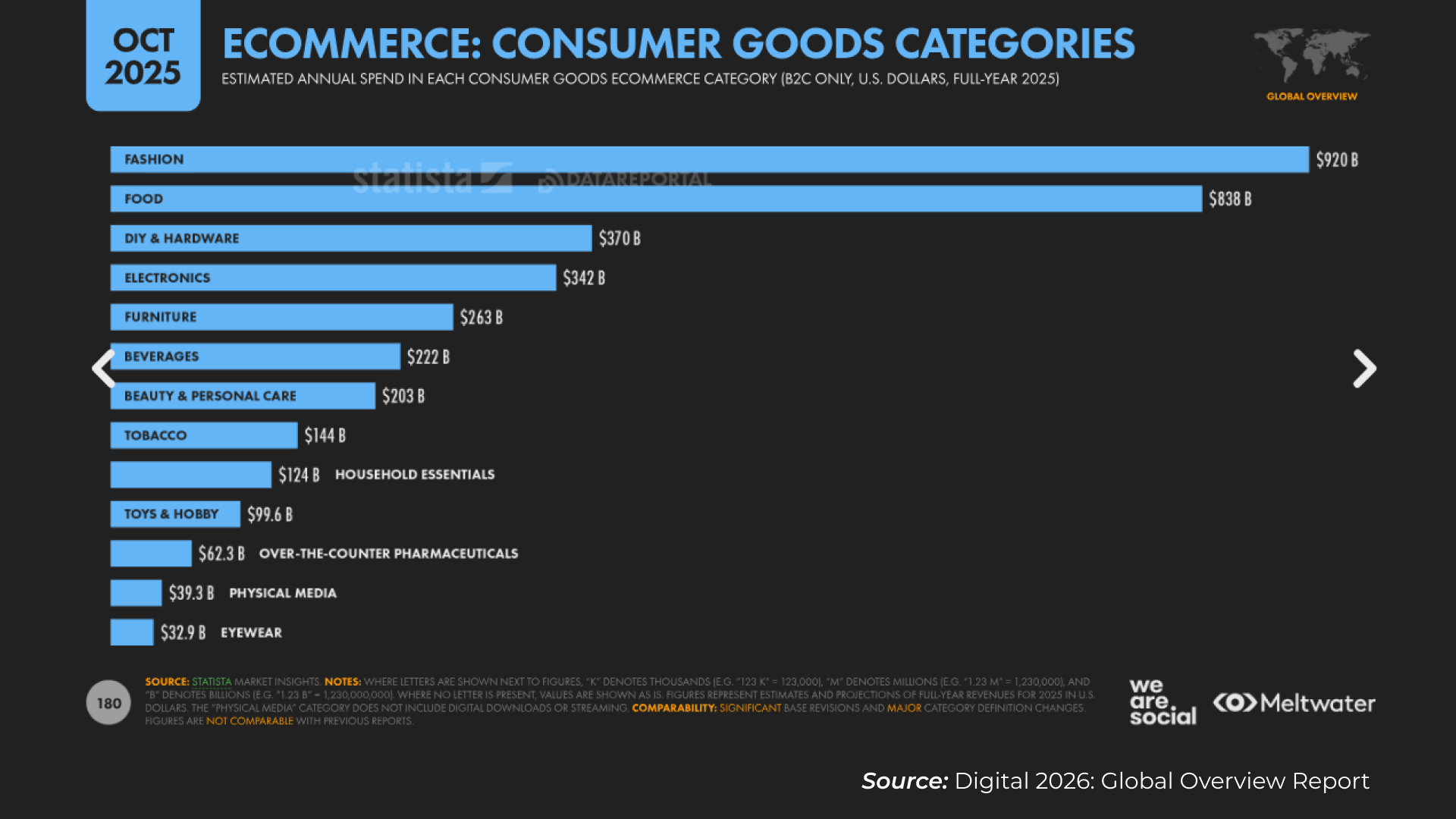
In 2025, the annual volume of e-commerce reached:
Mobile advertising is becoming one of the most effective tools in FMCG promotion because purchasing decisions often don’t require a long decision-making process. The choice is made quickly, often situationally, and the path to purchase increasingly passes through the smartphone.
Nearly a third of users order products online weekly, and one in five regularly compares prices. Therefore, it is essential for brands to be visible exactly at the moment of decision.
Mobile advertising allows brands to seamlessly integrate into this scenario:
Mobile advertising through the BYYD platform offers the opportunity to advertise within mobile apps. Programmatic is an automated advertising technology that allows for real-time audience targeting, ad display management, and flexible campaign optimization.
Today, programmatic plays a significant role in FMCG promotion. It helps FMCG brands work not only on broad reach but also on efficiency:
Furthermore, in the FMCG segment, purchasing decisions are rarely completely spontaneous. By the time a decision is made, the consumer is already familiar with the brand—whether they’ve seen the ad or noticed it in apps and social media. Repeated contacts form brand awareness, which then influences the purchase decision.
Mobile advertising helps brands regularly appear in the user’s sight, subtly embedding themselves in memory and creating the effect of background recall. At the crucial moment, the consumer is more likely to choose a product they are already familiar with.
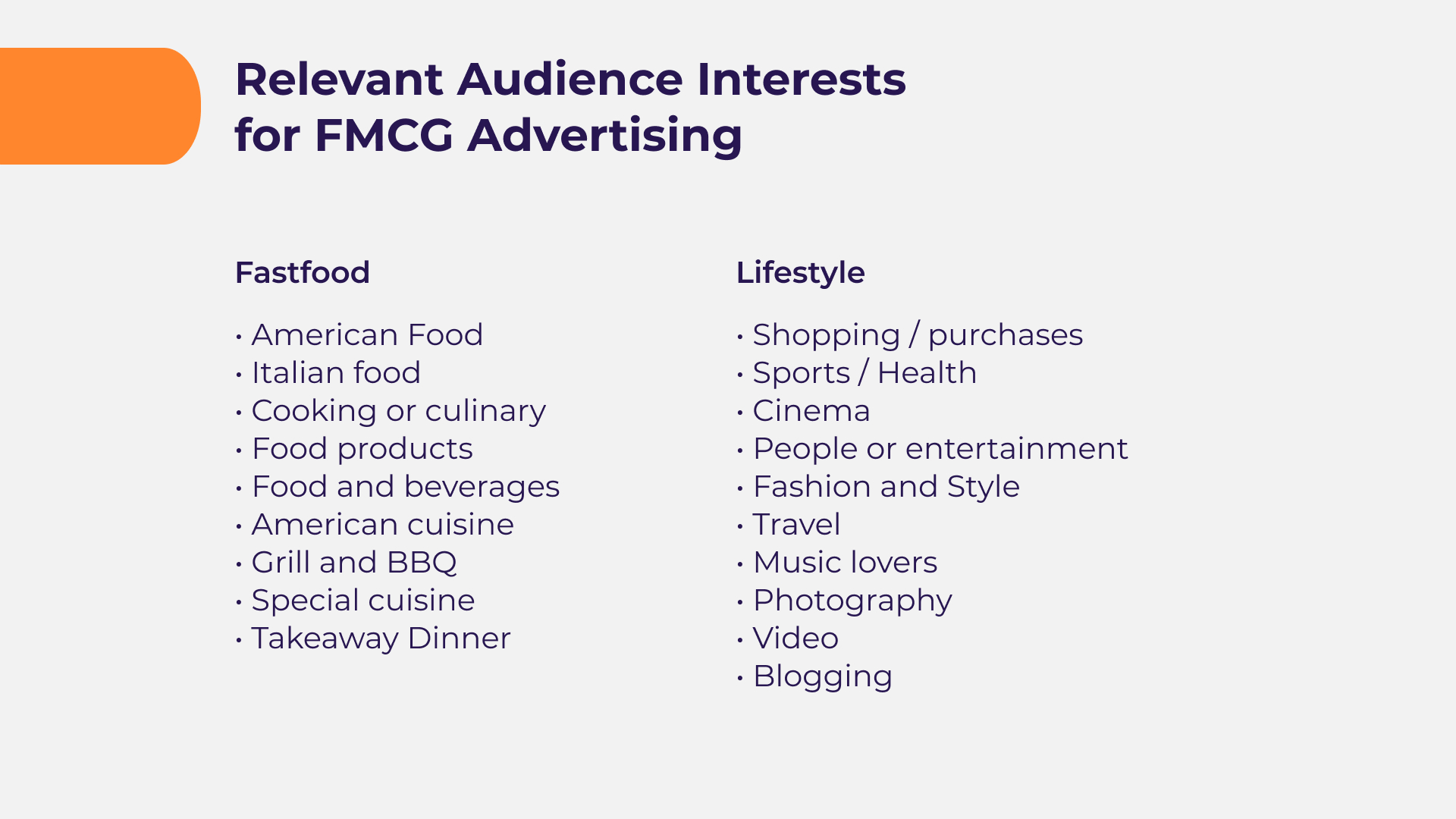
One of the strengths is precise audience targeting. FMCG brands use targeting by interests, socio-demographic parameters, and big data.
This is important in FMCG, where different products within the same category can be aimed at different audiences—by age, gender, lifestyle, purchasing habits, and income level. This allows the company to save the budget and avoid irrelevant impressions.
Daily optimization allows for adjusting purchases, reallocating volumes in favor of more effective sources. Marketers disable less effective apps and select higher-quality platforms.
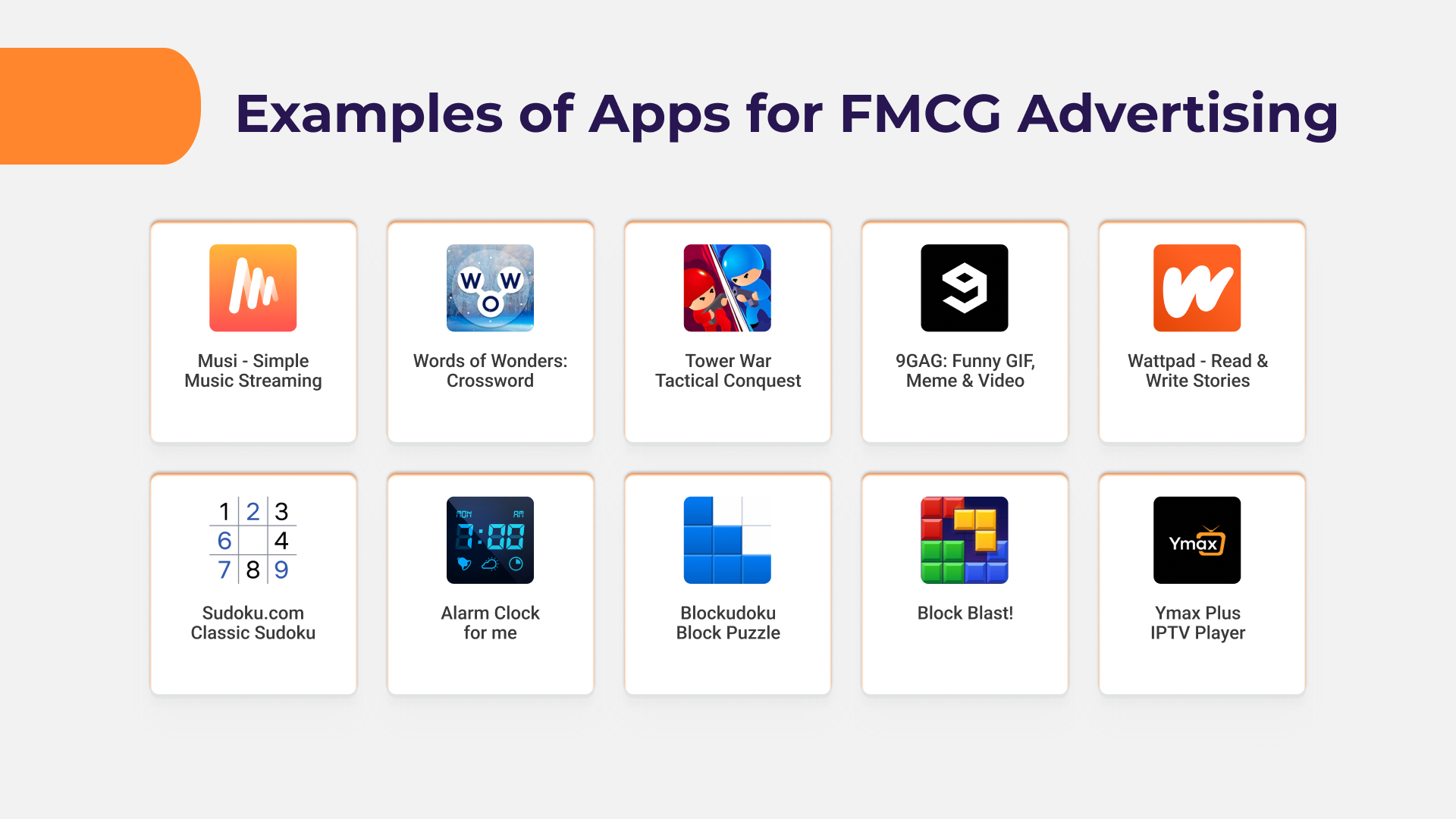
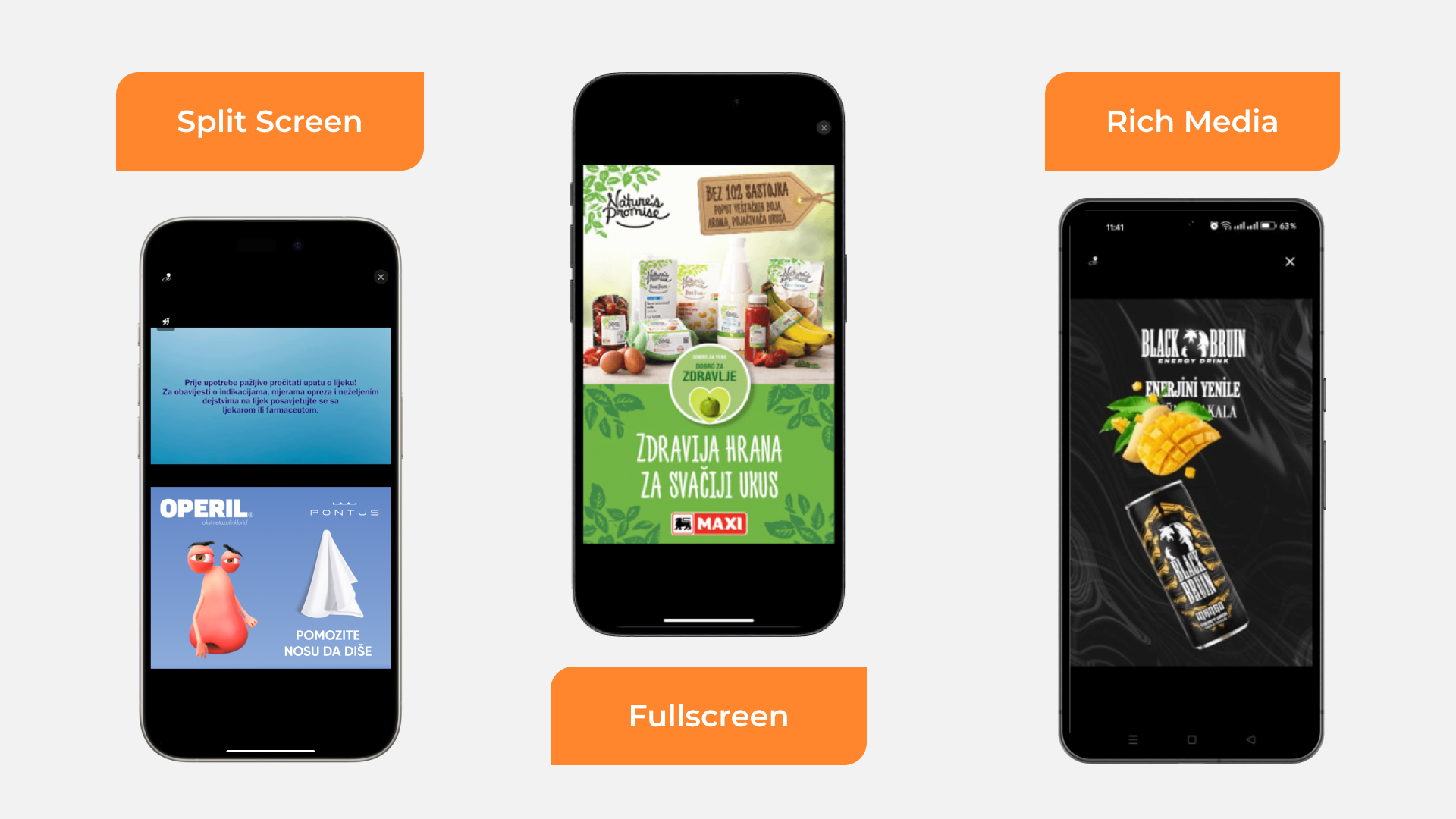
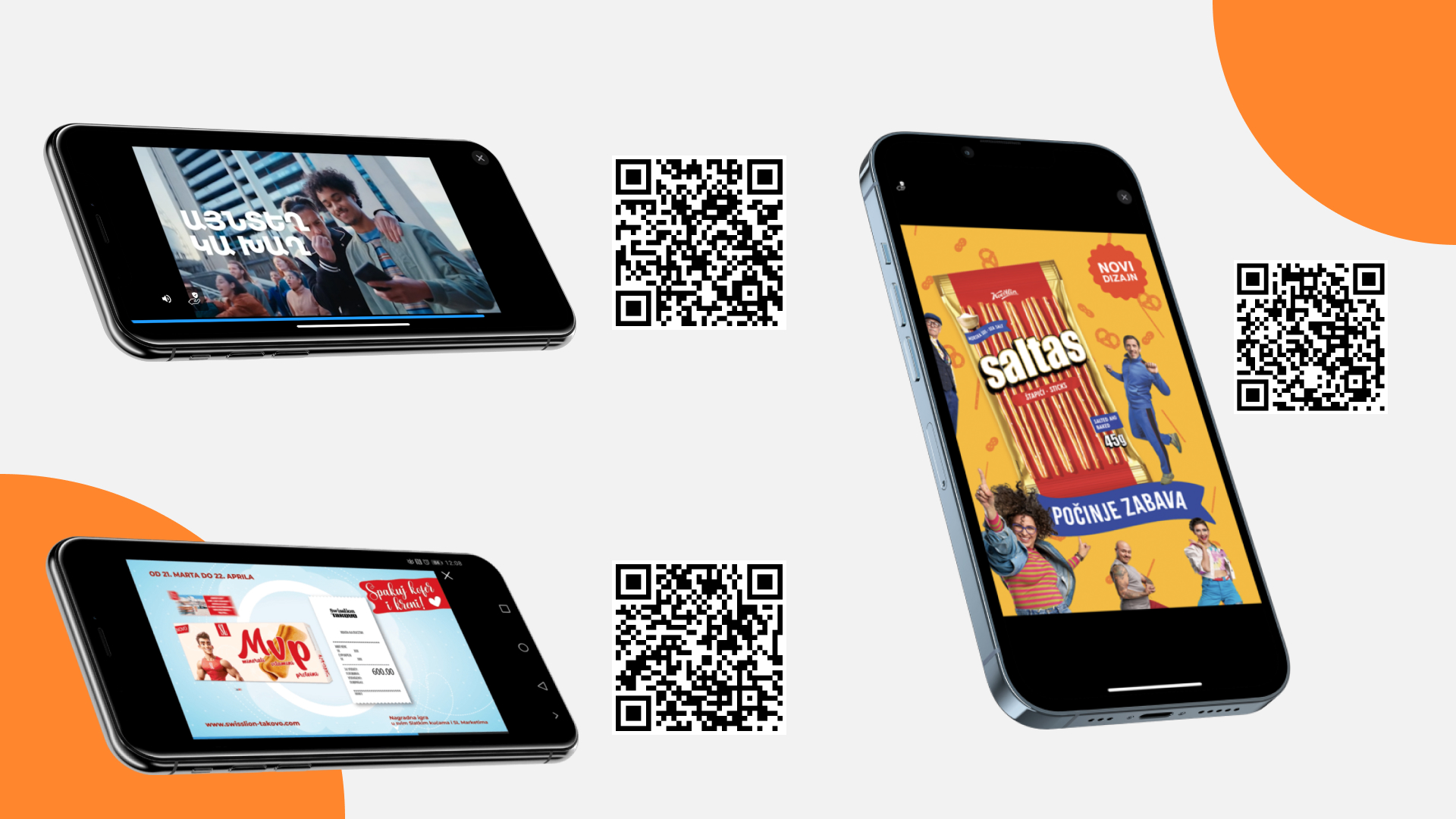
In mobile advertising, formats that not only show a message but also retain the user’s attention are especially in demand. These include Rich Media creatives, formats with gaming mechanics, Split Screen, full-screen placements, and video ads.
Such solutions allow different ways to present the product depending on campaign objectives: from increasing awareness to stimulating the next step in the funnel. In BYYD, the internal design team handles banner creation.
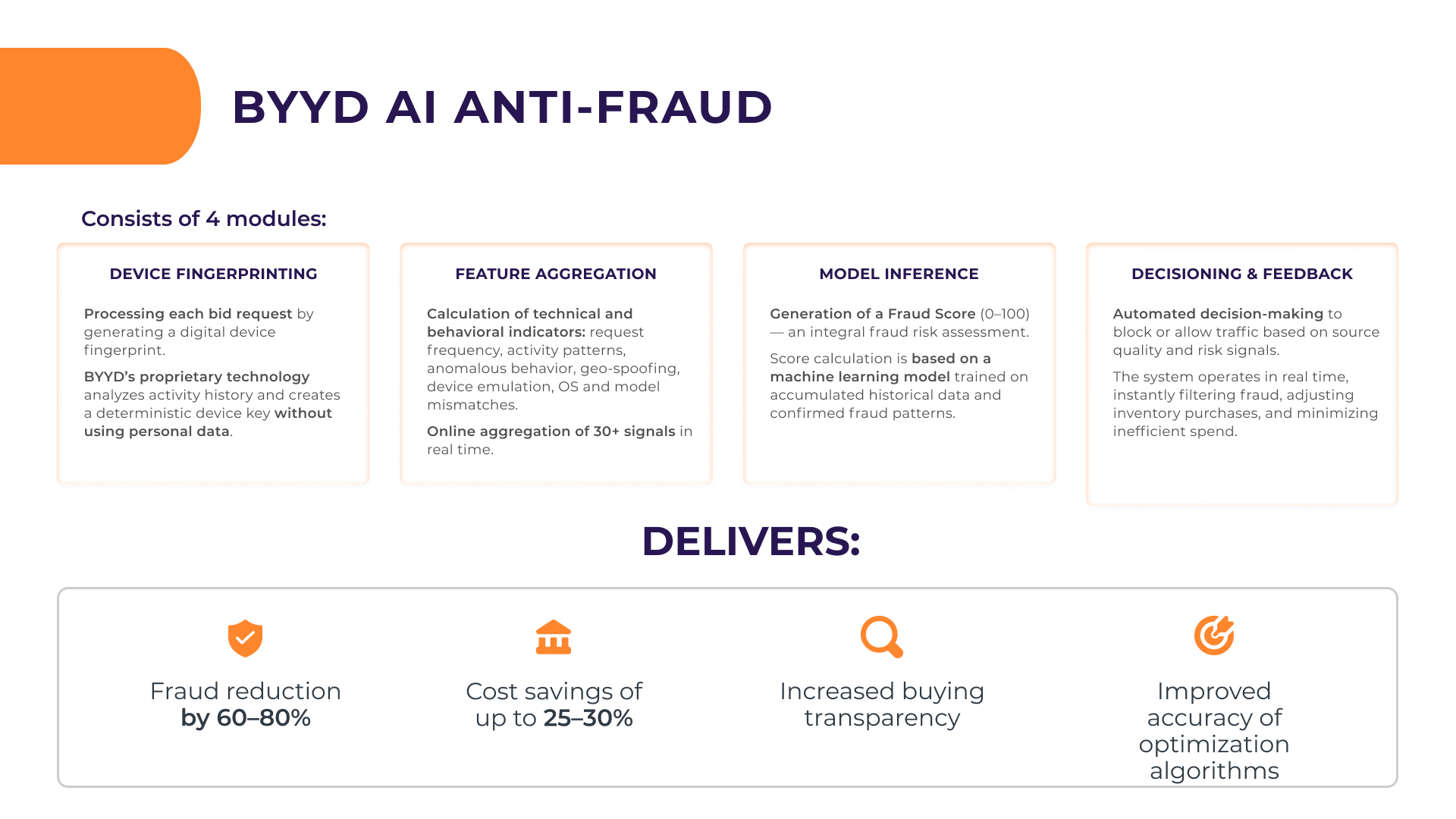
For FMCG communication, the quality of traffic is critically important. Mass reach alone does not guarantee results if the ad is shown to the wrong audience. Therefore, controlling traffic sources and bot protection becomes a key factor. BYYD uses its own anti-fraud system for this. It analyzes traffic in real-time and helps block low-quality and suspicious sources at the purchasing stage.
Such an approach allows brands to work with cleaner inventory, increase placement reliability, and concentrate the budget on high-quality audiences.
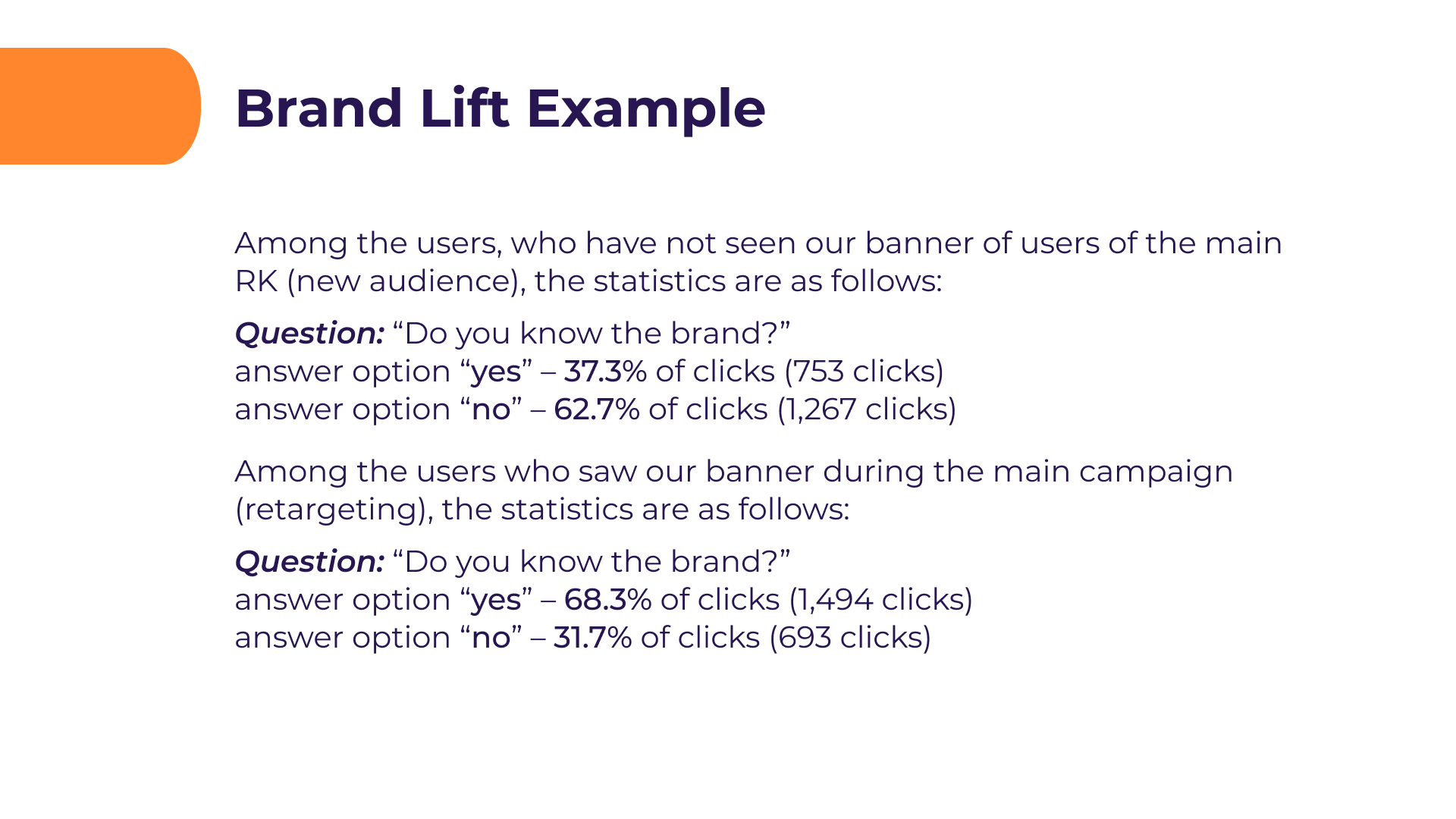
Brand Lift is a study that investigates how brand awareness increased after mobile promotion. To do this, BYYD marketers conduct a survey with two audiences:
Users are asked which brands they know and which products they would choose to purchase. This helps evaluate consumer trust and understand how it has changed after the advertising campaign.
The BYYD team has been working with mobile advertising for over 11 years and creates banners focused on real user engagement. We help attract audience attention and achieve client goals through proven mechanics.
Interested in testing this approach and seeing tangible results in 2026?
Reach out to BYYD — a top programmatic platform designed to help brands grow and meet their objectives.
Check out our case studies and send us an email – let’s launch your next campaign together.
Found this helpful? Share it with your friends and colleagues!
For consultations and partnership inquiries:
'/%3E%3C/svg%3E)
'/%3E%3Cpath%20fill='%23b2b2b2'%20d='M241%20382q0%2016%2017%2026%2017%2011%2042%2011t42-11q16-11%2017-26V269H241'/%3E%3Cpath%20fill='%239f7e00'%20d='M241%20379q0%2014%208%2023%209%209%2021%209%2014%200%2021-9%209-9%209-23V269h-59'/%3E%3Cpath%20d='M241%20339v-70h59v110q0%2014-9%2023l-6%205v-68h-15v72q-8%200-14-4v-68zm59%2040c0%2022%2015%2032%2029%2032%2021%200%2030-18%2030-32v-40h-59'/%3E%3Cpath%20fill='%239f7e00'%20d='M266%20277v5h2v12h-3v-5h2v-5h-9v5h2v5h-4v9h3v18h-5v10h34v-10h-5v-18h3v-9h-4v-5h2v-5h-9v5h2v5h-3v-12h2v-5zm42%20101q0%2010%206%2017%206%206%2015%207%2010-1%2016-7%206-7%206-17v-29h-43'/%3E%3Ccircle%20fill='%230044ad'%20cx='329.5'%20cy='372'%20r='6'/%3E%3Cellipse%20fill='%230044ad'%20cx='300'%20cy='340'%20rx='16'%20ry='21'/%3E%3C/svg%3E)

'%3E%3Cpath%20stroke='%23000'%20stroke-width='4'%20d='m-35-37-13%2020m5%203%2013-20m5%203-13%2020m63%2042%206-9m1-2%206-9m5%203-6%209m-1%202-6%209m5%203%206-9m1-2%206-9m-96%200%2013%2020m5-3-6-9m-1-2-6-9m5-3%2013%2020m63-42-6-9m-1-2-6-9m5-3%2013%2020m5-3-6-9m-1-2-6-9'/%3E%3Ccircle%20r='24'%20fill='%23cd2e3a'/%3E%3Cpath%20fill='%230047a0'%20d='M0%200a12%2012%200%201%201%2020%2013%2024%2024%200%201%201-40-26A12%2012%200%201%200%200%200'/%3E%3C/g%3E%3C/svg%3E)
