The LATAM mobile market continues to evolve rapidly, creating new opportunities for brands, developers, and marketers. As consumers increasingly rely on smartphones for financial services, shopping, entertainment, and everyday tasks, mobile apps are becoming a key driver of digital transformation across the region.
According to the Adjust Mobile App Trends: LATAM 2026 report, markets such as Brazil, Mexico, Argentina, Chile, Colombia, and Peru demonstrate strong growth potential across major app categories, including fintech, e-commerce, and utilities.
In this article, we explore the key insights from the report: how app installations and sessions are changing, how user engagement patterns are evolving, and what strategies can help marketers build stronger connections with mobile audiences in LATAM.
The mobile market in Latin America continues to expand, with app usage growing across multiple markets and industries. Between 2024 and 2025, app installations increased by 13% year over year, while sessions grew by 20%, highlighting stronger engagement from mobile users.
Growth accelerated throughout 2025, with installations reaching 12% above the annual average in July, while sessions showed particularly strong momentum toward the end of the year, increasing by 8% in December.
This positive trend continued into 2026. In January, LATAM experienced a strong start to the year, with:
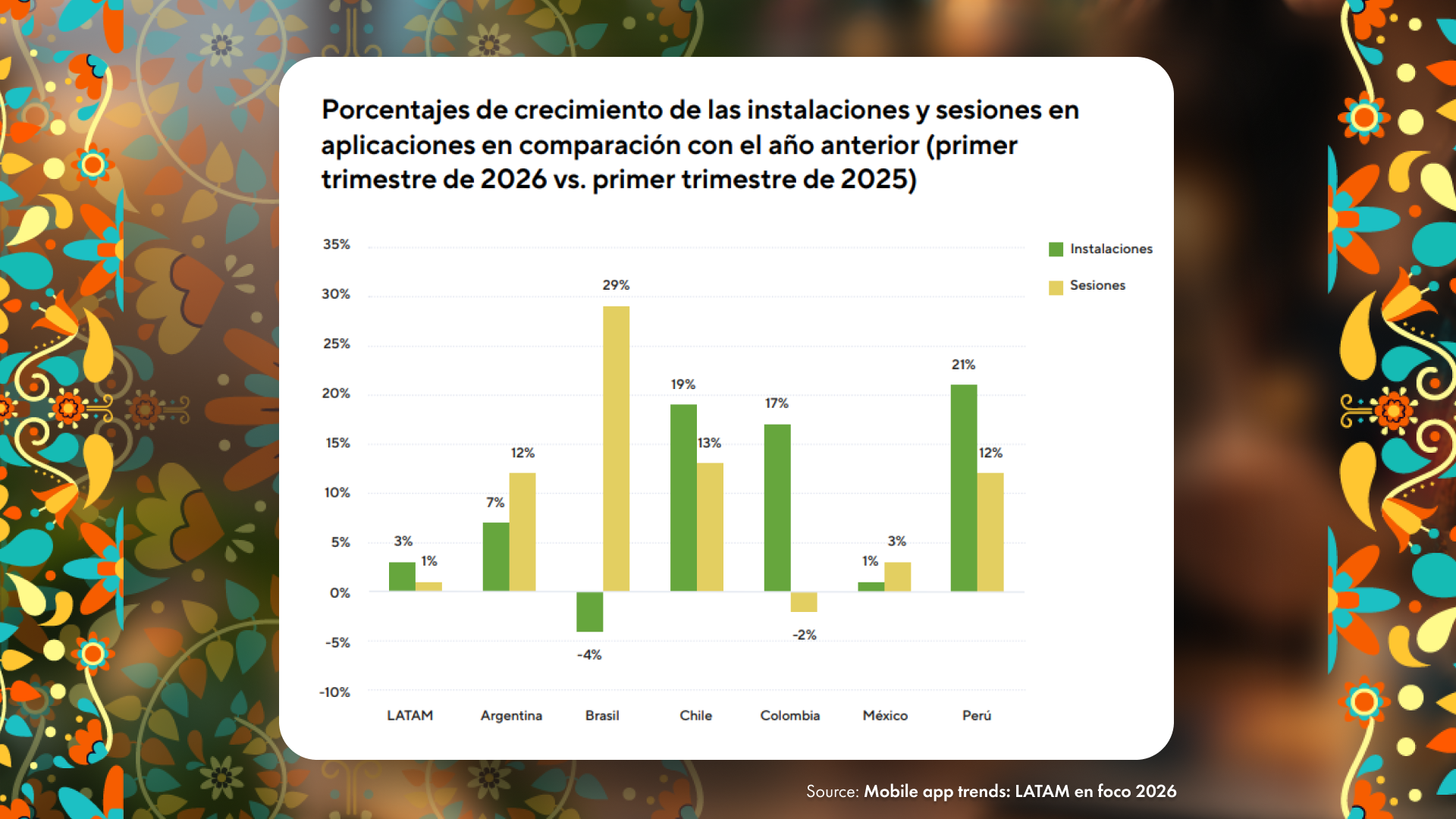
During Q1 2026, overall app activity remained positive:
However, growth patterns differed significantly between countries. Brazil demonstrated particularly strong engagement growth, with app sessions increasing by 29% YoY. Argentina and Peru recorded 12% growth, while Chile saw sessions increase by 13%.
In terms of installations, Peru and Chile showed the strongest performance:
These differences highlight the importance of adapting mobile strategies to local market behavior rather than applying a single regional approach.
As mobile advertising becomes increasingly focused on privacy, understanding user consent behavior is becoming a critical factor for marketers.
In Q1 2026, the App Tracking Transparency (ATT) authorization rate among iOS users who received the permission prompt reached 49% in LATAM, significantly exceeding the global average of 38%.
Brazil showed the highest opt-in rate:
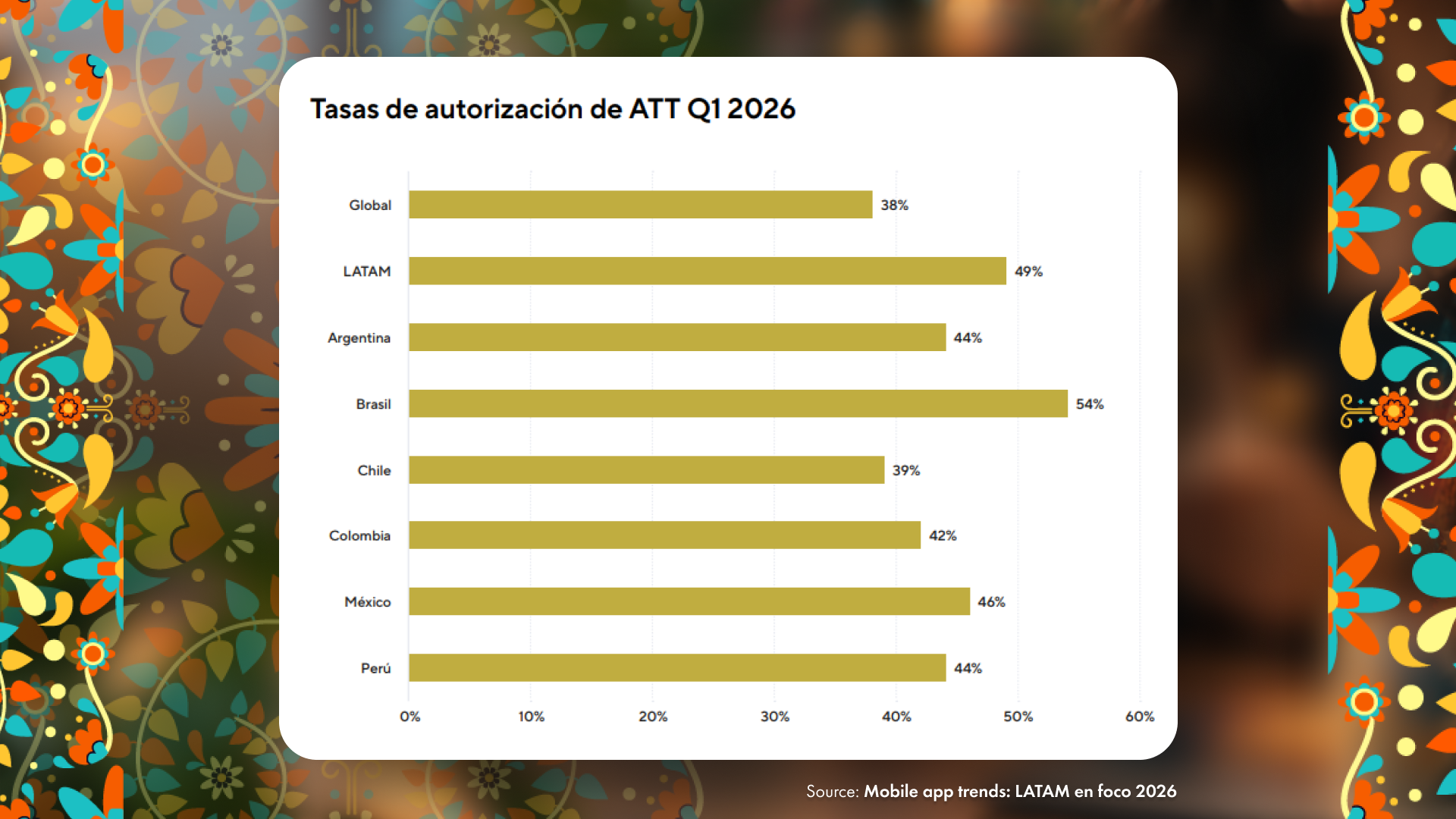
Higher authorization rates reflect a growing focus among mobile marketers on improving consent strategies. Brands increasingly integrate permission requests into the user journey, testing pre-permission messages and selecting the right moments to ask users for tracking approval.
At the same time, privacy-focused measurement and predictive modeling are becoming essential tools for extracting more value from available data.
For marketers, success in LATAM depends on:
Mobile users in LATAM continue to demonstrate high engagement levels. During Q1 2026, the average app session duration across the region reached 17.9 minutes, compared with 18.13 minutes in 2025 and 17.6 minutes in 2024.
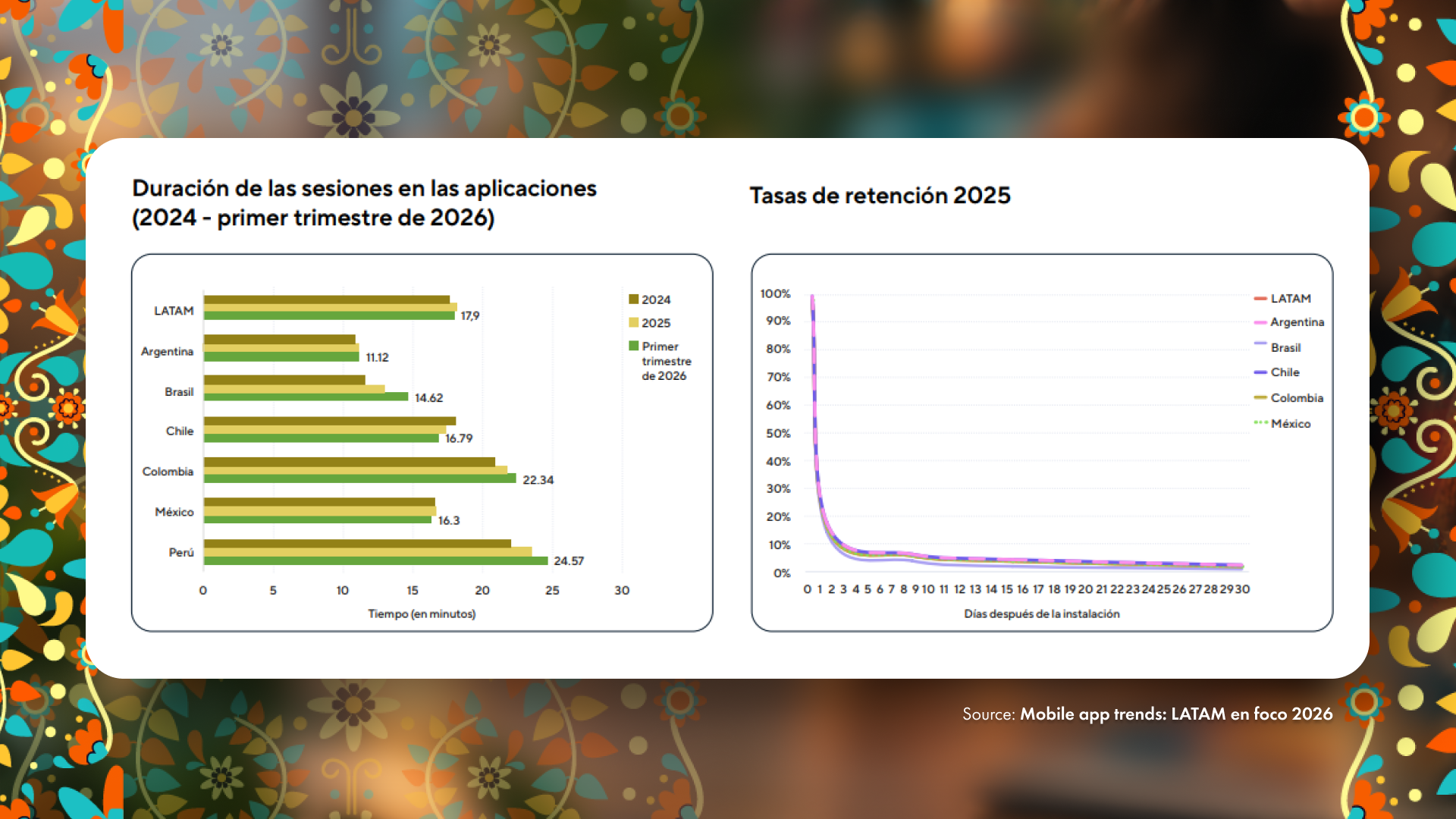
Brazil showed the strongest improvement:
Other markets also showed positive dynamics:
Mexico maintained average session durations of around 16 minutes, while Argentina remained stable at approximately 11 minutes over the three-year period.
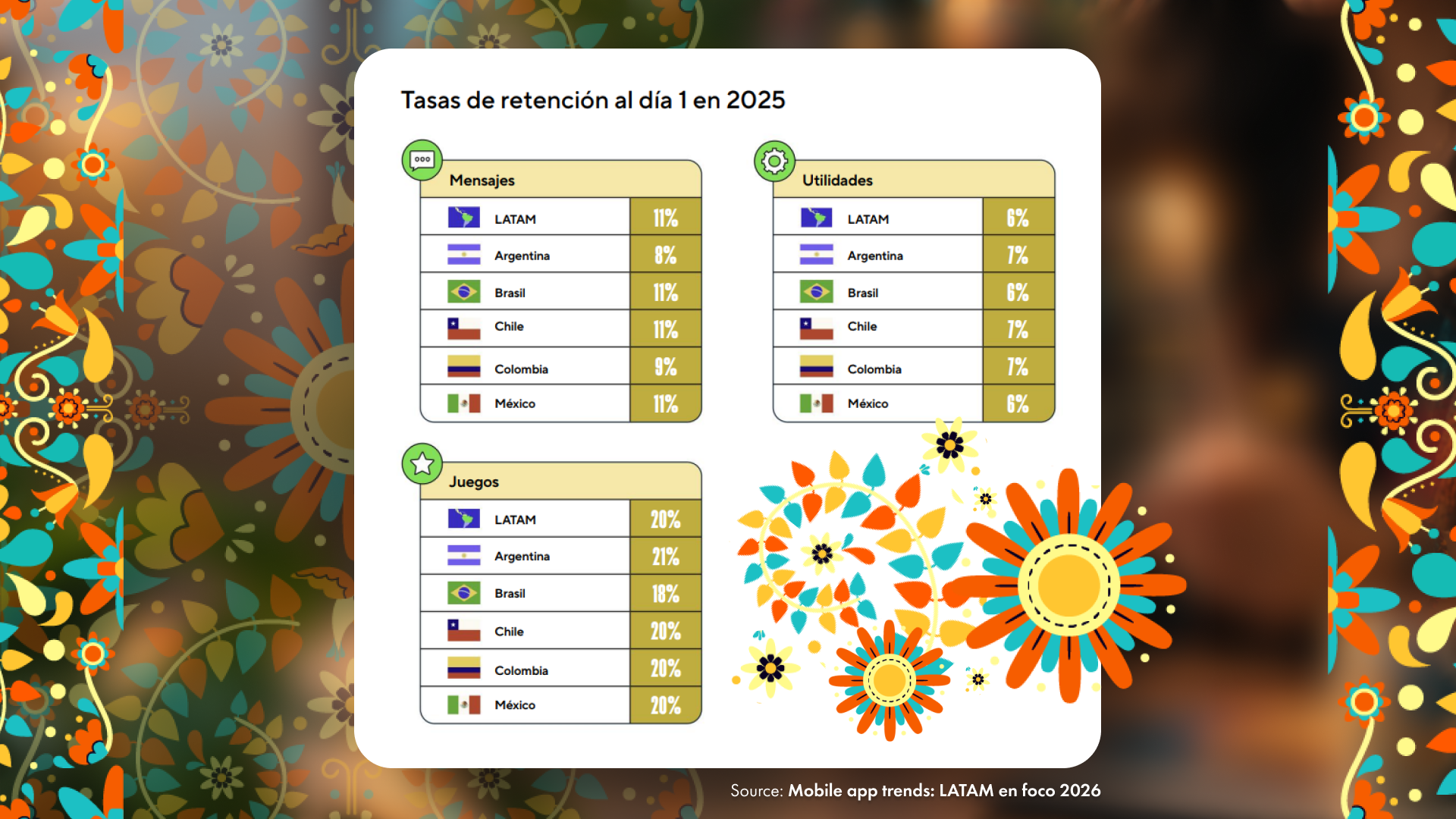
Retention remains one of the main challenges for mobile marketers. In 2025:
These figures demonstrate the importance of building long-term engagement strategies beyond initial acquisition.
Mobile commerce remains one of the fastest-growing segments in LATAM, supported by increasing consumer adoption of digital payments and online shopping.
In 2025:
Growth accelerated during major shopping periods, including:
During these events:
January 2026 also showed strong momentum:
During Q1 2026, e-commerce app sessions increased by 20% YoY across LATAM.
The strongest markets included:
Installation growth was especially strong in:
Despite strong growth, retention remains a key challenge. In 2025:
For e-commerce brands, success depends not only on acquiring users but also on creating personalized experiences that encourage repeat purchases.
Financial applications represent one of the strongest growth areas in LATAM. Mobile banking, digital payments, and fintech services are becoming central parts of everyday consumer behavior.
In 2025:
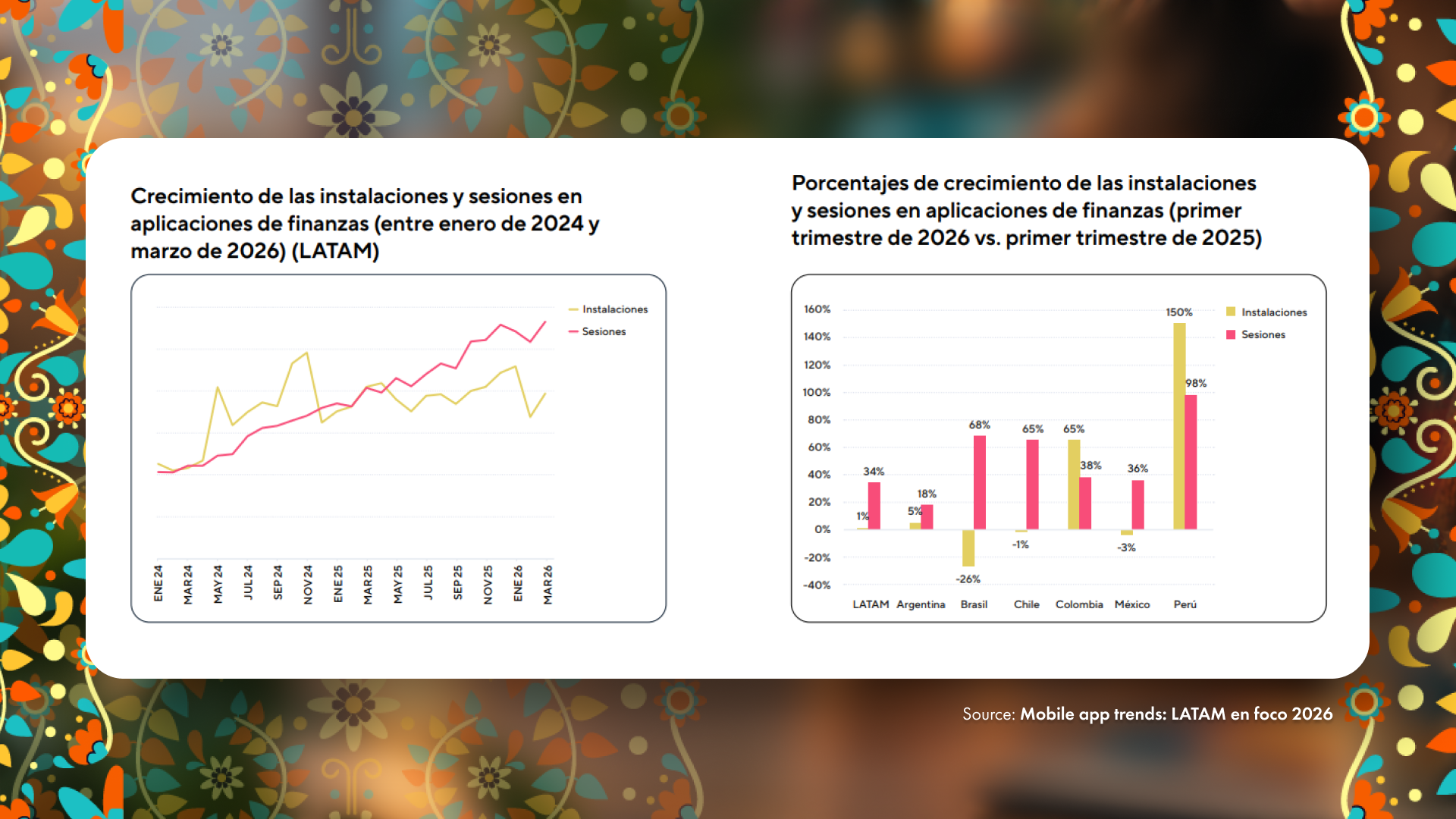
Engagement accelerated throughout the year, especially during Q4:
Growth continued into 2026, with finance apps recording:
During Q1 2026, finance app activity continued expanding:
The strongest growth came from:
Finance apps demonstrate relatively strong engagement because they become an essential part of users’ daily routines.
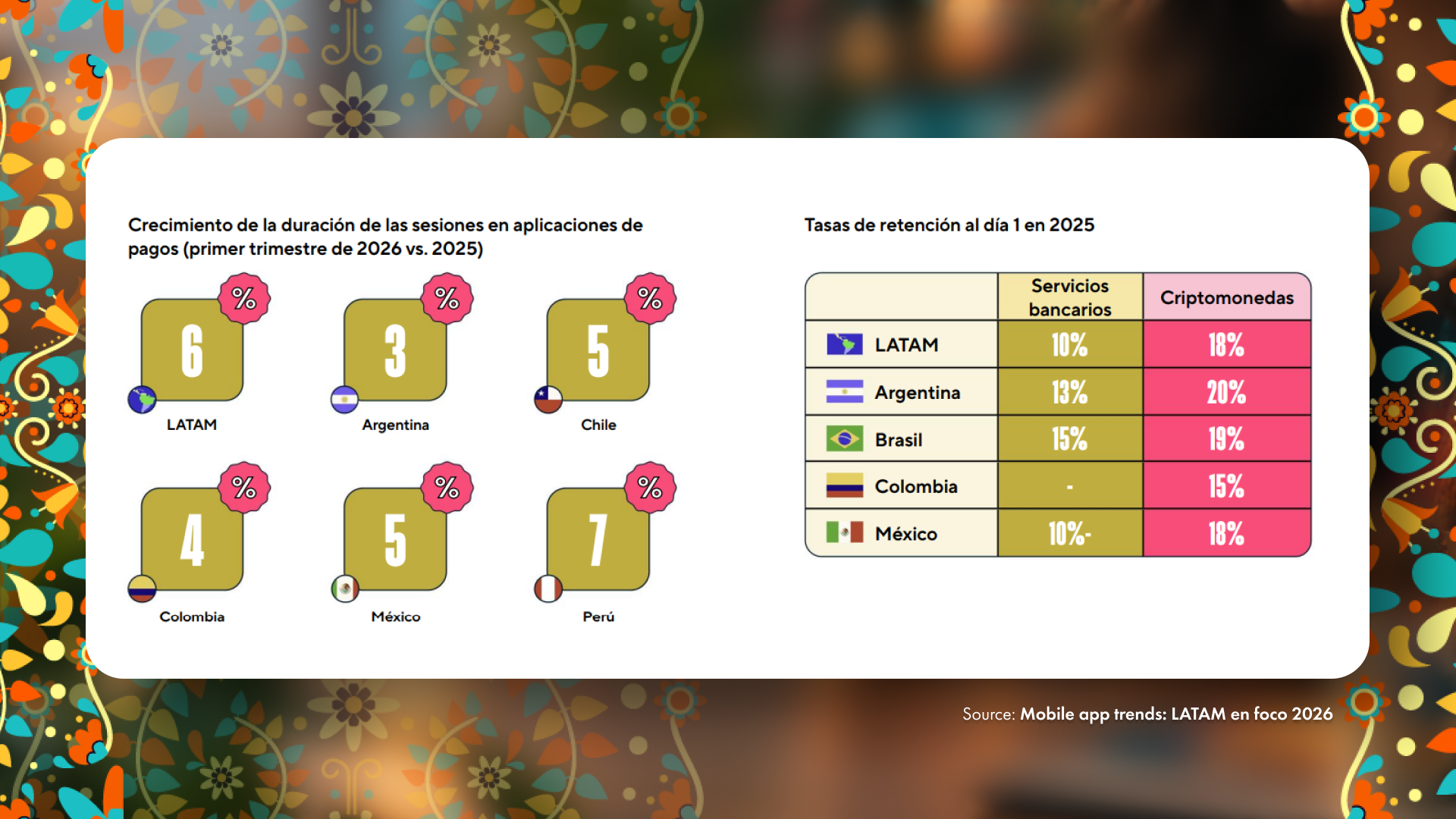
Average session duration increased across LATAM:
The strongest improvements were seen in:
Brazil remained one of the most active markets, although average session duration decreased slightly from 7.93 minutes in 2024 to 7.07 minutes in Q1 2026.
Retention rates remained relatively consistent across markets:
For fintech brands, the challenge is moving beyond acquisition and creating personalized experiences that increase engagement, loyalty, and customer lifetime value.
The LATAM mobile ecosystem offers significant growth opportunities, but success requires a data-driven approach.
The key trends shaping the market in 2026 include:
For brands operating in LATAM, sustainable mobile growth will depend on combining accurate attribution, personalized user experiences, and the ability to transform data into actionable insights.
LATAM is becoming one of the most mobile-oriented markets worldwide, driven by high smartphone adoption, expanding mobile internet access, and strong app market growth.
Fintech and e-commerce are the main drivers of mobile app expansion in the region. Countries such as Brazil and Mexico demonstrate significant growth in app downloads and in-app revenue, while innovations such as real-time payments, super apps, buy-now-pay-later services, and on-demand platforms continue to accelerate digital adoption.
At the same time, the LATAM mobile market remains highly diverse, with differences in user behavior, acquisition channels, and device usage across countries. To succeed in this competitive environment, marketers need accurate measurement, cross-platform data analysis, and effective campaign optimization to improve conversions, retention, and ROI.
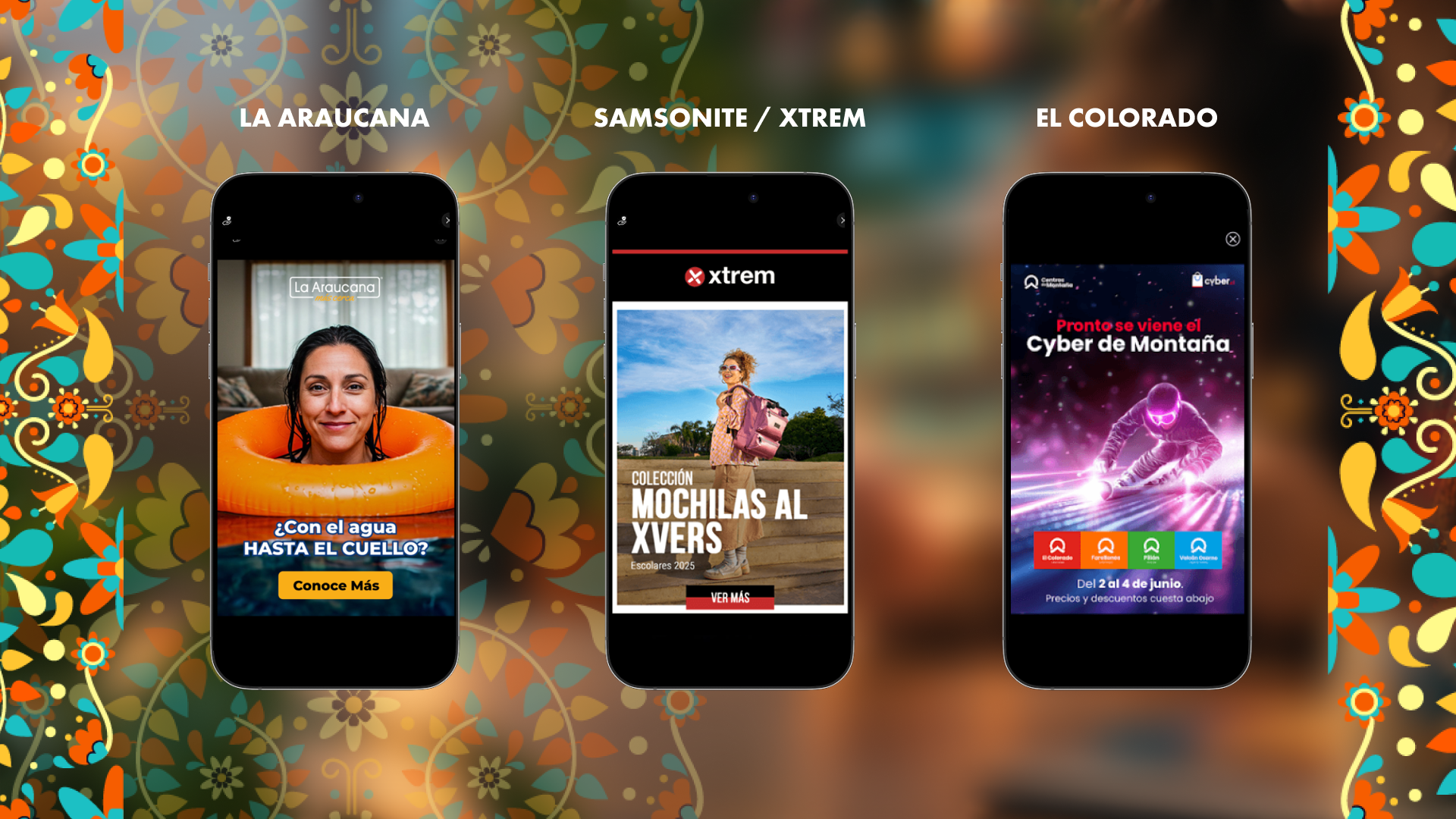
For more than 11 years, BYYD has been helping companies with mobile advertising and continuously improving its tools to meet the evolving needs of the market. Check out our case studies and send us an email – let’s launch your next campaign together.
Found this helpful? Share it with your friends and colleagues!
For consultations and partnership inquiries:


