Brazil’s Digital Advertising Market in 2026: Key Trends and Insights
Brazil’s digital advertising market continues to expand as brands invest more heavily in online channels and adopt more consistent, mobile-focused communication strategies. Video is gaining a larger share of advertising budgets, while mobile devices remain the primary environment for reaching digital audiences.
This article is based on the Digital AdSpend 2026 report prepared by IAB Brasil and IBOPE. We examine the key trends shaping Brazil’s digital advertising market and explore how programmatic advertising helps brands respond to these changes.
Brazil’s Digital Advertising Spend Grew by 12.7%
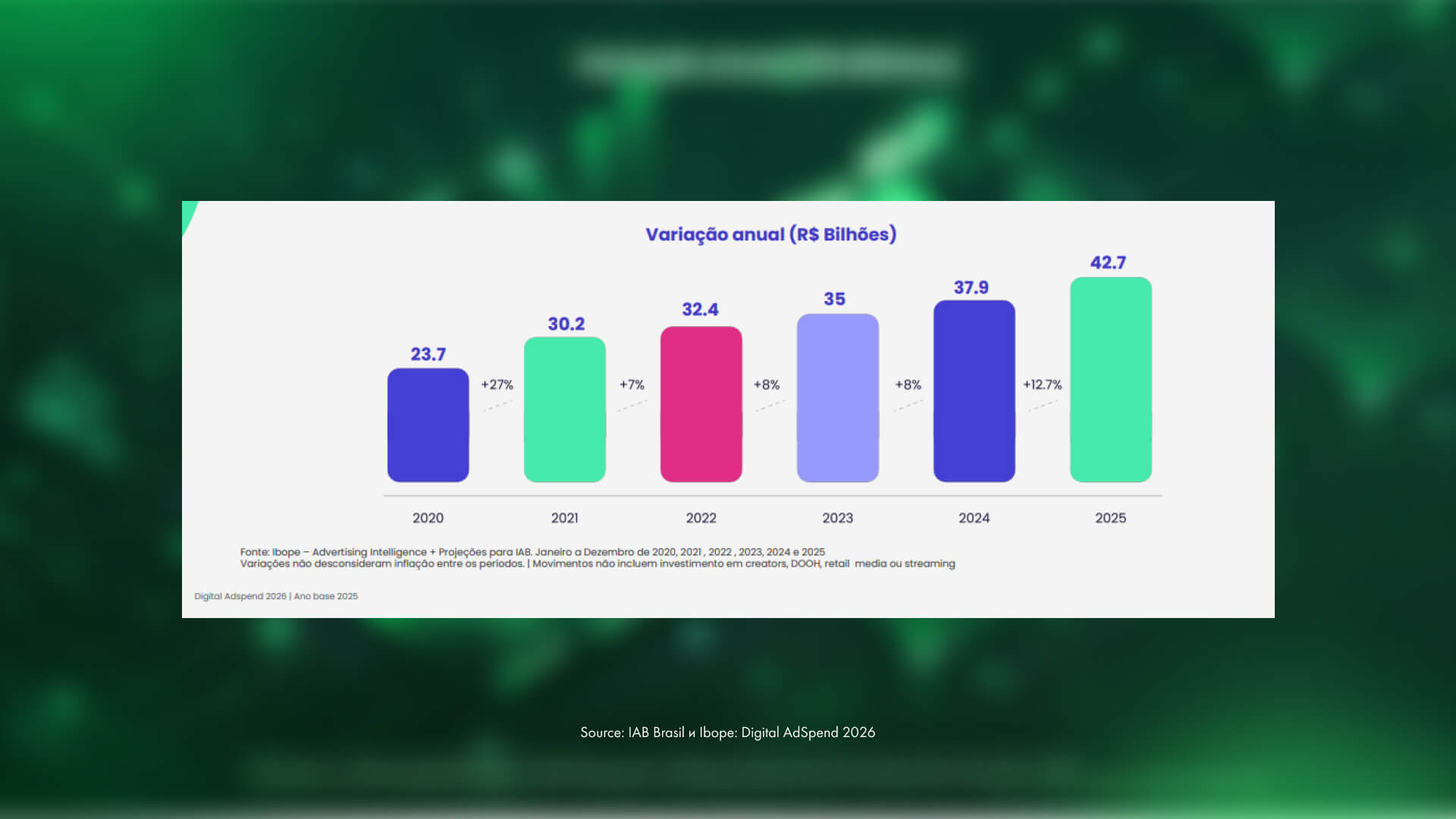
In 2025, Brazil’s digital advertising investment reached R$42.7 billion, representing a 12.7% year-over-year increase. This was the second-highest annual growth rate recorded since the measurement series began in 2020, surpassed only by the 27% increase registered in 2021.
Digital ad investment has grown steadily over the period, rising from R$23.7 billion in 2020 to R$30.2 billion in 2021, R$32.4 billion in 2022, R$35 billion in 2023, and R$37.9 billion in 2024. The results demonstrate the continued expansion of digital channels and their growing importance in Brazilian brands’ media strategies.
Digital Ad Spending Moves Towards an Even Year-Round Split
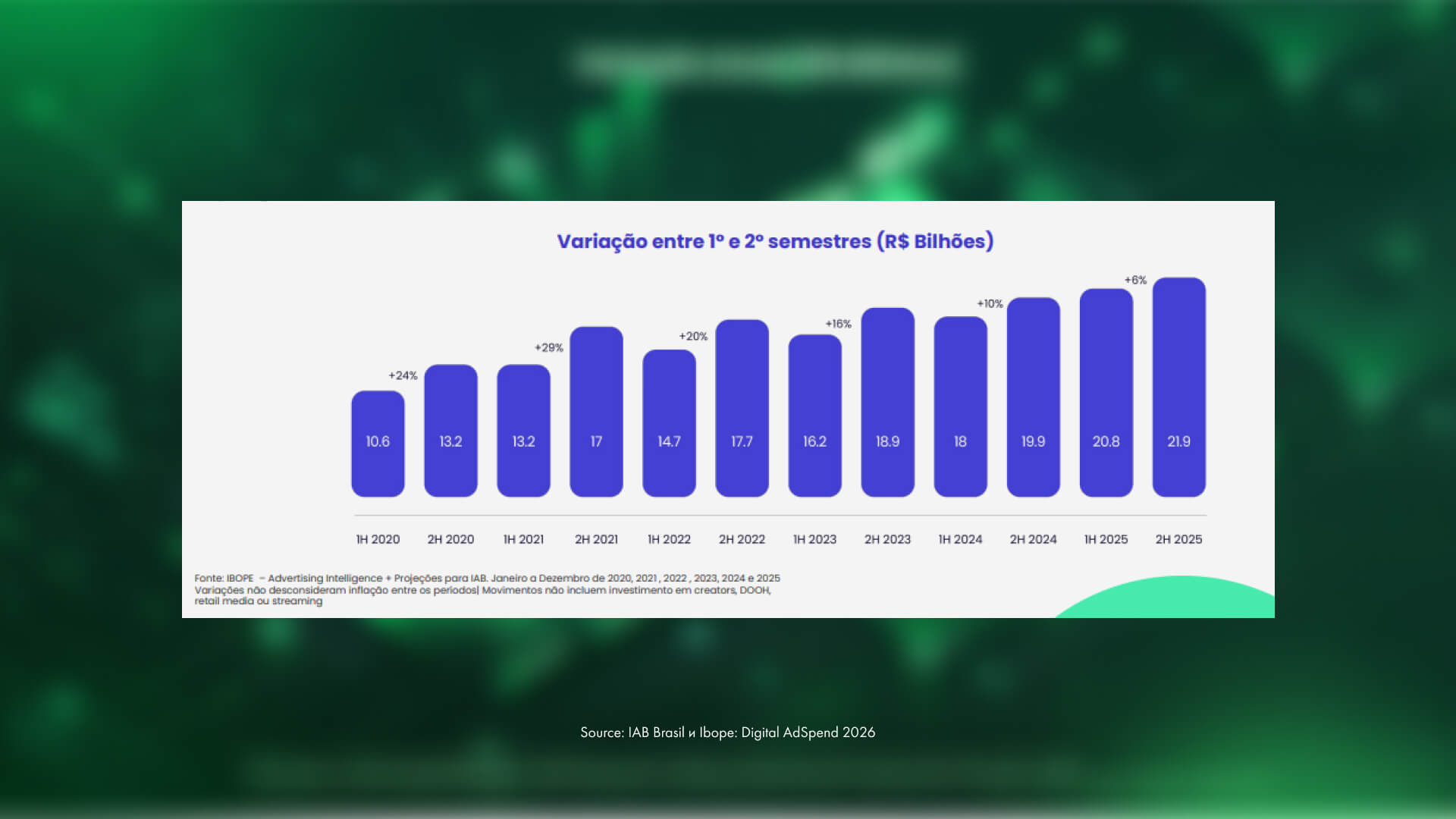
Brazil’s digital advertising investment is becoming more evenly distributed throughout the year. In 2025, brands invested R$20.8 billion in the first half and R$21.9 billion in the second half, leaving a gap of only 6%.
This was the smallest difference between the two halves of the year since the measurement series began in 2020. The second-half advantage has gradually declined from 24% in 2020 and 29% in 2021 to 20% in 2022, 16% in 2023, 10% in 2024, and just 6% in 2025.
The shift towards a nearly 50/50 split suggests that brands are moving away from concentrating budgets at the end of the year. Instead, they are maintaining a more consistent advertising presence, supporting continuous audience engagement and always-on digital strategies.
Video Captures Nearly Half of Digital Advertising Investment
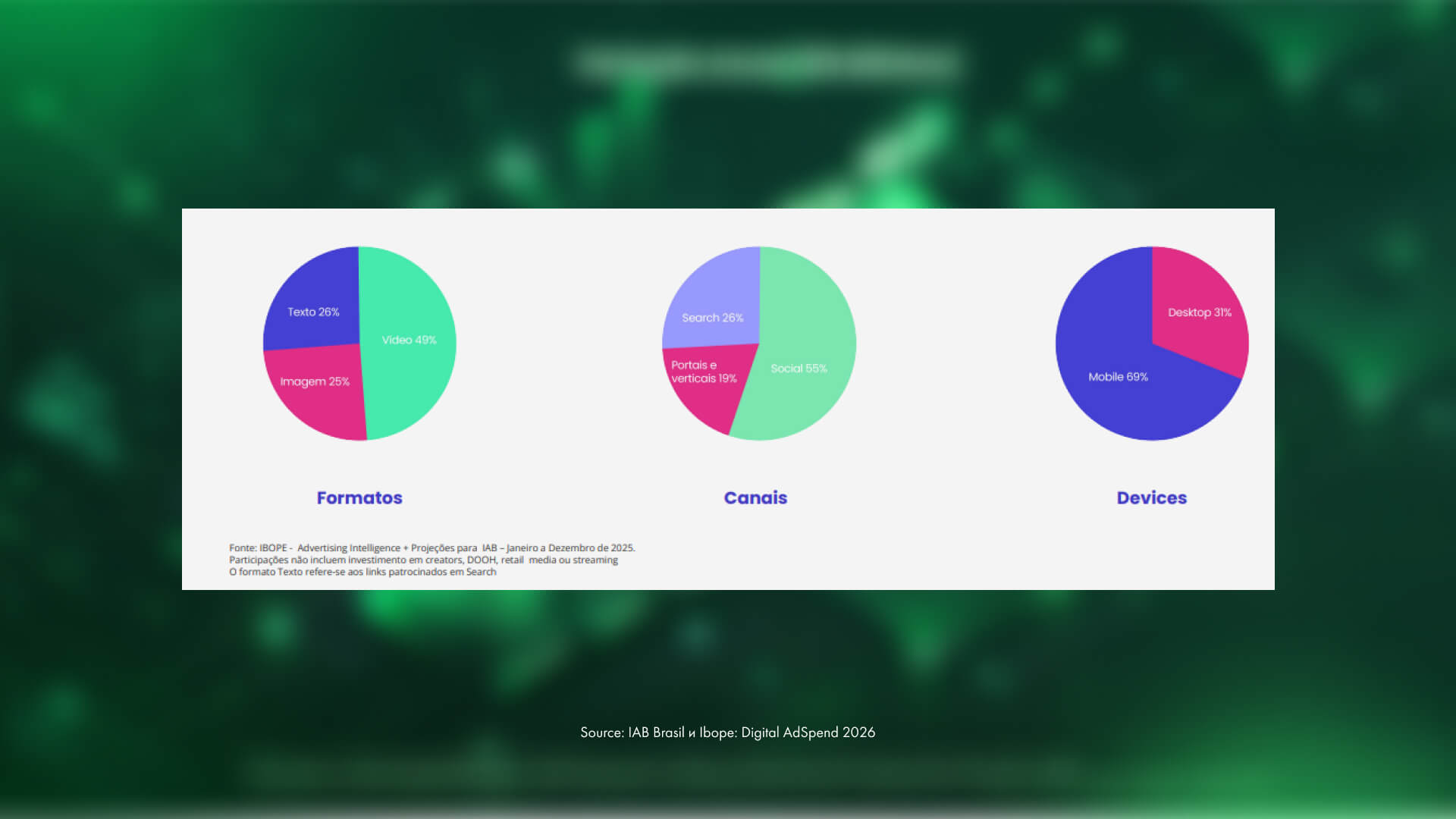
Video became the leading digital advertising format in Brazil in 2025, accounting for 49% of total investment. Its share increased by 7 percentage points compared with 2024, reflecting brands’ growing focus on engaging and visually rich content. Text-based advertising represented 26% of spending, while image formats accounted for 25%.
Mobile remained the dominant environment, receiving 69% of digital ad investment, compared with 31% allocated to desktop. These figures highlight the importance of mobile-first campaigns and video formats for brands targeting Brazilian audiences.
Social Media Leads Brazil’s Expanded Advertising Mix
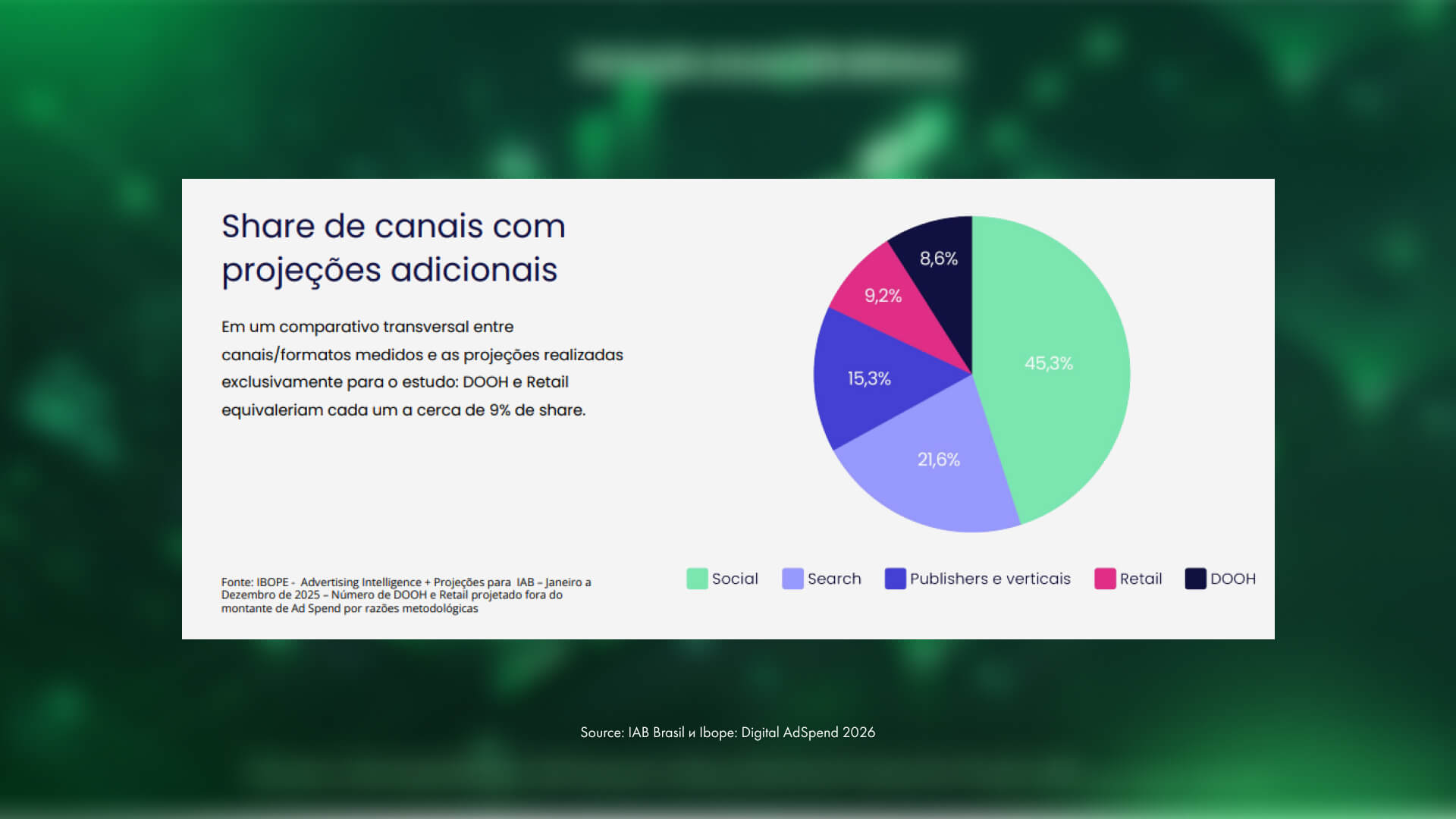
When retail media and digital out-of-home advertising are included in the broader channel comparison, social media remains the leading category, accounting for 45.3% of investment. Search follows with 21.6%, while publishers and vertical platforms represent 15.3%.
The additional estimates show that retail media accounts for 9.2% of the expanded advertising mix, while digital out-of-home advertising represents 8.6%. Each channel therefore attracts approximately 9% of investment, highlighting the growing diversification of Brazil’s digital advertising market beyond social media, search, and traditional online publishers.
Electronics and Entertainment Recorded the Fastest Growth
Nearly half of all digital advertising spending was concentrated in five sectors:
- commerce and services — 25%;
- electronics and information technology — 8%;
- financial services — 6%;
- education — 5%;
- media — 4%.
Among the 15 largest sectors, six recorded double-digit growth in digital advertising spending compared with 2024:
- electronics — +42%;
- culture and leisure — +41%;
- beverages — +31%;
- education — +21%;
- public administration — +21%;
- telecommunications — +10%.
The electronics sector recorded the strongest increase in investment.
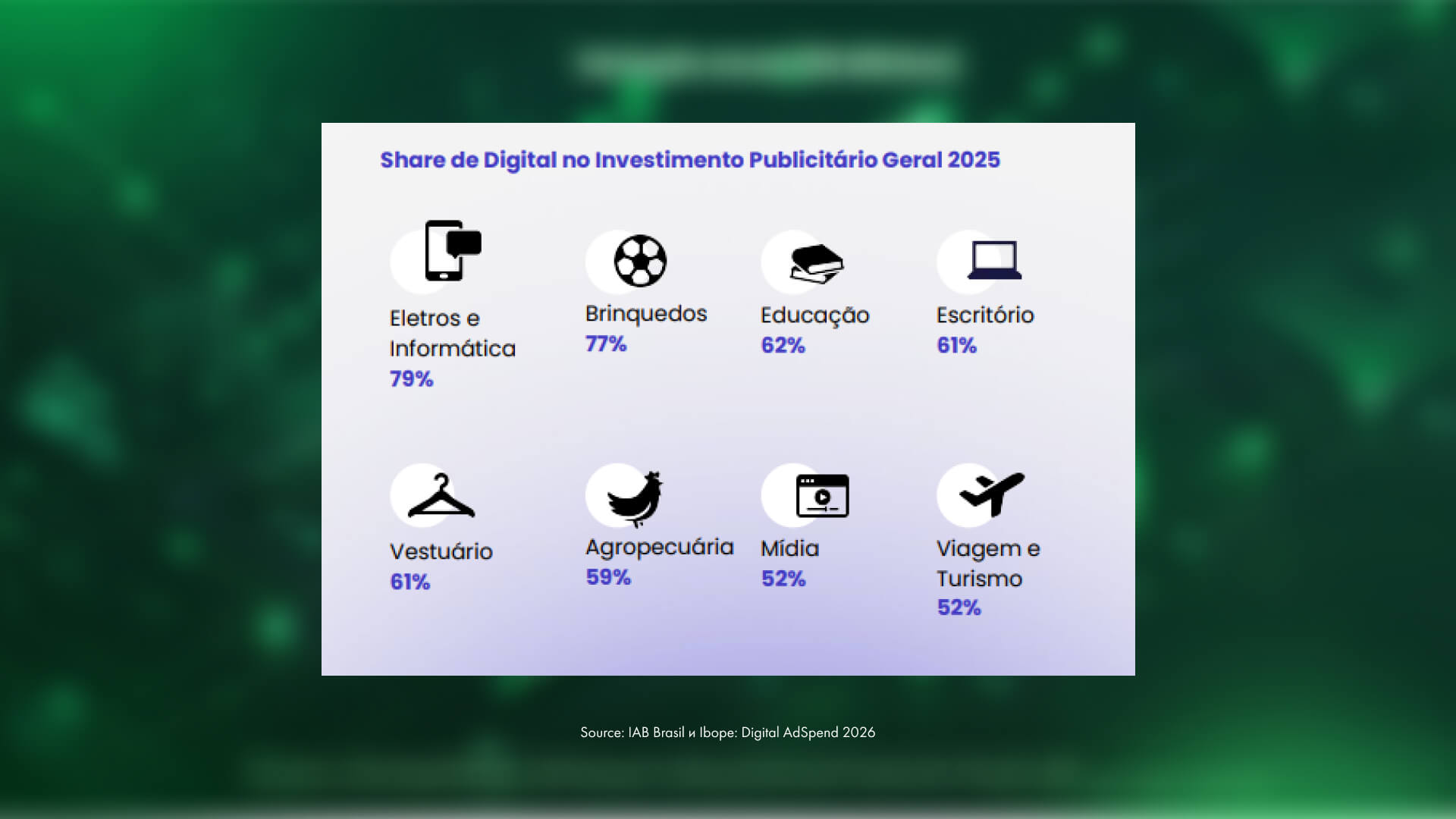
In 2025, eight sectors allocated 50% or more of their total advertising spending across all media channels to digital:
- electronics and information technology — 79%;
- toys — 77%;
- education — 62%;
- office supplies and equipment — 61%;
- apparel — 61%;
- agriculture — 59%;
- media — 52%;
- travel and tourism — 52%.
AI Adoption Grows Alongside Concerns About Misinformation
Artificial intelligence is becoming part of everyday digital life in Brazil. According to IBOPE Consumer Intelligence, 51% of Brazilian internet users accessed an AI-powered application during the previous six months, while 42% reported frequently using AI tools and features in their daily lives.
Consumers also recognise the practical benefits of the technology: 59% believe AI should make everyday life easier by automating certain tasks. However, adoption is accompanied by caution. 67% are concerned about AI’s role in spreading false information.
The findings reveal a mixed but complementary attitude: Brazilian consumers are increasingly open to AI-driven services, while expecting greater transparency, reliability, and responsible use of the technology. For marketers, this means AI can support personalisation and campaign automation, but communication must remain credible and protect audience trust.
How Programmatic Advertising Supports Brazil’s Digital Growth
Programmatic advertising fits naturally into Brazil’s expanding digital market by helping brands manage campaigns across a growing and increasingly fragmented media environment. As advertising budgets become more evenly distributed throughout the year, automated buying supports always-on strategies, allowing advertisers to adjust targeting, frequency, bids, and budget allocation based on campaign performance.
The dominance of mobile devices and the growing share of video make programmatic especially relevant. Brands can reach selected audience segments within mobile applications, adapt video and interactive formats to different user contexts, and compare results across placements. Continuous optimisation also makes it possible to reduce investment in underperforming sources and redirect budgets towards environments that deliver stronger engagement.
Artificial intelligence further strengthens programmatic capabilities by supporting audience analysis, media buying, and campaign optimisation. However, growing concerns about misinformation and data reliability make transparency, traffic verification, and brand safety increasingly important. Combining automation with human oversight allows advertisers to benefit from scale and efficiency while maintaining control over where and how their advertising appears.
For more than 11 years, BYYD has been helping companies with mobile advertising and continuously improving its tools to meet the evolving needs of the market. Check out our case studies and send us an email – let’s launch your next campaign together.
Found this helpful? Share it with your friends and colleagues!
For consultations and partnership inquiries:
- Submit a request on our website
- Email us at hello@byyd.me