The mobile ecosystem continues to actively develop. User habits are changing. The role of apps in everyday life is growing. Brands are increasingly using mobile channels to communicate with their audiences.
The new Sensor Tower Digital Market Index Q2 2026 report highlights key mobile market trends, including app dynamics, changes in user behavior, and the development of digital advertising in the mobile environment.
This article explores the main trends of Q2 2026.
According to Sensor Tower, the global mobile app market continues to demonstrate steady growth driven by increasing revenue from non-gaming apps. In Q2 2026, total in-app purchases across the App Store and Google Play reached $43.6 billion, up 5.3% year over year.
The main growth drivers were subscription-based apps, especially artificial intelligence solutions, service apps, and utility apps. At the same time, revenue from gaming apps decreased by 4.5% year over year and amounted to $19.2 billion.
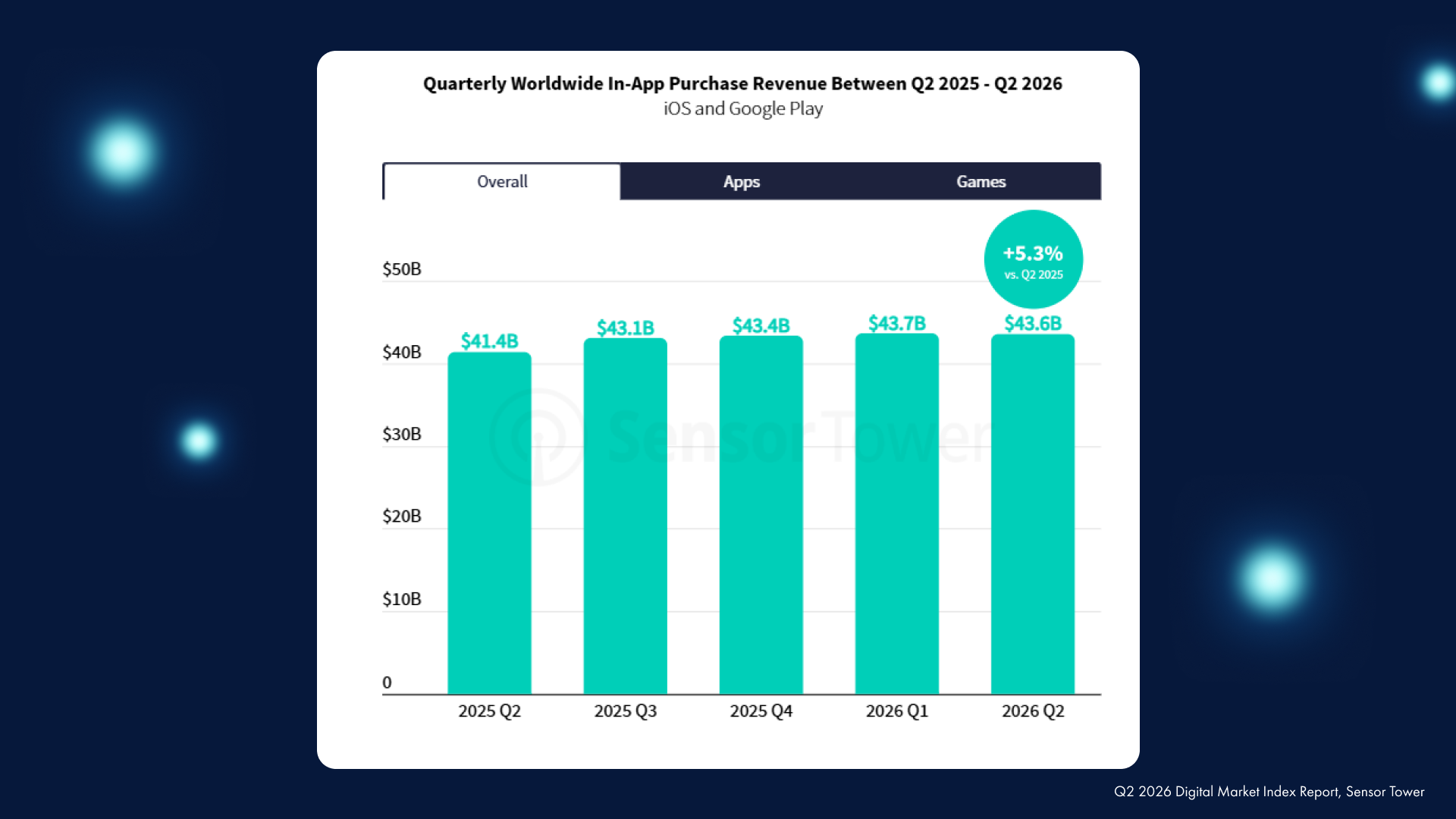
In Q2 2026, the App Store maintained its leadership in terms of monetization volume:
However, Google Play demonstrated stronger growth dynamics: platform revenue increased by almost 10% year over year.
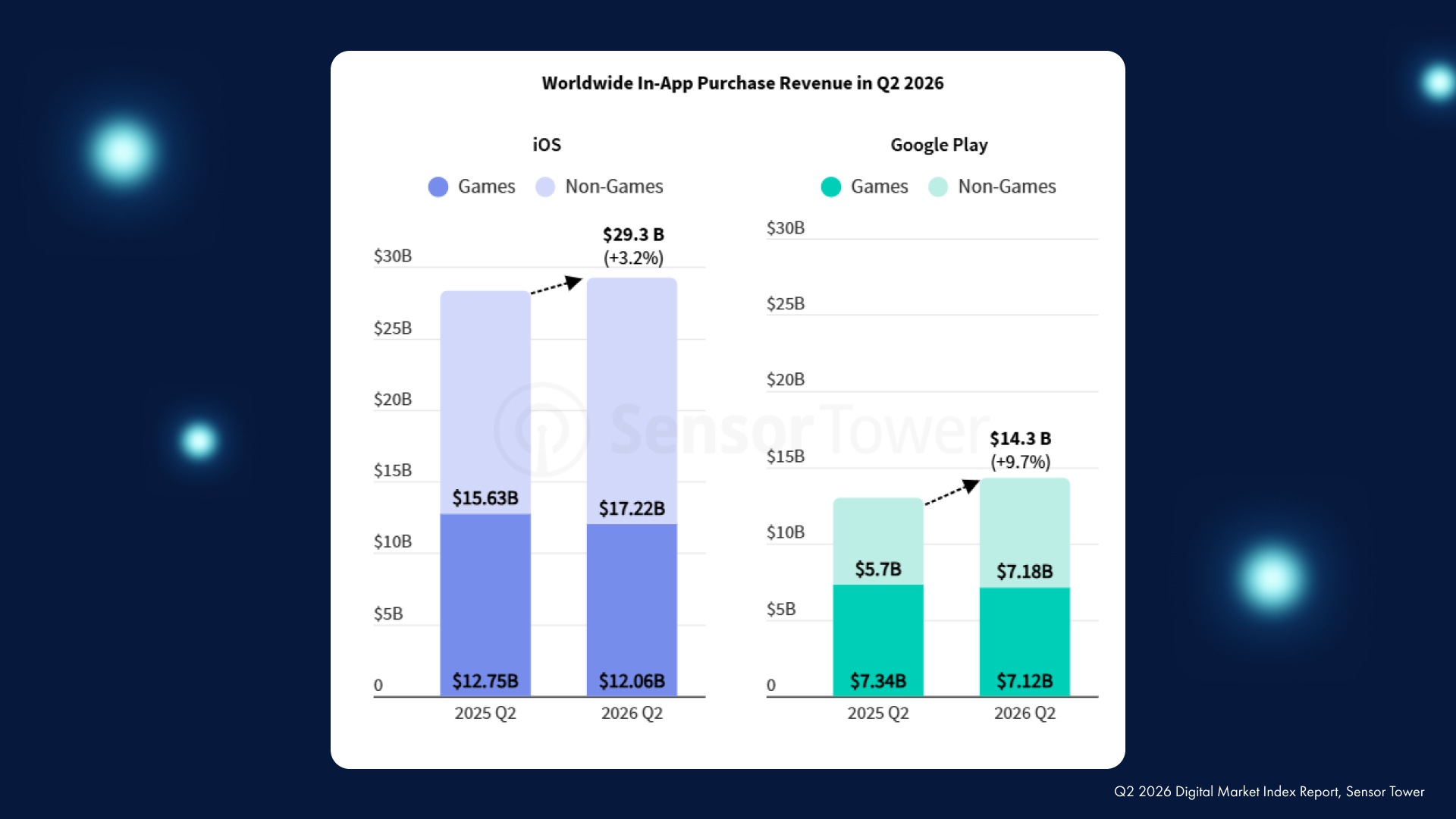
The growth of non-gaming app revenue shows that the mobile ecosystem is becoming increasingly diverse. Users actively rely on apps not only for entertainment, but also for work, shopping, finance, health, education, and everyday tasks.
For advertisers, this means expanding opportunities for advertising within mobile applications.
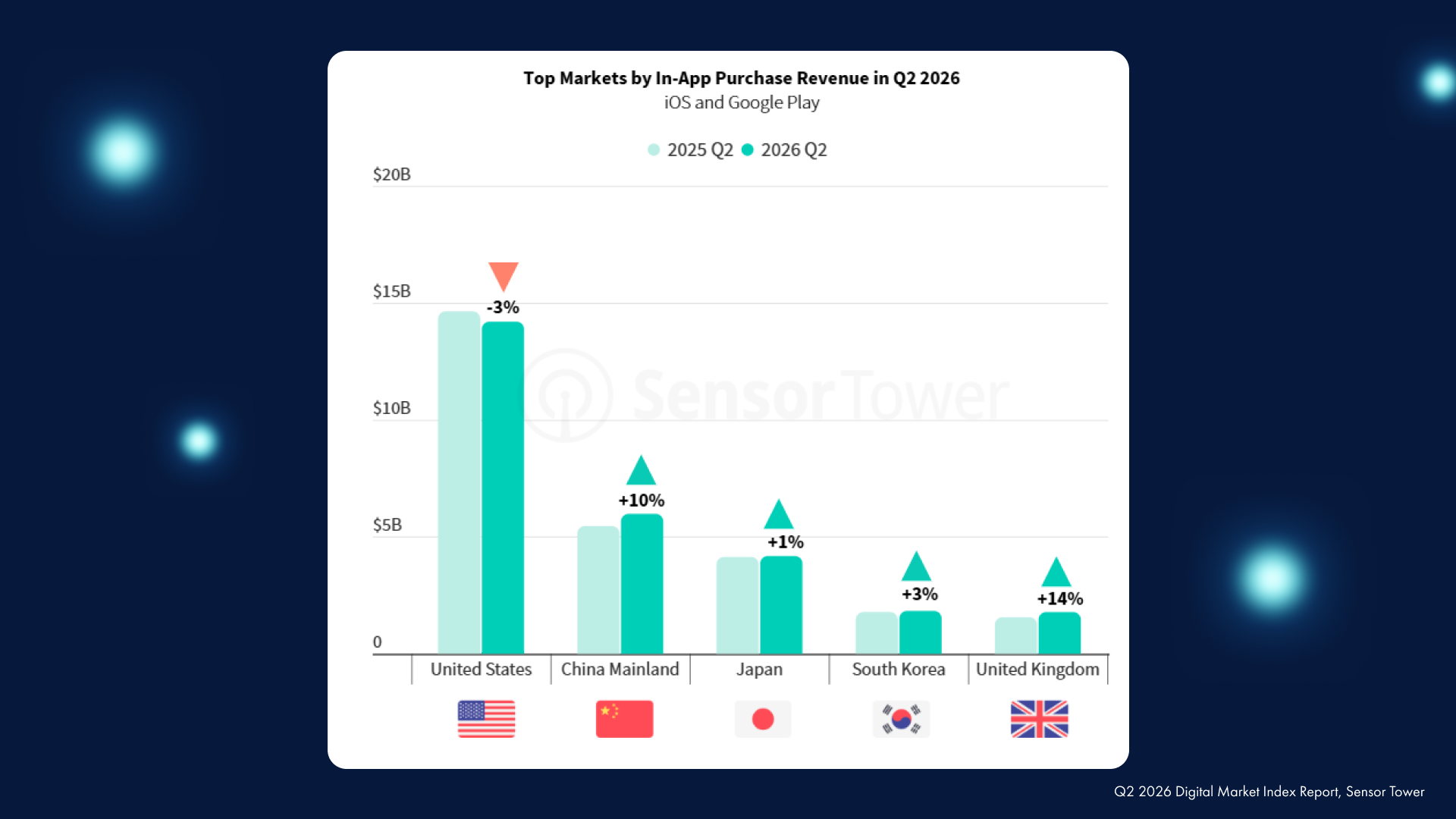
According to Sensor Tower, the United States remains the largest market by consumer spending inside mobile applications.
At the same time, mobile economy growth is shifting toward other regions. Among the largest markets, the United Kingdom demonstrated the strongest growth, with IAP revenue increasing by 14% year over year.
China also showed strong growth, increasing by 10% and reaching $5.7 billion. South Korea and Japan recorded more moderate growth of +3% and +1%, respectively.
The global mobile economy is becoming more distributed. Growth is increasingly driven by European and Asian markets. This reflects the expanding audience of mobile applications and the growing role of apps as a key channel for consuming digital services.
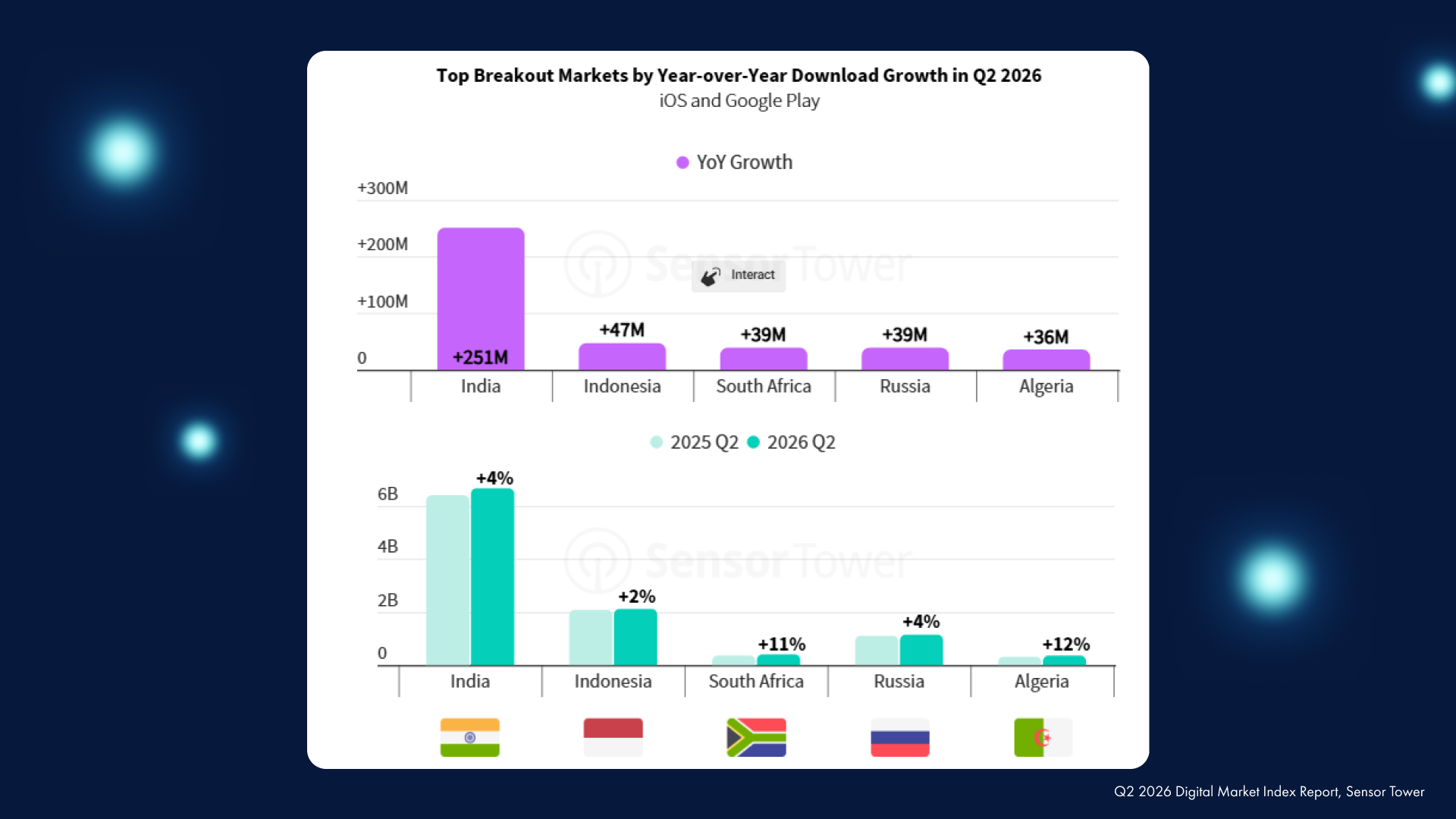
In Q2 2026, India became the leader in new mobile app installations growth — the number of downloads increased by 251 million year over year.
Other markets with significant download growth:
The strongest year-over-year download growth rates were recorded in:
The growth in installations means an expanding potential audience for brands and new opportunities for mobile advertising.
Generative AI applications continue to demonstrate the highest growth rate among non-gaming mobile app categories. Users are increasingly using these apps for work, education, content creation, image processing, and everyday tasks.
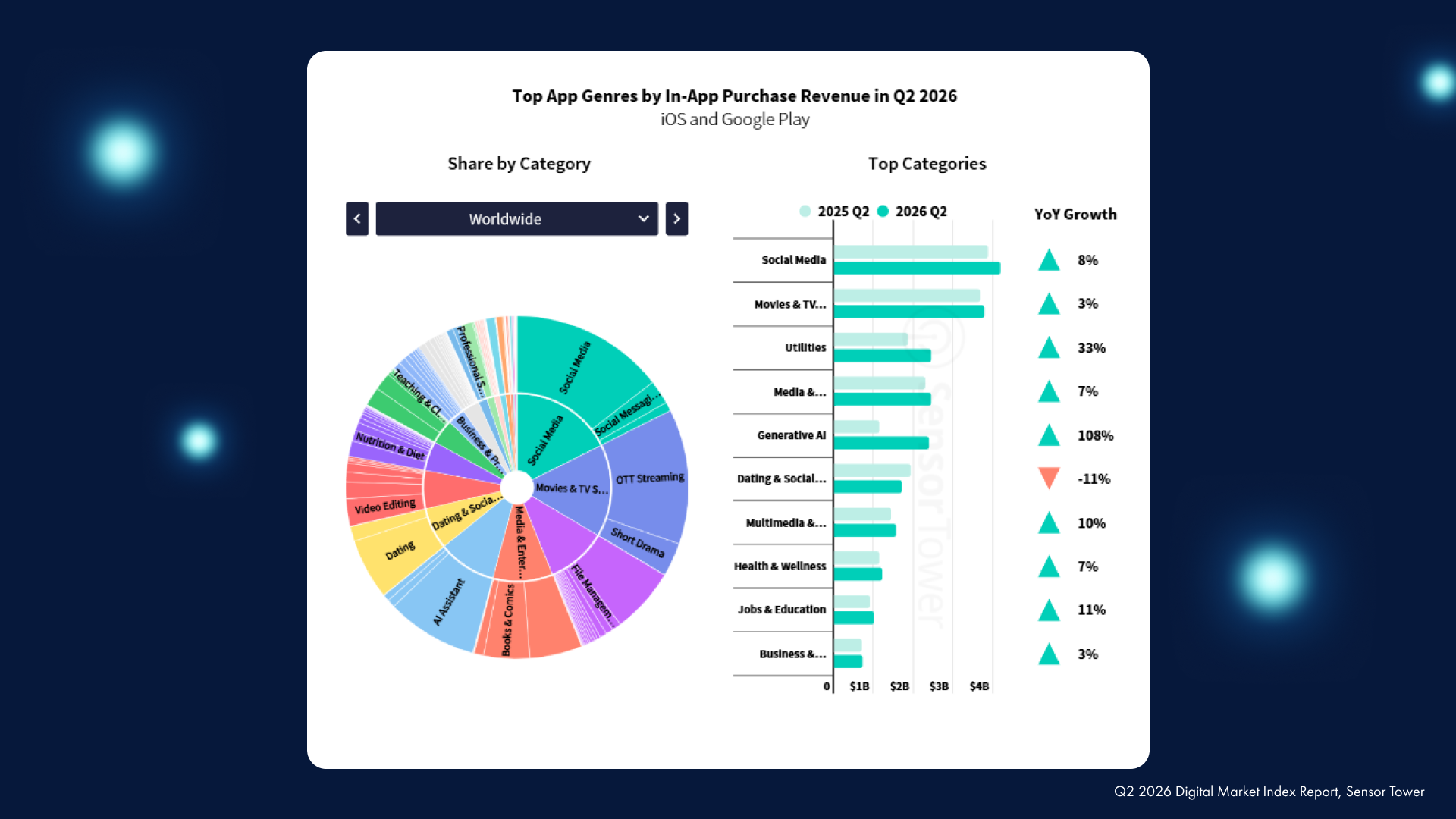
ChatGPT remains the category leader, accounting for around 60% of global revenue. At the same time, competition in the segment is increasing, with apps such as Claude, Grok, and Gemini also showing rapid growth.
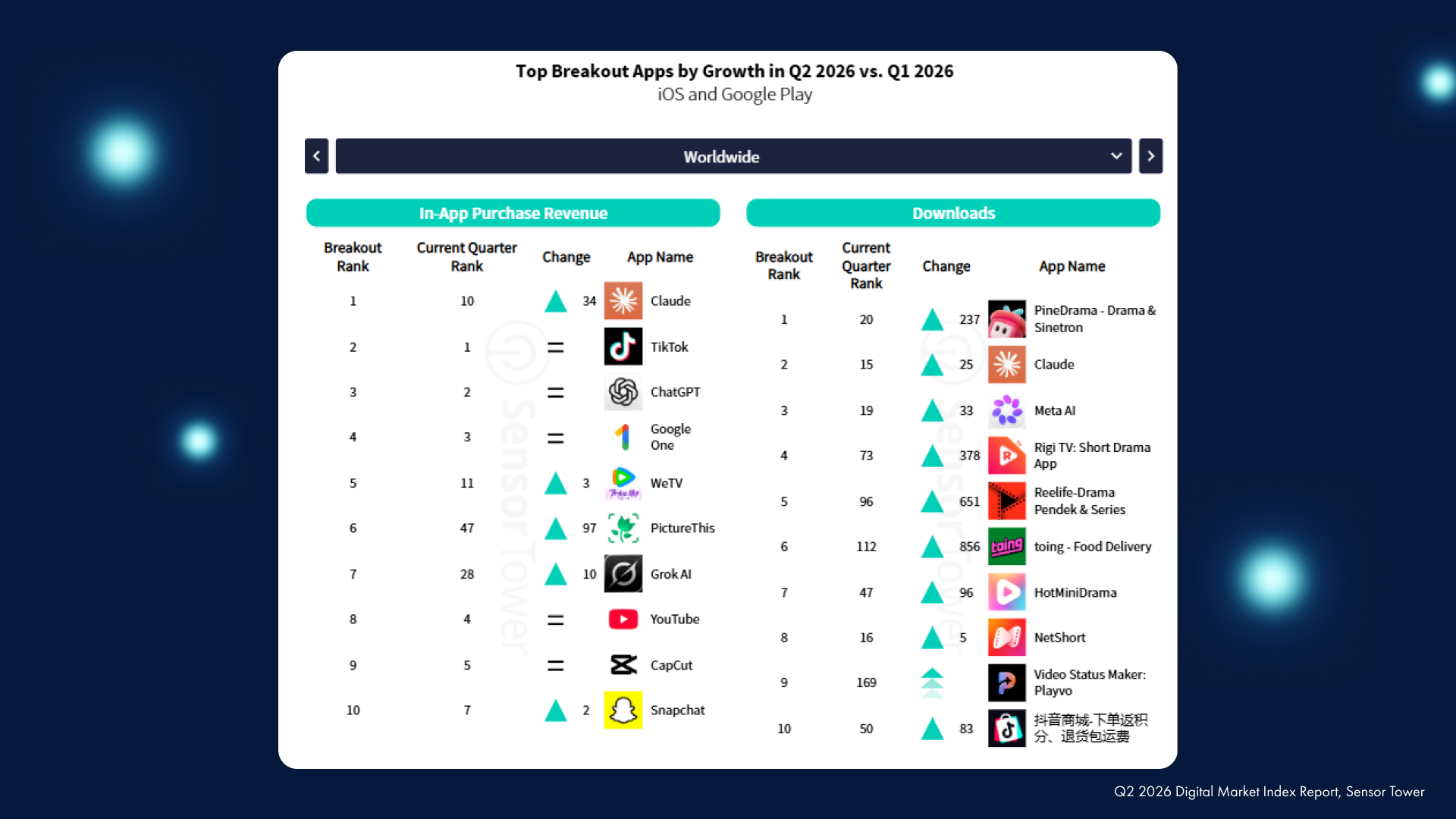
Utility apps remain the largest segment among non-gaming applications, accounting for 16% of all installs. The Movies & TV Shows category is also showing strong growth.
In Q2 2026, mobile gaming saw significant growth in puzzle games, especially projects based on Arrow Puzzle mechanics (games involving arrow movement and logic-based challenges). The biggest breakthrough of the quarter was Arrows Puzzle Escape, which climbed 20 positions and became the most downloaded mobile game worldwide.
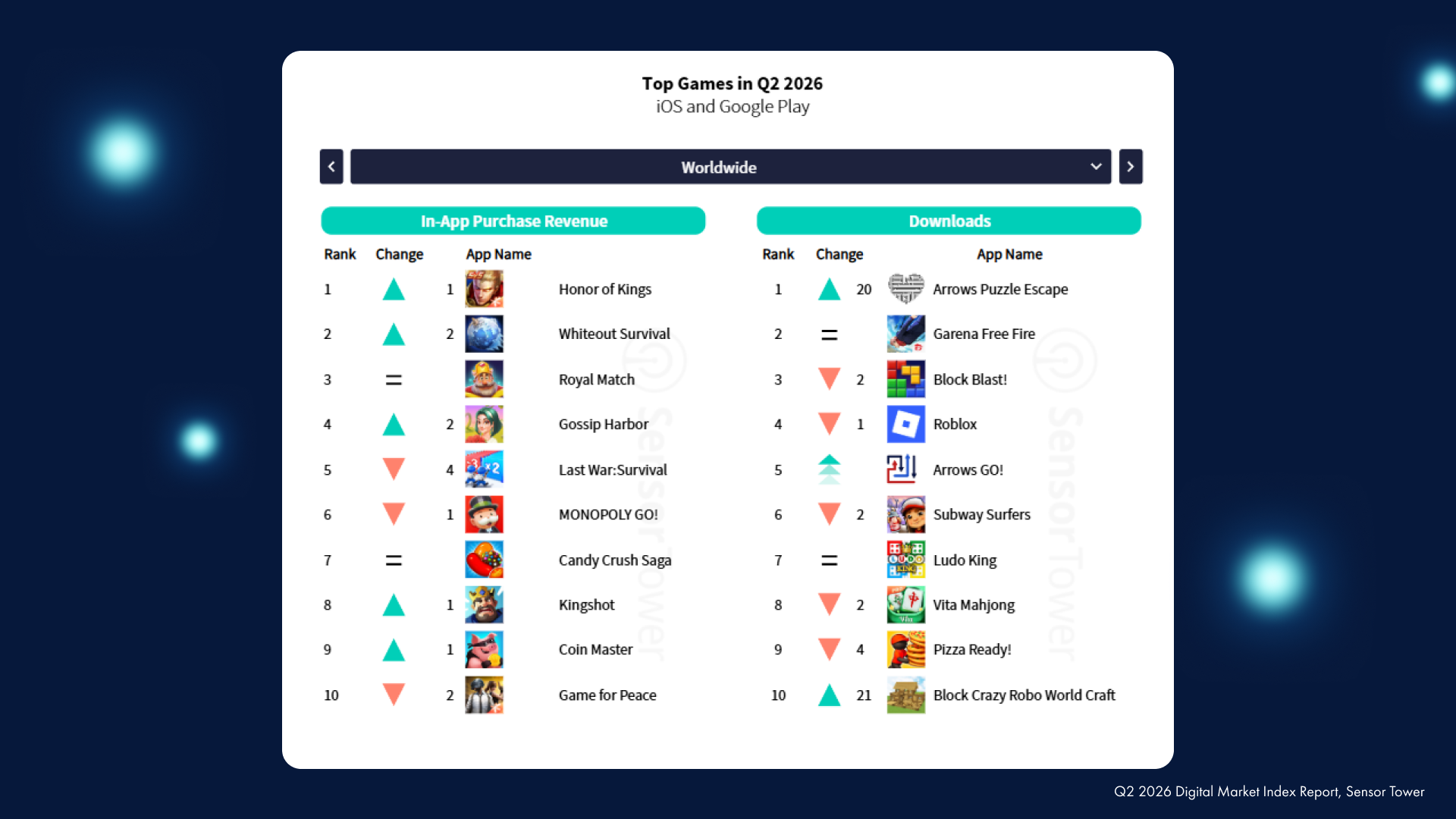
The mobile market trends show that gaming apps continue to evolve through new mechanics and large-scale user acquisition. Simple and engaging game formats are becoming an effective tool for increasing user retention and time spent in mobile applications. For advertisers, this highlights the importance of working within the mobile environment.
The mobile ecosystem continues to evolve:
The main mobile market trends demonstrate a shift from simply increasing the number of installations toward deeper user engagement and the development of personalized services.
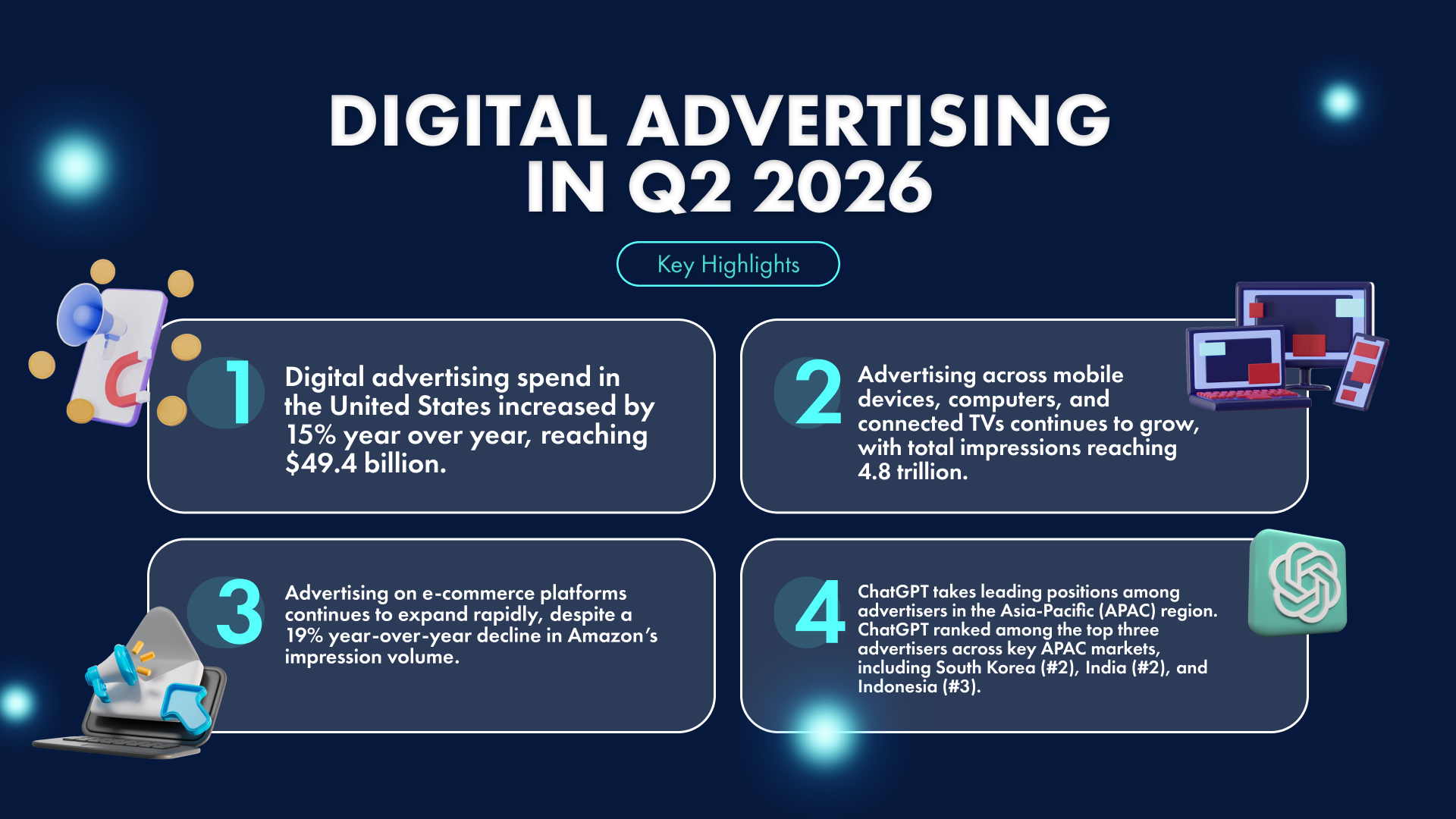
For BYYD, these changes confirm the importance of developing in-app advertising as an effective channel for audience communication.
The platform helps brands reach relevant users within the mobile ecosystem by using precise targeting, data-driven solutions, and a variety of advertising formats — from video to interactive Rich Media.
For more than 11 years, BYYD has been helping companies with mobile advertising and continuously improving its tools to meet the evolving needs of the market. Check out our case studies and send us an email – let’s launch your next campaign together.
Found this helpful? Share it with your friends and colleagues!
For consultations and partnership inquiries:
'/%3E%3C/svg%3E)
'/%3E%3Cpath%20fill='%23b2b2b2'%20d='M241%20382q0%2016%2017%2026%2017%2011%2042%2011t42-11q16-11%2017-26V269H241'/%3E%3Cpath%20fill='%239f7e00'%20d='M241%20379q0%2014%208%2023%209%209%2021%209%2014%200%2021-9%209-9%209-23V269h-59'/%3E%3Cpath%20d='M241%20339v-70h59v110q0%2014-9%2023l-6%205v-68h-15v72q-8%200-14-4v-68zm59%2040c0%2022%2015%2032%2029%2032%2021%200%2030-18%2030-32v-40h-59'/%3E%3Cpath%20fill='%239f7e00'%20d='M266%20277v5h2v12h-3v-5h2v-5h-9v5h2v5h-4v9h3v18h-5v10h34v-10h-5v-18h3v-9h-4v-5h2v-5h-9v5h2v5h-3v-12h2v-5zm42%20101q0%2010%206%2017%206%206%2015%207%2010-1%2016-7%206-7%206-17v-29h-43'/%3E%3Ccircle%20fill='%230044ad'%20cx='329.5'%20cy='372'%20r='6'/%3E%3Cellipse%20fill='%230044ad'%20cx='300'%20cy='340'%20rx='16'%20ry='21'/%3E%3C/svg%3E)

'%3E%3Cpath%20stroke='%23000'%20stroke-width='4'%20d='m-35-37-13%2020m5%203%2013-20m5%203-13%2020m63%2042%206-9m1-2%206-9m5%203-6%209m-1%202-6%209m5%203%206-9m1-2%206-9m-96%200%2013%2020m5-3-6-9m-1-2-6-9m5-3%2013%2020m63-42-6-9m-1-2-6-9m5-3%2013%2020m5-3-6-9m-1-2-6-9'/%3E%3Ccircle%20r='24'%20fill='%23cd2e3a'/%3E%3Cpath%20fill='%230047a0'%20d='M0%200a12%2012%200%201%201%2020%2013%2024%2024%200%201%201-40-26A12%2012%200%201%200%200%200'/%3E%3C/g%3E%3C/svg%3E)
