The mobile market continues changing. Advertisers face rising user acquisition costs, limited iOS advertising inventory, and the need to evaluate each channel’s real business impact more accurately.
According to the Singular Q3 2026 Quarterly Trends Report, user conversion after interacting with ads has increased for the second consecutive quarter. At the same time, the market is becoming more competitive. User acquisition costs change due to inventory availability, regional differences, and the development of new advertising channels.
In this new review, we analyze the key mobile marketing trends of 2026:
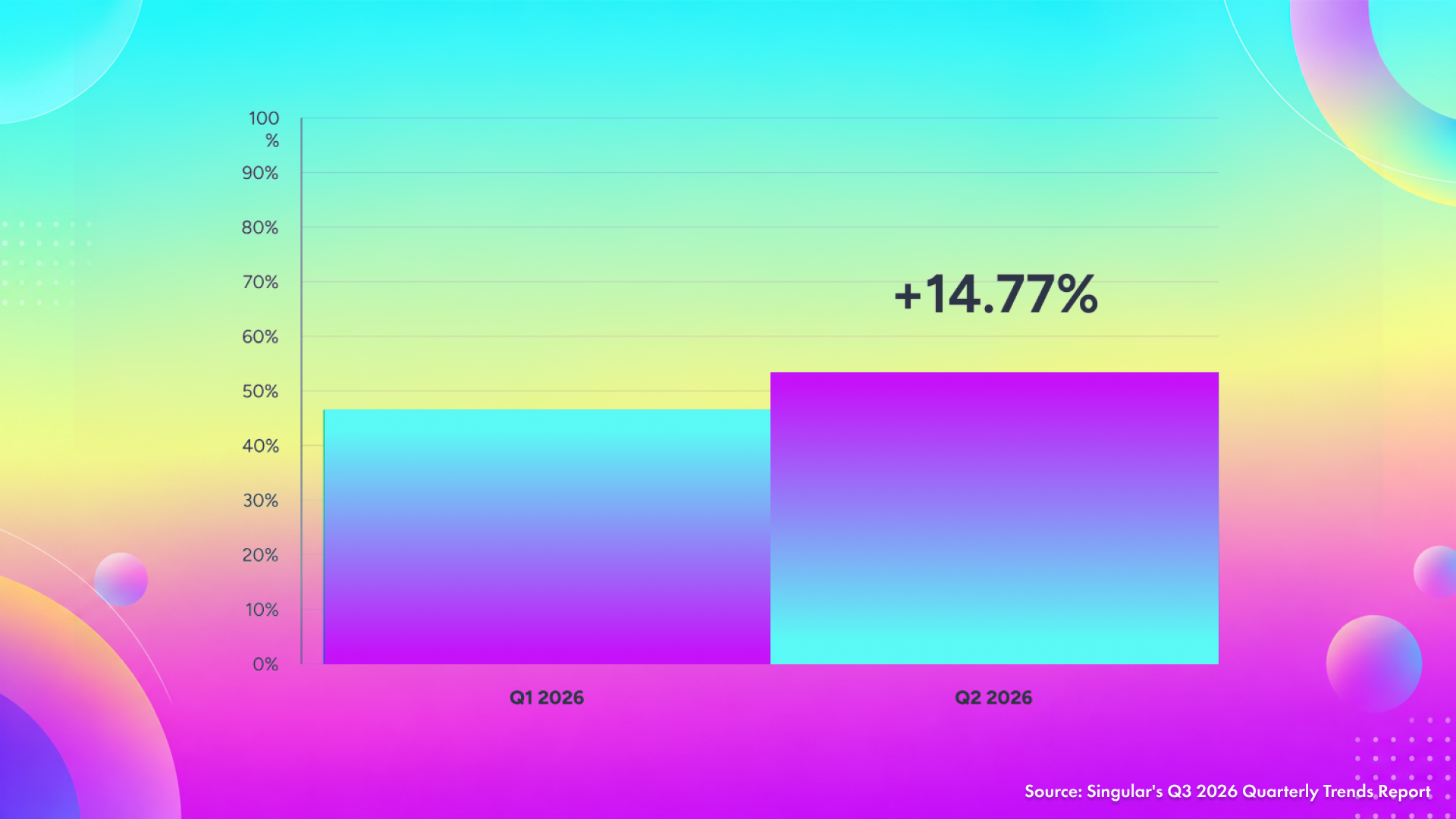
In Q2 2026, the mobile advertising market grew after declining in Q1. Global mobile advertising spending increased by 14.77%. This indicates advertisers returning to active user acquisition investments.
Growth was almost identical across both key platforms. Android spending increased by 14.73%, while iOS spending increased by 14.80%. However, the main difference appeared not in demand, but in advertising inventory availability.
Android supported growth through a 6.40% increase in impressions. Meanwhile, iOS impression volume decreased by 5.40%. As a result, competition for Apple users increased, and placement costs grew.
Reduced iOS inventory with stable demand led to significant advertising cost growth.
The global average CPM (cost per thousand ad impressions) increased by 13%. CPI (cost per app install) increased by 8.47%. The cost increase was especially noticeable on iOS. CPM increased by 21.36%. On Android, growth reached 7.84%.
This means that in 2026, rising user acquisition costs depend not only on campaign efficiency. They are also connected with market changes. Advertisers compete for limited volumes of high-quality mobile traffic.
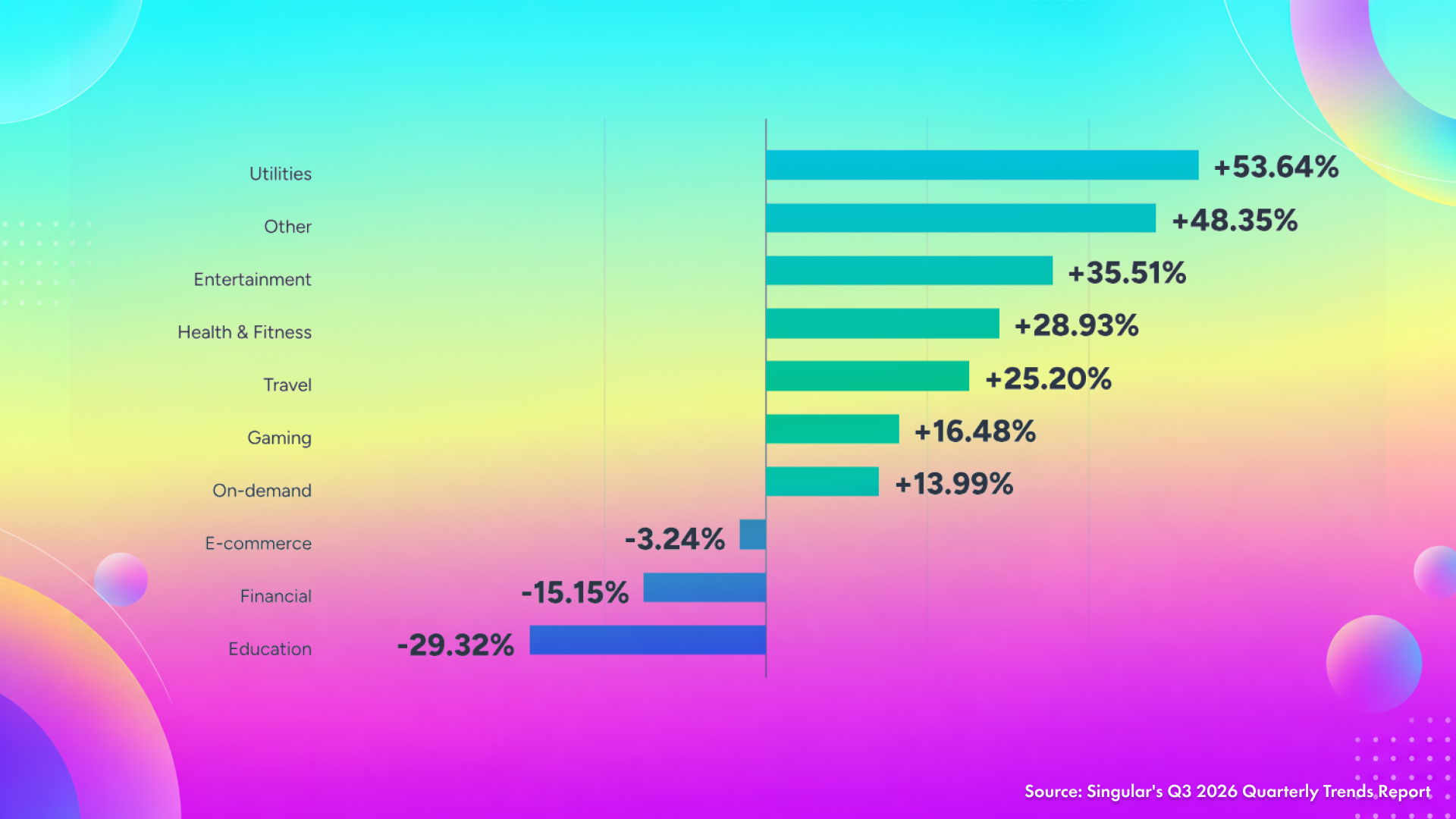
The gaming industry continues to hold the largest share of the mobile advertising market. It accounted for 45.1% of all advertising spending. Investment volume increased by 16.5%.
However, other categories demonstrated the fastest growth rates:
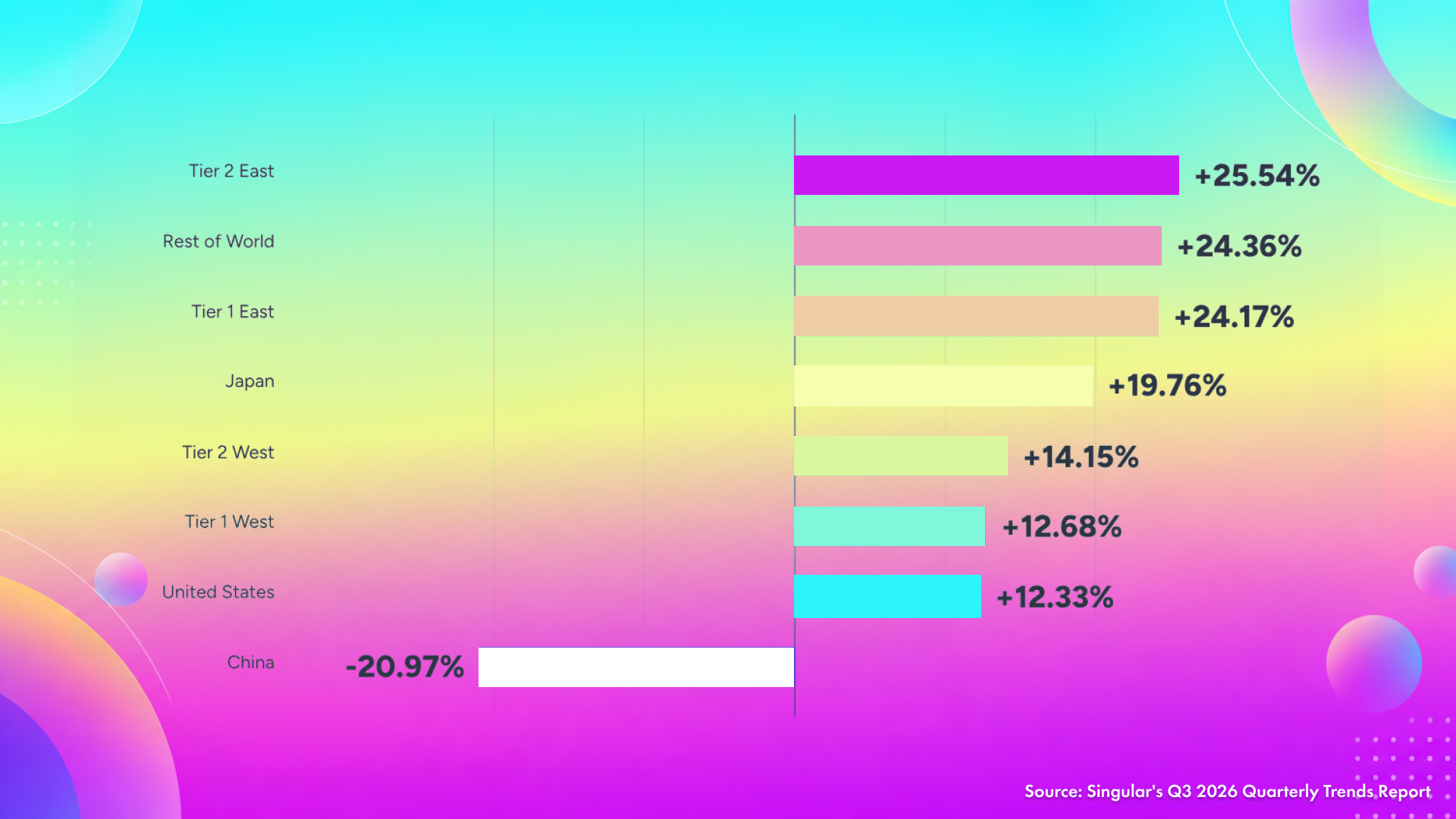
In Q2 2026, mobile advertising spending increased across almost all global regions. Seven out of eight regional segments showed higher advertising investments. The difference between growth rates became one of the smallest in recent quarters.
At the same time, the main market change was not only budget growth. It was also the limited availability of advertising supply. In the largest regions, advertisers increased spending despite fewer available impressions.
This increased competition for high-quality mobile inventory. It also became one of the factors driving advertising cost growth.
Mobile advertising spending in this region increased by 24.17%. The number of impressions grew by 21.47%.
This is the only region where advertising demand growth almost matched inventory expansion.
The United States remains the largest mobile advertising market. The country accounts for 59.11% of global advertising spending.
Among the fastest-growing regions, Tier 2 East stood out. It includes Indonesia, the Philippines, Thailand, Taiwan, and Turkey.
Mobile advertising spending in this region increased by 25.54%. The number of impressions grew by 4.65%.
One of the key factors affecting mobile marketing in recent years remains limited access to user data on iOS.
Apple’s ATT (App Tracking Transparency) technology allows users to decide whether applications can track their activity for advertising purposes. The share of users providing this permission directly affects IDFA (Identifier for Advertisers) availability. IDFA is a unique device advertising identifier.
In Q2 2026, the average iOS user consent rate for tracking was 9.99%. This means approximately only one in ten users allows apps to use data for personalized advertising. Most users remain outside direct tracking.
Users are more likely to provide consent when personalization directly improves their experience. For example, personalization can provide more relevant content, recommendations, or functionality.
The highest consent rates were shown by:
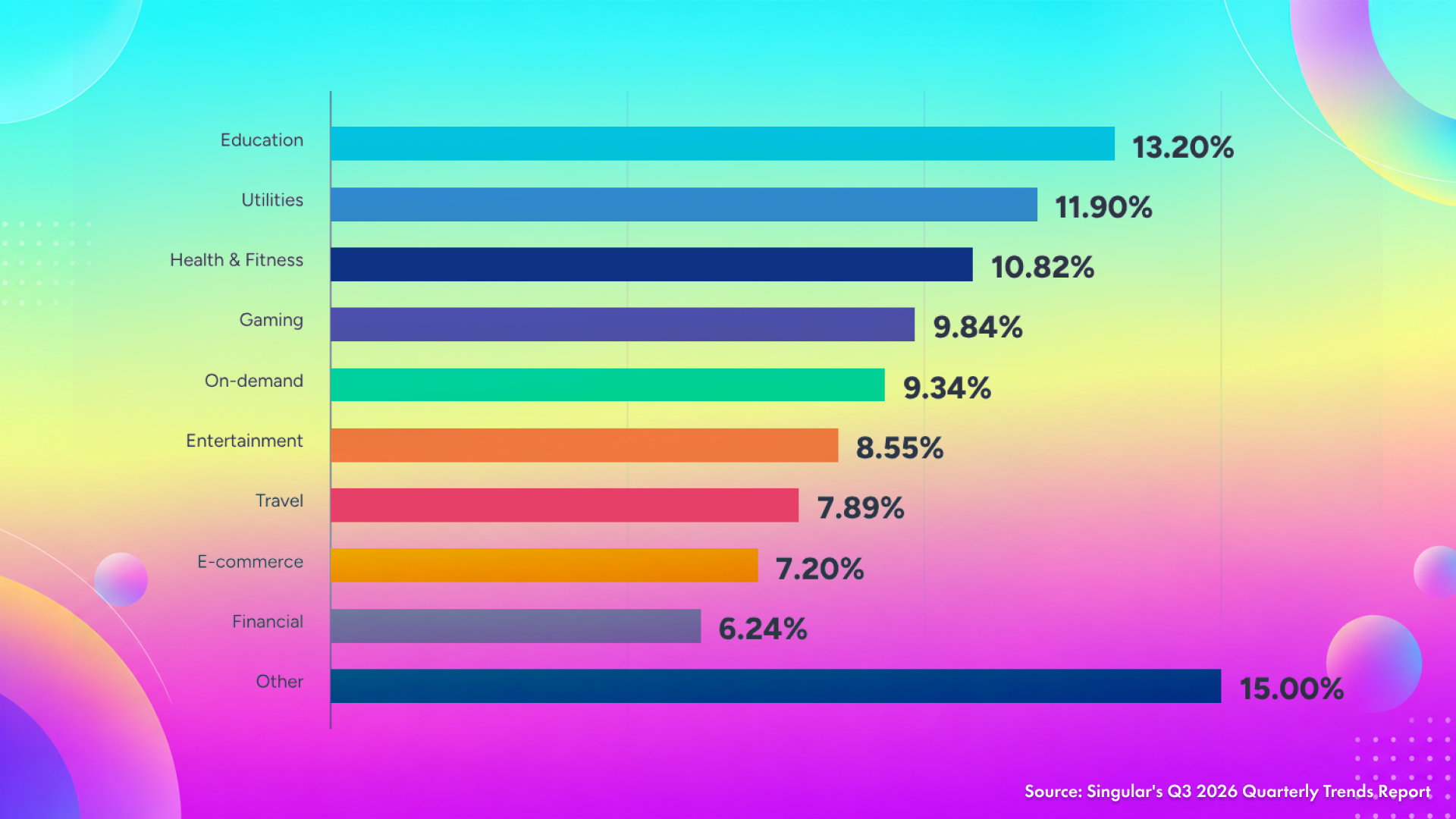
In these categories, users more often see clear value from personalized app interactions.
On the opposite side are finance and e-commerce categories. Users are less likely to allow tracking because these categories involve financial operations and purchases.
The benefits of data sharing are less obvious for users. Under limited identifier access, simply counting installs and conversions is no longer enough. Advertisers increasingly evaluate not only the number of acquired users. They also analyze which part of the results was truly generated by advertising.
With increasing advertising costs, brands are shifting from evaluating user volume to analyzing real impact. One of the key trends is the development of incrementality testing. It measures how many users actually came because of advertising.
It helps distinguish users influenced by ads from those who would act independently. This is especially important for retargeting. Some users might return to the app without any advertising interaction.
Therefore, advertisers increasingly use:
As a result, attention is shifting from simple conversion tracking. The focus is moving toward understanding the business impact of advertising investments.
2026 shows that mobile advertising is becoming more competitive. It requires a more precise strategic approach.
Key trends:
In 2026, mobile campaign effectiveness increasingly depends not only on targeting quality. It also depends on the ability to use new measurement methods. These include data modeling and advertising impact studies.
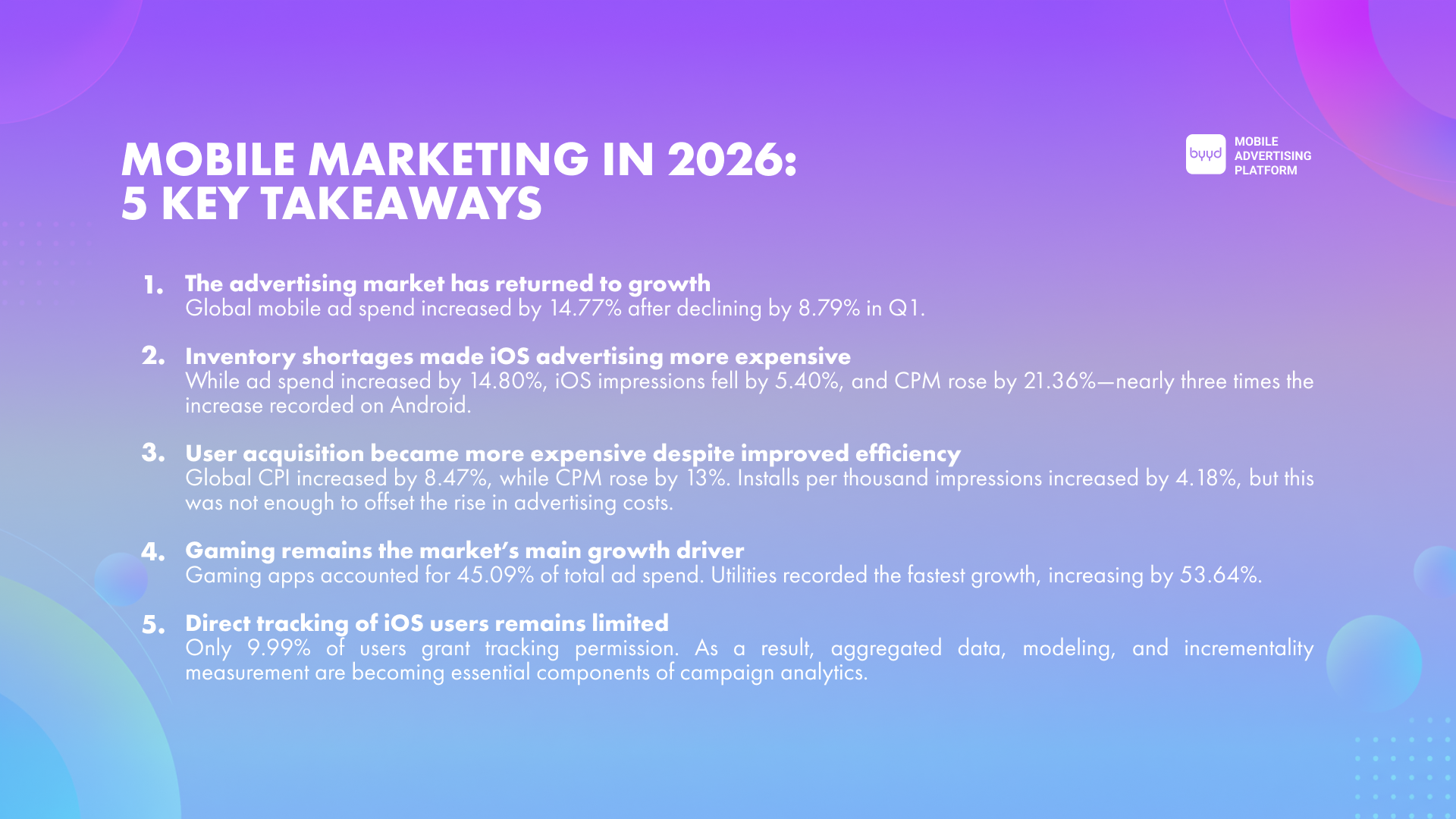
In 2026, mobile marketing is moving from simple scaling to a more intelligent model. Efficiency is determined by data quality, measurement accuracy, and the ability to find valuable audiences.
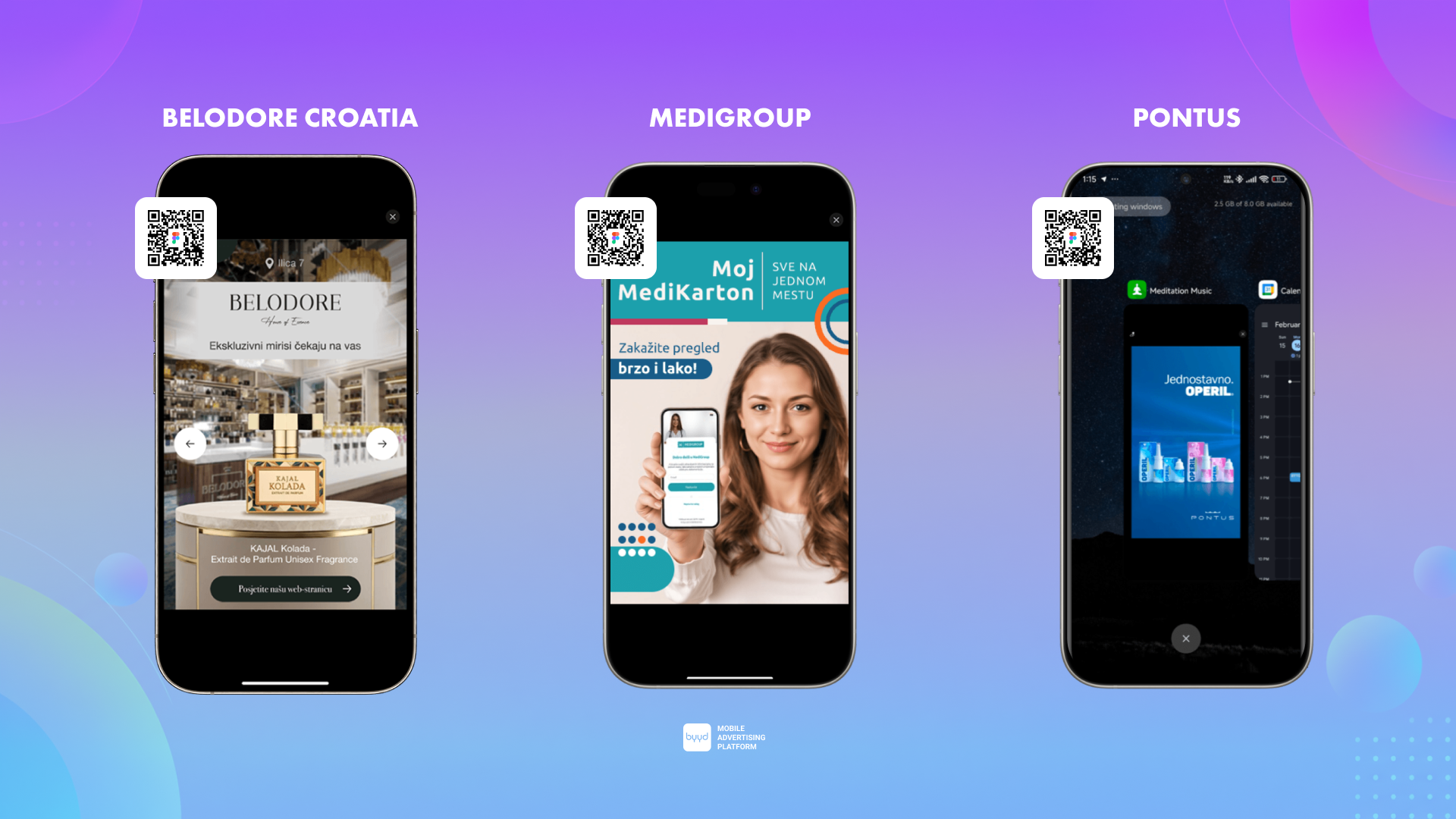
This becomes especially important in conditions of growing competition. For more than 11 years, BYYD has been helping companies with mobile advertising and continuously improving its tools to meet the evolving needs of the market.
Check out our case studies and send us an email – let’s launch your next campaign together.
Found this helpful? Share it with your friends and colleagues!
For consultations and partnership inquiries:


