Digital Market in the Caucasus in 2026: Trends and Characteristics of Georgia, Armenia, and Azerbaijan
The digital market in the Caucasus is a platform for new marketing tools. Since mobile internet penetration is at the level of 70–80%, it makes the region promising for programmatic advertising.
In the article, we study the digital market in Georgia, Armenia, and Azerbaijan based on Data Reportal statistics and other sources.
In the review, we will examine:
- How the mobile market in the Caucasus is developing in 2026.
- What trends are expected in digital marketing.
- Why mobile advertising is becoming a growth driver for brands.
Internet growth and mobile speed: how the digital market in the Caucasus is changing
According to DataReportal statistics, by the end of 2025, 9.27 million people in Azerbaijan were using the internet, with a penetration rate of 89%. In Georgia, there were 3.12 million people (81.9%), and in Armenia, 2.36 million people (80%).
As a result, the Caucasus market shows a high level of digital maturity. Internet penetration is at the level of 80–89% in the key countries of the region.
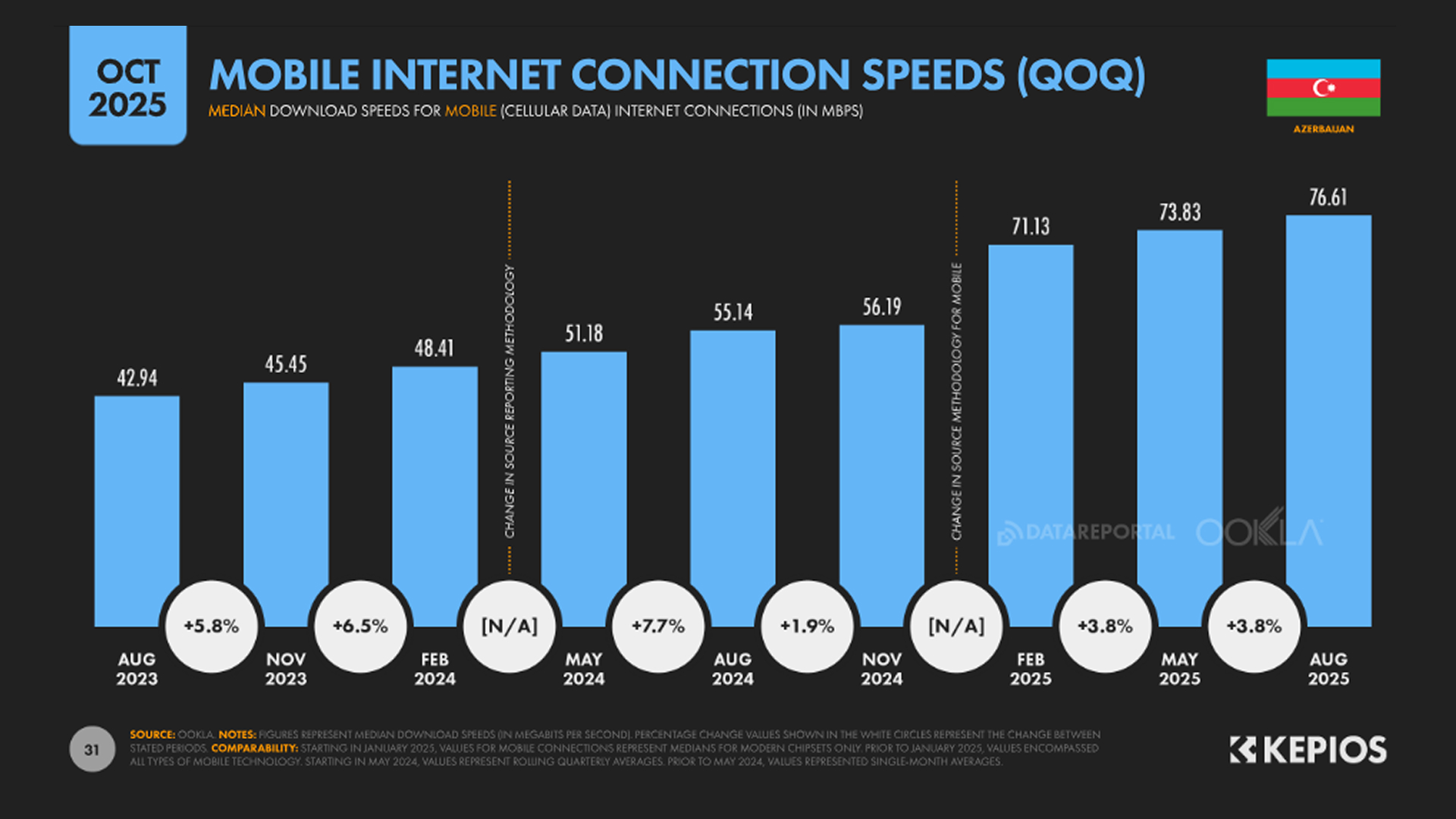
Mobile internet speed is steadily increasing. Over two years in Azerbaijan, it grew almost 1.8 times (from ~43 to ~77 Mbps).
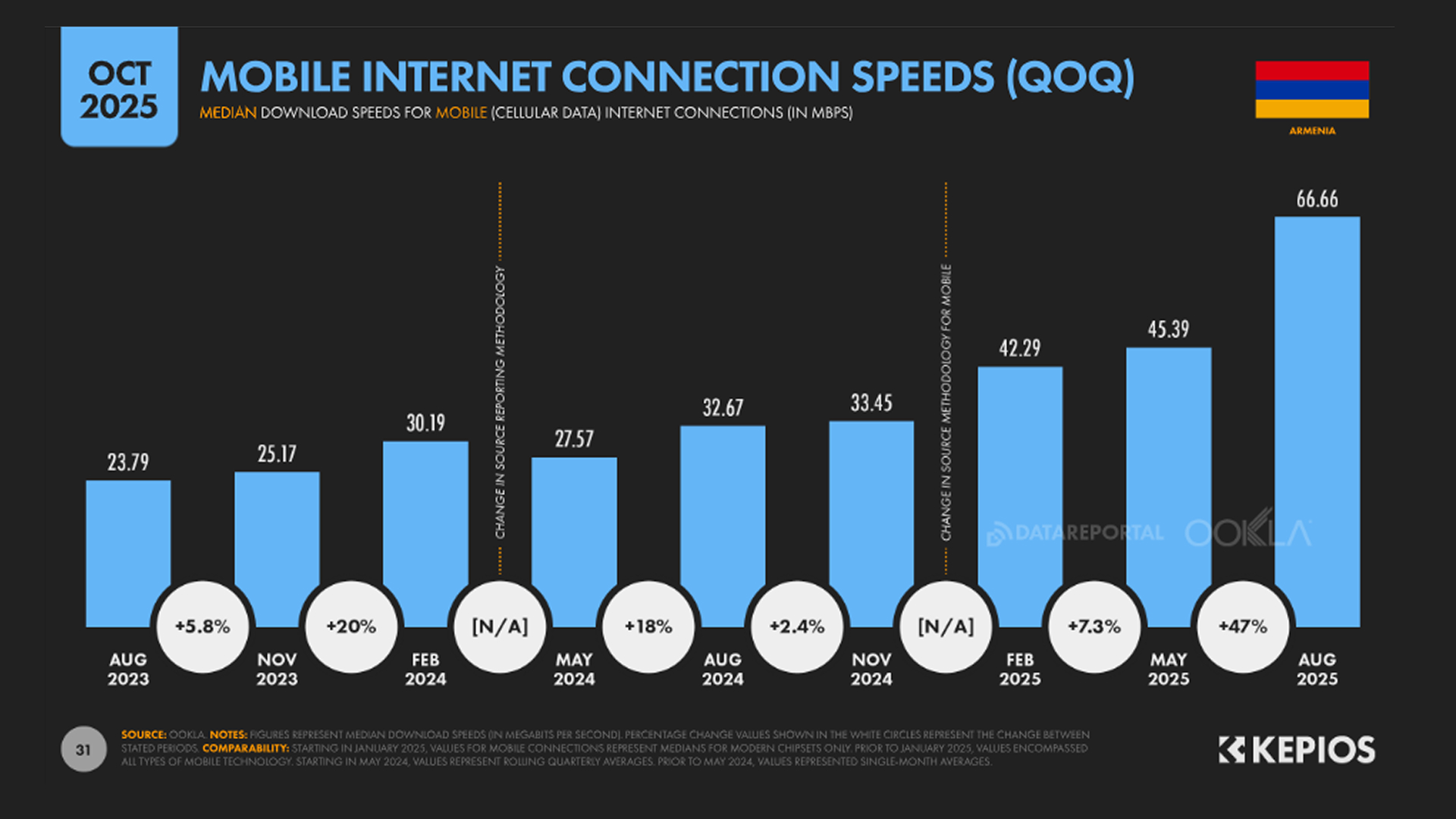
Armenia demonstrates one of the fastest rates of mobile infrastructure growth in the region. Over two years, mobile internet speed almost tripled and exceeded 66 Mbps.
The sharp jump in 2025 indicates the market’s transition to a new level. Mobile internet is becoming a stable foundation for content consumption and the development of digital advertising.
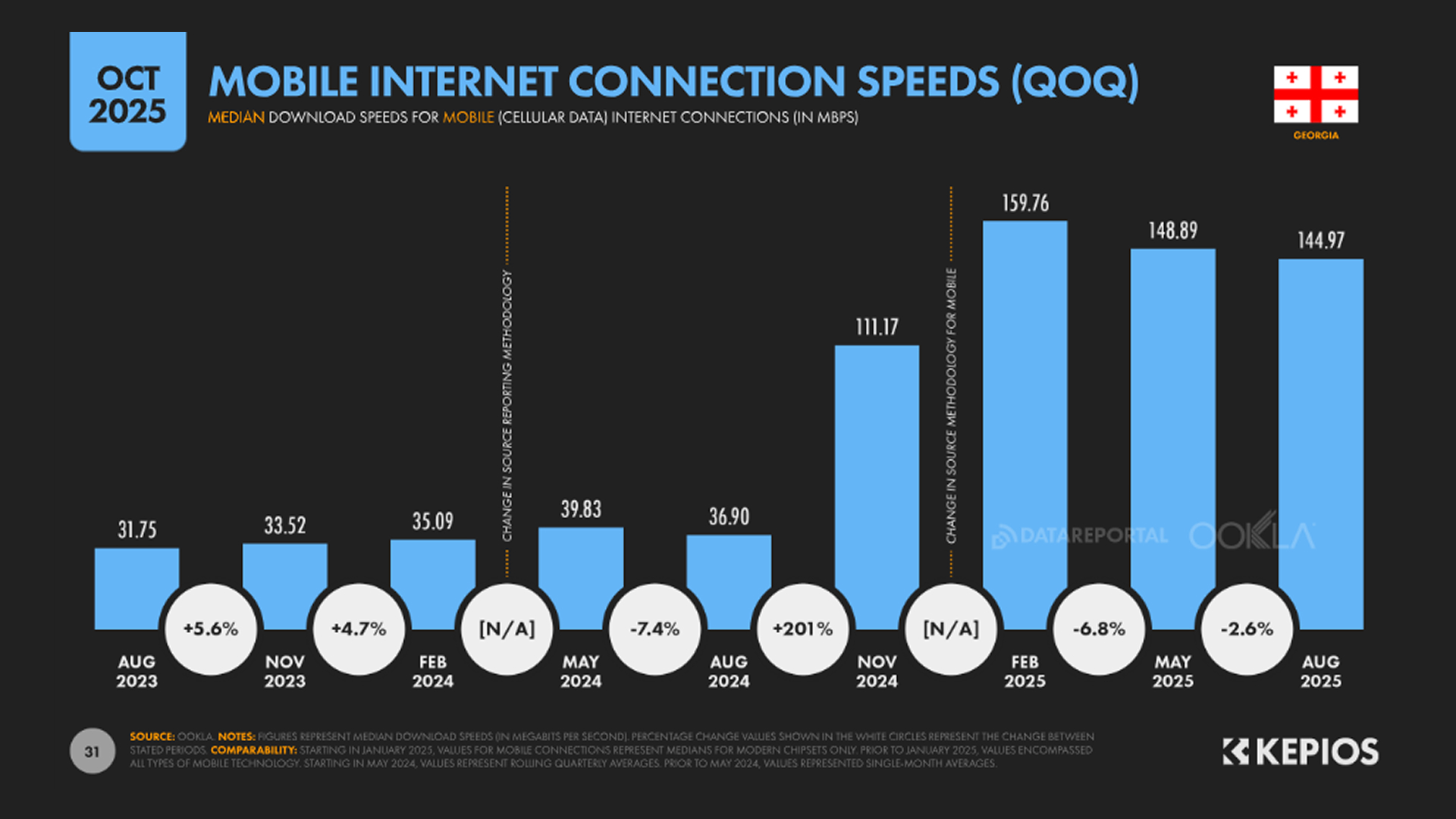
Georgia shows the highest mobile internet speed in the region.
If in 2023–early 2024 the speed was at the level of 30–40 Mbps, then by the end of 2024 the market showed a sharp technological leap. The speed grew more than 3 times and exceeded 100 Mbps.
In 2025, growth continued, reaching a peak value of 159.76 Mbps. After that, the speed stabilized at the level of 140–150 Mbps.
High mobile internet speed directly affects the user experience:
- Content loads instantly.
- Video plays without delays.
- Interaction with apps becomes deeper and longer.
This creates favorable conditions for the growth of media consumption and audience engagement. For brands, this means expanding mobile advertising opportunities.
Smartphones dominate: mobile traffic in the Caucasus exceeds 70%
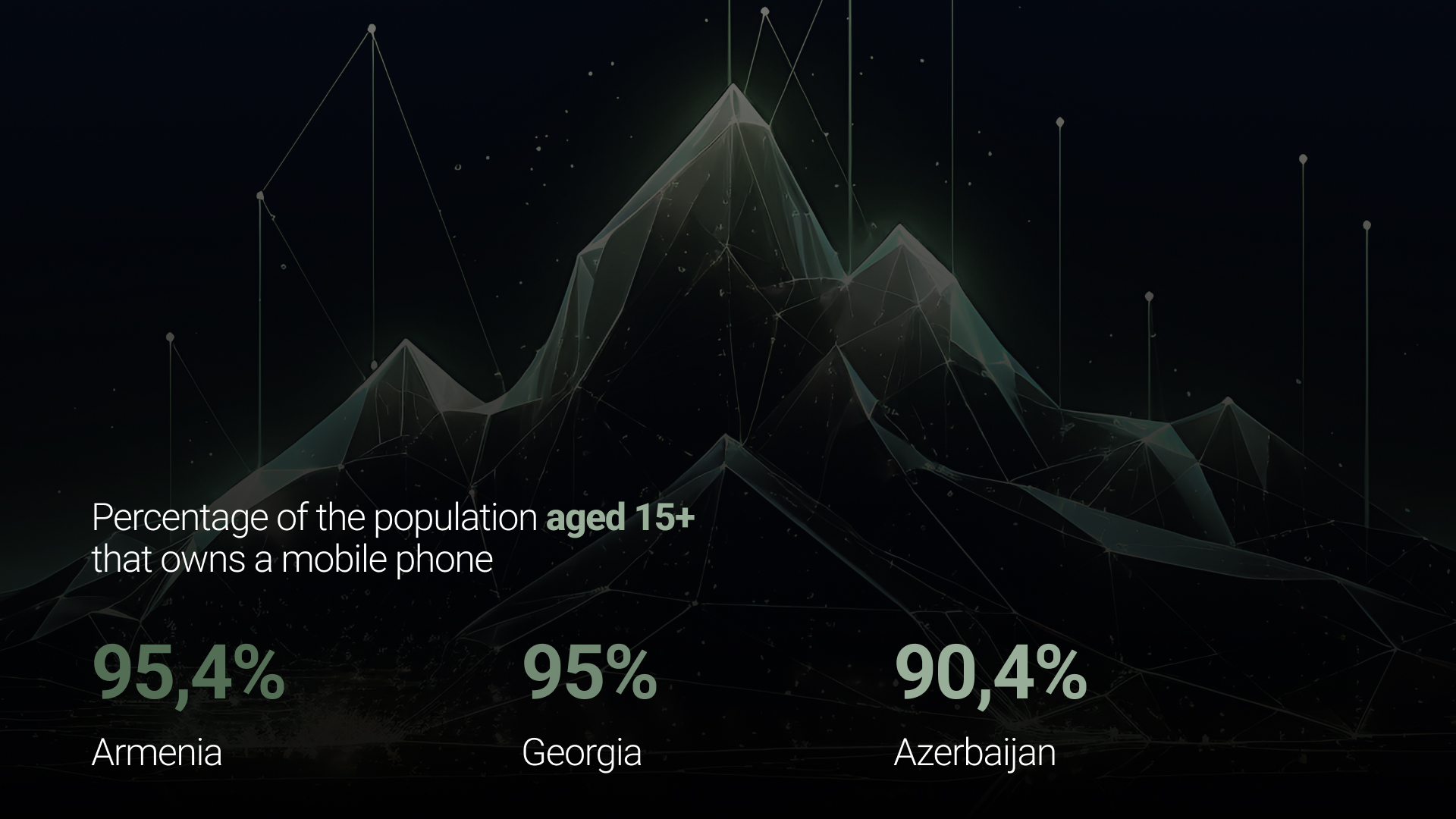
In Azerbaijan, 90.4% of the population over 15 own a mobile phone. In Georgia, it is 95%, and in Armenia, 95.4%. It makes mobile the main point of contact between the brand and the audience.
Mobile traffic in the countries of the Caucasus is the largest and amounts to:
- in Azerbaijan — 77.08%,
- in Armenia — 78.2%,
- in Georgia — 69.41%.
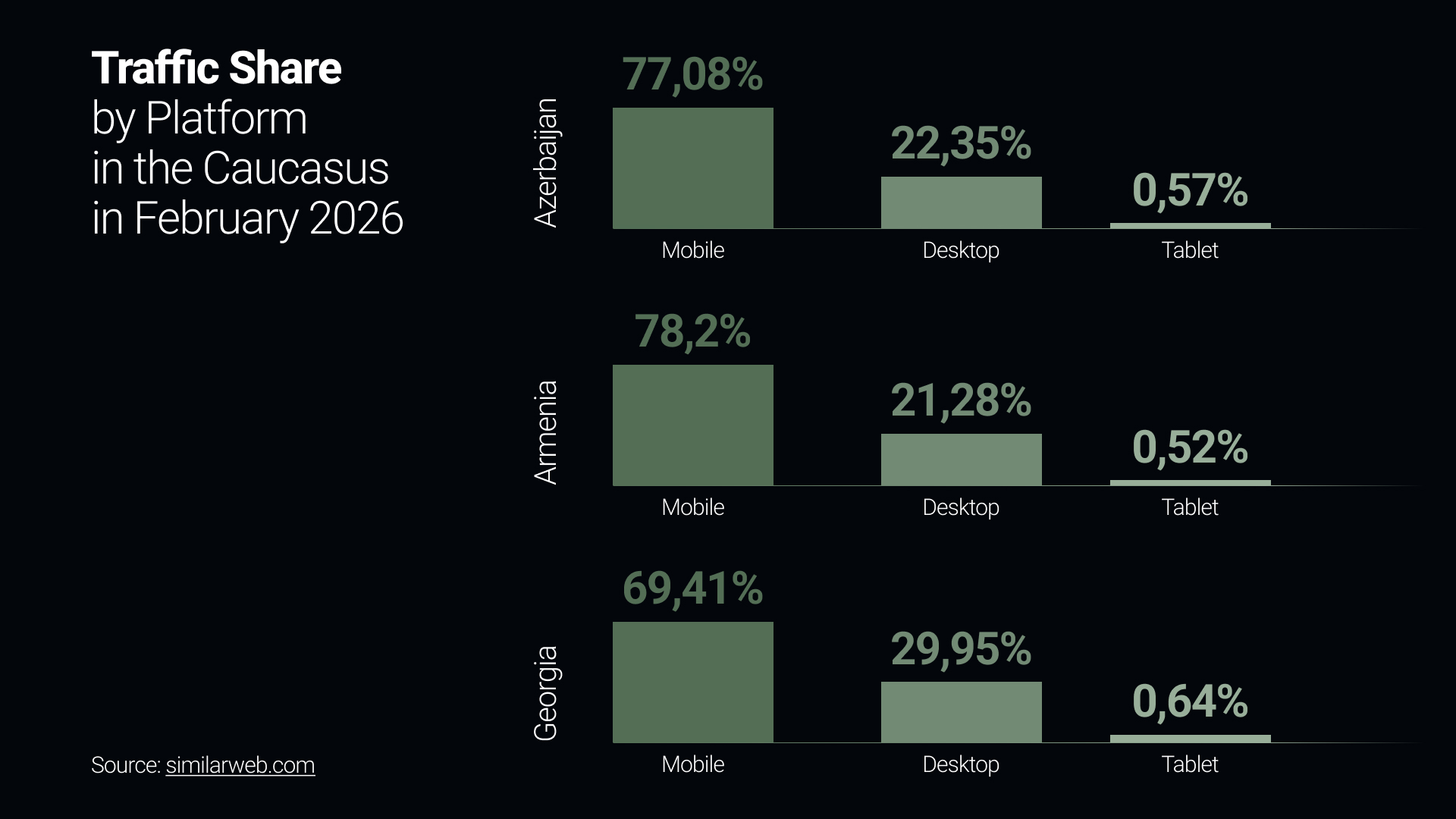
The data shows that the countries of the Caucasus have already shifted to a mobile-first consumption model. A smartphone is the main channel of internet access through which users interact with brands and make decisions.
This means that creatives, websites, and communication must be adapted to the mobile experience.
Armenia is the leader in ChatGPT usage in the Caucasus
Armenia ranks 5th in the world in ChatGPT usage per capita and has become the leader in the South Caucasus. 7.9% of the population use the service weekly.
In neighboring countries, ChatGPT is used by: 4.3% of the population in Georgia, 4.1% in Azerbaijan, 4.5% in Turkey, and 3.5% in Iran.
Such indicators show the rapid adoption of new technologies in the region. This demonstrates the audience’s readiness to interact with more complex digital services.
Accordingly, the growing use of tools such as ChatGPT strengthens the overall trend toward the region’s digital maturity.
In March 2026, ChatGPT’s market share across all platforms in Azerbaijan reached 78.44%. This is 4.65 percentage points lower than in February. Thus, ChatGPT’s share has been declining for the fourth month in a row. The total decline amounted to 16.5%.
Samsung took first place in the mobile device market of Azerbaijan
Apple lost 8% of its share in the mobile device market of Azerbaijan. Meanwhile, in January 2026 Samsung took first place with a 27% share, according to Statcounter.
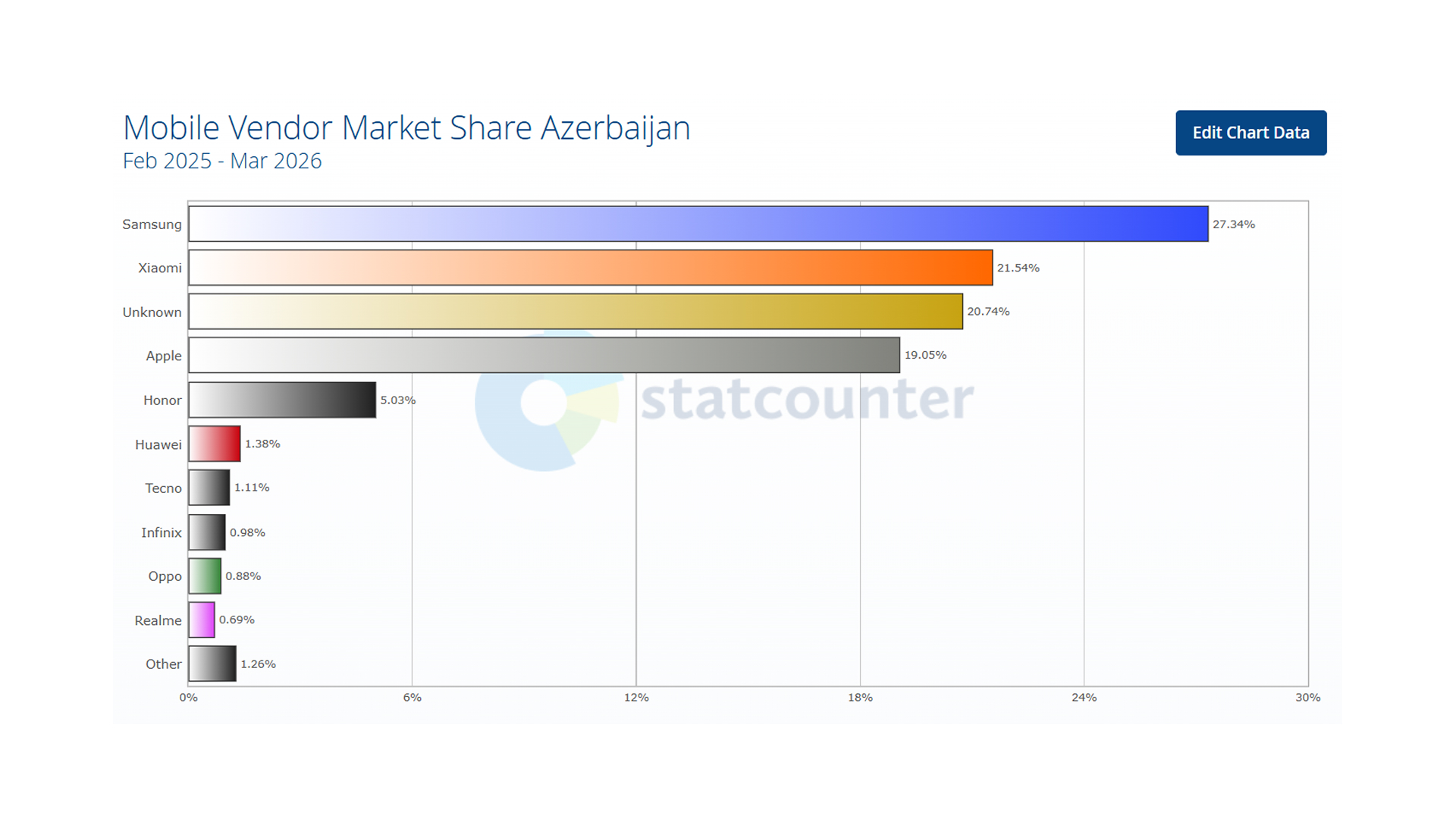
Xiaomi took second place with a market share of 22%. Apple was in third place with a 20.87% share: the level decreased by 8% compared to the previous month.
Android leads the mobile operating systems market in Azerbaijan with a 76% share in December 2025.
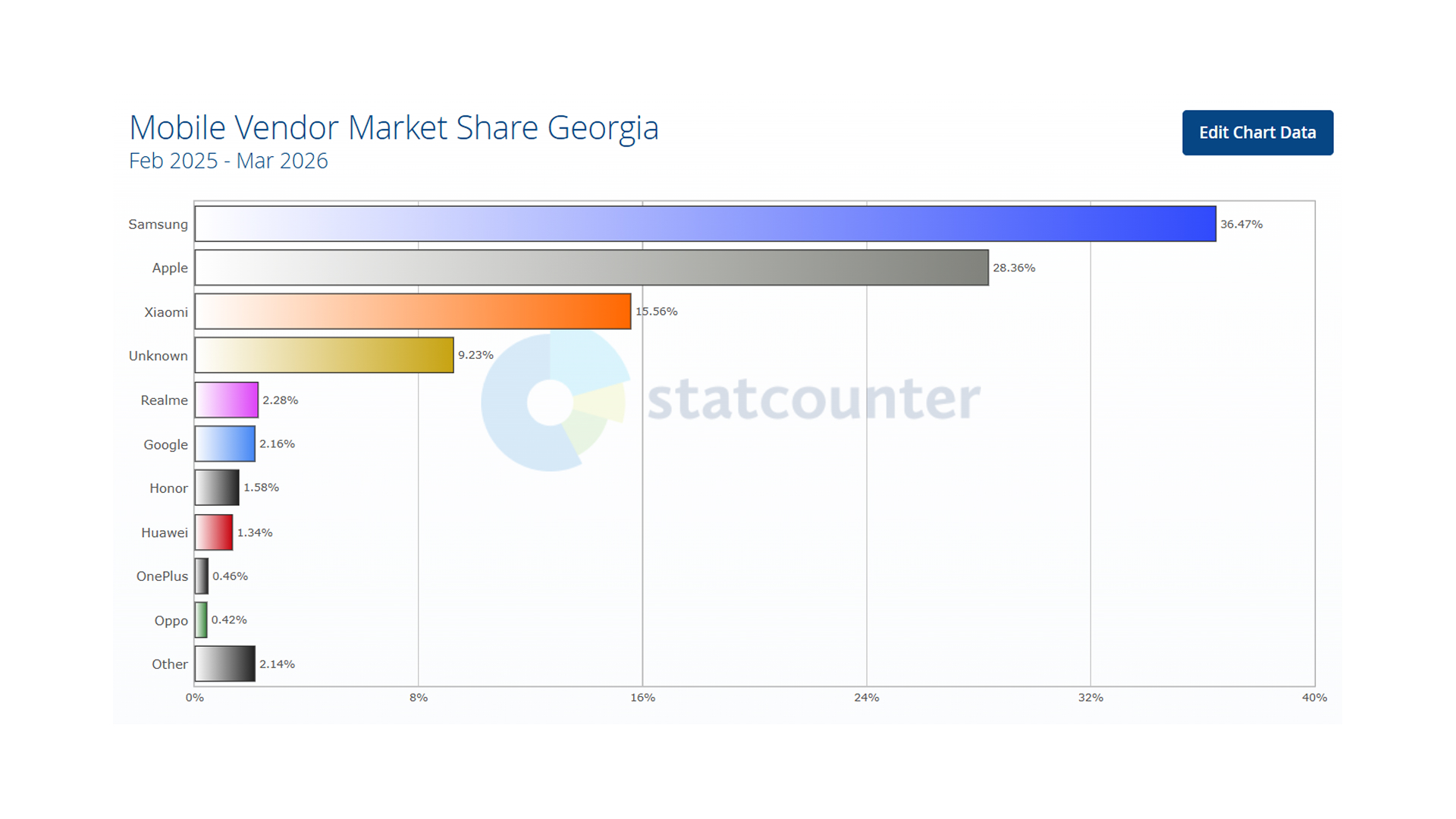
The situation in the mobile device market of Georgia is different. There is a clear dominance of two brands: Samsung with a 36.47% share and Apple with 28.36%. Together they control almost two thirds of the market.
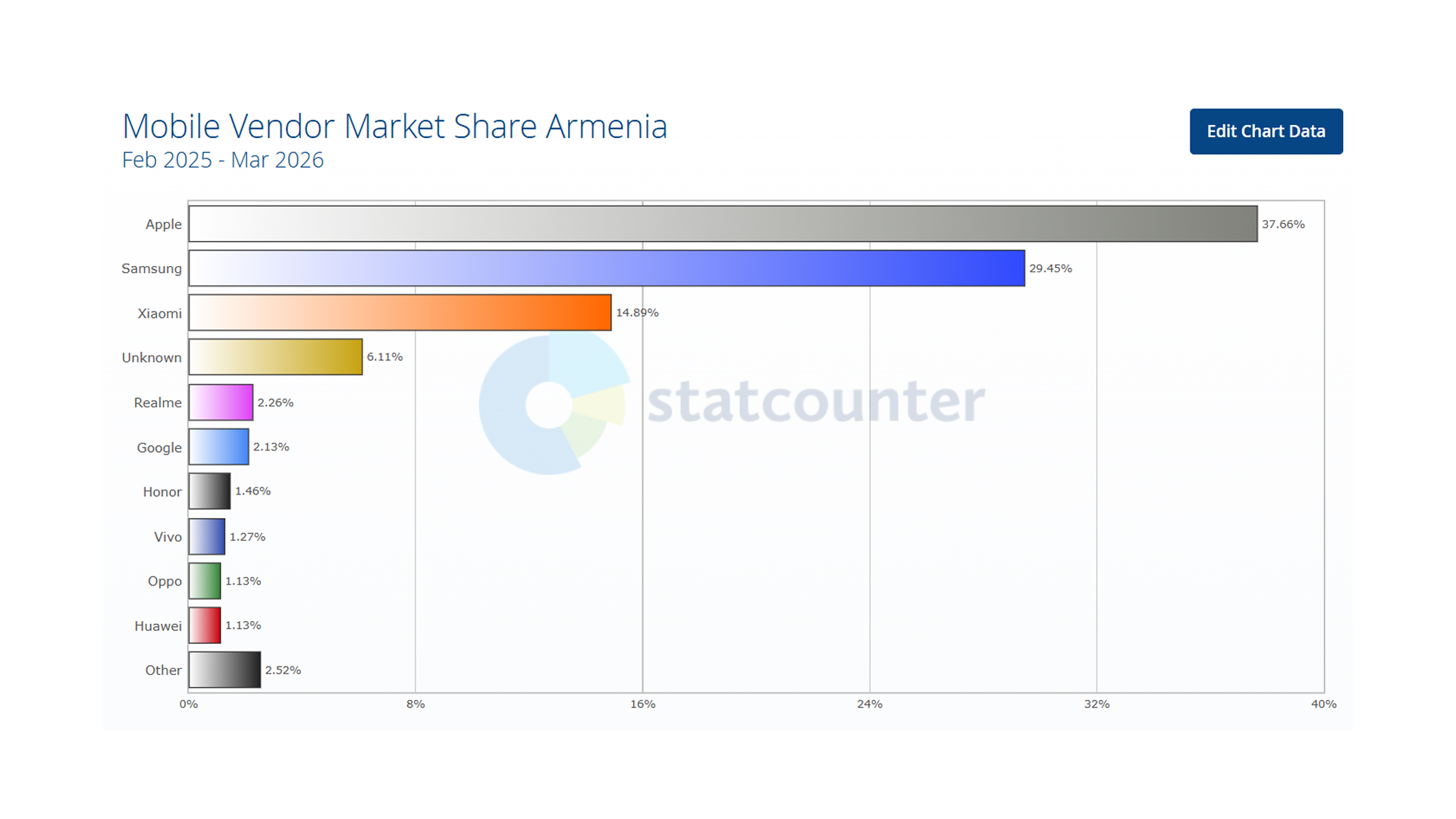
Apple led the mobile device market of Armenia with a 37.66% share
In the mobile device market of Armenia, Apple ranks first with a 37.66% share. Samsung holds a strong second position with 29.45%.
This shows that the Armenian market noticeably leans toward the premium segment.
Xiaomi remains the largest mass-market alternative player with 14.89%, but it noticeably lags behind the leaders.

Inara Jafarova, head of BYYD mobile specialists for the Caucasus region:
In 2026, the Caucasus can no longer be considered a peripheral digital region. These are three different but mature markets with high internet penetration, a pronounced mobile-first consumption model, and growing technological readiness of the audience.
At the same time, each country is forming its own profile: Azerbaijan looks like the largest and fastest-digitizing market with a strong Android base and high mobile reach. Georgia appears as the most technologically advanced market with very high mobile internet speed and a strong role of the smartphone in media consumption. Armenia appears as the most premiumized market, where users show a high readiness for new services and more complex digital scenarios.
For brands, this means that it is already worth working with the Caucasus not through a general regional approach, but through separate country strategies.
At BYYD, we take into account the specifics of each market and launch campaigns based on local media consumption and differences in user behavior.
When planning placements, we pay attention to:
- How exactly the audience consumes content in each country.
- Which formats work better in a specific category.
- How traffic is distributed between Android and iOS.
- Which brand interaction scenarios will be the most effective.
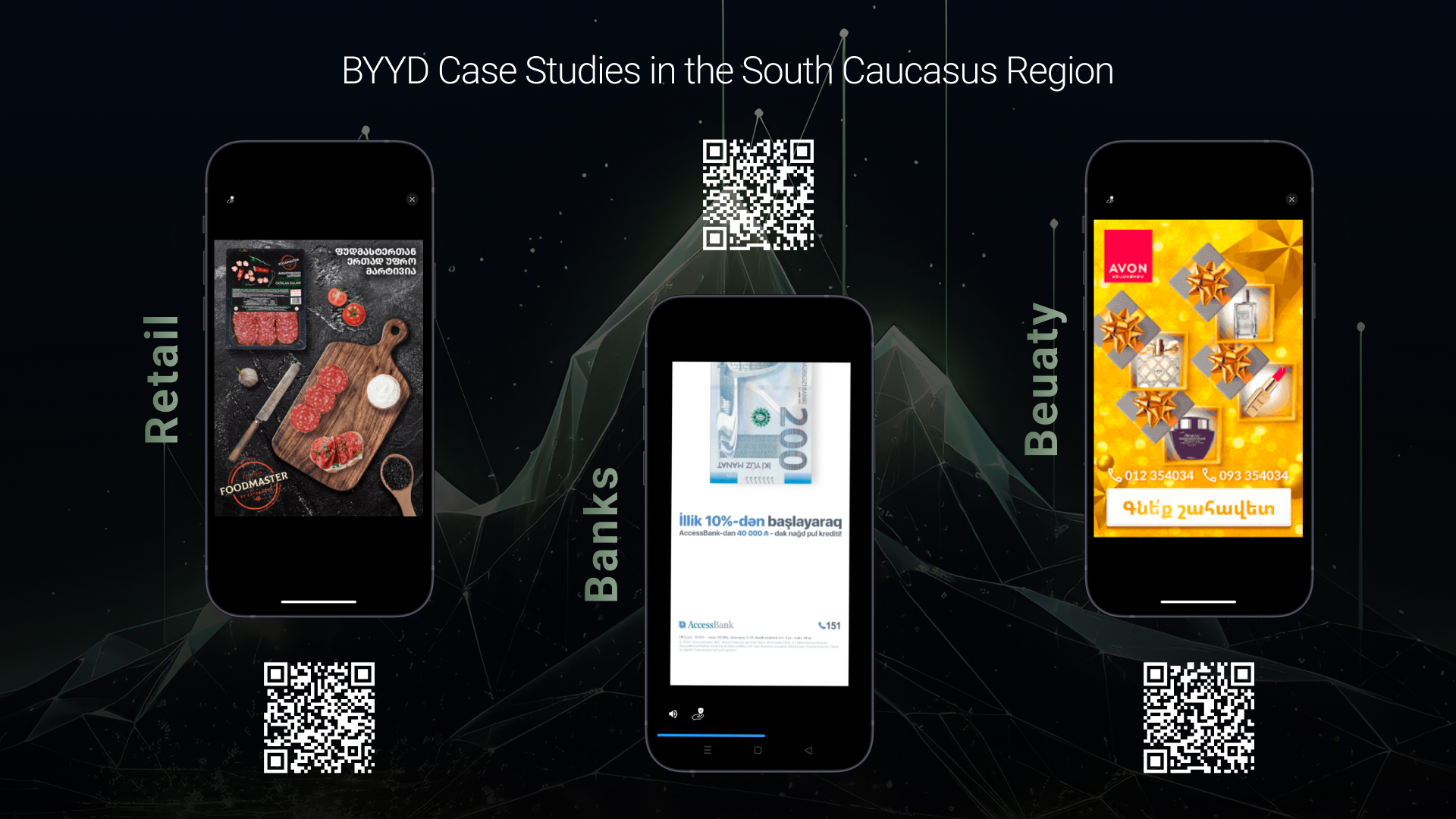
This approach allows campaigns to be adapted to the real digital environment and helps achieve the necessary results for brands from different sectors — from retail to finance.
How to contact us
For over 11 years, the BYYD team has been working with mobile advertising and creating banners designed for real user engagement. We help brands capture audience attention and achieve business objectives through proven mechanics.
Check out our case studies and send us an email – let’s launch your next campaign together.
Found this helpful? Share it with your friends and colleagues!
For consultations and partnership inquiries:
- Email us at hello@byyd.me
- Submit a request on our website