AI in Advertising: Technologies That Enhance Marketing
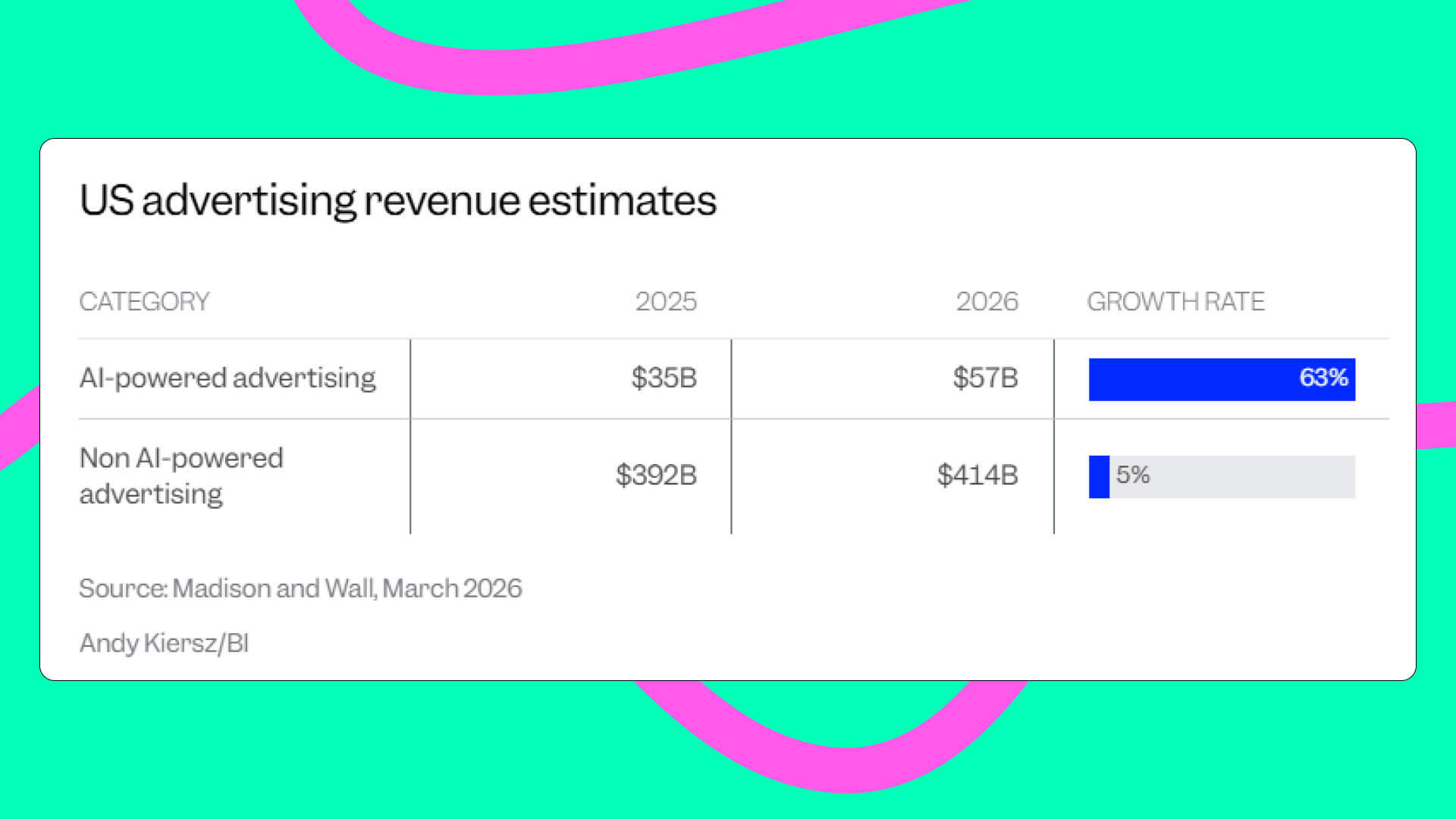
According to data, in 2026 the AI advertising market will grow by 63% and reach $57 billion, accounting for 12% of total ad spend. These growth rates clearly show that AI is no longer an experiment — it is a full-fledged tool reshaping how campaigns are launched and managed.
Today, AI is already handling targeting, budget allocation, creative production, and analytics. However, the key question remains: where is the balance between automation and human control?
In this article, we cover:
— how AI is used in advertising campaigns today
— which tasks are already automated and where human expertise is still essential
— what advantages AI tools bring to brands
And most importantly — whether it is still possible to work effectively without AI.
How AI Manages Advertising: Tools and Use Cases
Today, the AI advertising market is focused on operational efficiency — accelerating content production, research, and data structuring.
For example, in content marketing, AI is used across all stages — from idea generation to reporting. However, this also increases content volume and intensifies competition for attention.
As a result, content must be meaningful, demonstrate expertise, and build trust in the brand.
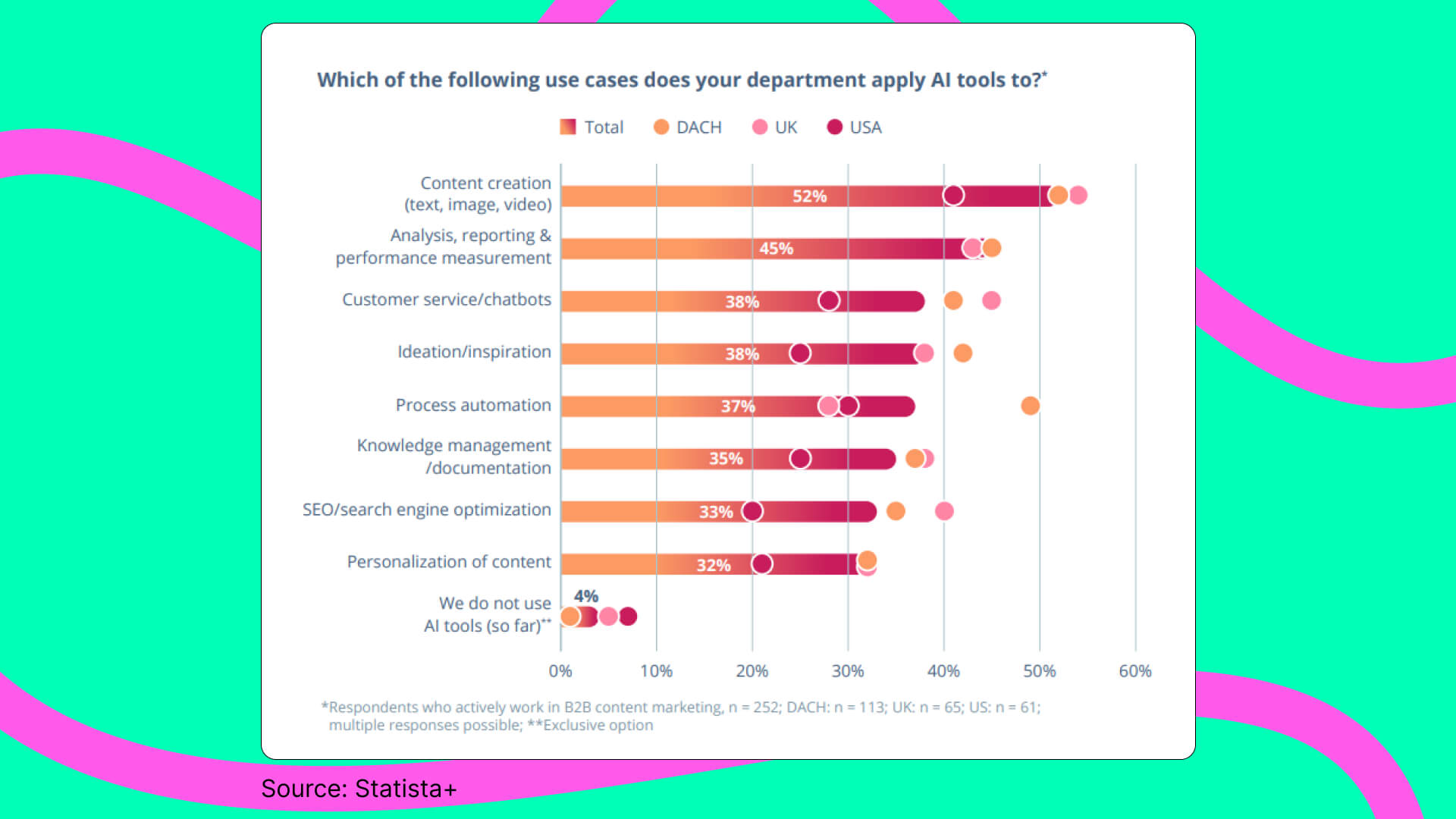
The application of AI is relevant across various areas of marketing. In media planning, AI helps analyze large volumes of data faster, identify effective audiences, and forecast campaign performance.
In programmatic buying, AI optimizes bids and allocates budgets in real time. In analytics, it simplifies data processing and insight generation. In SEO, it assists with keyword research and generates meta tags. In CRM and customer engagement, AI automates interaction scenarios.
Thus, AI is no longer a standalone tool but a cross-functional technology that enhances every stage of the advertising process.

Anastasia Zayarnuk, Mobile Director at BYYD:
At BYYD, we use AI as a tool that enhances every stage of working with advertising campaigns: from creative production and video development to anti-fraud, optimization, and AI Targeting for more precise audience reach. At the same time, AI plays a supporting role: it accelerates processes and helps work with data, while key decisions, quality control, and final interpretation always remain with specialists.

Andrey Barabanshchikov, Digital Director at MCA CCAR:
The foundation of digital marketing is built on AI. All auction-based and algorithmic buying relies on AI, so we have been working with it for a long time. However, like any AI system, it needs proper training. If it is not fed with the right data, the results will reflect that — which often leads to skepticism toward AI overall.
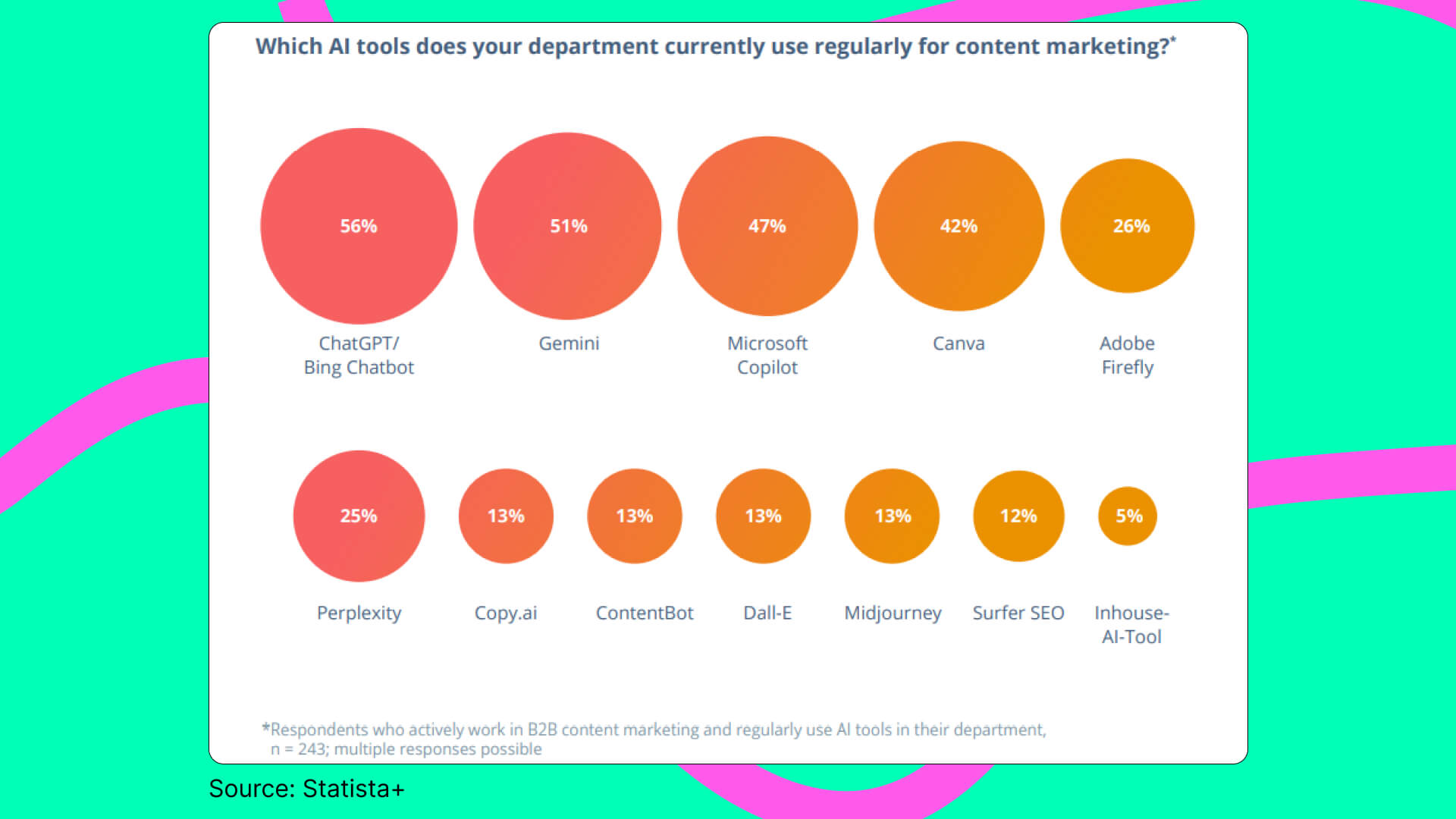
The choice of AI tools depends on the task. Universal tools like ChatGPT and Gemini form the base of most processes, while specialized tools such as Canva and Adobe Firefly support visual production.
According to statistics, in-house solutions still play a secondary role, with companies focusing on ready-made tools and evaluating their potential.

Dmitry Berzin, Leading Digital Specialist at TAG Media:
I use AI primarily for idea generation. Often, alternative ideas from non-practitioners are not viable, or they have already been used. In this sense, AI’s “cold” approach helps generate new hypotheses, while results are validated through A/B testing.

Anton Ayrikh, Digital Director Initiative Media Kazakhstan:
To be honest, AI is no longer just a “tool” — it has become a foundational layer of work. At the strategy stage, it accelerates analysis: insights, trends, competitors — everything is gathered faster. In creative, it generates hypotheses and helps adapt messaging for different audiences. It also constantly challenges the team, preventing linear thinking. In media, it automates processes and provides more accurate forecasts. But it’s important to remember: AI is not magic. Without strong expertise guiding it, it delivers average results — just like the market.

Denis Molostov, Digital Buying Director Okori Kazakhstan (Partner of Dentsu):
At our agency, we have long viewed AI not as a trendy novelty or a “for fun” tool, but as a real working asset in marketing. First and foremost, we use it to analyze data faster, identify non-obvious patterns, test hypotheses, and better understand how to communicate with different audiences. AI helps us get to the essence more quickly. As a result, we have more time for decision-making, strategy, and finding strong ideas. At the same time, it is very important for us not to overestimate the technology itself. AI does not replace thinking, experience, or an understanding of the client’s business. On its own, it does not make marketing stronger—it simply provides more opportunities.
Automation vs Human: What AI Cannot Do
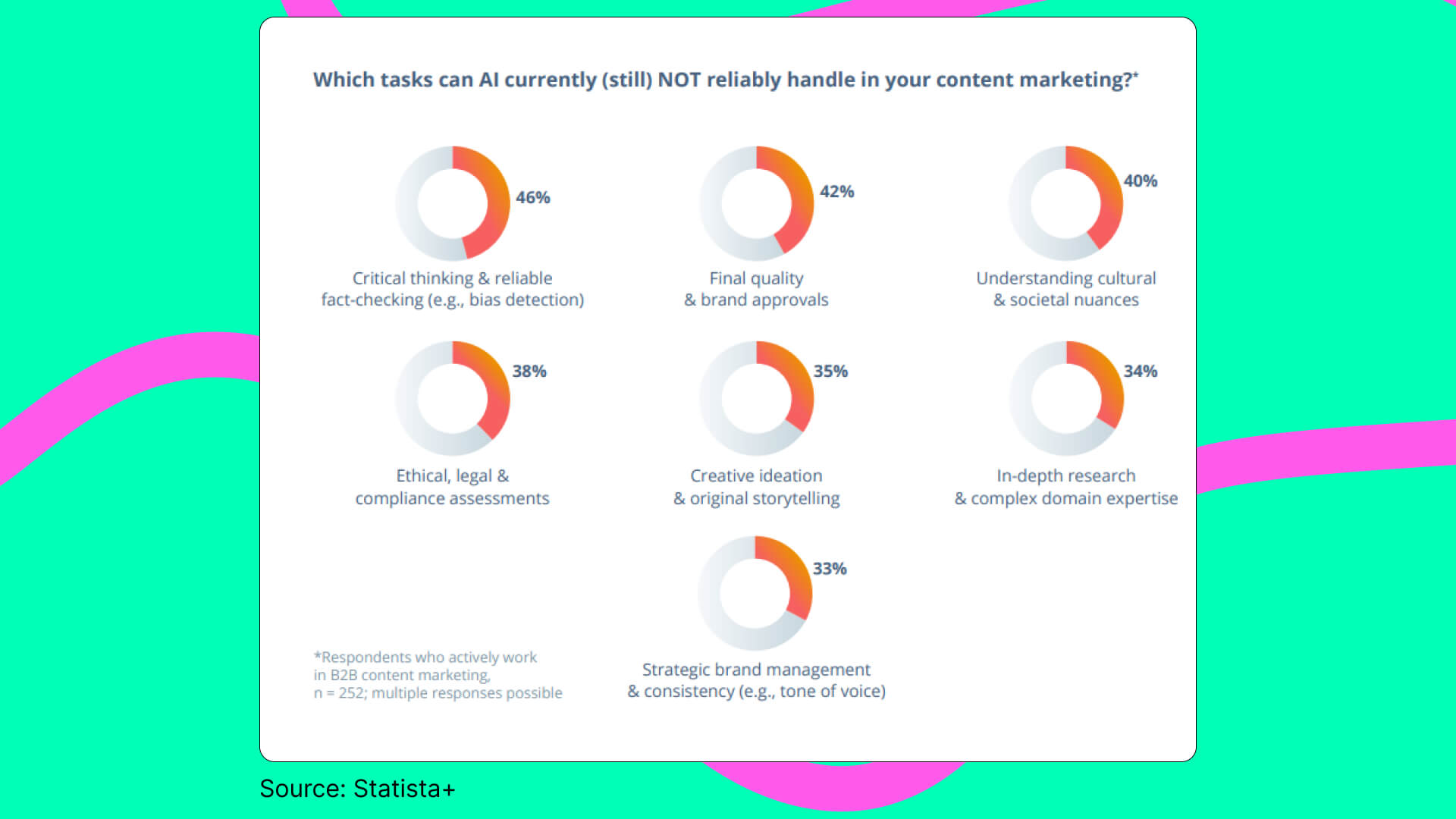
AI increases efficiency and frees teams from routine tasks. However, not all processes can be automated.
- First, AI is still not capable of critical thinking, brand alignment, creativity, or deep expertise.
- Second, human involvement is essential for legal evaluation and accounting for cultural nuances.
- Third, AI cannot make final decisions.
Anastasia Zayarnuk, Mobile Director at BYYD:
When it comes to trust in AI-driven campaigns—yes, we trust them, but only in combination with human expertise. AI performs exceptionally well in scaling, bid optimization, and budget allocation. However, strategy, hypothesis selection, data interpretation, and final decision-making still remain the responsibility of humans.
Denis Molostov, Digital Buying Director Okori Kazakhstan (Partner of Dentsu):
It is important not to confuse optimization with strategy. AI is excellent at processing large volumes of data, quickly analyzing signals, and reallocating budgets within a campaign. However, understanding the client’s business, market context, reputational risks, and decision-making logic still remains with humans. My approach is simple: AI should and must be involved in campaign management—but not in a blind trust mode. Expert supervision remains essential.
At the same time, as neural networks accelerate workflows, the role of humans becomes even more important. It is necessary to regulate the process and determine which ideas are truly original, which content builds trust, and what strengthens brand positioning. The task is not just to increase volume, but to ensure quality outcomes.
Dmitry Berzin, Leading Digital Specialist at TAG Media:
Trust in AI today is high—it delivers stronger results, but it also has downsides. AI can scale campaigns to almost any audience, but traffic quality must be monitored much more strictly. It is crucial to track not only performance metrics but also the real value of the audience, ensuring that impressive numbers do not hide bots or irrelevant users.
Anton Ayrikh, Digital Director Initiative Media Kazakhstan:
We tend to use AI rather than fully trust it. The issue is that full autopilot requires large datasets, which are still insufficient in Kazakhstan. Therefore, any attempt to “leave everything to algorithms” is risky. Additionally, the market is currently too unstable—models become outdated quickly. Our approach is simple: AI operates internally, but control always remains with humans.
Andrey Barabanshchikov, Digital Director at MCA CCAR:
The AI boom started relatively recently with the rise and popularization of LLM. At the same time, I have a certain level of distrust toward such models. They can “hallucinate,” often tend to agree with the user, and sometimes make mistakes—especially in calculations. That’s why, when employees bring ready-made AI-generated answers, I always ask them to rethink the result. For now, only humans are capable of producing deep, creative, and, most importantly, accurate conclusions. At the same time, AI has strong advantages: it excels at structuring information—whether tables, presentations, or key points—and effectively takes over routine tasks, saving a significant amount of time.
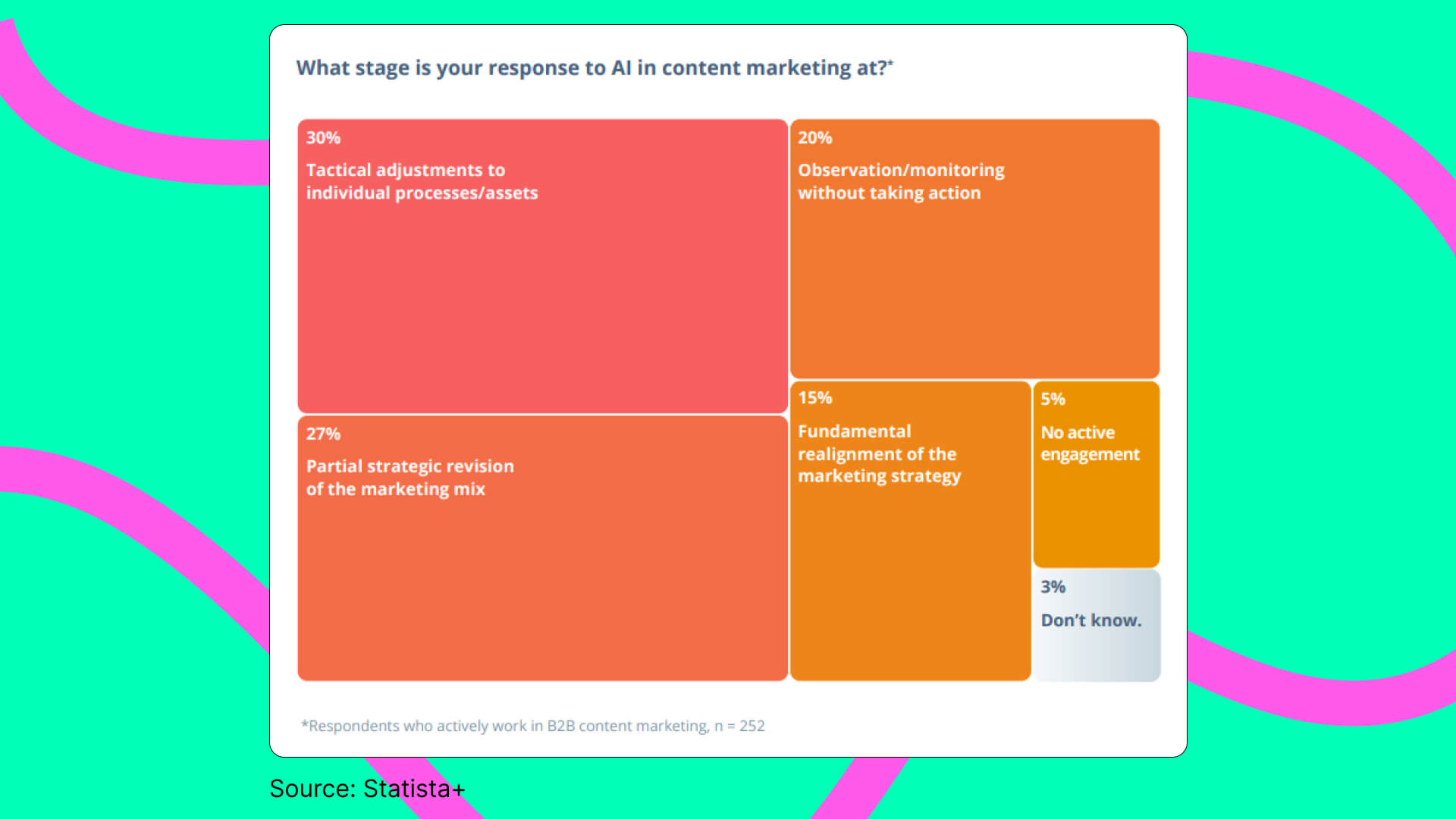
As AI adoption grows, the need for clear guidelines increases. According to statistics, 93% of companies have already implemented or plan to implement guidelines for working with AI. However, many questions remain unresolved:
- How to structure approval processes.
- What requirements should be applied to data validation and sources.
- How to ensure a consistent tone of voice, transparent documentation, etc.

Vachagan Vardanyan, Co Founder & CEO at Granat Digital Agency:
By 2026, AI in marketing is no longer a competitive advantage—it is a baseline tool. In our practice, we use neural networks primarily to increase efficiency and speed, not to replace specialists. This is especially important in performance marketing, where speed and flexibility directly impact results. At the same time, we remain cautious about fully AI-driven campaigns. While AI performs well in traffic buying optimization, audience segmentation, and A/B testing, it is still limited in understanding brand context, cultural nuances, and long-term strategy. In some cases, this leads to optimizing local metrics rather than overall business results. That is why we trust AI—but do not give it full control.

Anzhela Chobanyan, Digital Marketing Specialist at Evocabank:
Fully manual setup in 2026 can no longer compete on its own. There is simply too much data and too much speed required. At the same time, a fully automated approach without human involvement does not work as effectively as expected. The strongest results come from balance: when AI handles scale and optimization, while specialists manage strategy, audience intuition, and creativity. At some point, you realize your role is no longer about “pressing buttons,” but about sensing where things are going and guiding the process. For example, in the banking sector, we actively monitor AI development and implement it in marketing. However, it is important to understand that AI cannot convey the spirit of a brand and its culture the way a human can. Only someone who truly understands the brand, its values, and what works for a specific audience can build strong communication.
AI in Advertising: Can You Work Without AI Today?
For example, in the US, AI-driven advertising revenue is expected to grow from $35 billion in 2025 to $57 billion in 2026. Meanwhile, the non-AI advertising market will grow from $392 billion to $414 billion—just a 5% increase.
The trend is clear: investments are increasing in platforms where AI manages targeting, bidding, and budget allocation with minimal human involvement.
With the development of AI search, large language models—ChatGPT, Gemini, and Copilot—are increasingly connecting brands and audiences.
How they differ from traditional search engines:
- They provide ready-made answers, recommendations, and summaries
- They select content based on relevance criteria
- They factor in reliability and expertise
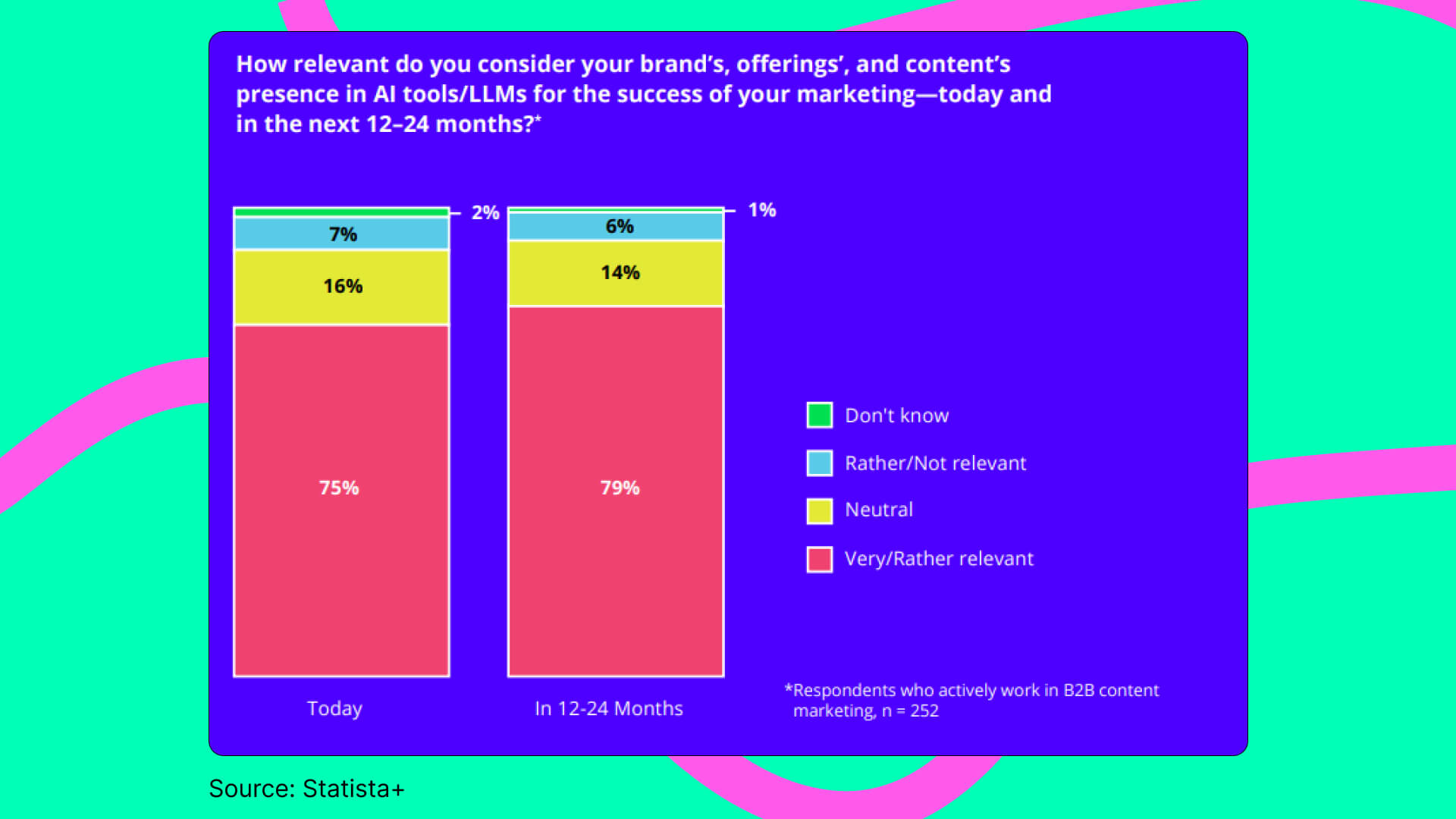
As a result, the nature of brand visibility is changing. It is now important to appear in AI-generated answers and control the context in which the brand is mentioned.
According to Statista+, 45% of companies evaluate visibility in AI responses sporadically, without clear KPIs. 26% have established a systematic approach with metrics. 16% do not yet track it but plan to implement it within a year. 7% do not consider this direction at all.
This indicates that the market is in a transitional stage: interest is high, but only a quarter of companies have structured processes in place.
Anastasia Zayarnuk, Mobile Director at BYYD:
In our view, fully manual marketing is no longer competitive in 2026. Without AI, it is difficult to process such volumes of data and respond to real-time auction changes. However, the best results come from a hybrid approach: technology handles speed and scale, while marketers manage strategy, quality control, and business understanding.
Vachagan Vardanyan, Co Founder & CEO at Granat Digital Agency:
Manual marketing is becoming less competitive, but it is not obsolete. Its key value lies in strategic thinking and creativity. In 2026, the question is no longer whether to use AI, but how effectively it is integrated into the overall system.
Dmitry Berzin, Leading Digital Specialist at TAG Media:
Manual marketing is the foundation of a strong digital specialist’s work. Today, there is a growing perception that AI can handle everything on its own, but as soon as non-standard situations arise, it becomes difficult to make decisions without human expertise. In my opinion, manual setup is what allows you to achieve maximum quality with a limited budget—through deep analysis, optimization, and precise audience targeting. Yes, it takes time and can take up to six months, whereas AI delivers results faster but may slightly fall short in quality. Ultimately, the choice depends on the task.
Anzhela Chobanyan, Digital Marketing Specialist at Evocabank:
Working in digital advertising, I perceive AI not as something separate, but as a natural part of my workflow. In PPC campaigns (Google Ads, programmatic), it is already deeply embedded in all processes: from bid optimization to audience selection and budget allocation. Honestly, it is simply impossible today to operate at the same level of speed and efficiency without it. At the same time, I do not treat it as something you can “turn on and forget.” I see AI more as a powerful assistant that needs to be given the right direction, goals, structure, and logic. Because without that, it may show strong numbers that do not translate into real business results.
Anton Ayrikh, Digital director Initiative Media Kazakhstan:
In performance marketing, manual approaches can no longer compete with AI. Humans physically lose to algorithms in terms of speed and data processing capacity. This leads to an important division of labor: everything that can be algorithmized is handed over to AI. As a result, technical setup skills are gradually losing value. What comes to the forefront instead is strategic vision, ideas, thinking, and the ability to assemble and visualize solutions. So the question is no longer whether AI will replace marketers. The question is whether marketers are capable of thinking at a level above AI.
Andrey Barabanshchikov, Digital Director at MCA CCAR:
Each year, we integrate more AI tools into our processes, especially for automation and data systematization. However, AI is still not capable of fully replacing manual work. It does not understand tasks at the level of business context and objectives. In an environment with multiple tools, analytics, and specific workflows, human involvement is always required—first to set up processes, and then to control them.
Denis Molostov, Digital Buying Director Okori Kazakhstan (Partner of Dentsu):
In large-scale campaigns, manual approaches already significantly lag behind in terms of reaction speed and the ability to quickly identify the most effective solutions. At the same time, I would not oppose humans to technology. It is not about AI replacing marketers, but about it taking over processes that previously required a large volume of manual work. In my view, in 2026 it is not manual marketing or “full autopilot” that wins, but a hybrid approach. Where teams are able to combine human expertise with AI capabilities, the results are usually stronger.
Frequently Asked Questions
— How is AI used in advertising campaigns today?
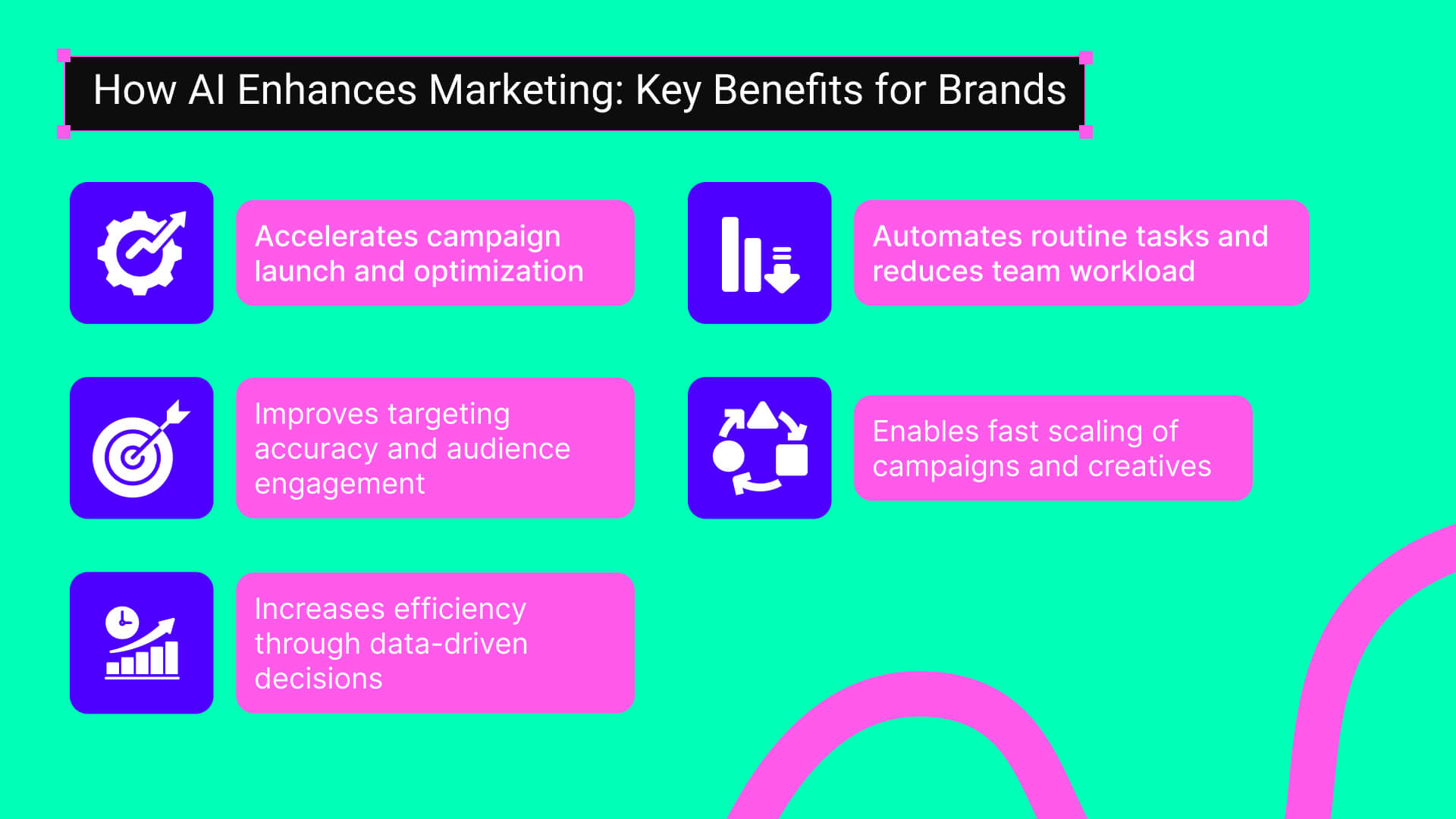
AI is used for targeting, budget allocation, creative production, and analytics. It accelerates campaign launch and optimization.
— Which tasks can already be automated, and where is human input still essential?
Routine processes and optimization can be automated. However, strategy, creative ideas, quality control, and decision-making remain the responsibility of humans.
— How do marketers assess the future of AI advertising?
Marketers believe that the key factor will not be AI itself, but how processes, roles, and standards around its use are structured.
— Can you work effectively today without AI, or has it become a mandatory part of digital strategy?
Fully manual marketing is already less efficient. The optimal result is achieved through a hybrid model—combining AI with human expertise.
How to contact us
For over 11 years, the BYYD team has been working with mobile advertising and creating banners designed for real user engagement. We help brands capture audience attention and achieve business objectives through proven mechanics.
Check out our case studies and send us an email – let’s launch your next campaign together.
Found this helpful? Share it with your friends and colleagues!
For consultations and partnership inquiries:
- Email us at hello@byyd.me
- Submit a request on our website