Key Marketing Trends in 2026 According to Deloitte
Marketing no longer works by the old rules. Economic pressure and the development of AI are forcing brands to rethink their traditional approaches and move toward more measurable communication.
Today, it is not enough to simply be present in digital. The ability to quickly adapt and deliver real results has become one of the main marketing trends.
In this article, we analyze key market changes based on Deloitte’s report — Marketing Trends 2026:
- What trends are already transforming marketing today.
- How brands can build effective strategies in 2026.
- How mobile advertising is becoming a relevant tool in the new environment.
#1. The economy is changing the marketing approach
The main shift is clear. The market is moving from ambition and innovation to efficiency and discipline — one of the defining marketing trends.
What is driving companies to rethink their strategies?
- Slowing economic growth.
- Decreasing purchasing power.
- Pressure on budgets.
Marketing now needs to deliver measurable results faster while operating with limited resources.
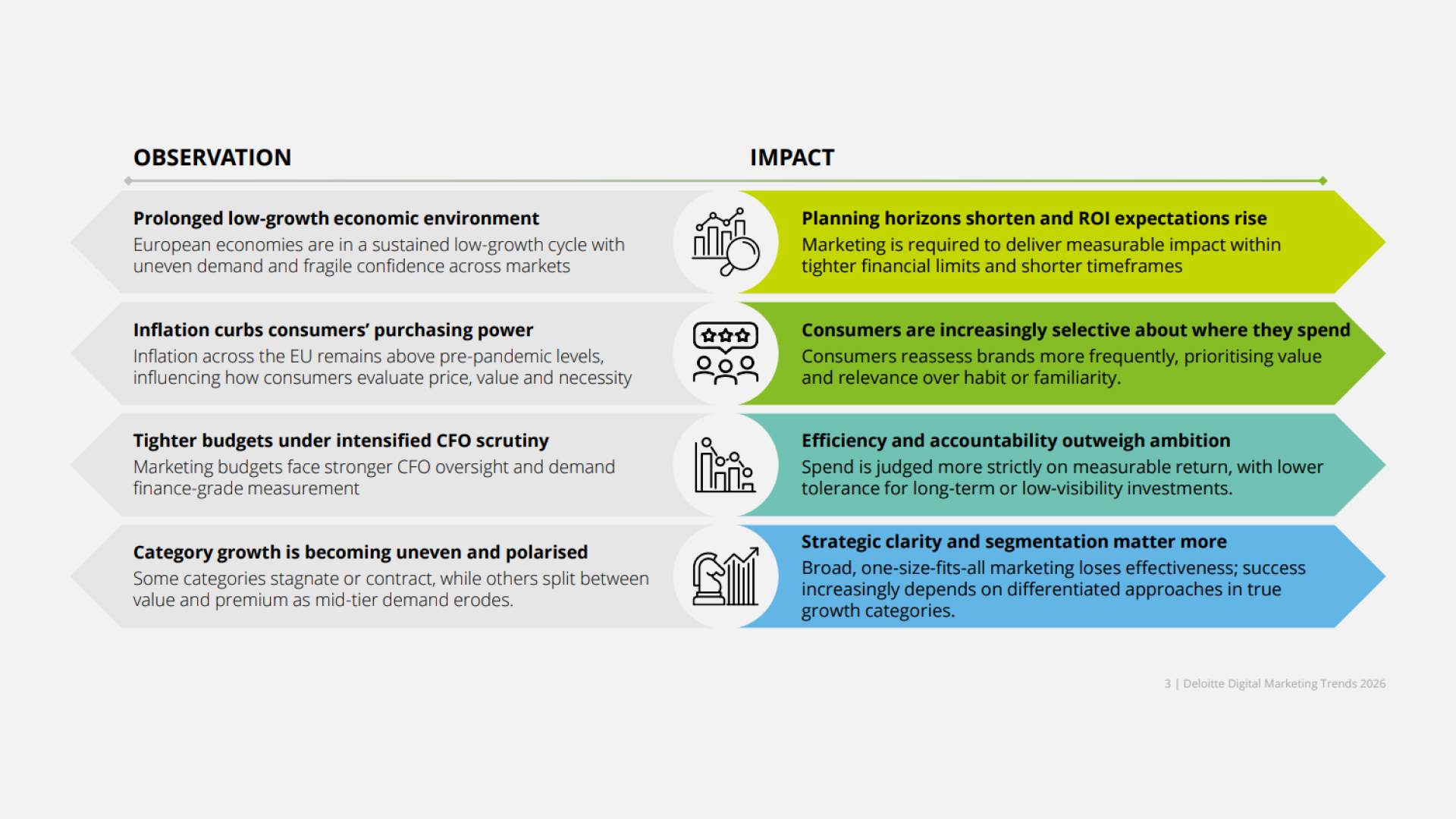
In conclusion, marketing is now evaluated as a business function. The goal is to eliminate inefficient spending. And stronger control over performance is becoming a marketing duty. Accuracy and transparency of financial metrics are now critical.
#2. Consumers are becoming more selective
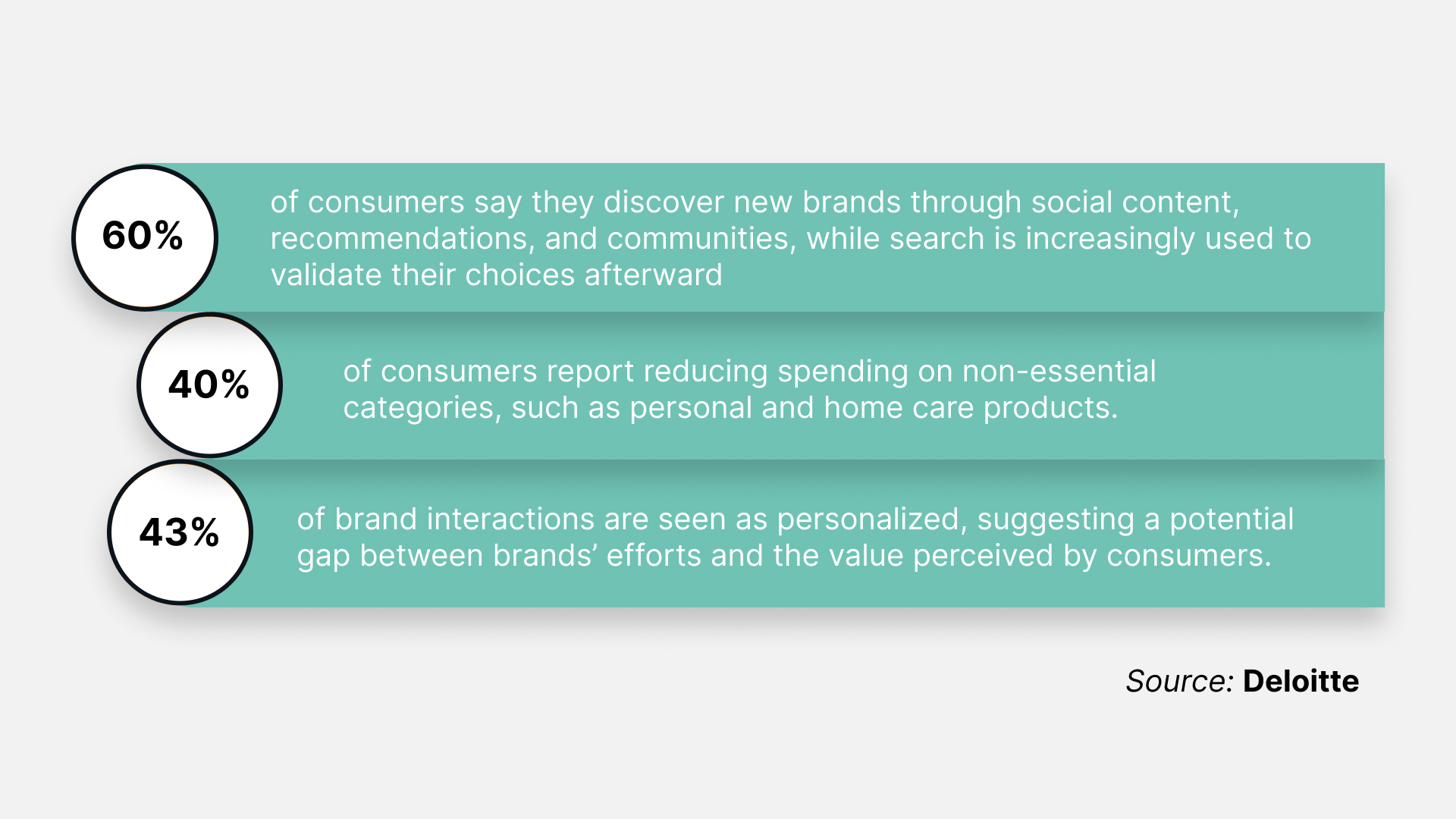
Consumer behavior is also changing. When choosing brands, people increasingly prioritize value over habit.
Relevance — not reach — now defines brand awareness. People discover new products through content and recommendations, not only through direct search.
At the same time, price is no longer the only factor. Users are willing to pay more if they clearly understand the value. Brands that can justify their offering win.
How online behavior has changed:
- Device upgrade cycles are accelerating. Users are replacing their devices more frequently.
- Gen Z is more likely to abandon devices and apps. Self-control over digital consumption is increasing.
- Tolerance for content overload is decreasing. Users are deleting social media apps, turning off notifications, and limiting screen time.
- Value matters more than habit. Users are becoming more critical of subscriptions and services. Choices are driven by utility and price.
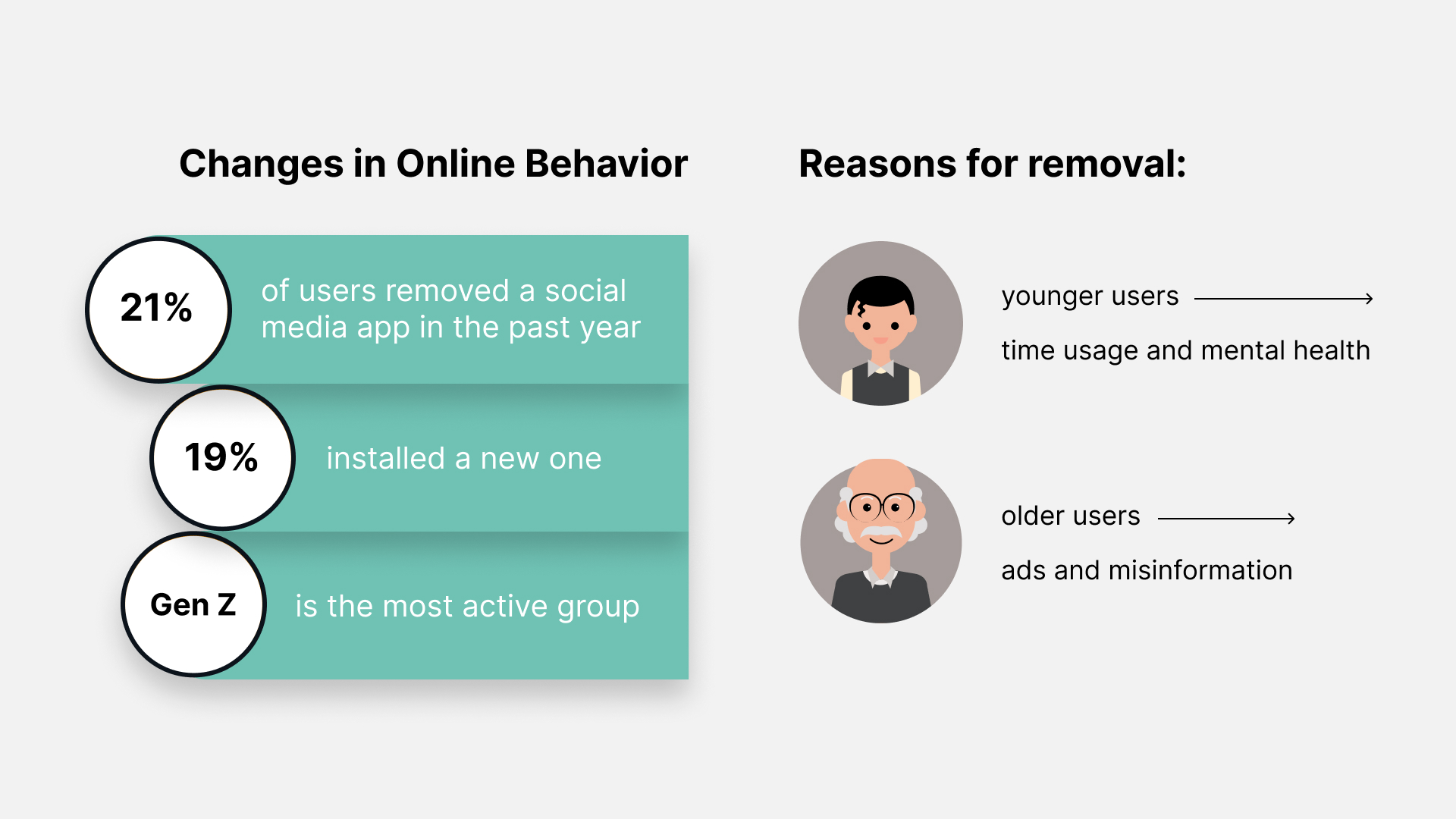
As a result, users now control their digital environment and choose only relevant and valuable content.
#3. AI is scaling high-quality content production
AI tools already generate content suitable for direct customer interaction. Marketers need to build systems where human creativity and AI work together.
AI frees up time for strategic tasks, so routine processes should be automated, such as email creation or ad testing.
According to Deloitte, AI:
- Significantly reduces production costs, with up to a 300× increase in content development speed.
- Enhances personalization but may undermine trust, as not all users are comfortable with AI.
- Often fails to deliver results, with only a small share of companies achieving real ROI. It depends on well-structured processes, requiring the right infrastructure.
- Takes time to generate impact: 85% of companies have increased AI investments over the past 12 months, and 91% plan further growth, but achieving meaningful ROI typically takes 2–4 years.
#4. Presence across multiple platforms is essential
There is no longer a dominant channel. Brands must build multiple small, relevant touchpoints instead of one large campaign.
Success depends on creative flexibility and platform-native formats.
What brands should do:
- Test different channels (for instance, influencer marketing spending has grown by 72%).
- Integrate channels instead of managing them in silos.
- Focus on 2–3 key channels per audience segment.
- Continuously optimize budgets based on performance.
#5. Marketing organizations are evolving
Traditional structures can no longer keep up. Marketing teams must become agile and cross-functional.
Key challenges:
- Skills gaps
- Technology overload
- Outdated operating models
The solution is to redesign teams around outcomes and performance metrics rather than functions.
How mobile advertising increases brand awareness and explains product value
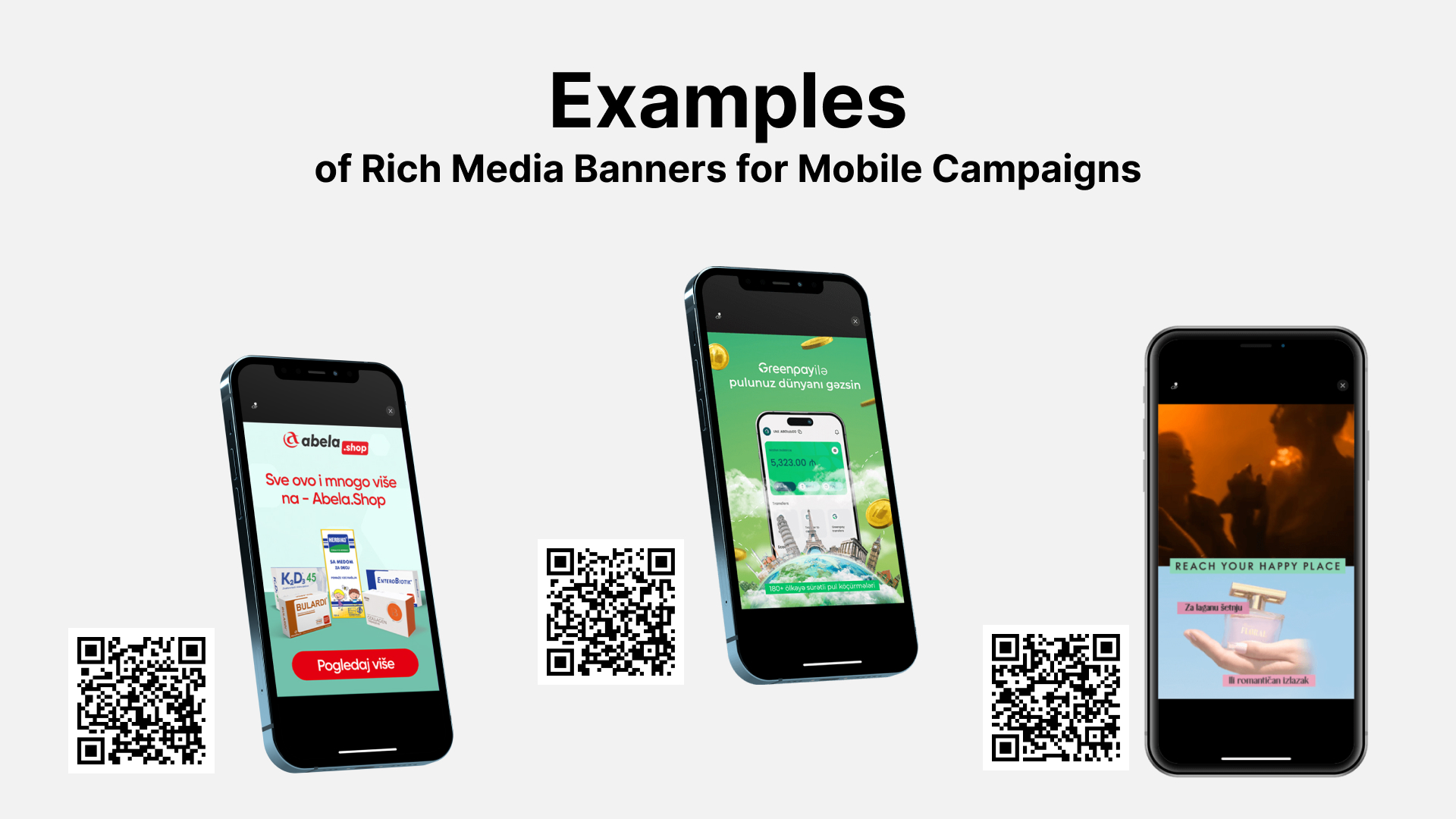
First, mobile advertising in Rich Media formats captures attention quickly and communicates the product’s value proposition through interaction.
Gamification and animation engage users, allowing them not just to see the product, but to experience it. It helps brands clearly demonstrate functionality, benefits, and use cases, increasing understanding and interest.
Second, more than 5 billion people worldwide use mobile apps daily, spending an average of 3.5–5 hours per day in them. It makes mobile advertising a constant presence in users’ attention.
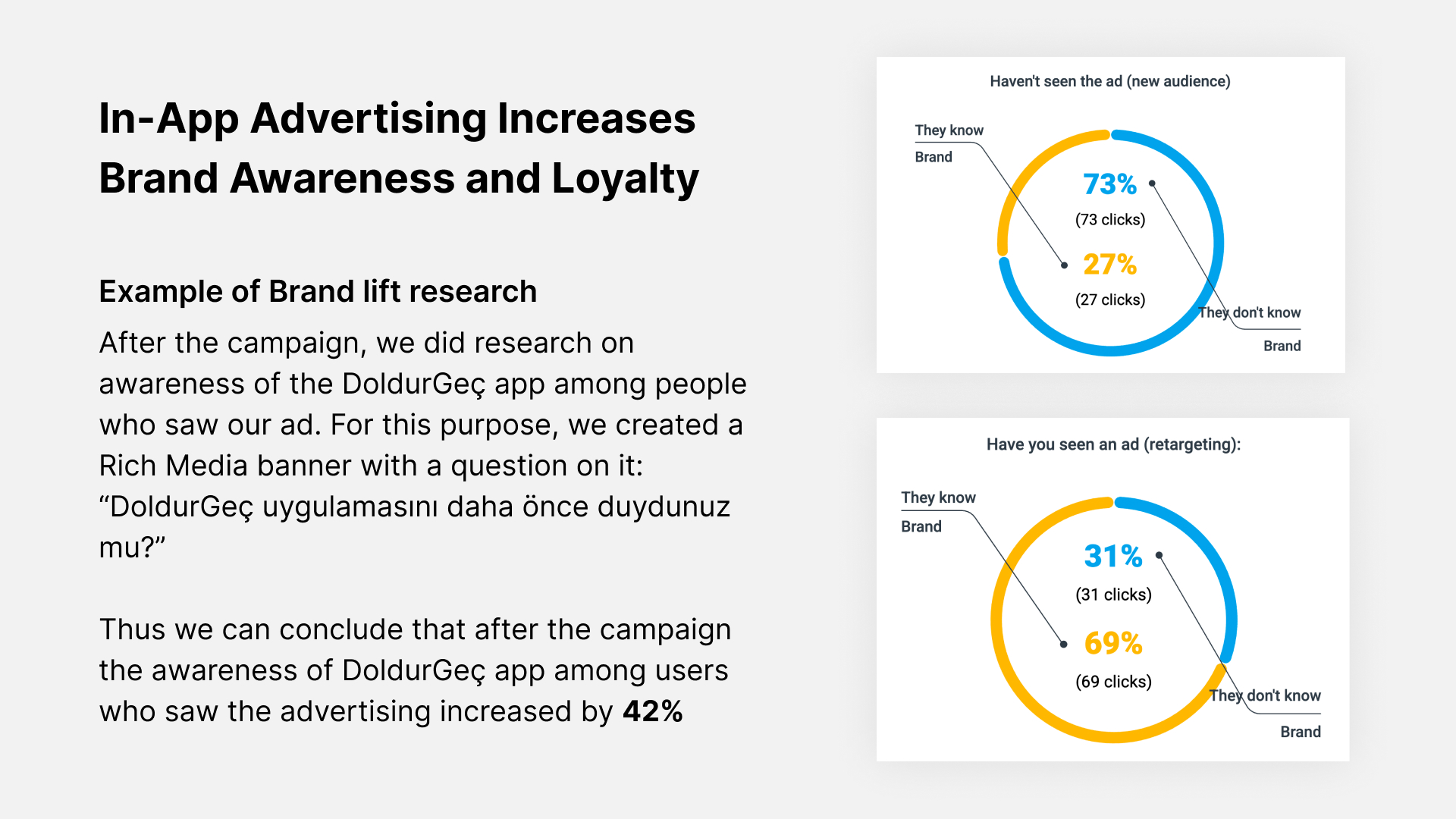
This directly impacts brand awareness and recall, as confirmed by Brand Lift studies.
How to contact us
For over 11 years, the BYYD team has been working with mobile advertising and creating banners designed for real user engagement. We help brands capture audience attention and achieve business objectives through proven mechanics.
Check out our case studies and send us an email – let’s launch your next campaign together.
Found this helpful? Share it with your friends and colleagues!
For consultations and partnership inquiries:
- Submit a request on our website
- Email us at hello@byyd.me