Ramadan 2026: How to Enhance Digital Marketing
Ramadan is the holy month in Islam, during which Muslims around the world observe fasting, dedicate more time to prayer, spiritual reflection, and family. In 2026, Ramadan began on February 19 and will last until March 19.
Ramadan affects nearly one in four people worldwide. For brands, this represents an opportunity to connect with consumers through shared cultural values.
In this article, we explain how consumer habits will change during Ramadan 2026 and how marketers can adapt their strategies to the specifics of this period.
How Many People Observe Ramadan in 2026
Islam is the fastest-growing religion in the world. According to Pew Research Center, more than 1.9 billion people practice Islam. Therefore, Ramadan is a particularly important period for brands and marketers:
- Consumption rituals change
- Media engagement increases
- Audiences become more sensitive to relevant messages and offers
Understanding how many people observe Ramadan across different countries and regions helps brands better tailor their communication strategies.
Approximate Muslim population in selected countries:
- Russia — about 20–21 million Muslims (approximately 14–15% of the population).
- Kazakhstan — around 69% of the population practices Islam; approximately 12.5–13 million people.
- Uzbekistan — Muslims account for about 89% of the population; approximately 33–35 million out of 37 million total population.
- United States — around 4 million Muslims (approximately 1–1.2% of the population).
- Malaysia — about 63.5% of the population are Muslims.
- Indonesia — around 229 million Muslims (87% of the population).
- Pakistan — around 200 million Muslims (97% of the population).
- Turkey — around 82 million Muslims (99% of the population).
- Saudi Arabia — around 33 million Muslims (100% of the population).
How Audience Behavior Changes During Ramadan 2026
№1. Spirituality and Family Values at the Core of Ramadan 2026
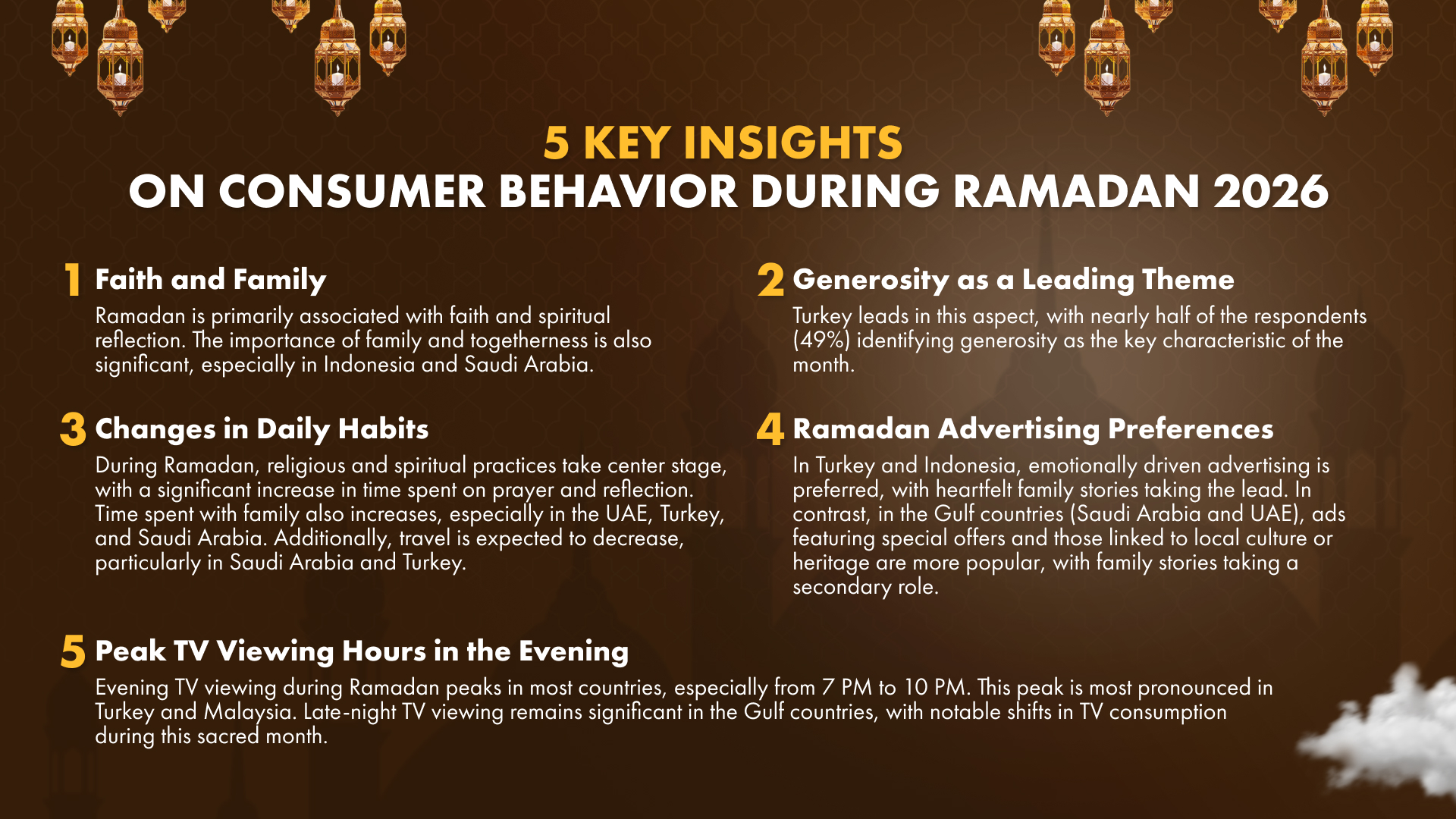
According to YouGov, 79% of respondents in Saudi Arabia and 72% in the UAE perceive Ramadan primarily as a time of faith and reflection.
Family and unity play a key role in how people experience Ramadan. This is especially pronounced in Indonesia (51%) and Saudi Arabia (48%), as well as in the UAE (38%), Malaysia (36%), and Turkey (33%).
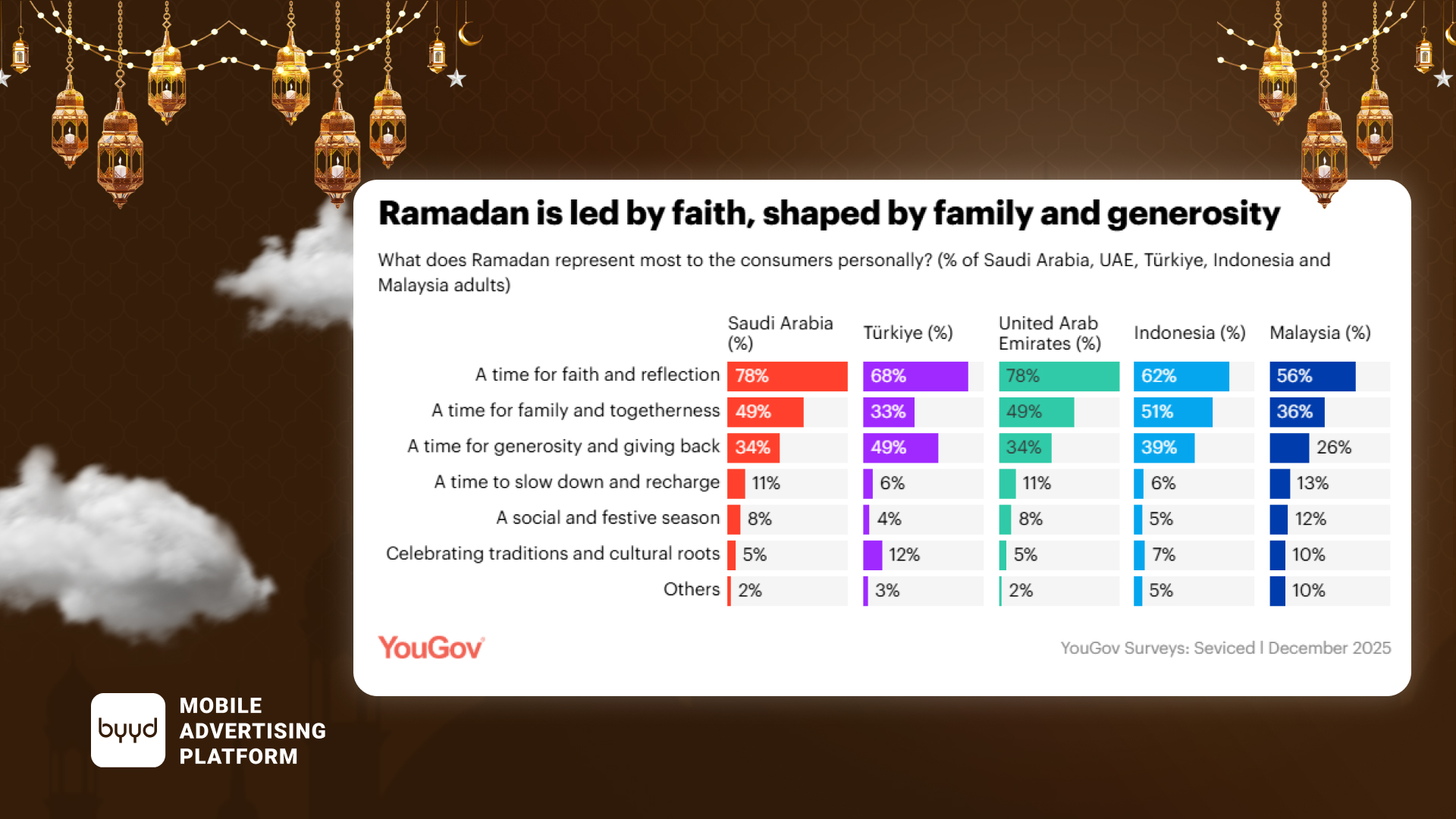
More than 70% of adults in Saudi Arabia, the UAE, Turkey, and Indonesia stated that they intend to spend more time on religious and spiritual practices during Ramadan. At the same time, around half of adults expect their physical activity and health routines to remain unchanged.
In Saudi Arabia, nearly half of adults (48%) expect their travel activity to decrease during the holy month.
№2. The Importance of Generosity
Globally, Ramadan is closely associated with generosity and charity. This theme is particularly significant in Turkey, where nearly half of respondents (49%) identify generosity as the main characteristic of the month.
№3. Preference for Emotional Advertising with Family Stories
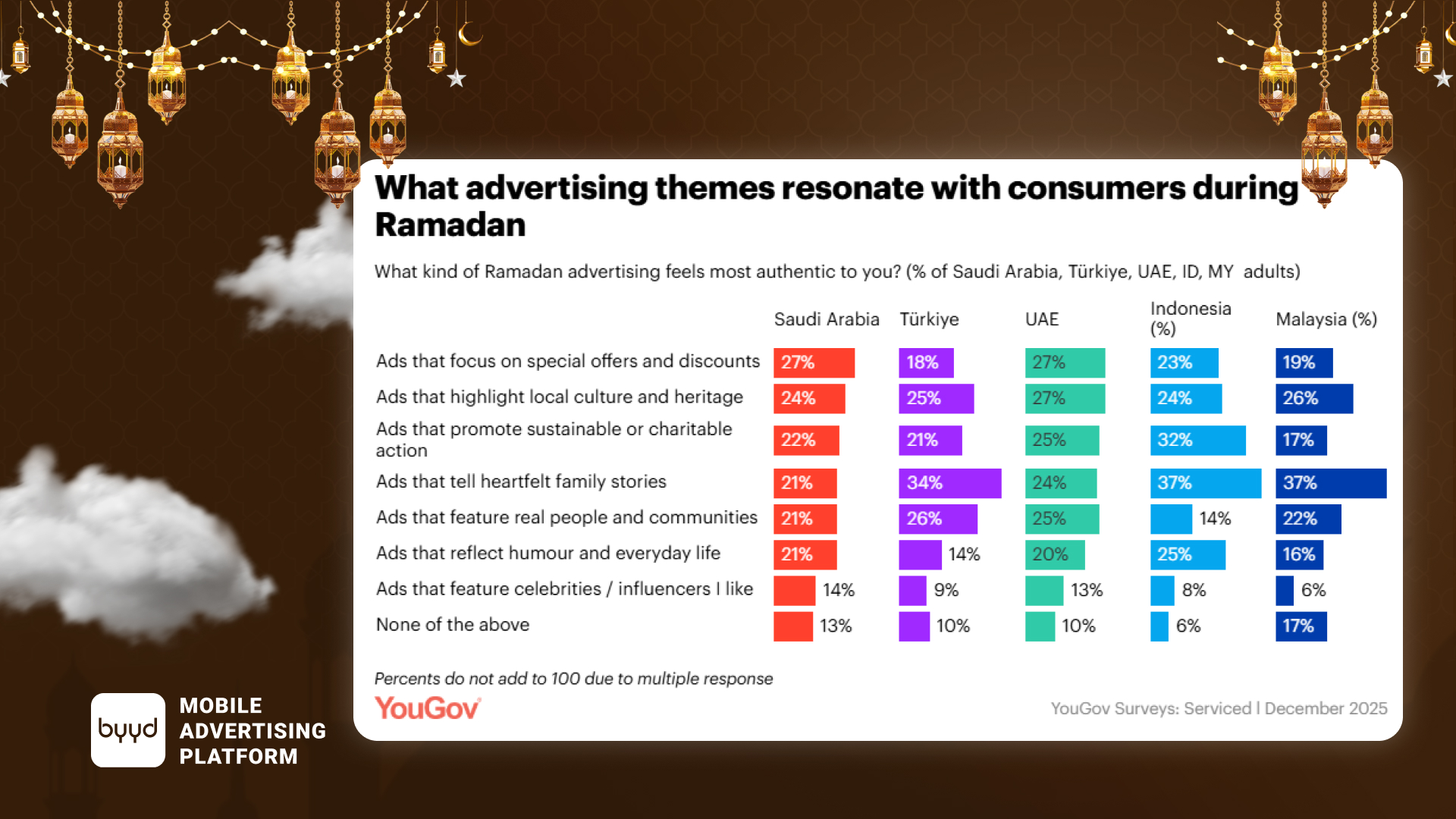
In Turkey, emotional storytelling leads. More than one-third of respondents (34%) consider ads featuring touching family moments to be more authentic than promotional offers (18%) or celebrity endorsements (9%).
A similar but even stronger trend is observed in Indonesia, where 37% prefer emotionally driven stories and 32% respond positively to charity-related messaging.
In Gulf countries such as Saudi Arabia and the UAE, consumers pay the most attention to advertising that highlights special offers, local culture, and heritage.
№4. Peak TV Viewing During Ramadan — After 7 PM
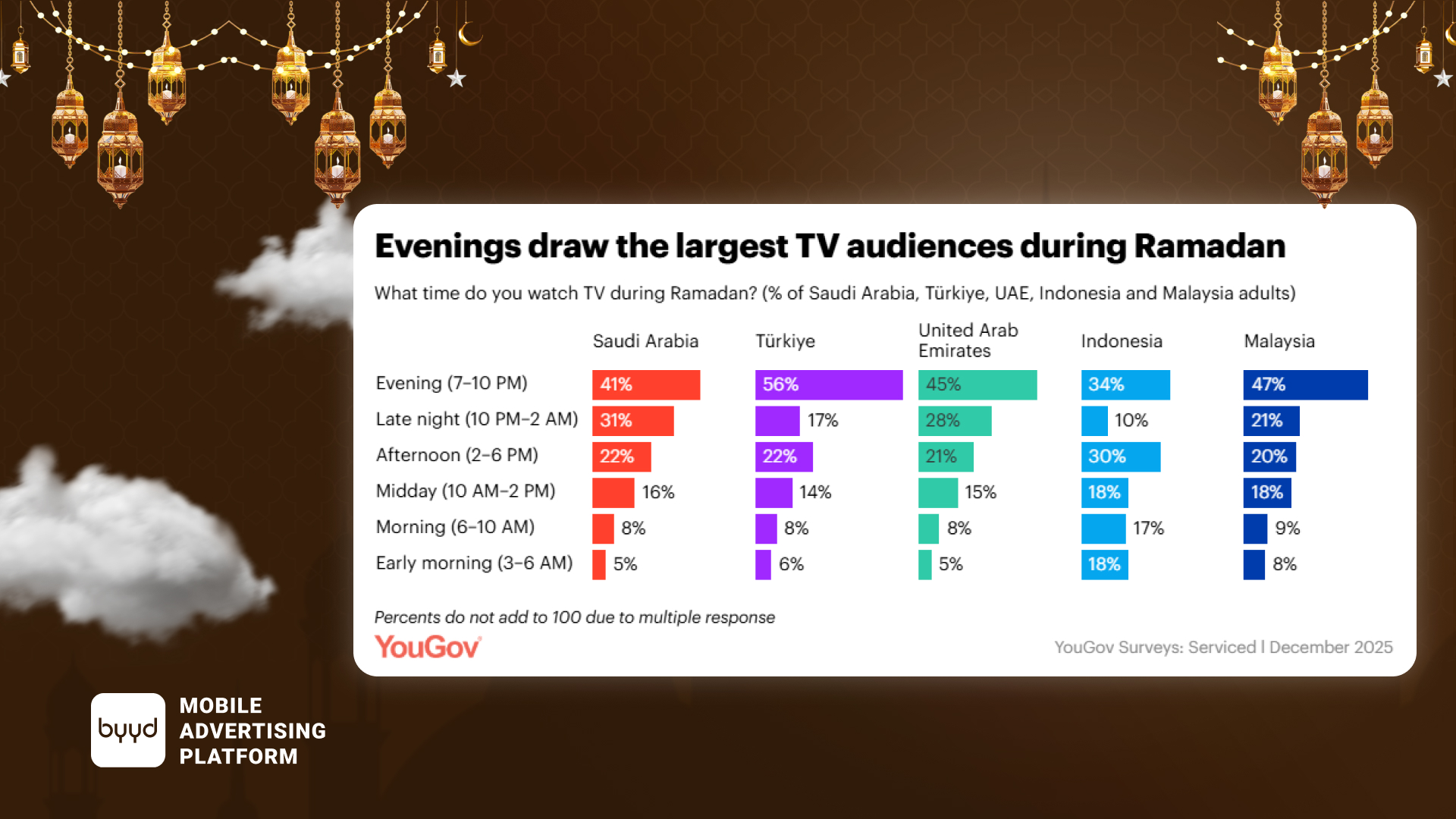
TV viewing during Ramadan peaks in the evening between 7:00 PM and 10:00 PM.
However, in Indonesia, evening TV consumption is lower compared to other countries, with audience activity distributed more evenly throughout the day.
Marketing Trends During Ramadan 2026
№1. Remarketing as a Key Growth Driver During Ramadan 2026
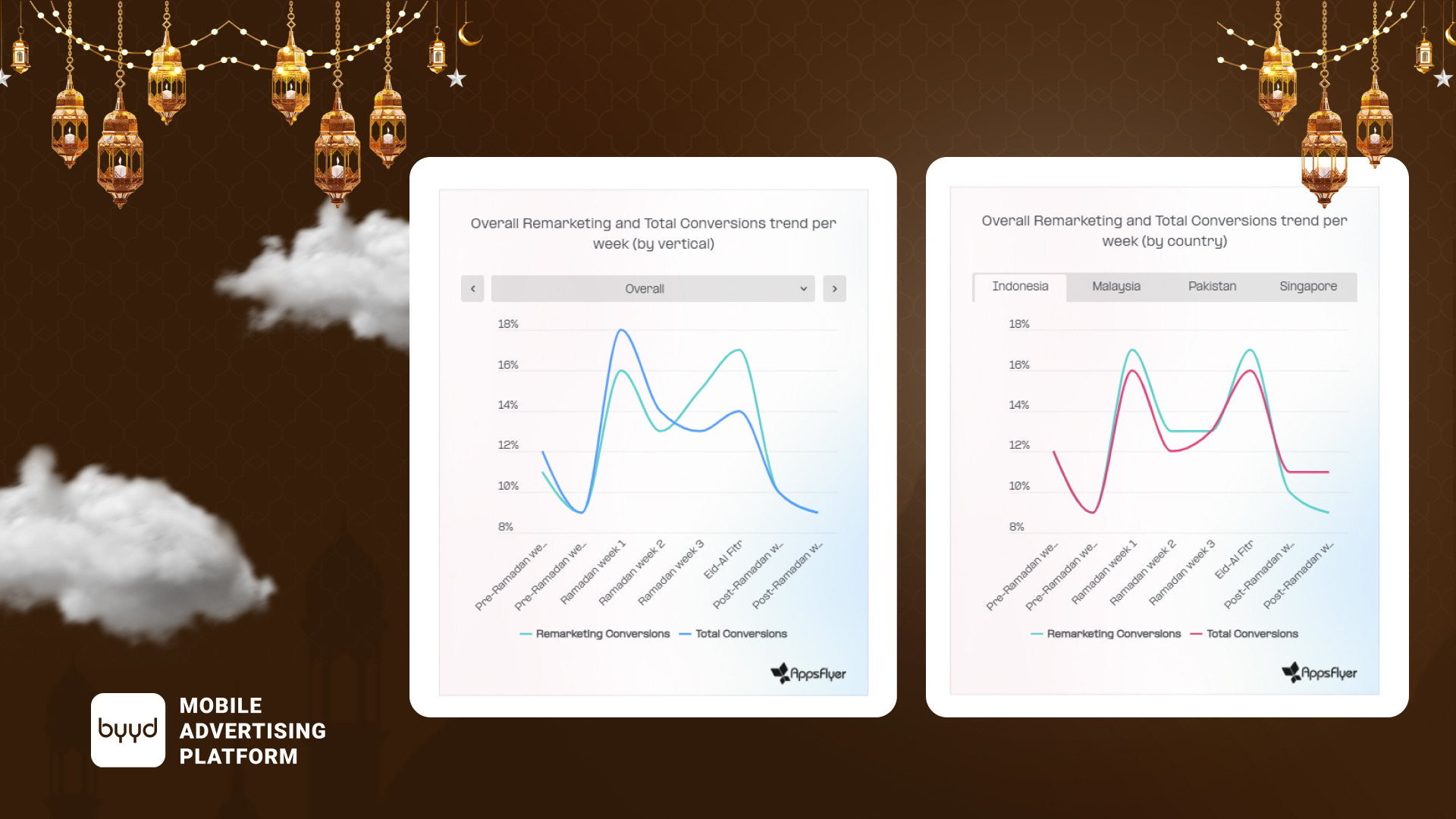
In Southeast Asia and Pakistan, the share of conversions driven by remarketing increased from 11% to 16% over the course of the month. This indicates a clear shift toward re-engagement strategies.
№2. Highest Engagement Observed in the First Weeks of Ramadan
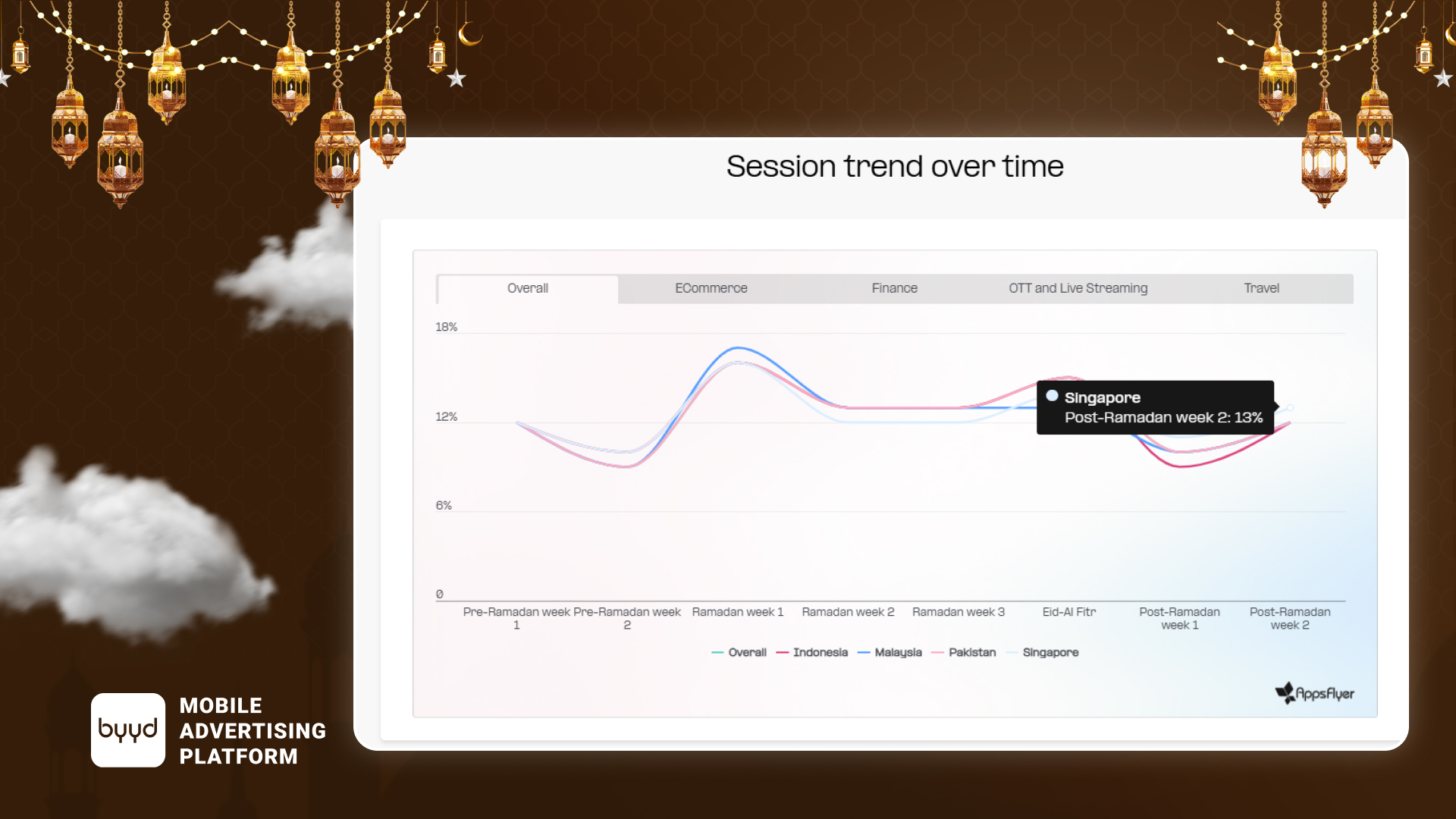
In 2025, the highest activity levels were recorded during the weeks of Ramadan and around Eid al-Fitr. Shopping, payment, and entertainment apps were most actively used during key festive moments.
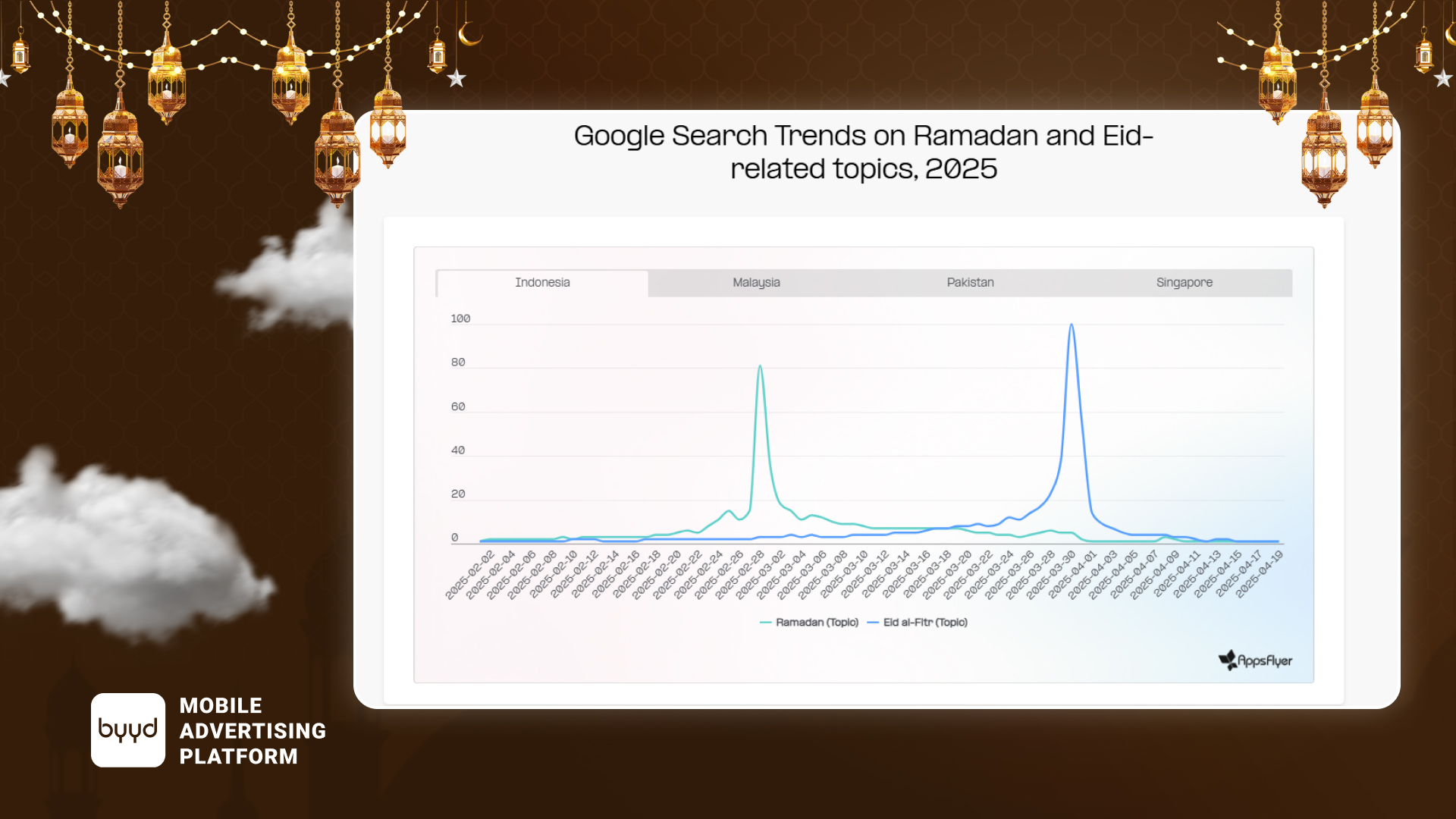
E-commerce app sessions increased by 37%, while in-app purchases (IAP) grew by 20%. This was supported by consistent browsing, discount searches, and promotional campaigns throughout the season.
Travel apps saw the highest demand closer to Eid al-Fitr. Sessions increased by 15% compared to the pre-Ramadan period, as users planned trips and family visits.
№3. Traffic Quality Control Is Crucial During Ramadan
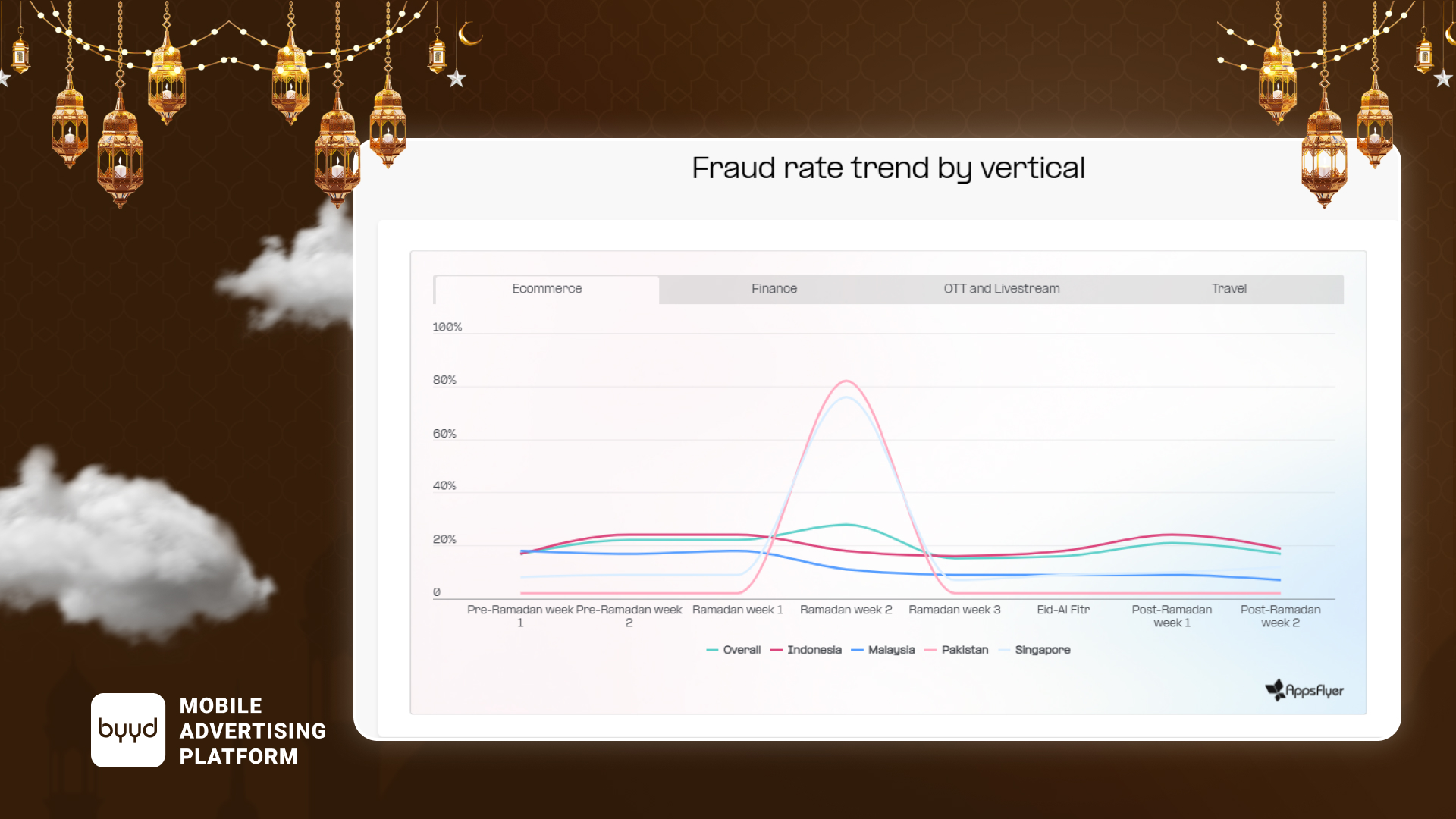
In 2025, overall fraud levels in Southeast Asia and Pakistan increased from 21–25% to 24–27% during the first week of Ramadan. After the holiday, the figure rose to 33%.
The second week of Ramadan proved to be the most challenging. In Pakistan, e-commerce fraud reached 82%, while in travel it climbed to 54%.
Finance remained the highest-risk category, with fraud frequently exceeding 25–30%.
№4. Growth of Mobile Shopping and Online Activity
According to AppsFlyer analytics, in Southeast Asia and Pakistan Ramadan remains a key intersection of culture and commerce. Brand interactions increasingly take place via mobile devices.
The holy month reshapes daily routines and digital habits, increasing activity in shopping, streaming, finance, and travel. Consumers make purchases and donations through their device screens.
In Pakistan, household spending typically rises by 40% during Ramadan. Festive demand stimulates both retail and online activity, while mobile commerce continues to gain momentum.
Recommendations for Brands During Ramadan 2026
- Focus on values and traditions
- Use remarketing to maintain engagement
- Apply precise targeting and personalized offers based on interests, behavior, and demographics
- Monitor traffic quality to minimize invalid clicks
- Optimize content and timing, focusing on evening peaks and Eid
- Prioritize mobile platforms, given the growth of mobile commerce
In-app advertising with BYYD helps brands effectively achieve their goals during Ramadan. The platform enables interest-based targeting and optimized ad scheduling. BYYD’s internal anti-fraud system minimizes the risks of invalid traffic.
For over 11 years, the BYYD team has been working with mobile advertising and creating banners designed for real user engagement. We help brands capture audience attention and achieve business objectives through proven mechanics.
Check out our case studies and send us an email – let’s launch your next campaign together.
Found this helpful? Share it with your friends and colleagues!
For consultations and partnership inquiries:
- Submit a request on our website
- Email us at hello@byyd.me