How Rewarded Video Enhances Mobile Advertising Strategies
Rewarded ads give users incentives for watching advertising inside an app. Because of this value exchange, the format keeps audiences engaged for longer and increases loyalty.
Promotion within mobile games and apps allows brands to integrate rewarded video into their campaigns. In this article, we outline the key advantages of the format, share statistics, and explain why rewarded ads are a powerful marketing tool.
What Is Rewarded Video?
Rewarded video is an ad format where users receive in-app rewards for watching a video.
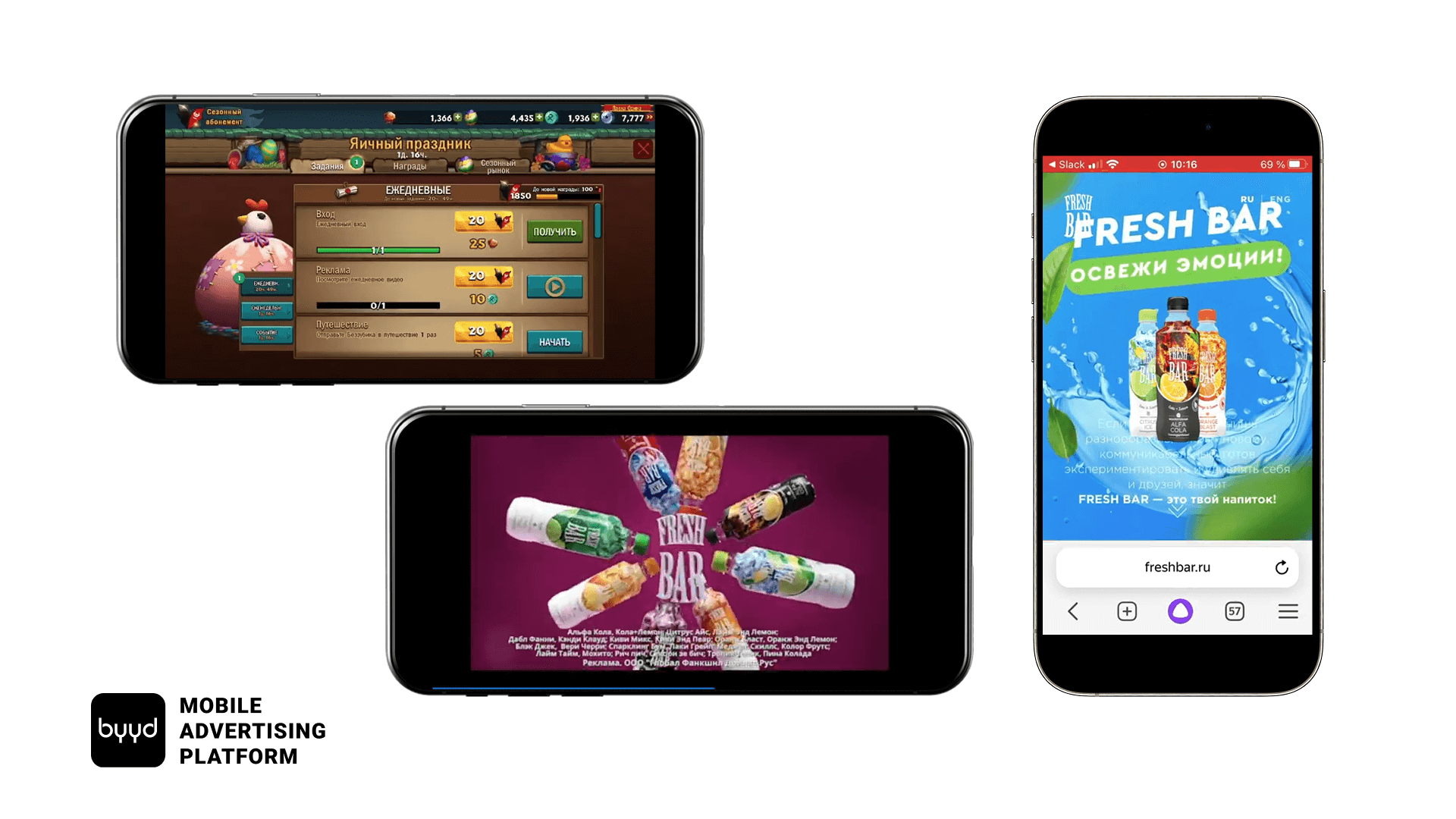
For example, in a mobile game that uses virtual currency, players may earn extra coins by watching a 15–30 second ad. The key feature is voluntary participation — users choose to watch the ad in exchange for value. Rewards can include in-game currency, bonus lives, premium access, or exclusive content.
According to industry research, 75% of mobile gamers consider rewarded video less intrusive than traditional advertising formats.
Unlike disruptive ad placements, rewarded video is built into the logic of the app or game and is perceived as a fair exchange: attention and time in return for tangible value.
Key Features of Rewarded Video
- Voluntary viewing — users choose to initiate the ad
- Clear reward — users know what they will receive
- Instant reward delivery after viewing
- Controlled frequency to preserve perceived value
- Contextual placement — shown at the right moment (loss, resource shortage, premium access)
- High technical standards — fast loading and stable playback are essential
Advantages of Rewarded Video
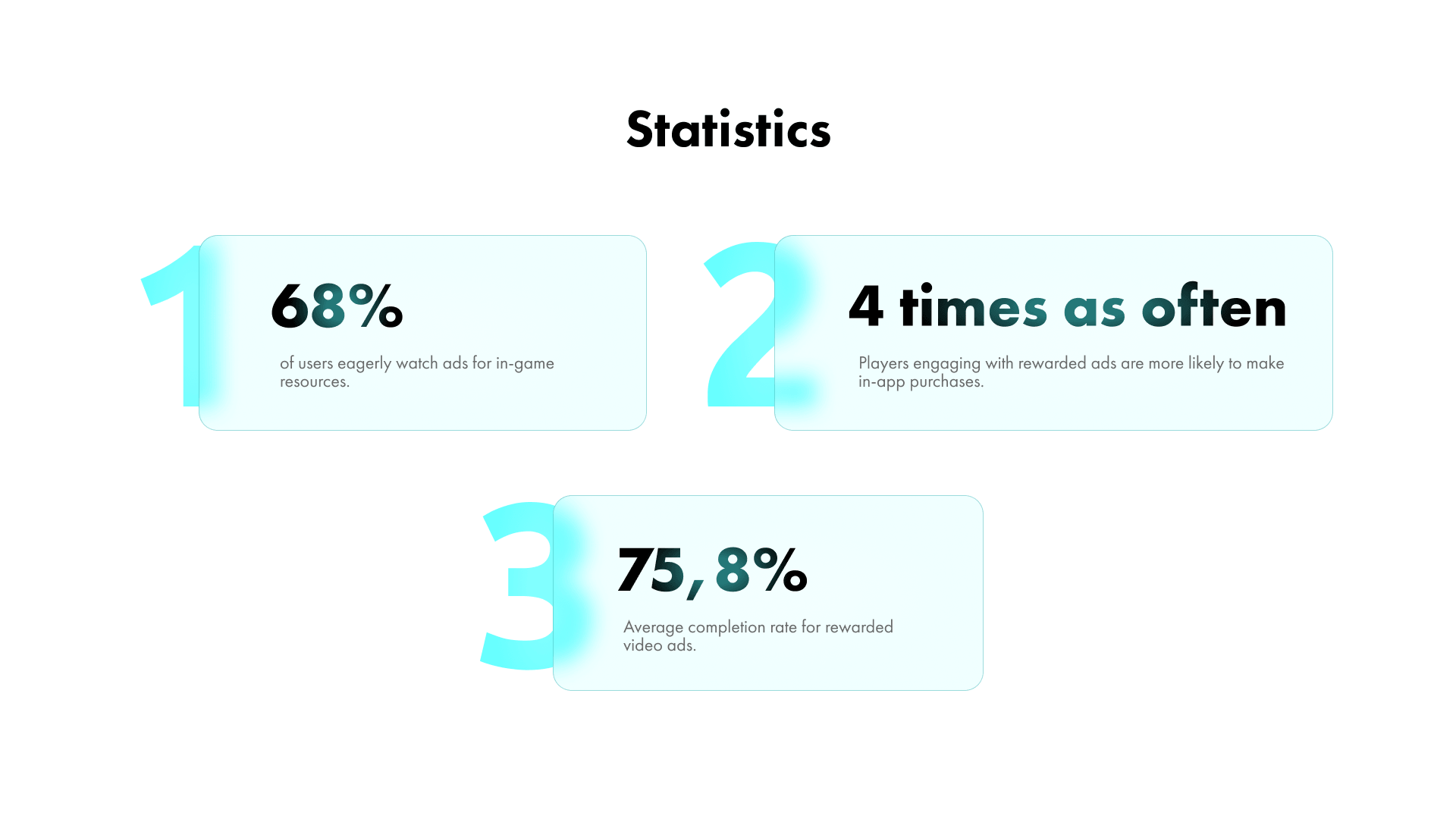
According to TechCrunch, 68% of gamers say they like rewarded advertising, and users who watch rewarded ads are six times more likely to make in-app purchases.
Researches show that players perceive the format positively:
- 32% consider it useful content
- 27% find it interesting
- 12% say it is pleasant to watch
- 24% consider it irritating
- 53% reported playing longer thanks to rewarded ads
The effectiveness of rewarded video is rooted in behavioral psychology. Users maintain control — they decide whether to watch and clearly understand the benefit. Advertising becomes a tool for achieving goals rather than an interruption:
- Passing a difficult level
- Progressing faster
- Accessing premium features
- Saving money
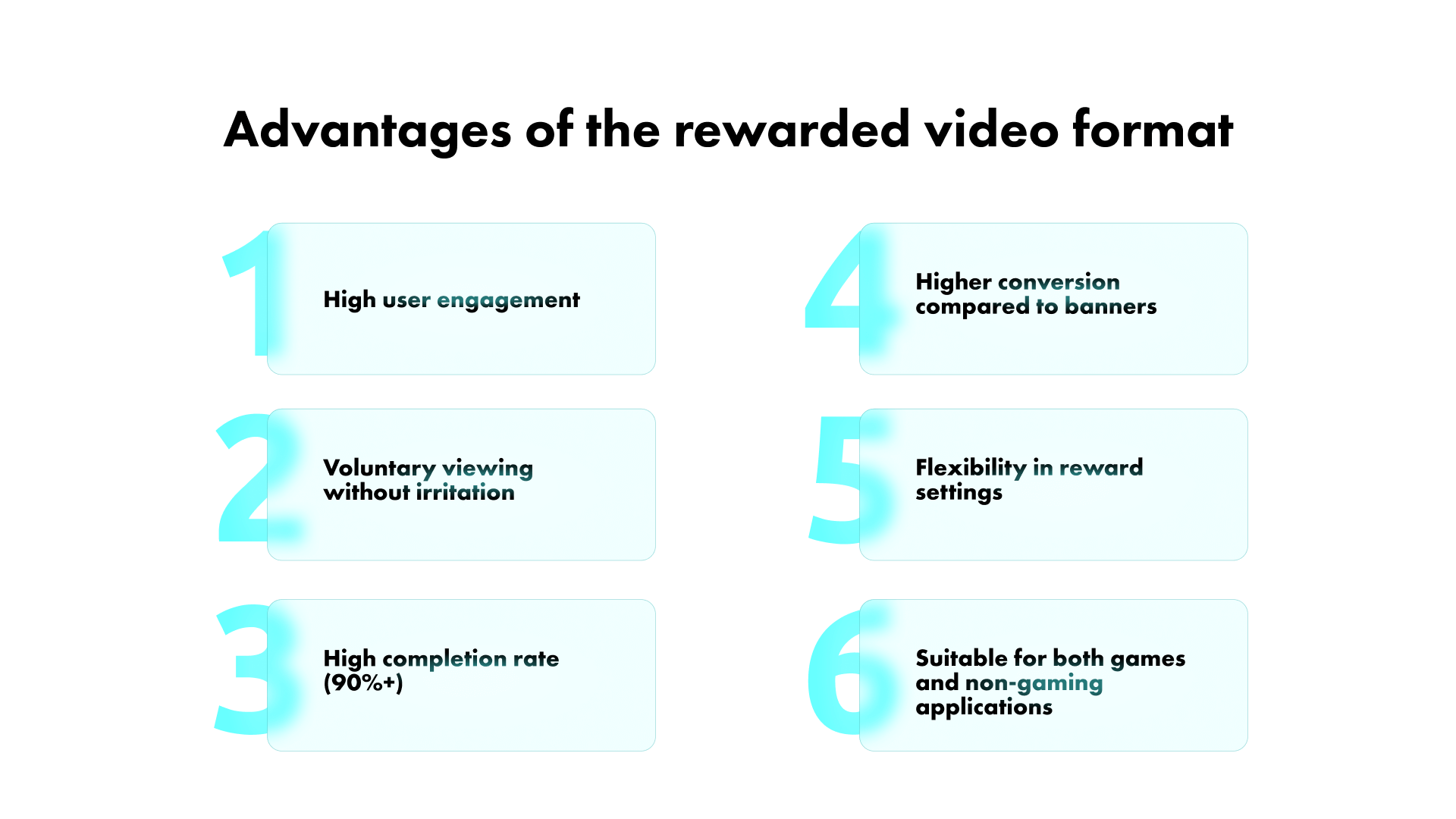
For developers, this format monetizes without harming user experience — and can even enhance it. Rewards can be balanced to complement in-app purchases rather than replace them.
Using Rewarded Video in Non-Gaming Apps
Rewarded video performs better in non-gaming apps than many expect. The “value in exchange for attention” model is universal: users willingly watch ads in return for meaningful benefits.
Common non-gaming use cases include:
- Unlocking premium features (analytics, lessons, pro tools)
- Extending usage limits (scanners, editors, utilities)
- Accelerating processes or removing queues
- Access to bonus content or exclusive materials
- Ecosystem currency that converts into discounts or features
Educational apps often use gamified rewarded mechanics. For example, Duolingo allows users to restore extra “hearts” by watching ads, enabling continued learning without interruption. Here, advertising is perceived as a voluntary value exchange.
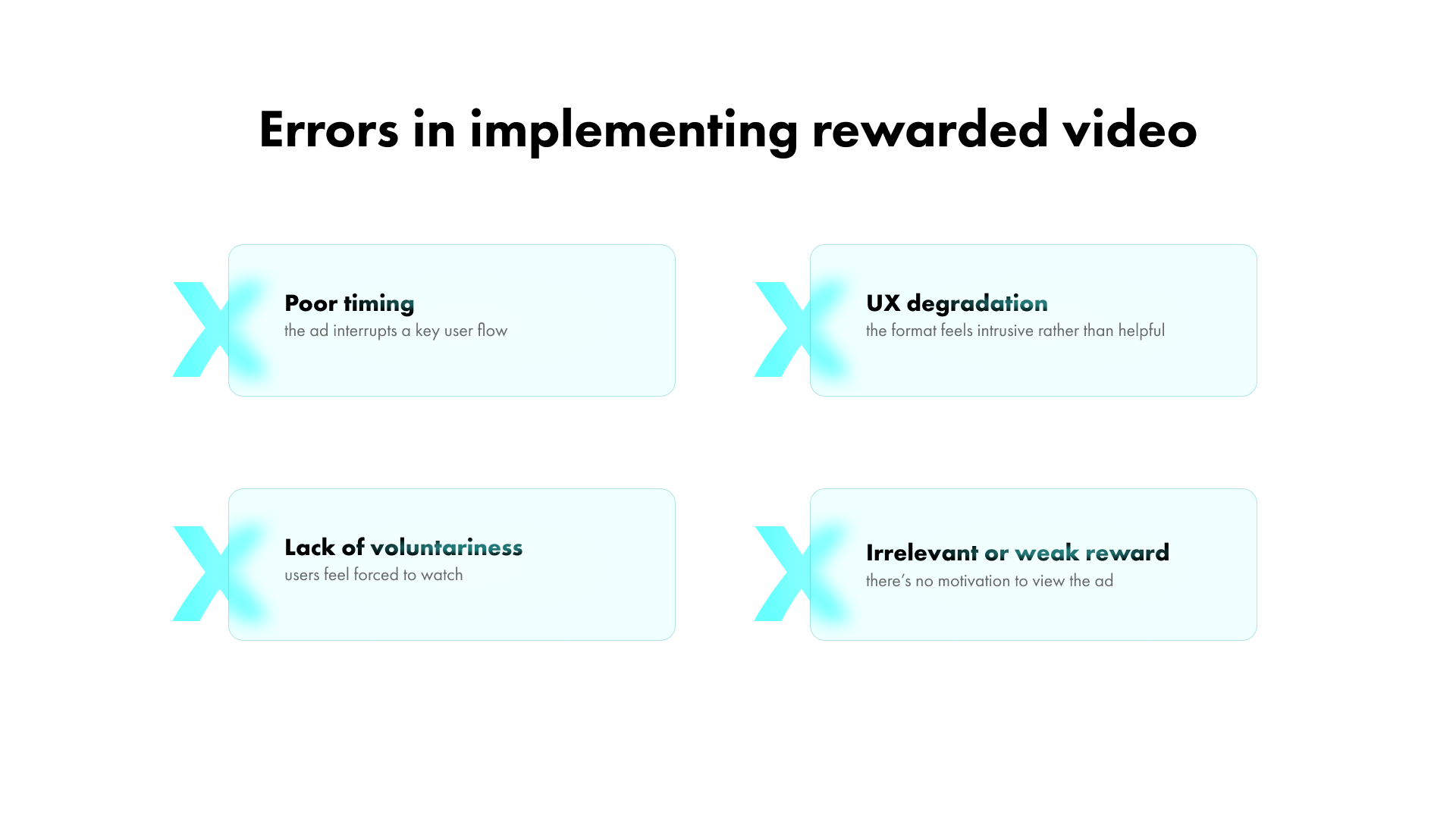
Common Mistakes When Implementing Rewarded Video
First, placement matters. Showing an ad before a key game moment can disrupt the experience. It is more effective to offer ads between levels or when users run out of resources.
Second, protect user experience. Rewarded video should enhance engagement, not damage it — this directly impacts retention.
Third, participation must remain voluntary. Users who are not interested in rewards should be able to continue using the app normally.
Fourth, ensure rewards are meaningful. Insufficient incentives are likely to be ignored — testing helps identify optimal value.
Beyond rewarded video, mobile advertising includes many creative formats that drive engagement through interactivity and native experiences — such as rich media banners with game mechanics, fullscreen formats, and immersive video solutions. Read more in the article.
For over 11 years, the BYYD team has specialized in mobile advertising, creating banners designed for real user engagement. We help brands capture attention and achieve campaign goals using proven interactive mechanics.
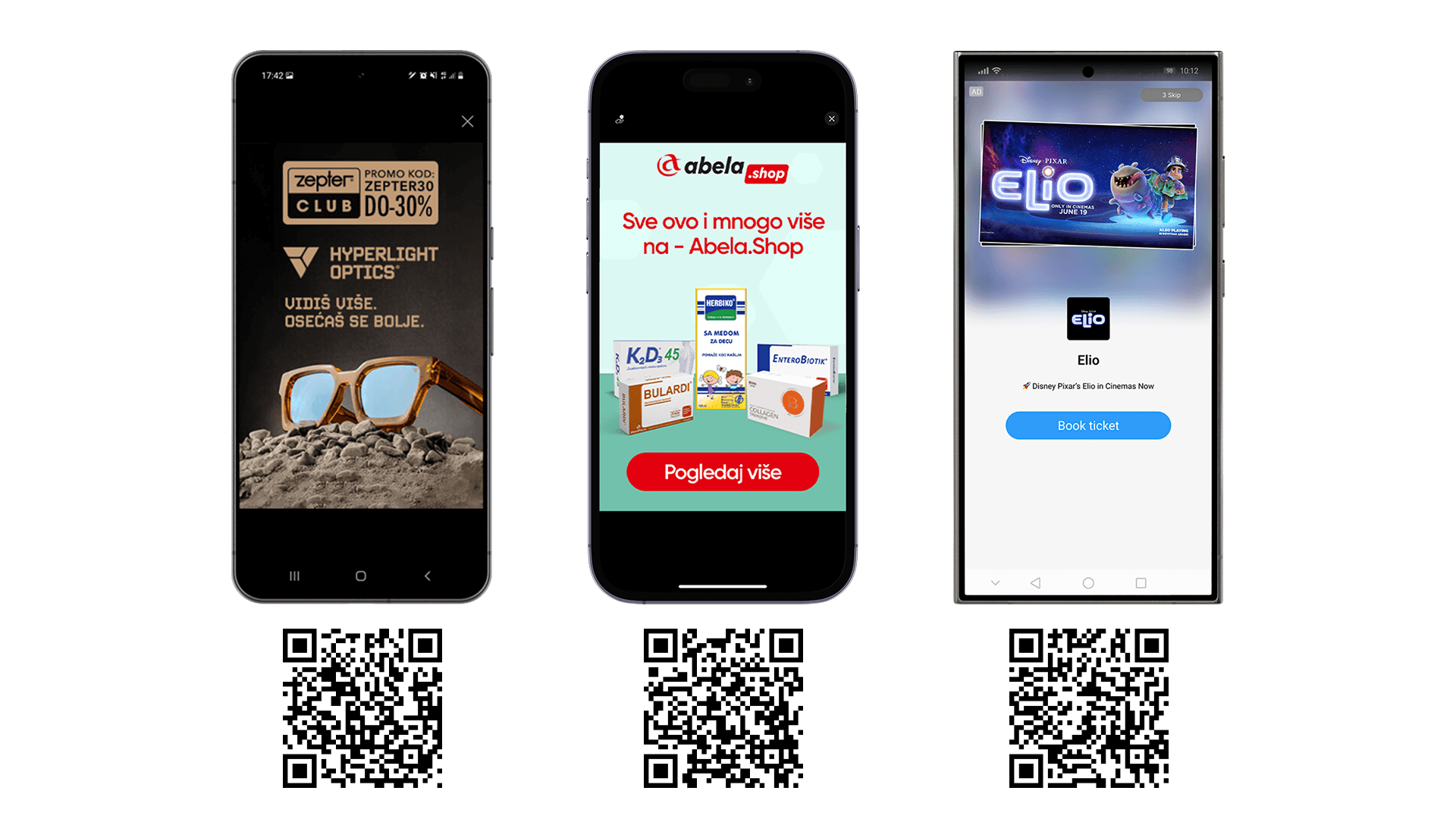
Check out our case studies and send us an email – let’s launch your next campaign together.
Found this helpful? Share it with your friends and colleagues!
For consultations and partnership inquiries:
- Submit a request on our website
- Email us at hello@byyd.me