Digital Market in Latin America: 2026 Trends
The digital market in Latin America remains one of the world’s fastest-growing ones. Accelerated mobile transformation, the rise of e-commerce, and the rapid adoption of new technologies are reshaping user behavior and influencing brand strategies across the region.
Companies are already being forced to rethink their communication approaches, prioritizing mobile-first strategies, omnichannel presence, and personalized user experience.
In this article, we examine the key trends in the digital market in Latin America for 2026 — from the transformation of online commerce to the growth of the expanding opportunities for in-app advertising.
E-commerce in Latin America: Growth and New Consumer Expectations
According to a report by Endeavor and MercadoLibre, the e-commerce market in Latin America may exceed $215 billion in 2026. At the same time, the market is growing approximately 1.5 times faster than the global average.
Most sales are concentrated in Brazil, Mexico, and Argentina. The region remains strongly mobile-first, with about 84% of purchases made via smartphones. At the same time, user loyalty is declining, as consumers increasingly choose platforms that offer reliable delivery and transparent terms.
Delivery delays and complicated return processes are becoming key reasons for service abandonment. Experts note that the market’s potential extends beyond traditional marketplaces. E-commerce players are actively developing payment, credit, and logistics services.
According to Colliers, online sales in Colombia reached approximately $7 billion in the first quarter of 2025. Panama and Costa Rica are demonstrating accelerated growth driven by innovations such as digital wallets and click-and-collect — a purchase model where users order online and pick up their items at a physical location.
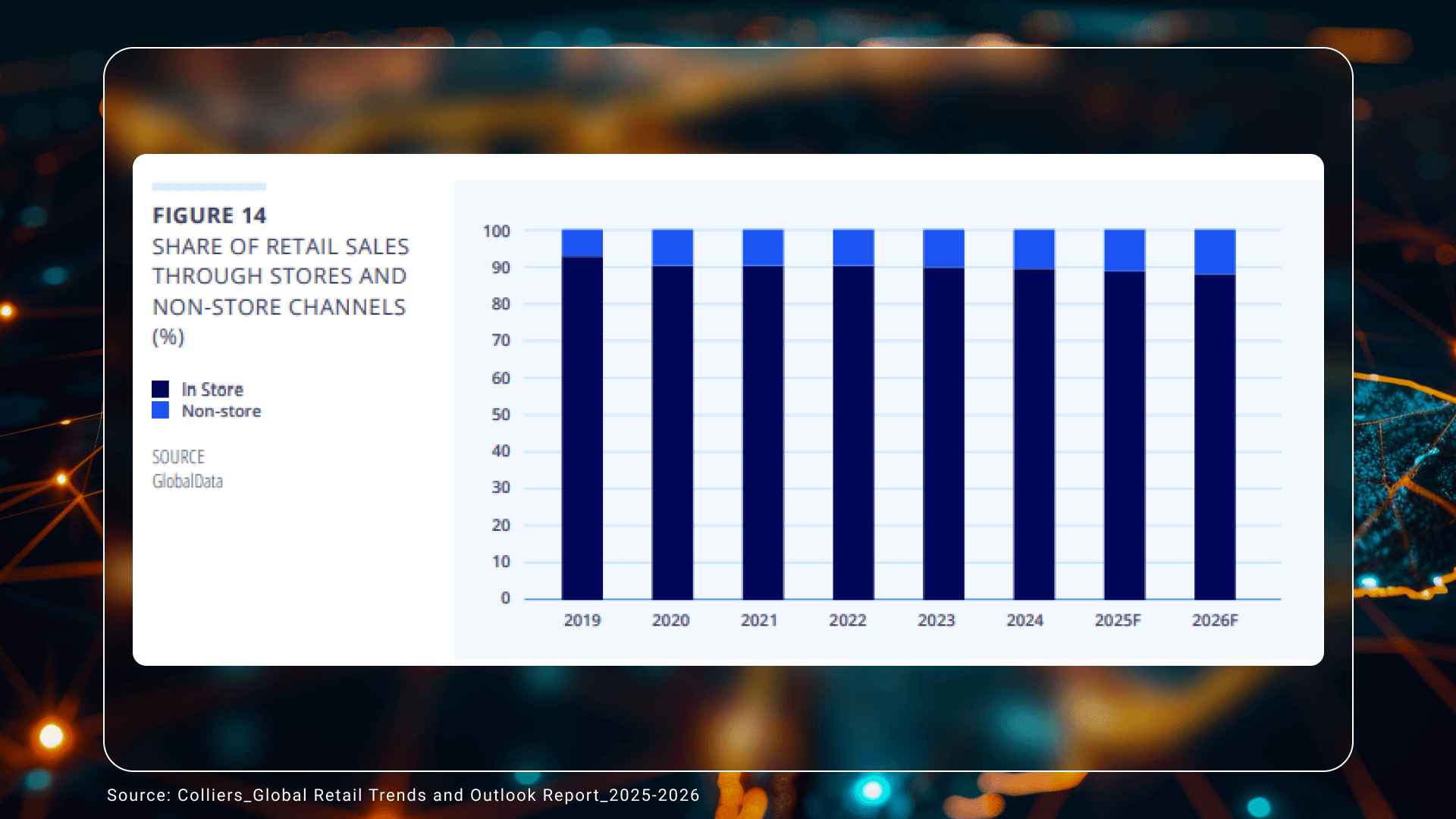
How Gen Z Is Reshaping LATAM Retail Strategies
Generation Z is becoming one of the leading forces in Latin America’s consumer market, reshaping sector strategies. Young consumers expect brands to maintain a strong and authentic digital presence, pushing retailers toward greater transparency and social responsibility.
In Brazil, Mexico, and Argentina, demand for authenticity and sustainability is rising, while in Chile, 58% of young shoppers value brands with a genuine social impact. In Panama, Gen Z is strongly oriented toward omnichannel experiences and social commerce via TikTok, prioritizing speed and instant access.
In Costa Rica and Colombia, consumers increasingly prefer hybrid models that combine offline and online experiences.
How LATAM Companies Are Building Digital Strategies
Digitalization in the region is viewed as a strategic tool. According to GSMA Intelligence, 70% of brands in Latin America aim to improve customer experience and strengthen cybersecurity. This reflects a shift toward a model where competitiveness is built around speed and convenience.
Revenue growth also ranks among top priorities, indicating that digital transformation is seen as a way both to protect businesses and to scale them.
The Mobile Market in Latin America
In 2024, Latin America had about 456 million unique mobile subscribers, representing 70% of the population. By 2030, this figure is expected to reach 531 million.
At the same time, the mobile internet audience continues to grow: 413 million users (64% of the population) in 2024, projected to reach 496 million by 2030.
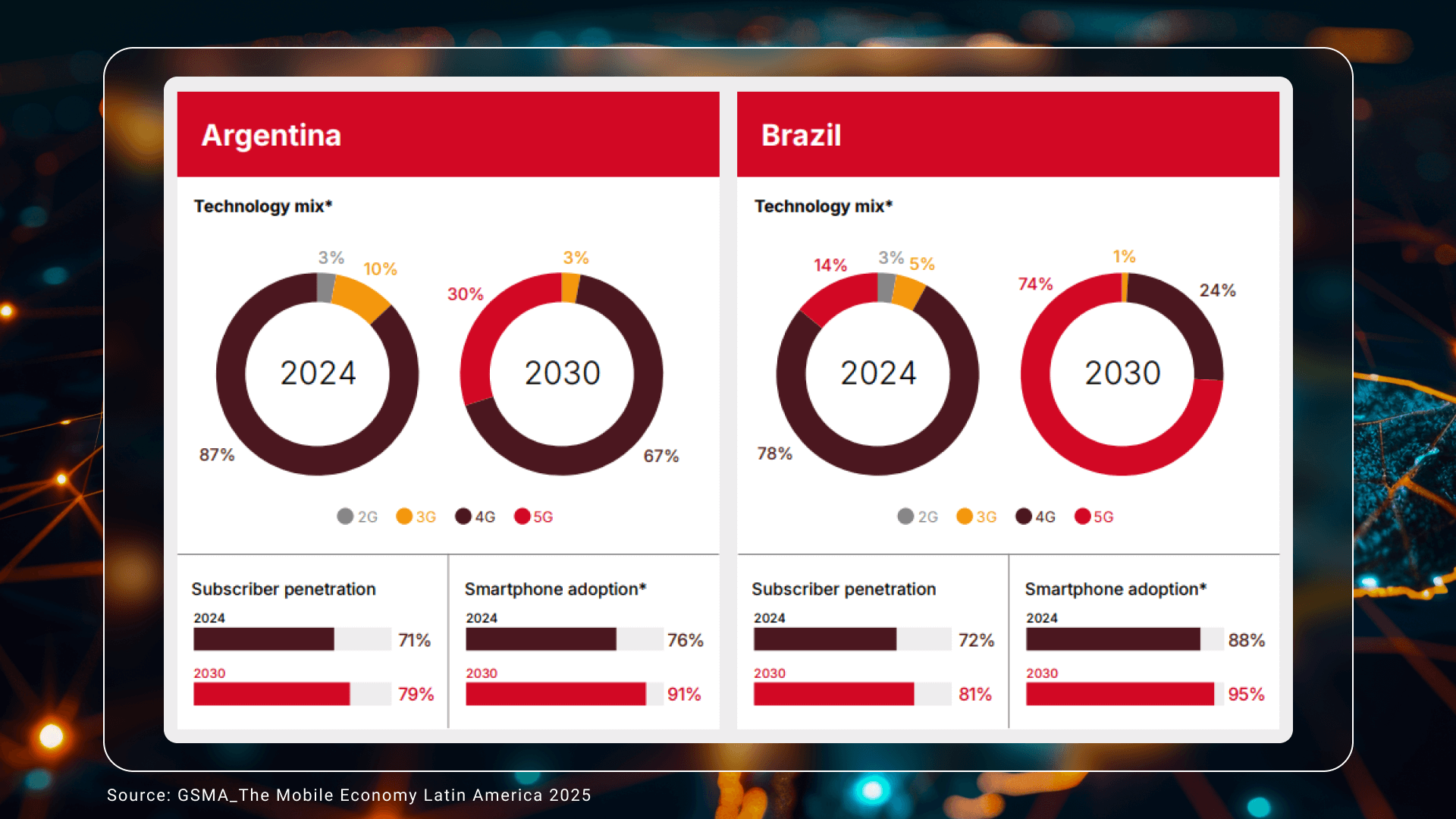
The expansion of mobile access is accompanied by increasing smartphone penetration — from 81% of total connections in 2024 to a projected 93% by 2030.
The economic role of the mobile ecosystem is also strengthening. Operator revenues in the region are estimated at $68 billion in 2024 and may grow to $81 billion by 2030. To support this growth, operators plan to invest about $86 billion in infrastructure between 2024 and 2030. These figures reflect the steady development of the mobile market and its strategic importance for Latin America’s digital economy.
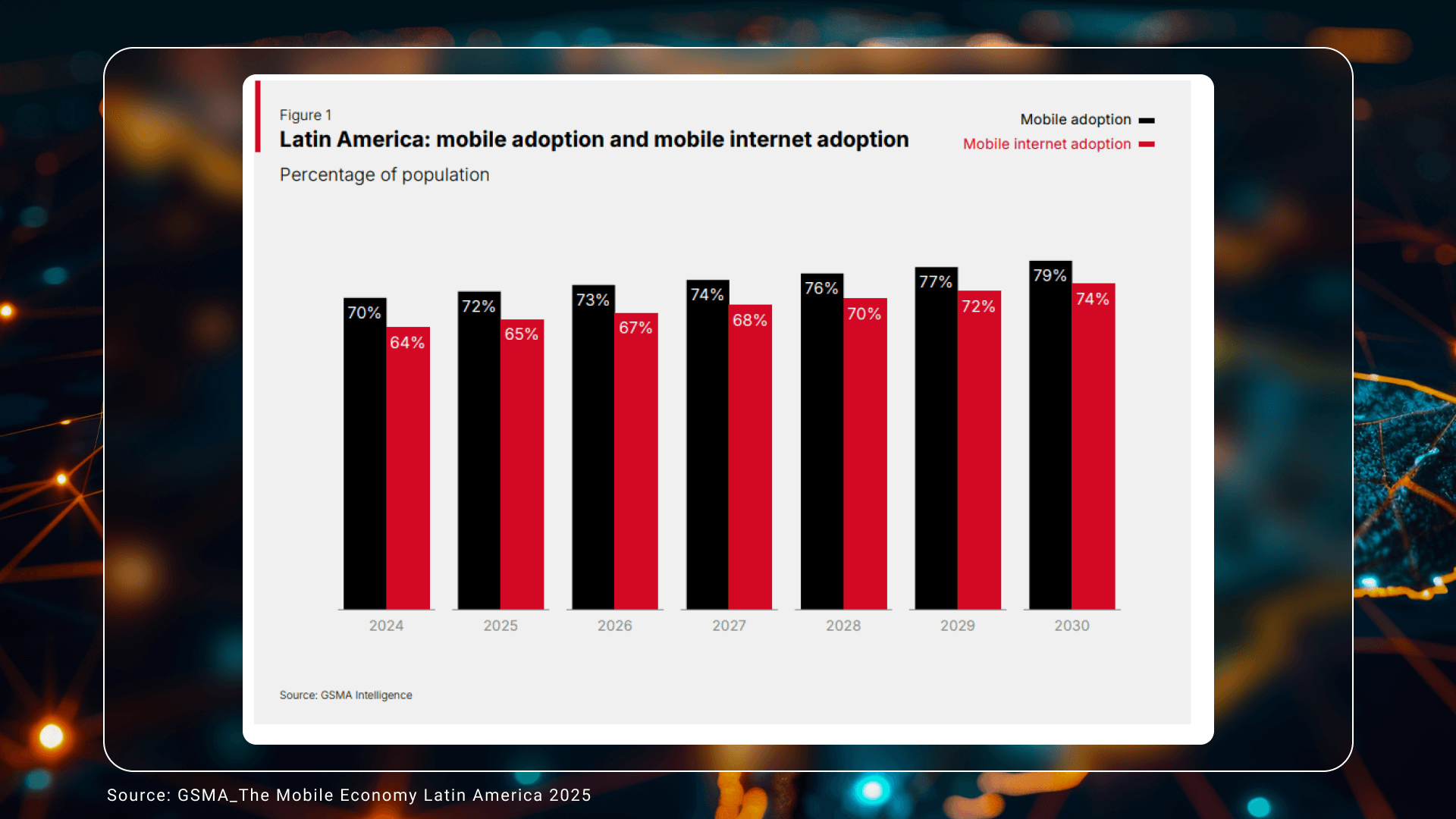
As smartphones become the primary gateway to digital services, mobile advertising is turning into a key channel for audience engagement. The growth of app usage allows brands to reach users at moments of active digital behavior.
What this gives brands:
- Precise targeting
- Scalable reach
- Native presence in the mobile environment
Learn more about programmatic mobile advertising in the full article.
Advertising within mobile applications enables brands to reach the right consumers at the moment of their active interaction with the digital environment.
5G Becomes the New Connectivity Standard
According to GSMA Intelligence, demand for fast and reliable networks is growing across LATAM, driving the region’s steady 5G rollout.
More than 30 operators in 13 Latin American countries have already launched commercial 5G mobile networks, while another 18 operators have announced launch plans in the coming years. By the end of 2027, 5G is expected to account for about one quarter of all mobile connections in the region, exceeding 50% by 2030.
The development of mobile technologies is becoming a key driver of economic growth in Latin America, impacting both GDP and employment.
The Mobile Market in Latin America: Key Takeaways
Latin America’s digital environment is rapidly evolving. As mobile connectivity improves, user behavior continues to shift:
- Mobile traffic is growing rapidly — total volume increased 14× between 2016 and 2023.
- Nearly 90% of internet users in Latin America choose mobile devices as their primary way to watch video. This is prompting operators to form partnerships with digital platforms. For example, Claro Brasil offers streaming services such as Max, Netflix, and Globoplay alongside TV channels.
- In-app promotion through OTT TV is gaining momentum, allowing brands to reach the right audiences more efficiently. Mobile advertising via streaming services is more effective than traditional TV, where targeting is limited to broader segments.
- Companies in Latin America are partnering with telecom operators to simplify user registration. For example, Telefónica has partnered with Cabify to enable phone number verification via API for faster onboarding.
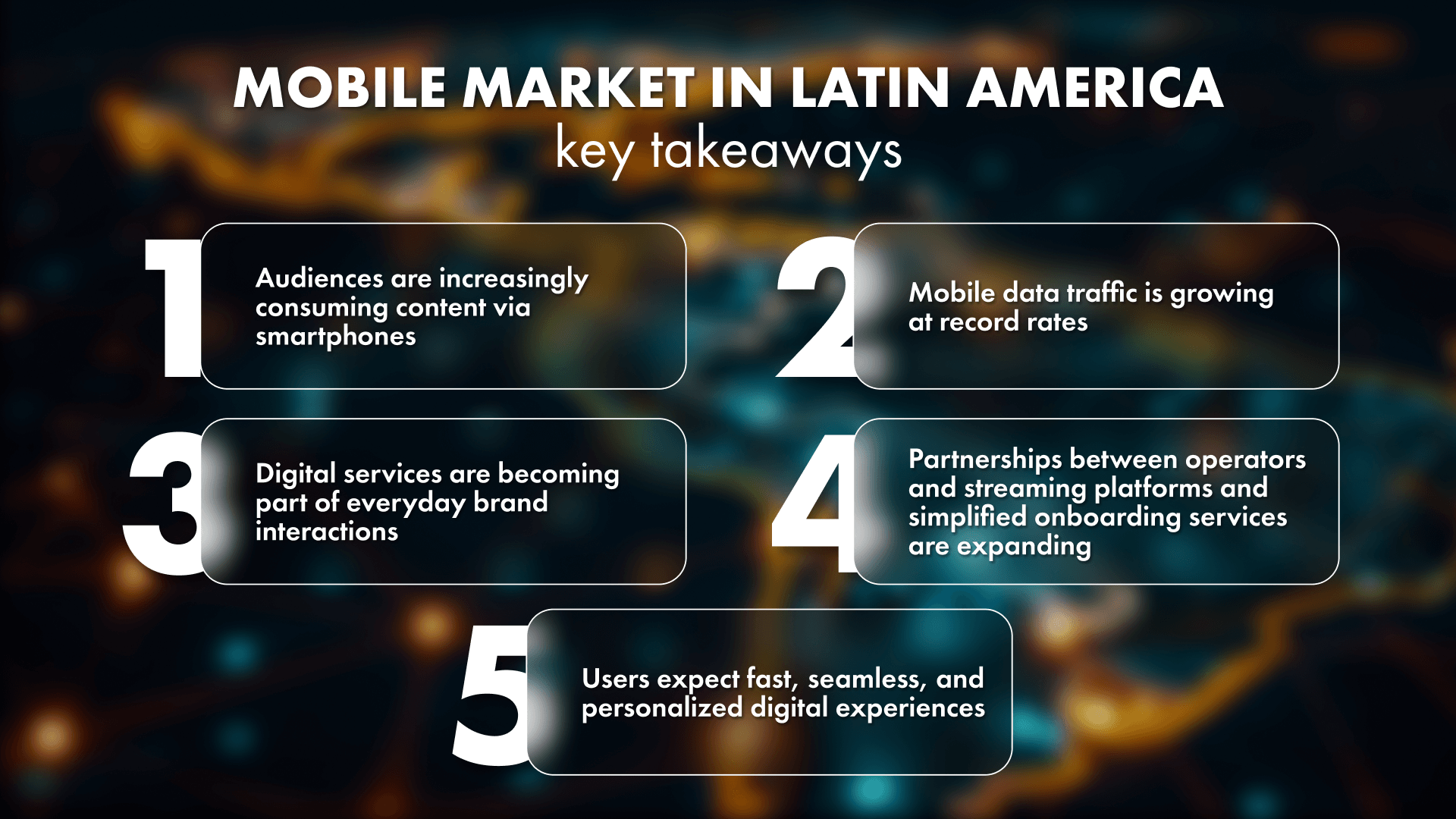
Overall, the digital market continues to expand and reshape brand behavior. In this environment, mobile advertising is becoming a natural communication channel. This shift is driven by growing video consumption, high in-app engagement, and users’ constant mobile presence.
For advertisers, in-app promotion provides the opportunity to appear where user attention is most concentrated.
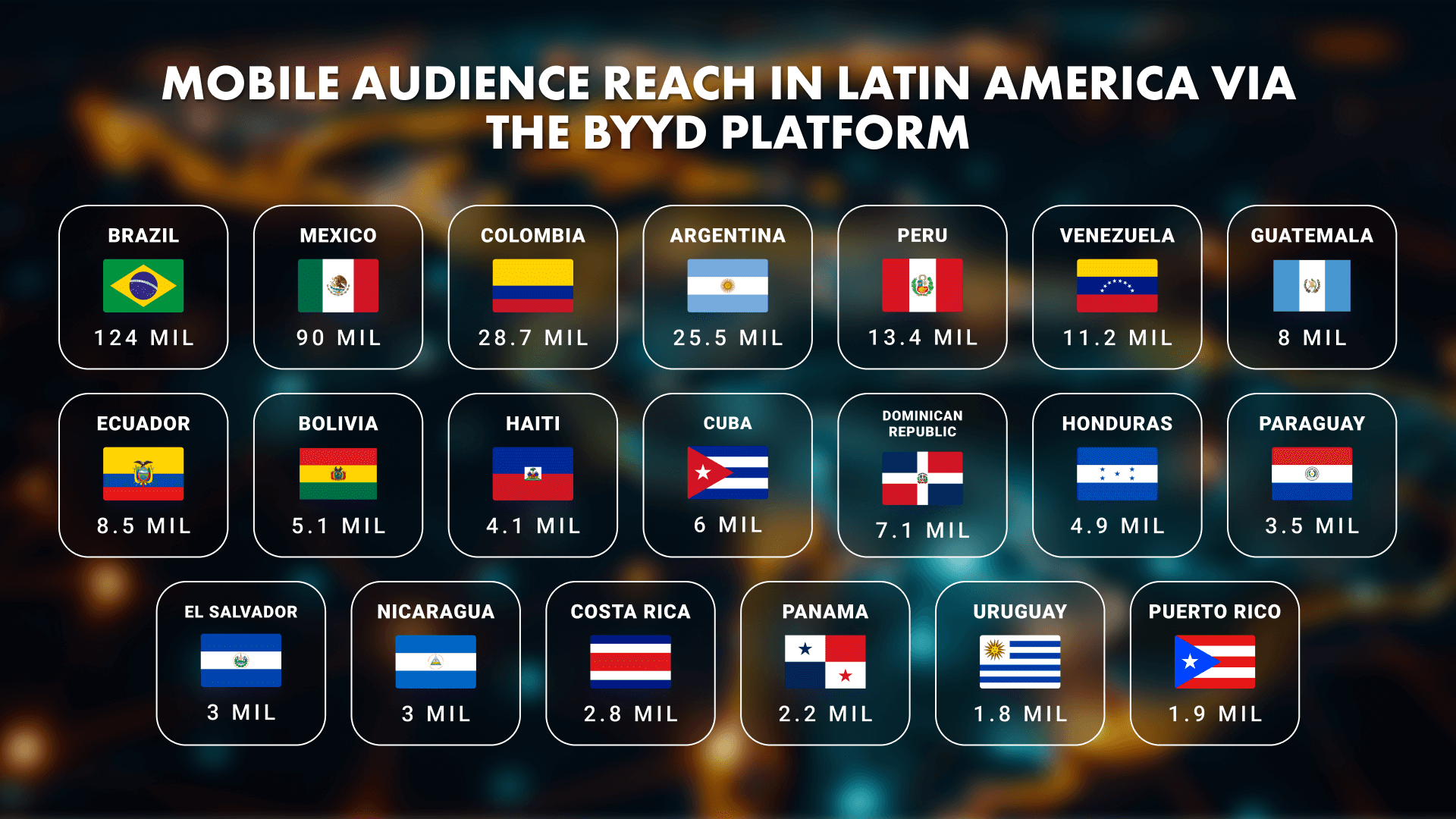
The BYYD mobile platform runs in-app advertising campaigns for brands across Latin America. We have already supported a wide range of industries — from retail to finance. Our team has deep regional expertise, develops high-performing creatives, and delivers precise targeting.
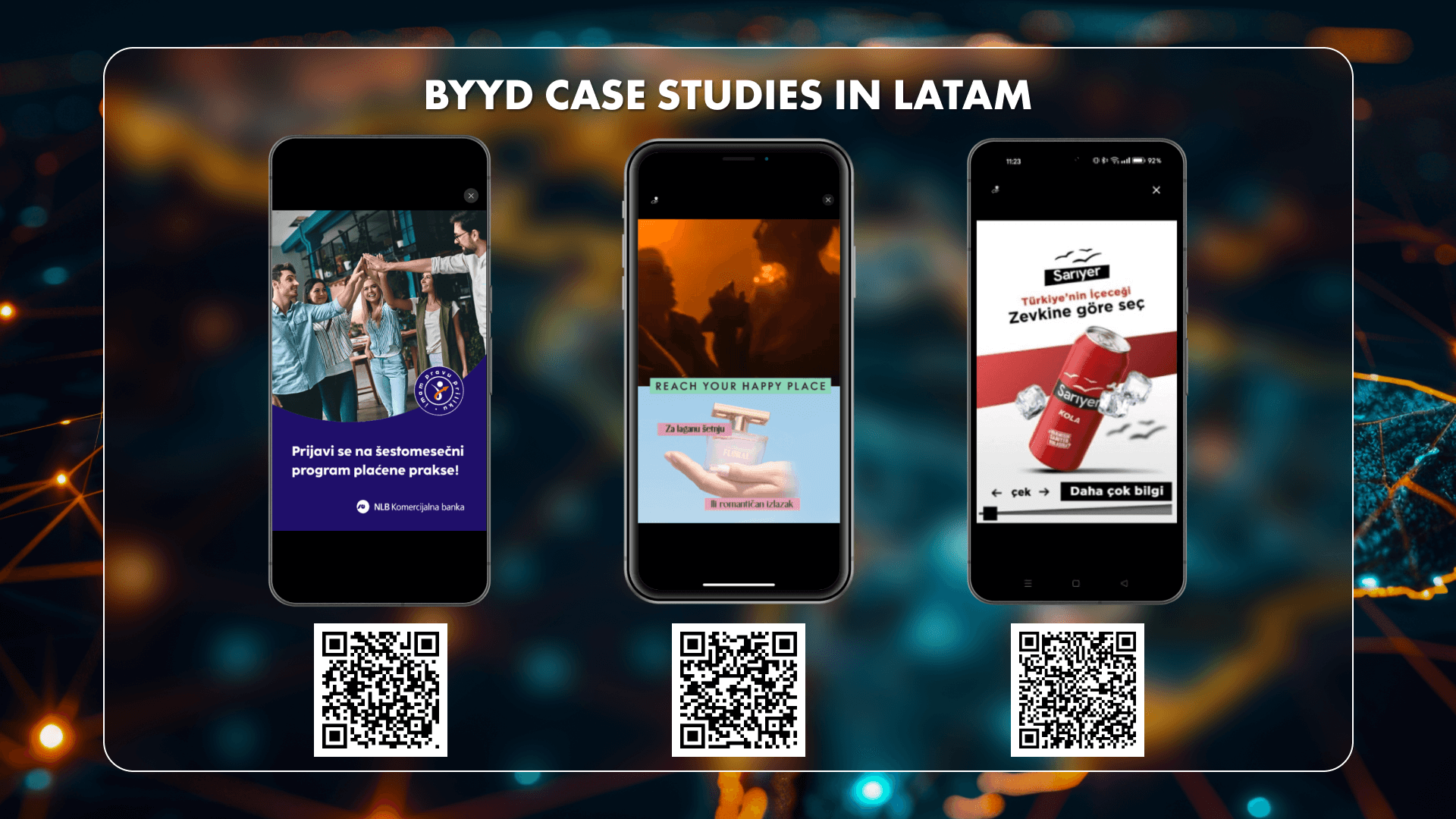
Check out our case studies and send us an email – let’s launch your next campaign together.
Found this helpful? Share it with your friends and colleagues!
For consultations and partnership inquiries:
- Submit a request on our website
- Email us at hello@byyd.me