Black Friday 2025 Worldwide: Key Figures, Trends, and Takeaways for Brands
Black Friday 2025 once again confirmed that the global shopping season is no longer about a single day of discounts. It has evolved into a prolonged, highly competitive period in which brands fight for attention, loyalty, and conversions across digital channels. Consumer behavior continues to shift toward online and mobile shopping, while expectations around personalization, transparency, and convenience keep rising.
We look at the growing role of mobile commerce, the impact of AI on product discovery and decision-making, the importance of timing and peak days, and why trust and real value matter more than ever.
Based on these insights, we outline practical ways to improve marketing performance and stay competitive in the peak shopping season.
Black Friday 2025 Worldwide
The Sale Lasts at Least a Week
Black Friday 2025 transitioned into a week-long format. Retailers began offering discounts several days before the main date, and some brands extended promotions for up to a month as they searched for ways to sustain demand.
Online Sales Reached $79 Billion
The average global discount rate reached 25%, while loyalty program registrations doubled compared to 2024. Brands actively encouraged participation through special terms and exclusive offers.
The highest average discounts were recorded in:
- USA — 35%
- EMEA — 24%
- APAC — 18%
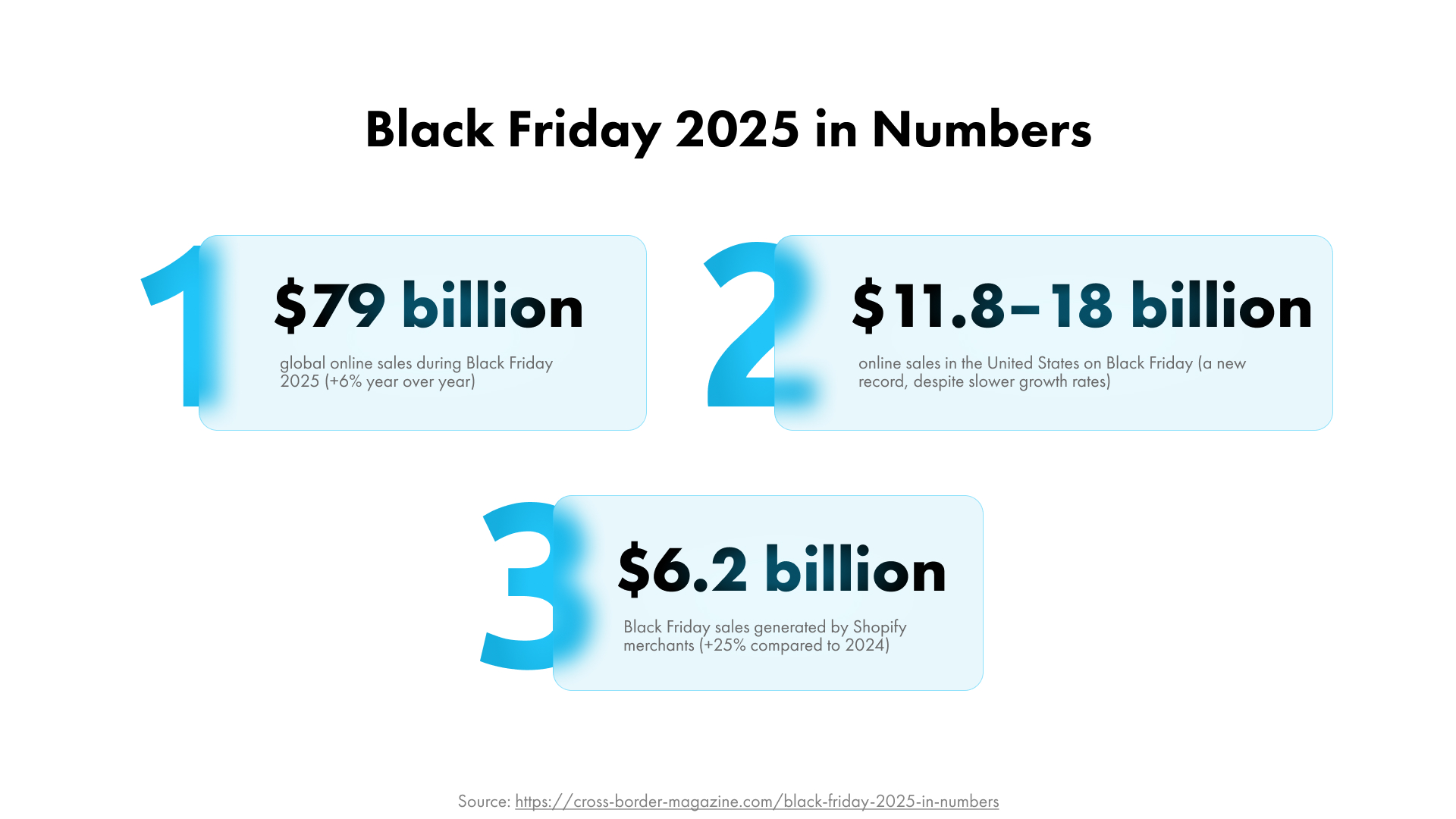
Globally, Black Friday 2025 generated $79 billion in online sales, representing approximately 6% year-over-year growth. In the U.S., online revenue reached record levels, estimated between $11.8 and $18 billion.
Black Friday 2025 showed that leading retailers focused on:
- early attractive offers,
- personalization,
- exclusive bonuses for loyalty program members.
Best-Selling Categories Worldwide
According to Shopify, strong sales were recorded in beauty and apparel. Fashion remains a key Black Friday category, while skincare, cosmetics, and fragrances continue to grow due to gift sets and social media trends.
Electronics also saw strong growth, driven by promotions on TVs, smartphones, gaming consoles, and accessories.
Family products — especially toys — were also in high demand, as shoppers purchased early to avoid December shortages ahead of the New Year season.
AI Is Gaining Popularity as a Product Discovery Tool
Online and mobile channels remain the primary sales drivers, while foot traffic in physical stores continues to decline. AI algorithms and assistants help users find better deals, compare prices, check availability, and discover relevant alternatives.
As a result, AI’s influence on consumer behavior has significantly increased. During Black Friday, AI-assisted purchases accounted for more than $14 billion in online sales, confirming that AI has become a full-fledged decision-making channel.
Adobe reported that AI-related traffic to U.S. retail websites increased by 805% compared to the previous Black Friday.
Cyber Monday in the U.S. Generated More Sales Than Black Friday
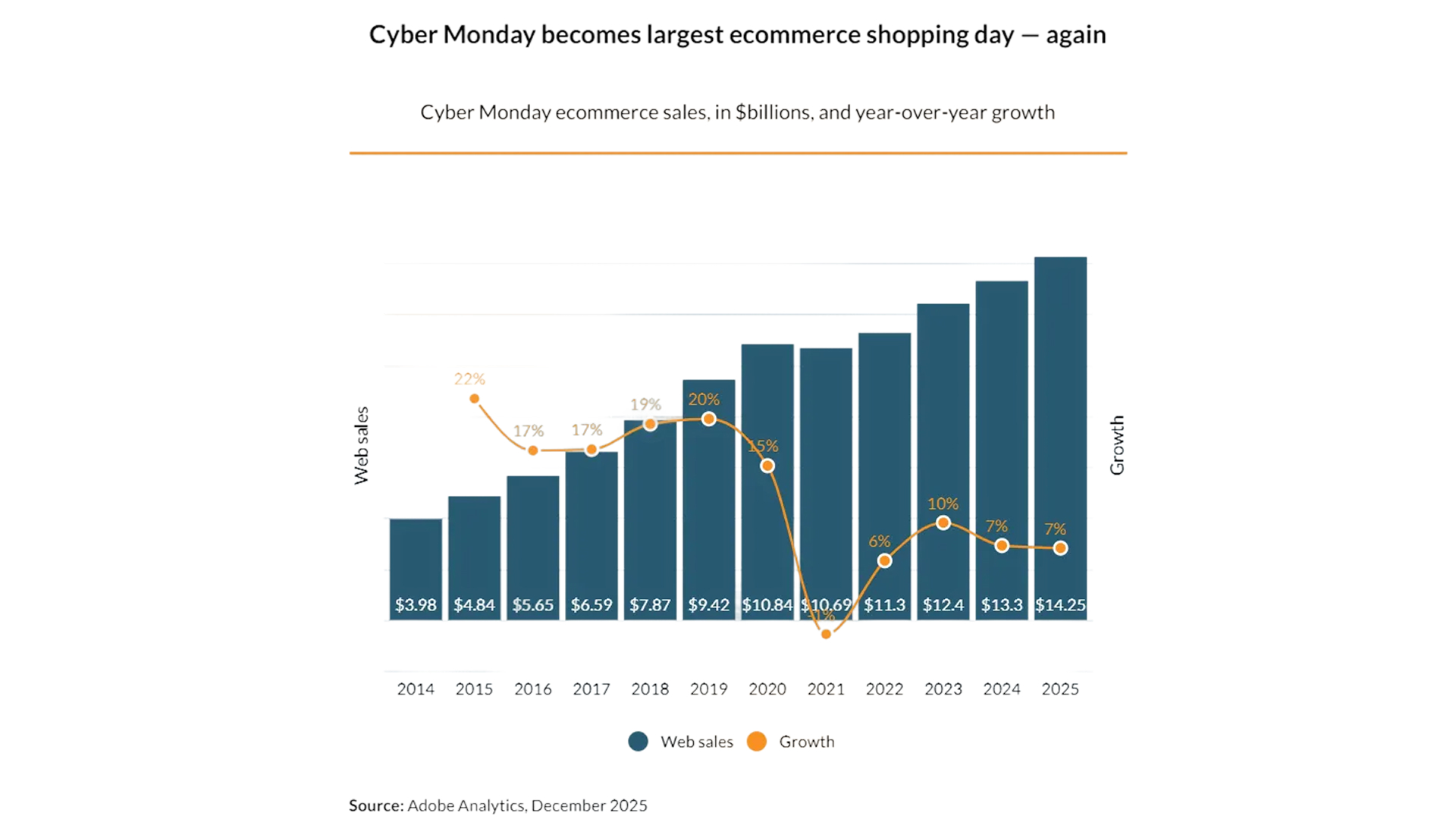
Cyber Monday set a new record for single-day online sales in the U.S., exceeding Black Friday sales by $2.45 billion.
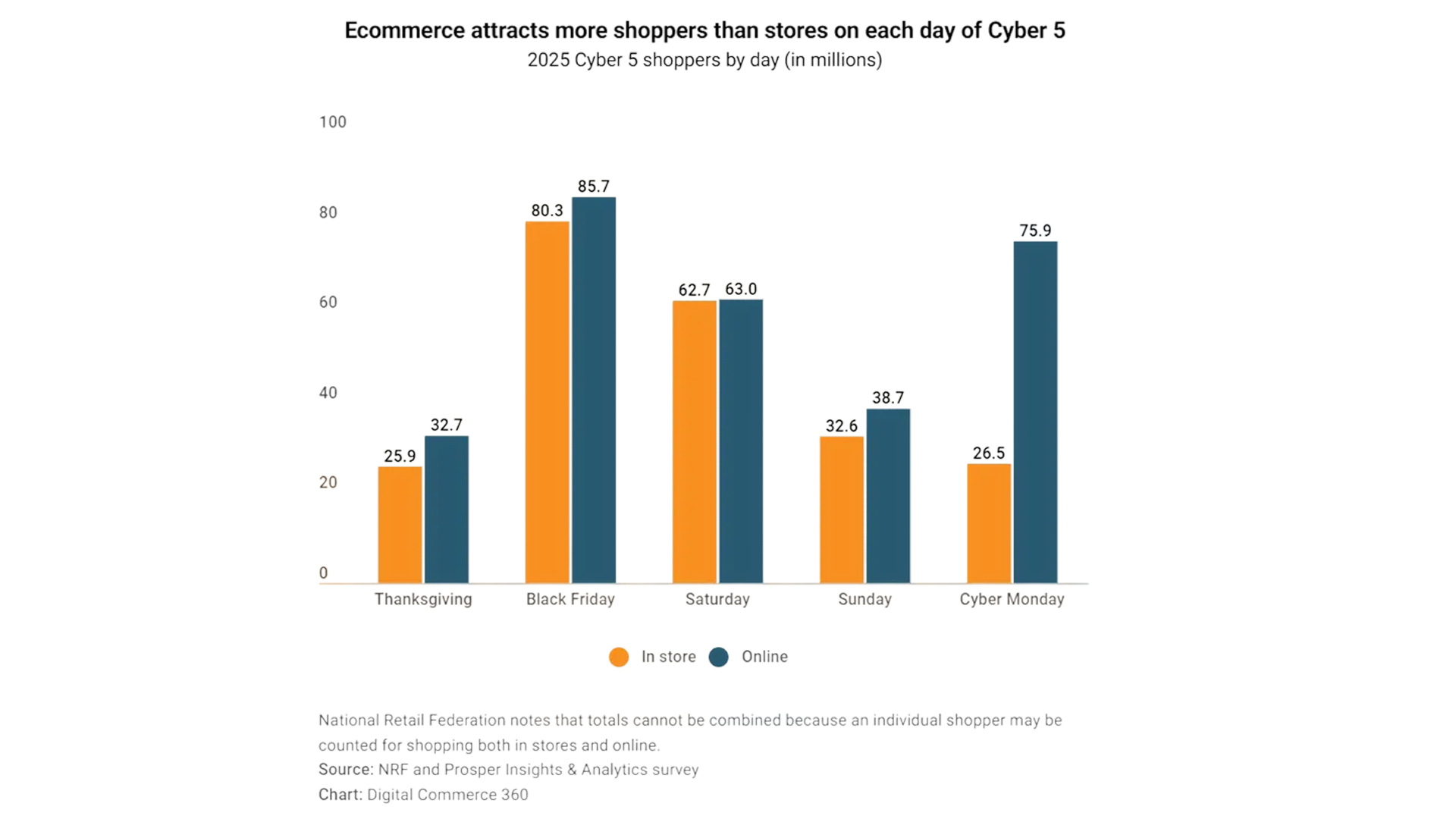
According to the National Retail Federation (NRF):
- Cyber Monday ranked second after Black Friday in terms of online shoppers
- 85.7 million consumers shopped online on Black Friday, down from 87.3 million in 2024
- Mobile shopping on Cyber Monday increased to 46.9 million users, up from 40.4 million in 2024
More Than Half of Black Friday Purchases Were Made on Smartphones
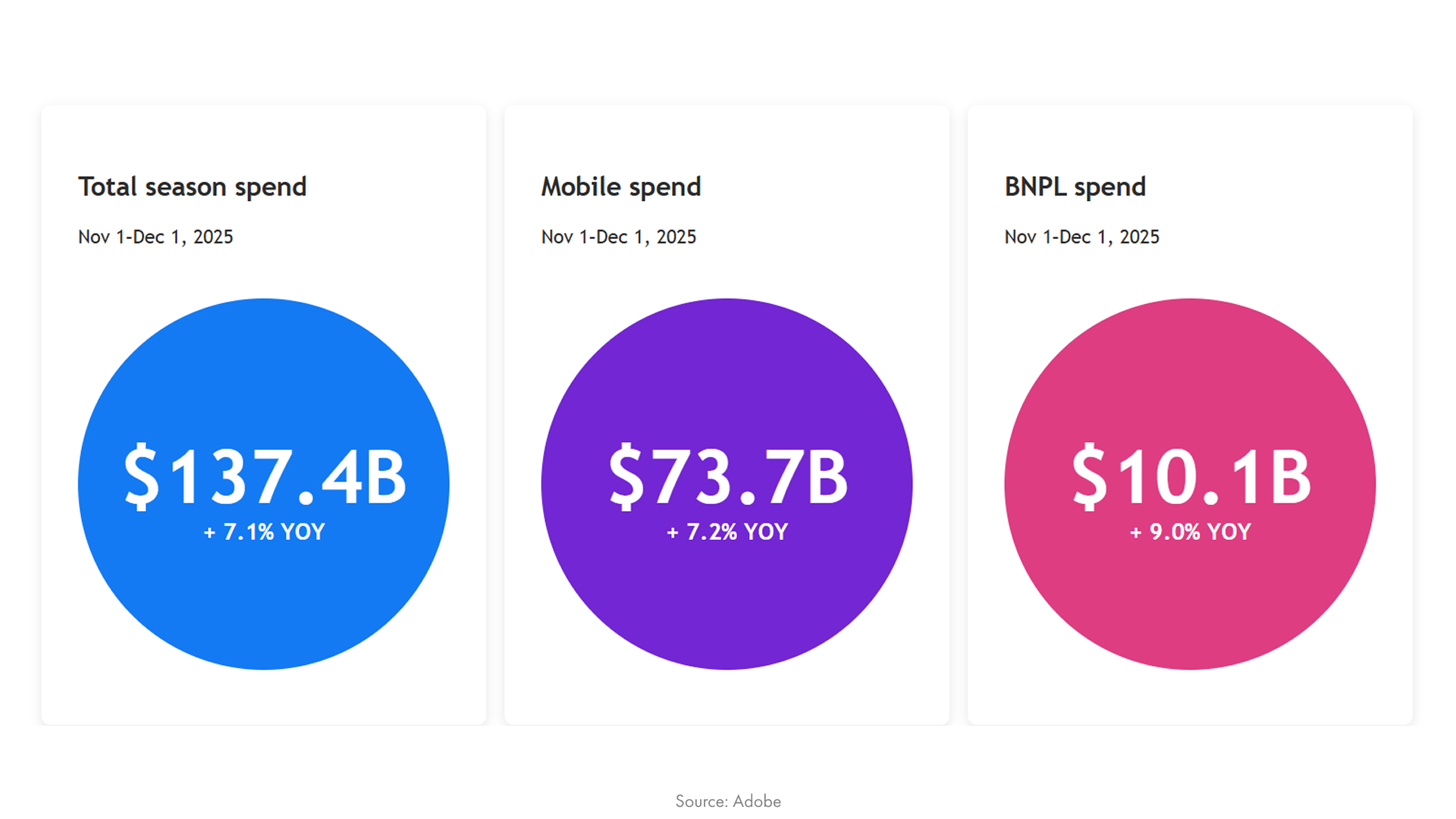
According to Adobe for Business, from November 1 to December 1, 2025:
- Total online spending reached $137.4 billion (+7.1% YoY)
- Mobile spending totaled $73.7 billion (+7.2% YoY)
Mobile now accounts for more than half of all online spending, meaning every second e-commerce dollar is spent on a smartphone.
Black Friday 2025: How Discounts Were Distributed
- Late October to early November: gradual increase in discounts without aggressive price cuts
- November 20–23: sharp price declines across all categories
- Peak discounts during Black Friday week, with electronics and toys discounted by up to 30%
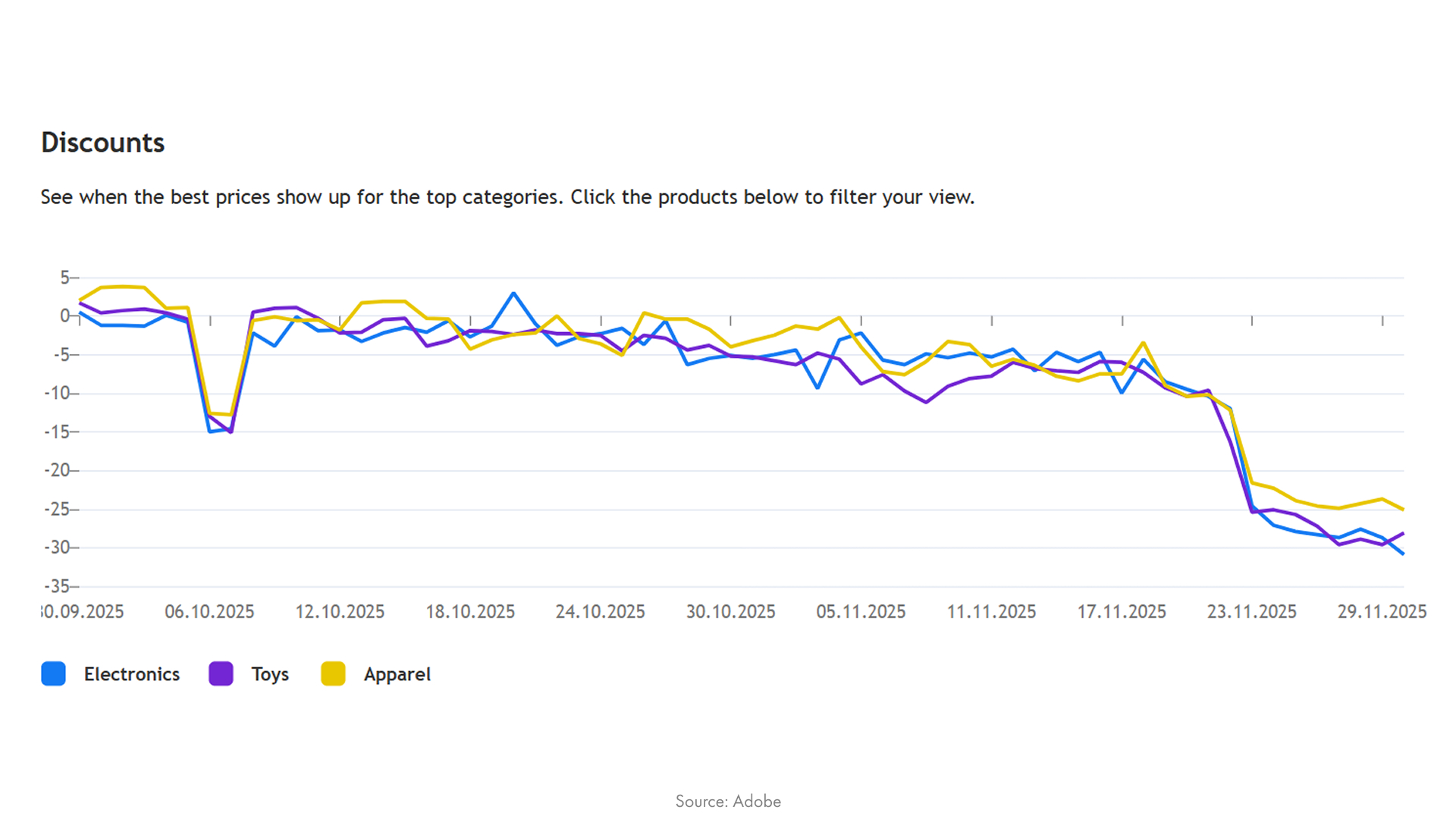
Retailers spread promotions over time, but the deepest discounts were concentrated in the final week. Consumers waited for the peak rather than responding to early deals, amplifying the delayed demand effect that exploded at the end of November.
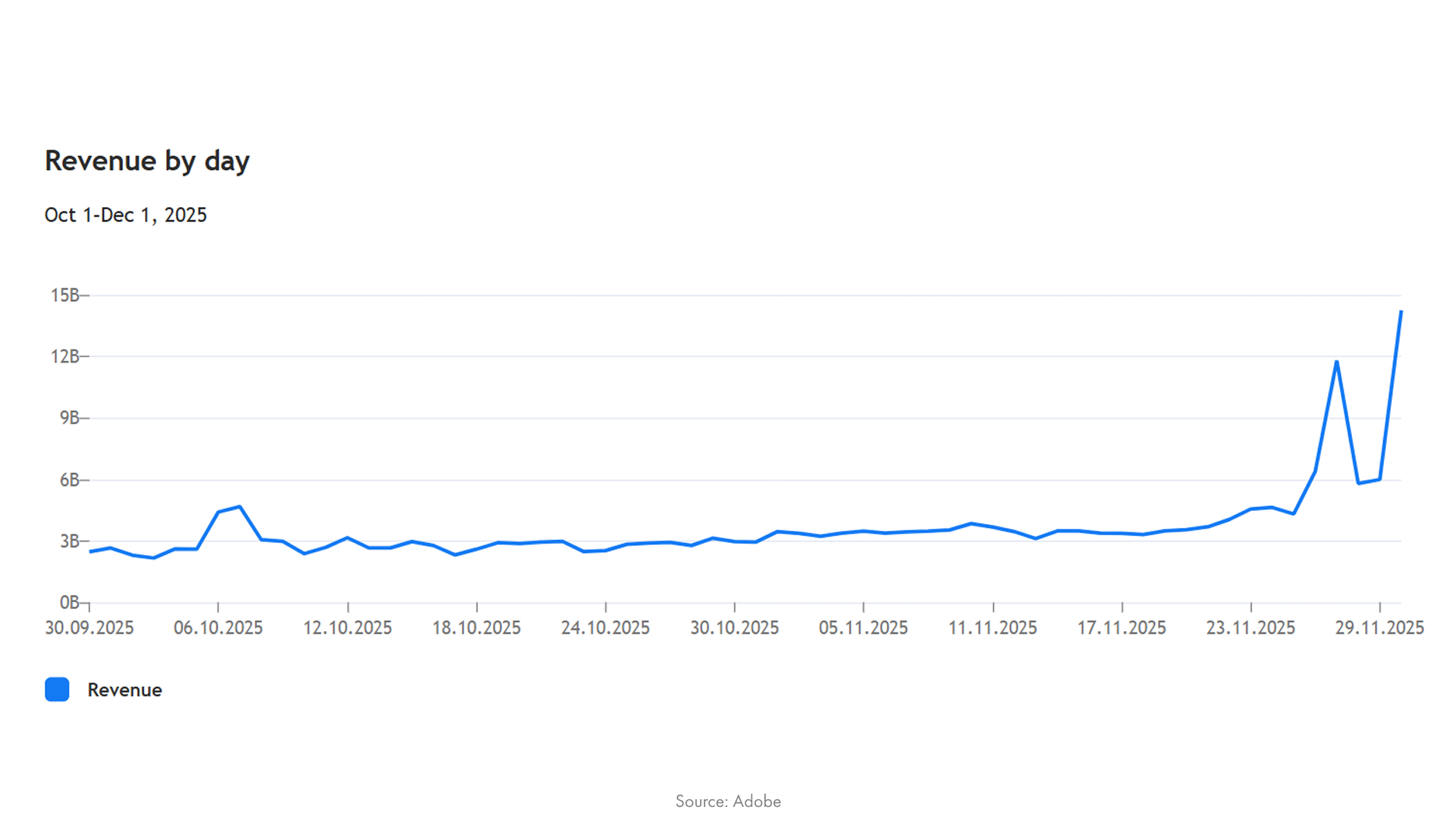
How Revenue Changed Throughout the Discount Season
- October: stable baseline revenue (~$2.5–3.5 billion per day)
- Early November: moderate growth
- After November 20: Black Friday and Cyber Monday peaks (up to ~$14–15 billion per day)
Despite early discounts, most spending occurred in the final 7–10 days. Revenue growth was not linear but spike-driven, responding to maximum discounts and perceived scarcity.
Recommendations for Brands and Marketers
- Build a mobile-first strategy: more than half of all online purchases are made on smartphones.
- Increase mobile campaign budgets in the final 7–10 days before peak sales.
- Use mobile advertising to drive impulse purchases with short, clear creatives.
- Focus on trust, not just discounts: show real value, transparent pricing, and loyalty bonuses.
- Start communication early—mobile campaigns have proven effective for brand awareness.
The BYYD platform has been helping companies run mobile advertising campaigns for over 10 years and continues to improve its tools.
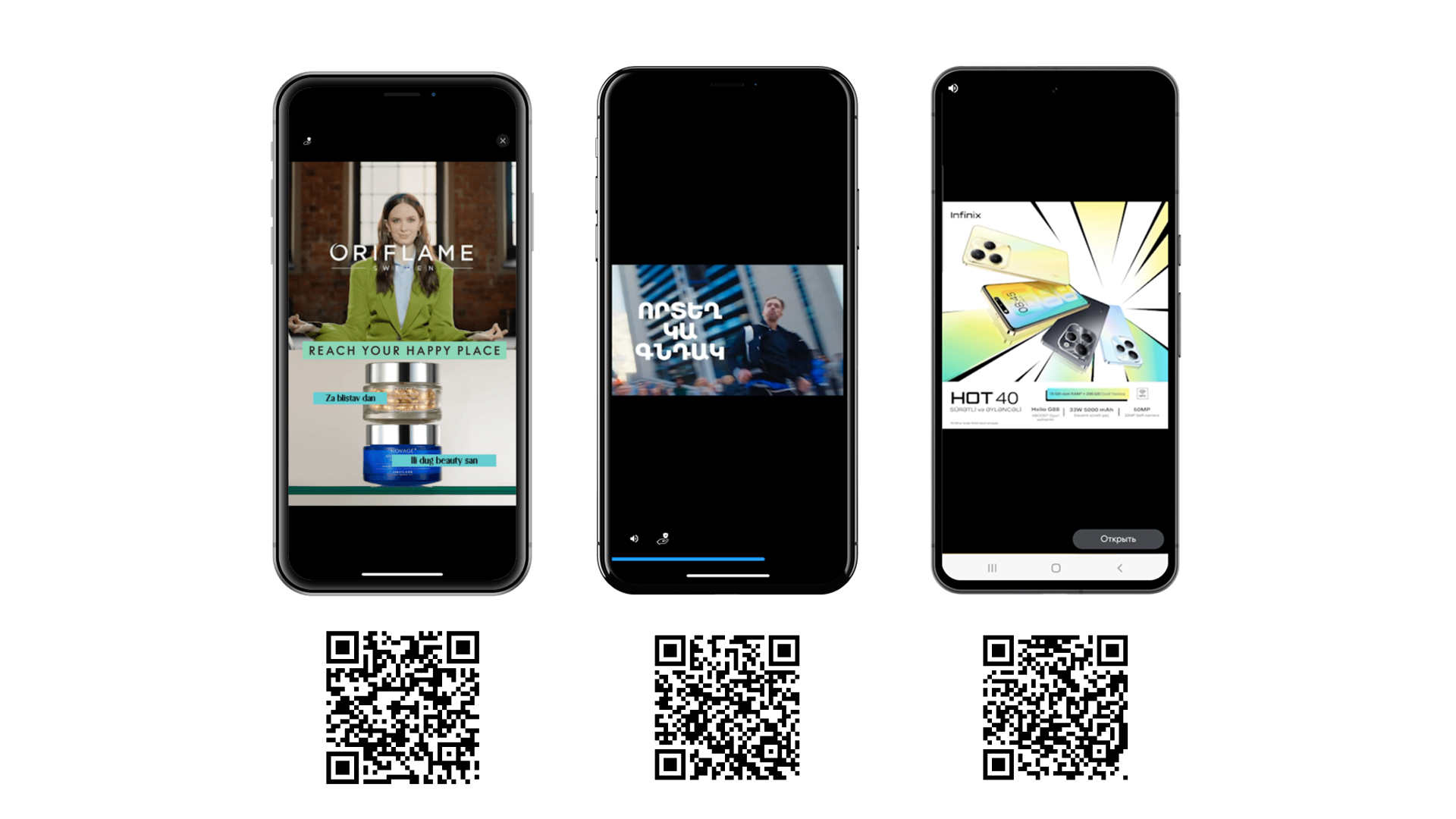
Check out our case studies and send us an email – let’s launch your next campaign together.
Found this helpful? Share it with your friends and colleagues!
For consultations and partnership inquiries:
- Submit a request on our website
- Email us at hello@byyd.me